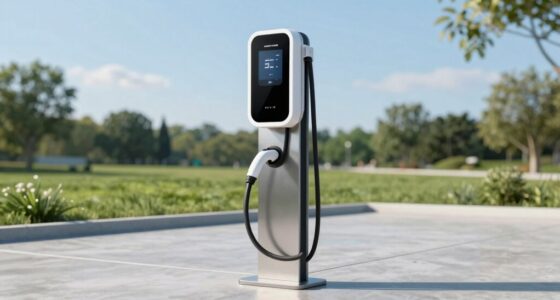
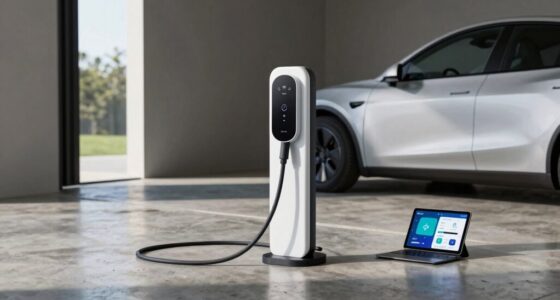
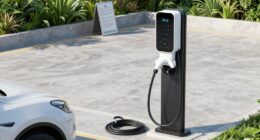
Outdoor EV chargers need more than just weather resistance because they face risks beyond environmental elements, like vandalism, theft, and security breaches. You want a charging station that’s protected with durable enclosures, tamper-proof locks, security cameras, and motion sensors to keep it safe and fully operational. These added protections help prevent damage and disruptions, ensuring consistent charging. If you keep exploring, you’ll discover how a thorough approach can make your charger both resilient and secure year-round.
Key Takeaways
- Security measures like tamper-proof locks prevent theft and vandalism, protecting the investment and ensuring continuous operation.
- Solar integration reduces reliance on grid power, providing sustainable energy and backup during outages or cloudy days.
- Weather resistance alone doesn’t safeguard against environmental damage or security threats that can disrupt charging.
- Vandalism protection features preserve equipment integrity, minimizing costly repairs and operational downtime.
- A comprehensive setup enhances long-term reliability, security, and energy independence beyond basic weatherproofing.

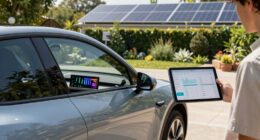
Solar integration is a key feature you should consider. By pairing your outdoor charger with solar panels, you harness renewable energy to power your vehicle, reducing reliance on the grid and lowering energy costs. This setup not only makes your charging more sustainable but also adds a layer of independence. When the sun’s shining, you generate your own electricity, which can be stored in batteries for use during nighttime or cloudy days. This integration can be especially beneficial if you have a home solar system, creating a seamless, eco-friendly charging station that’s less vulnerable to power outages or fluctuations in electricity supply.
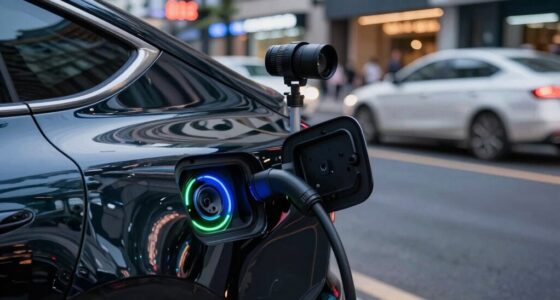
Vandalism protection is equally vital for outdoor chargers. In public or semi-public settings, your charger can become a target for theft or vandalism. Reinforced enclosures, tamper-proof locks, and security features like motion sensors or surveillance cameras help safeguard your investment. Even in private settings, accidental damage or intentional tampering can occur, and a robust design can deter such incidents. Protecting your charger from vandalism isn’t just about physical security; it’s about ensuring your EV remains charged and ready to go when you need it most. A well-protected charger minimizes downtime and maintenance costs, saving you money and frustration.
While weather resistance keeps your charger functional against the elements, integrating solar power and adding vandalism protection elevate your charging station’s reliability, sustainability, and security. These features work together to create a solution that withstands more than just weather. They guarantee that your outdoor EV charger remains accessible, efficient, and safe over the long term. When you’re investing in an outdoor charging station, don’t overlook these essential elements. It’s about creating a smart, resilient setup that matches your needs and protects your investment in electric mobility. This way, you’ll have peace of mind knowing your charger can handle any challenge that comes its way.
Frequently Asked Questions
How Do Outdoor EV Chargers Handle Extreme Temperature Fluctuations?
Outdoor EV chargers handle extreme temperature fluctuations through robust material durability and temperature resilience. You’ll find that they are built with high-quality, weather-resistant materials that withstand both freezing cold and scorching heat. These chargers incorporate advanced internal components designed to adapt to temperature changes, preventing damage and ensuring reliable charging. By focusing on material durability and temperature resilience, they maintain peak performance regardless of the weather conditions you face.
What Security Features Are Essential for Outdoor EV Chargers?
Think of your outdoor EV charger as a fortress guarding your electric vehicle. You need robust security features like anti-tampering mechanisms to prevent physical tampering and strong cybersecurity protocols to shield against vulnerabilities. These protections guarantee your charger stays safe from cyberattacks and vandalism, giving you peace of mind. Without these features, your charger’s integrity and your vehicle’s safety remain at risk, like a castle vulnerable to unseen enemies.
How Often Should Outdoor EV Chargers Be Maintained?
You should maintain your outdoor EV charger at least twice a year to guarantee peak performance. Regularly check the wireless connectivity to prevent disruptions and clean the user interface for clear operation. Inspect for physical damage, corrosion, or debris that could affect safety and functionality. Proper maintenance helps your charger adapt to weather conditions and keeps it dependable, so you can charge your vehicle conveniently and safely whenever needed.
Can Outdoor EV Chargers Be Used in Salty or Coastal Environments?
Think of outdoor EV chargers as brave sailors steering salty, coastal waters. Yes, they can be used in these environments if designed properly. Look for chargers with high corrosion resistance and salt corrosion protection, like coatings that act as shields against the relentless assault of salt spray. These features guarantee your charger stands strong against the corrosive power of salt, keeping it reliable and working smoothly in seaside settings.
What Are the Power Requirements for Installing Outdoor EV Chargers?
You need to guarantee your outdoor EV charger meets voltage compatibility with your electrical system, typically 240V for fast chargers. Installation considerations include proper grounding, weatherproofing, and ensuring enough power supply capacity. You might require a dedicated circuit and adherence to local electrical codes. Consulting a licensed electrician helps verify that power requirements are met safely, and the setup is optimized for outdoor conditions and your vehicle’s charging needs.
Conclusion
When you install an outdoor EV charger, it’s like planting a sturdy tree in a storm’s path—you need more than just weather resistance to stand tall through every gust and gust. Protecting your charger from the elements is the shield that keeps your EV journey smooth, ensuring it’s not just surviving but thriving amid nature’s unpredictable mood swings. Remember, a charger built with resilience is your faithful partner on every mile, no matter what weather rolls in.