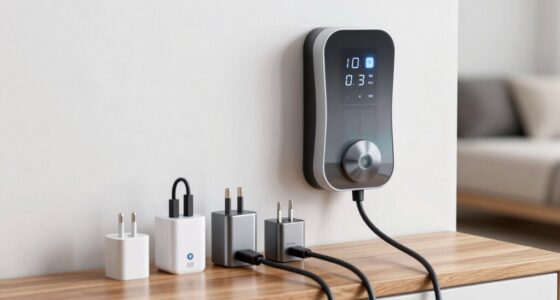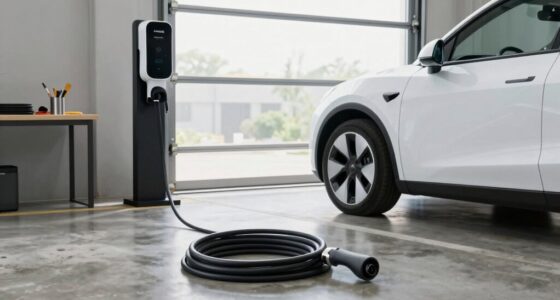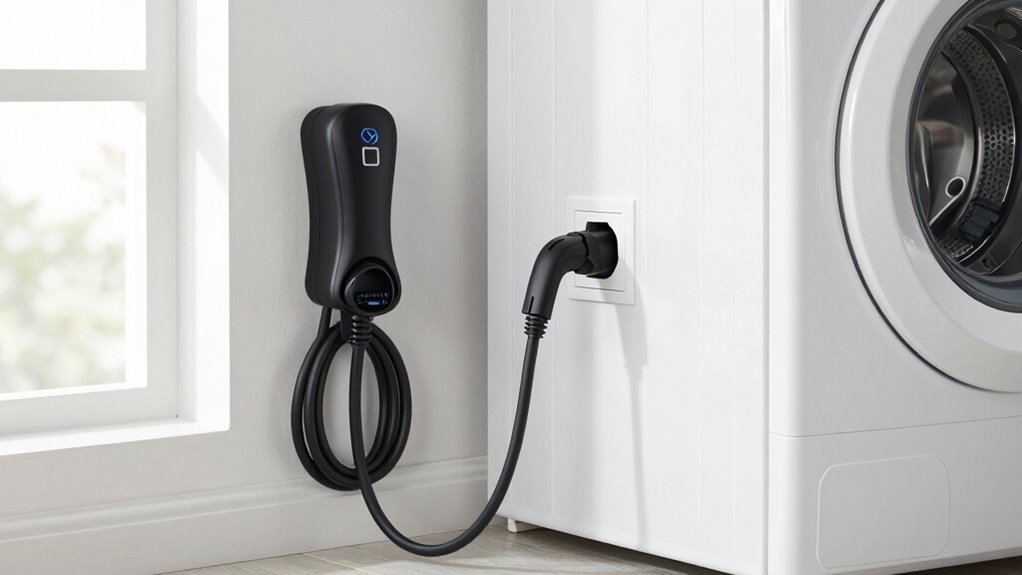

Sharing a dryer outlet with an EV charger can be safe if you guarantee that your electrical system is correctly assessed and upgraded if needed. Both devices require specific voltage, amperage, and proper circuit breaker sizing to prevent overloads or hazards. It’s important to follow electrical standards and consult a licensed electrician to evaluate your wiring and breaker capacity. If you want to know the key considerations and safety tips, keep exploring further.
Key Takeaways
- Ensure the outlet, voltage, and amperage ratings match both the dryer and EV charger specifications.
- Consult a licensed electrician to verify proper circuit breaker sizing and wiring capacity.
- Overloading the circuit risks tripping breakers, electrical damage, or fire hazards.
- Follow electrical codes and safety standards to prevent hazards and ensure compliance.
- Upgrading wiring or breakers may be necessary for safe, shared use of the outlet.
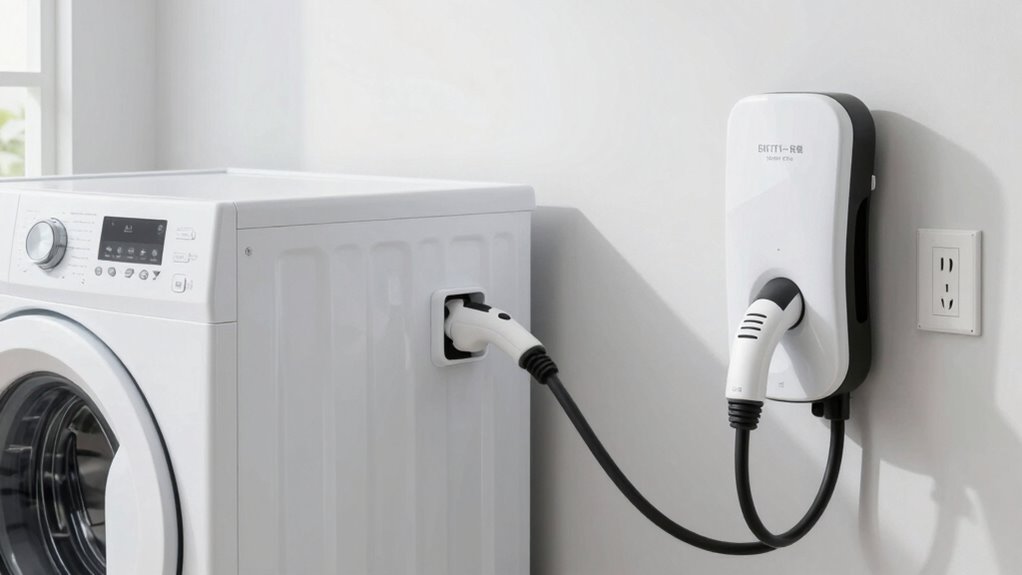
Ever wondered if you can safely share a dryer outlet with an electric vehicle (EV) charger? The short answer is that it depends on several critical factors, primarily voltage compatibility and circuit breaker sizing. Before you consider plugging in both devices to the same outlet or circuit, it’s essential to understand how these elements influence safety and functionality.
First, voltage compatibility is key. Your dryer outlet is typically designed for a specific voltage and amperage, often 240 volts with a certain current rating. An EV charger, especially Level 2 chargers, generally requires a similar voltage but may demand a different current load. If the EV charger’s voltage and amperage specifications don’t match the circuit’s capacity, you risk overloading the outlet or creating a hazardous situation. Always check the manufacturer’s instructions for your EV charger and compare them with your existing outlet’s specifications. If they align, sharing might be feasible, but if they differ, you could cause damage to your electrical system or reduce safety margins.
Next, circuit breaker sizing plays a crucial role. The circuit breaker protects your wiring from overheating by tripping when current exceeds safe limits. If you’re considering sharing a dryer outlet, the circuit breaker must be adequately rated to handle the combined load of both the dryer and the EV charger. This means calculating the total current draw of both devices and ensuring the breaker can handle that load without tripping unnecessarily or risking overheating. An undersized breaker can lead to frequent trips and potential electrical fires, while an oversized breaker might not trip in time during a fault, also risking safety. Ensuring proper circuit capacity is essential for safe operation. Additionally, understanding electrical safety standards can help prevent accidents and ensure compliance. Proper electrical codes should always be followed to guarantee safety and legality. It’s also important to consider proper wiring practices to prevent potential hazards. Consulting with a licensed electrician can help determine if your existing wiring and breaker are suitable for both devices, or if any upgrades are necessary to ensure safety and adherence to electrical standards.

Leviton 50 Amp EV Charging Receptacle/Outlet, Heavy Duty, 1450R, Black
- Designed for EV charging: Suitable for plug-in EV chargers
- Durable for frequent use: Withstands extended charge times and insertions
- Homeowner-friendly: Ideal for plug-in charging units over hardwired
As an affiliate, we earn on qualifying purchases.
As an affiliate, we earn on qualifying purchases.
Frequently Asked Questions
What Are the Code Requirements for Sharing a Dryer Outlet With an EV Charger?
Sharing a dryer outlet with an EV charger isn’t recommended because appliance compatibility and power capacity are critical. You need to verify the outlet’s circuit can handle both devices safely, which usually means upgrading to a dedicated circuit. Local electrical codes require proper wiring, circuit breakers, and possibly a professional inspection. Don’t attempt to share an outlet without confirming these requirements, as overloading can cause hazards or damage.
How Do I Determine if My Existing Outlet Can Handle Both Devices?
Your outlet’s capacity isn’t just a number; it’s the gatekeeper to safety and appliance harmony. To determine if your existing outlet can handle both devices, check the amperage rating—could it truly support the combined power draw of a dryer and EV charger? Review your appliance compatibility and compare it to the outlet’s capacity. If unsure, consult a licensed electrician to avoid risking overloads or electrical disasters.
What Safety Measures Should Be in Place When Sharing an Outlet?
You should guarantee appliance compatibility and install a dedicated circuit if needed, to safely share an outlet. Use a high-quality power surge protector to guard against voltage spikes that could damage both devices. Regularly inspect the outlet and wiring for wear or damage, and avoid overloading it. Consulting a licensed electrician can help you implement these safety measures, ensuring your dryer and EV charger operate safely together without risks.
Can Sharing an Outlet Affect the Lifespan of My Dryer or EV Charger?
Sharing an outlet is like riding a delicate tightrope—you risk imbalance. If your dryer and EV charger aren’t compatible, it can cause power surges, damaging your appliances over time. Battery compatibility issues can lead to increased wear, shortening their lifespan. Properly managing load and ensuring your circuit can handle both devices helps prevent damage, so you can enjoy your appliances without worry, keeping your home running smoothly for years.
Is There a Risk of Electrical Fires When Sharing a Dryer Outlet?
Sharing a dryer outlet with an EV charger can pose a risk of electrical fires if appliance compatibility and power load management aren’t properly addressed. You need to guarantee the outlet and circuit can handle the combined electrical load safely. Overloading can cause overheating and sparks. Always consult a qualified electrician to assess your setup, upgrade wiring if needed, and install proper circuit protection to minimize fire risks and keep your home safe.
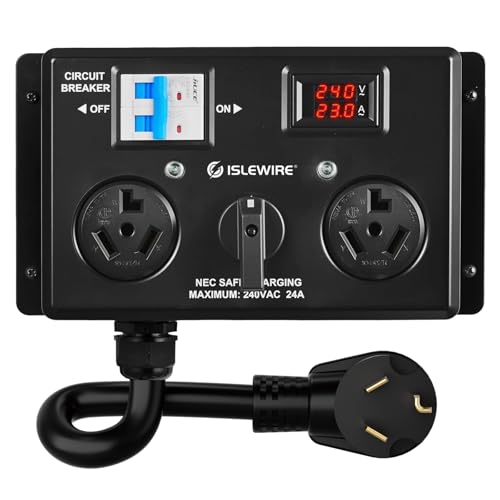
islewire NEMA 10-30 Dryer EV Charging Switch, 240V 24A Max Manual Splitter Switch for Dryer & EV with Circuit Breaker, Real-Time LCD Display, Plug and Play Physical Hand-Operated Selector, ETL Listed
- Maximum Charging Current: 24A limit for safety and compliance
- Manual Control: Secure, error-free power routing
- Plug-and-Play Setup: Easy installation without rewiring
As an affiliate, we earn on qualifying purchases.
As an affiliate, we earn on qualifying purchases.
Conclusion
Sharing a dryer outlet with an EV charger might seem like a practical solution, but it’s a risky gamble that can lead to electrical fires or damage. Think of your home’s wiring as a delicate balance—overload it, and chaos ensues. To keep your home safe and your devices running smoothly, always consult a professional electrician before making any modifications. After all, isn’t your safety worth more than a quick fix?
Leviton 50 Amp EV Charging Receptacle/Outlet, Heavy Duty, 1450R, Black
- Designed for EV charging: Suitable for plug-in EV chargers
- Durable for frequent use: Withstands extended charge times and insertions
- Homeowner-friendly: Ideal for plug-in charging units over hardwired
As an affiliate, we earn on qualifying purchases.
As an affiliate, we earn on qualifying purchases.

Smart Dryer Splitter for EV and Dryer, 240V Auto Power Switch for Dryer Outlet, 3-Color LED Ring, 3.4" LCD Display, No Rewiring Needed, NEMA 14-30 Plug, NEMA 14-30 & NEMA 14-50 Outlets (24 Amp)
- Easy EV and Dryer Sharing: No rewiring needed for 240V outlet
- Auto Power Switching: Seamless transfer between dryer and EV
- Multiple Outlet Compatibility: Supports NEMA 14-30 and NEMA 14-50 outlets
As an affiliate, we earn on qualifying purchases.
As an affiliate, we earn on qualifying purchases.