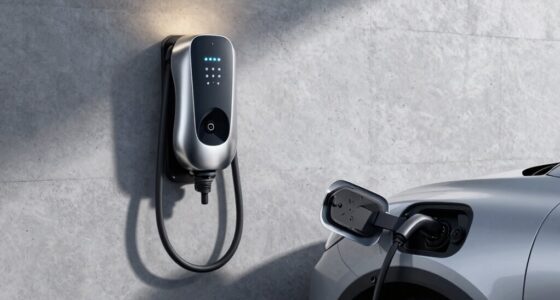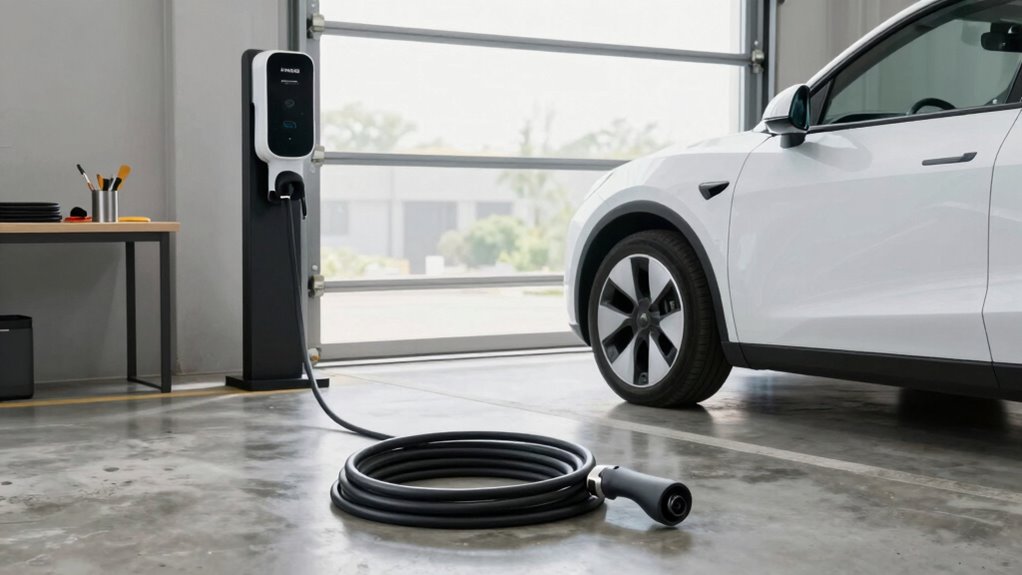

To avoid overbuying your first EV charging setup, match the charger’s capacity to your vehicle’s current needs and how you plan to use it. For daily drivers, a basic Level 1 charger may suffice, saving you money. Consider future upgrades, but don’t overshoot your requirements, as higher-capacity chargers can add unnecessary costs. Balancing cost and functionality is key. Keep these tips in mind, and you’ll find the right setup without overspending—more details ahead can help you make the best choice.

Get backup power and energy gear delivered free with Prime
- Fast, free delivery on millions of items
- Prime Video, Amazon Music and more included
- Member-only deals all year
Key Takeaways
- Match charger capacity to your EV’s battery size and daily driving needs to prevent overspending.
- Verify your vehicle’s support for rapid charging before investing in high-capacity chargers.
- Consider current and future vehicle plans to choose a charger that allows for upgrades without excess.
- Avoid buying more power than necessary; prioritize functionality and cost-efficiency.
- Account for installation and upfront costs to ensure the total setup remains within your budget.
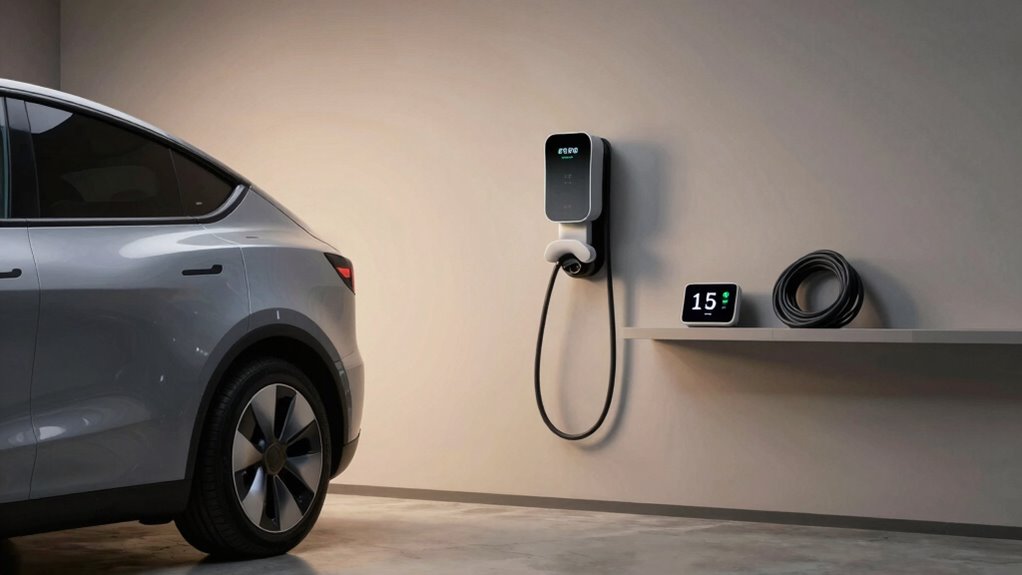
Getting your first electric vehicle (EV) charger can be exciting, but it’s easy to overspend or buy more than you need. To make the smartest choice, you need to understand your vehicle’s requirements and how different chargers match those needs. The key factors to evaluate are your EV’s battery capacity and the charging speed you want. Battery capacity determines how much energy your vehicle can store, influencing how often you need to charge and the duration of charging sessions. Charging speed, on the other hand, impacts how quickly your vehicle can regain its range, which is especially important if you rely on your EV for daily commutes or long trips.
First, assess your EV’s battery capacity. A larger battery means longer driving range but also potentially longer charging times if you pick a slower charger. For many daily drivers, a basic Level 1 charger, which uses standard household outlets, might suffice if you’re willing to charge overnight. However, if you need quicker top-ups, especially for larger batteries, you’ll want to weigh Level 2 chargers that offer faster charging speeds. Buying a charger with a higher capacity than you need can lead to unnecessary expenses, both upfront and in installation costs.
Next, consider your typical driving habits and how they influence your choice of charging speed. If you mostly commute short distances and can plug in your EV for several hours overnight, a charger with moderate charging speed might be enough. But if you often need rapid charging to make quick trips or avoid long waits, investing in a fast charger could save you time. Keep in mind, though, that not all EVs support rapid charging—check your vehicle’s specifications to match the charger’s charging speed accordingly. Overbuying a fast charger for a vehicle that can’t utilize its full capacity is a waste of money.
Finally, think about your future needs. If you plan to upgrade your vehicle or expand your household’s EV fleet, selecting a charger with a slightly higher capacity can be a smart move. But don’t go overboard; buying a charger with capabilities far beyond your current or near-future needs will only add to your costs without significant benefits. The goal is to find a balance—an EV charging setup that meets your current requirements without overspending on features you won’t use immediately. Being aware of emerging trends in digital publishing can help you stay informed about new technology options and innovations in EV charging. By understanding your vehicle’s battery capacity and your charging speed needs, you can avoid overbuying and make a smarter, more economical decision.
As an affiliate, we earn on qualifying purchases.
Frequently Asked Questions
Can I Upgrade My EV Charger Later if Needed?
Yes, you can upgrade your EV charger later if needed. Most chargers are designed with compatibility and flexibility in mind, allowing for future upgrade options. Before upgrading, check your current charger’s compatibility with your vehicle and home electrical system. Research available models and consult a professional to guarantee the new charger supports your needs. Upgrading helps you take advantage of faster charging speeds or additional features as your EV and requirements evolve.
What’s the Average Cost of a Basic EV Charging Station?
Imagine your EV charging station as the heartbeat of your electric journey. The average cost of a basic EV charging station ranges from $300 to $700, depending on features like charging speed. When doing a cost comparison, consider that faster chargers often cost more upfront but save you time. You can upgrade later if needed, so start with a setup that matches your current needs and budget.
Do I Need a Permit to Install an EV Charger?
You generally need a permit to install an EV charger, as it guarantees compliance with local building codes and safety standards. Permit requirements vary by location, so check your local regulations before starting installation. Follow specific installation guidelines provided by your utility or electric code authorities. Securing a permit helps prevent potential fines or safety issues and ensures your setup is legally compliant and safe for everyday use.
How Long Does It Take to Install a Home Charger?
Installing a home charger typically takes a few hours to a full day, depending on your home’s electrical setup and the charger’s charging speed. The installation process involves wiring, mounting, and testing the unit to guarantee safety and functionality. If your electrical system needs upgrades, it might take longer. To speed things up, work with a qualified electrician who can efficiently handle the installation process while ensuring your charger performs at its best.
Are There Portable EV Chargers Suitable for Travel?
Yes, there are portable EV chargers designed for travel compatibility, letting you charge your vehicle on the go, at campgrounds, or during road trips. These chargers are compact, lightweight, and easy to carry, making them perfect companions for adventures. Like a reliable friend, they adapt to your journey, providing power whenever and wherever you need it, ensuring your EV stays ready, no matter where the road takes you.
As an affiliate, we earn on qualifying purchases.
Conclusion
By budgeting wisely and researching thoroughly, you prevent pricey pitfalls and purchase powerfully. Prioritize practicality over price, and plan for future needs to avoid unnecessary overbuying. With cautious consideration and clever choices, you’ll confidently craft a charging setup that suits your style and system, saving both money and headaches. Stay savvy, stay strategic, and steer your EV journey smoothly—success begins with smart, simple steps today!
As an affiliate, we earn on qualifying purchases.
As an affiliate, we earn on qualifying purchases.
Fall Picks
fall essentials
As an affiliate, we earn on qualifying purchases.