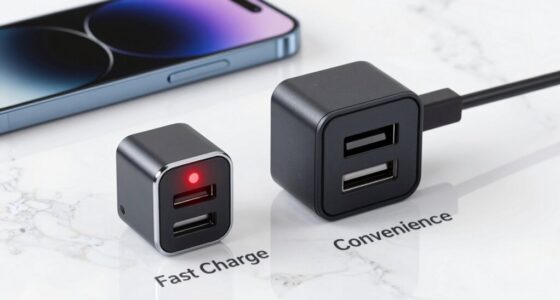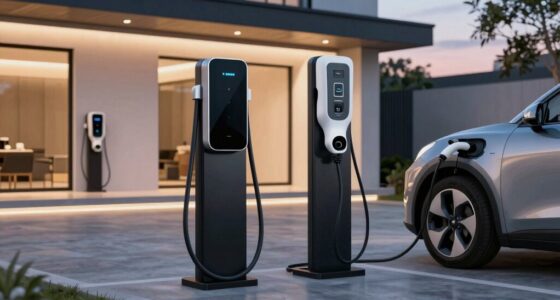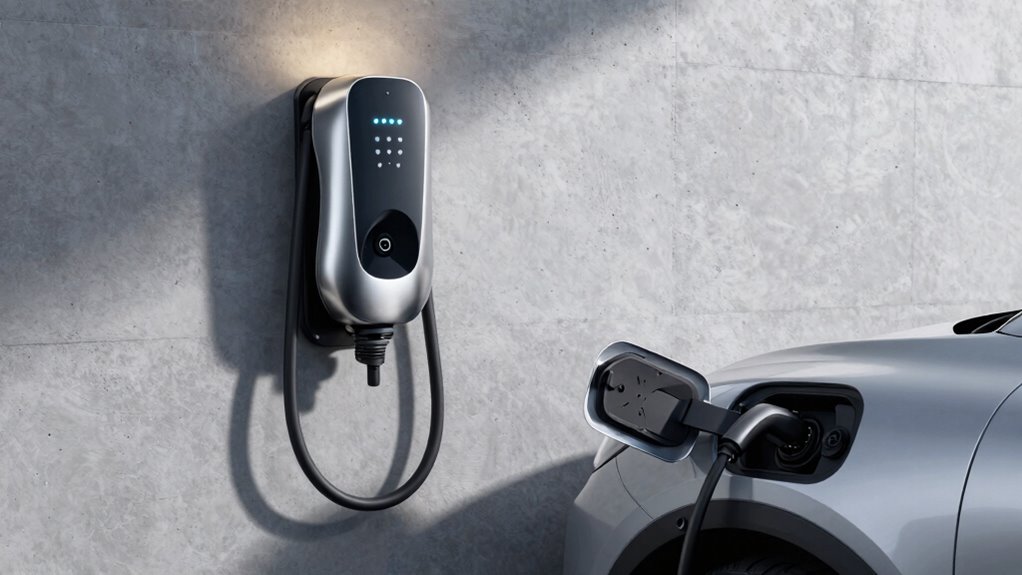

Before choosing a hardwired EV charger, you need to check your vehicle’s charging needs and compatibility, including port type and charging speed. Assess your home’s electrical system to see if upgrades are needed, and always hire licensed professionals for proper installation. Safety standards and correct wiring are essential to prevent hazards. Understanding these factors helps you select a charger that fits your vehicle and home. Keep exploring to make an informed, safe choice that powers up effectively.

Get backup power and energy gear delivered free with Prime
- Fast, free delivery on millions of items
- Prime Video, Amazon Music and more included
- Member-only deals all year
Key Takeaways
- Verify vehicle compatibility with the charger’s standards (Type 1 or Type 2) and charging capacity.
- Assess your home’s electrical system capacity and upgrade if necessary with a licensed electrician.
- Ensure proper grounding, secure mounting, and adherence to local electrical codes during installation.
- Match the charger’s amperage and voltage output with your vehicle’s charging needs.
- Choose a reputable installer to ensure safety, compliance, and optimal performance.
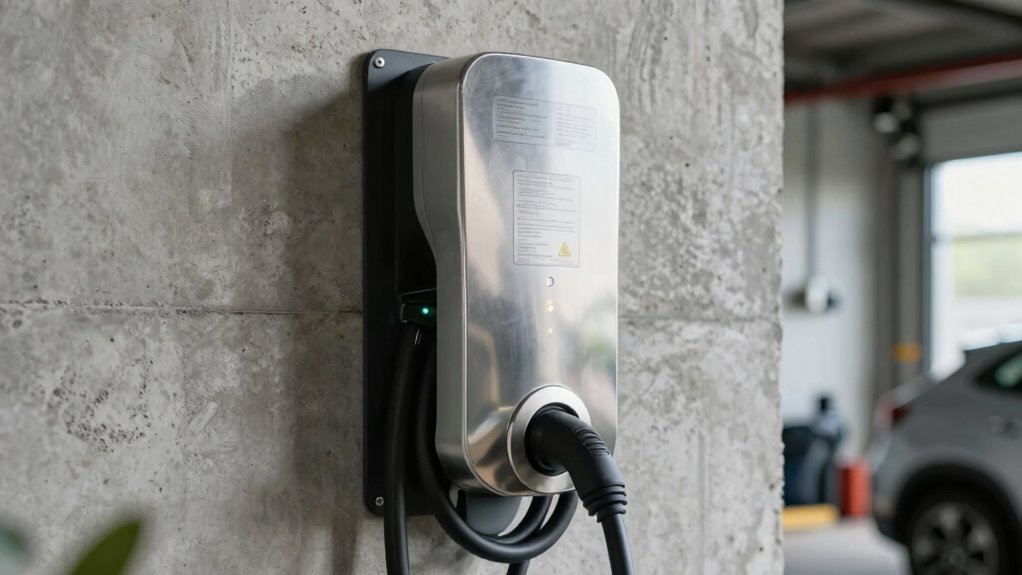
When selecting a hardwired EV charger, it’s essential to take into account your vehicle’s charging needs and your home’s electrical capacity. Your car’s charging speed, battery size, and daily usage patterns influence the level of power you should aim for. For example, if you own a larger EV or plan to charge frequently, investing in a higher amperage charger will reduce your charging time. Equally important is understanding your home’s electrical system. You need to verify if your current wiring can support the charger’s power requirements or if upgrades are necessary. Consulting a licensed electrician guarantees you’re aware of your electrical capacity and helps prevent overloads or safety hazards. Additionally, considering projector technology can help you choose a charger that optimizes energy efficiency and performance. Ensuring your home’s electrical system adheres to electrical safety standards is crucial for a safe and reliable installation. Proper installation is fundamental when choosing a hardwired EV charger. Since these chargers require direct wiring into your electrical system, proper installation is essential to avoid potential fire risks, electrical shorts, or damage to your home’s wiring. It’s advisable to hire a qualified professional who adheres to local electrical codes and standards. Proper grounding and secure mounting are non-negotiable to promote safety and longevity. Regularly consulting industry regulatory guidelines can help you stay updated on safety requirements and best practices. Being aware of technical specifications can also assist in ensuring compatibility and optimal performance of your charger. For example, understanding the importance of electrical standards can prevent issues related to incompatibility or non-compliance. Remember, an improper installation could lead to costly repairs or dangerous situations down the line. Always confirm that the installation process includes thorough inspections and that all components meet safety regulations. Compatibility considerations are equally important in your decision-making process. Not all chargers are compatible with every vehicle, so you need to check your car’s charging port and power needs against the specifications of the charger. Some units are compatible with specific EV models or charging standards, such as Type 1 or Type 2 connectors. Additionally, consider the amperage and voltage output to match your vehicle’s charging capabilities. Compatibility also extends to your home’s electrical panel; ensure your system can support the charger’s load without causing circuit breaker trips or requiring significant electrical upgrades. Reading product specifications and consulting with professionals can save you from purchasing a unit that doesn’t work smoothly with your vehicle or home setup.
As an affiliate, we earn on qualifying purchases.
Frequently Asked Questions
What Is the Typical Installation Time for a Hardwired EV Charger?
The installation process for a hardwired EV charger typically takes about 4 to 8 hours. Your electrician will handle wiring requirements, such as installing a dedicated circuit and ensuring proper grounding. Factors like your home’s electrical setup and charger type can influence the time. You should plan for some flexibility, as additional work might be needed if existing wiring isn’t compatible or if upgrades are necessary.
How Does a Hardwired Charger Impact Home Insurance Policies?
A hardwired EV charger can impact your home insurance policies mainly through insurance implications and policy requirements. You might face higher premiums or need to disclose the installation, as some insurers consider the electrical upgrade a risk factor. Make certain you check with your insurer beforehand, as policies often require professional installation and adherence to safety standards. Proper documentation can help prevent claim issues if damages or accidents occur related to the charger.
Can I Upgrade to a Faster Charger Later?
Sure, you can upgrade to a faster charger later—if your home’s wiring and power supply can handle the increased Charging speed and Power compatibility. But don’t assume your current setup is future-proof; it might be a charmingly outdated relic. Upgrading often involves costly electrical work and potential disruptions. So, while an upgrade’s possible, it’s best to plan for higher Charging speed now rather than regret it later.
What Is the Lifespan of a Hardwired EV Charger?
A hardwired EV charger typically lasts about 10 to 20 years, depending on charger durability and wiring maintenance. You should regularly inspect the wiring for signs of wear or damage and keep the unit clean to extend its lifespan. Proper installation and routine upkeep help guarantee your charger stays reliable for years. Over time, upgrades may be necessary, but with good maintenance, your hardwired charger can serve you well for a decade or more.
Are There Any Rebates or Tax Incentives Available?
Think of government programs as a treasure map guiding you to savings. Yes, there are rebates and tax incentives available for hardwired EV chargers. These incentives can considerably boost your energy savings by lowering installation costs. Check with local and federal agencies, as programs vary by region. Taking advantage of these incentives helps you invest smarter, making your switch to electric vehicles more affordable and eco-friendly.
As an affiliate, we earn on qualifying purchases.
Conclusion
Choosing a hardwired EV charger is like planting a sturdy tree—think carefully about your needs and future growth. With the right setup, you’ll enjoy a reliable, efficient charge that grows with you, not against you. So, take your time to choose wisely, invest in quality, and you’ll harvest the benefits of a seamless charging experience for years to come. Remember, the right charger is the solid foundation for your electric journey ahead.
As an affiliate, we earn on qualifying purchases.
home electrical system upgrade for EV
As an affiliate, we earn on qualifying purchases.
As an affiliate, we earn on qualifying purchases.
Halloween Picks
halloween
As an affiliate, we earn on qualifying purchases.