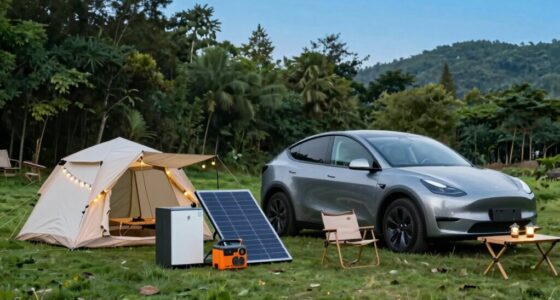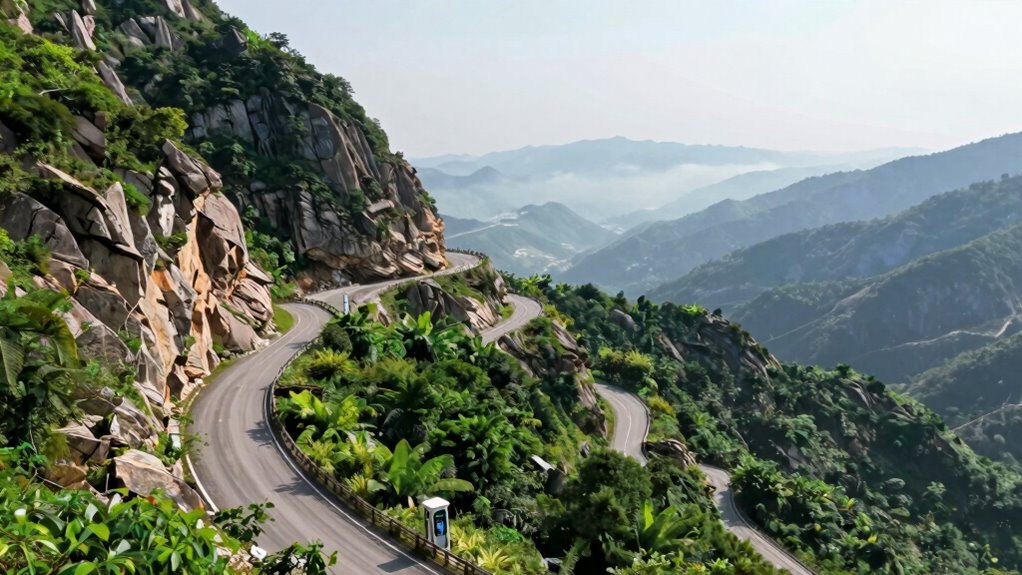
When driving through mountainous terrain, elevation gain can catch first-time EV road trippers off guard by rapidly draining your battery. Climbing uphill increases energy use due to gravity, weather, and terrain, causing unexpected range drops. Remote or high-altitude areas often lack nearby charging stations, making it tricky to plan ahead. Staying aware of these factors helps you avoid surprises, and if you keep exploring, you’ll discover useful strategies to smooth out your journey.

Get backup power and energy gear delivered free — and shop member deals
- Fast, free delivery on millions of items
- Access to Prime Big Deal Days deals on October 6–7
- Prime Video, Amazon Music and more included
Key Takeaways
- Higher elevations increase energy consumption, causing unexpected range drops during mountain or hill climbs.
- Scenic routes often lack nearby charging stations, risking battery depletion in remote, elevated areas.
- Cooler temperatures at high altitudes reduce battery efficiency, leading to unanticipated range reductions.
- Sudden elevation changes can significantly impact energy use, catching first-time EV travelers off guard.
- Insufficient route planning and lack of real-time terrain data may result in range anxiety in mountainous regions.
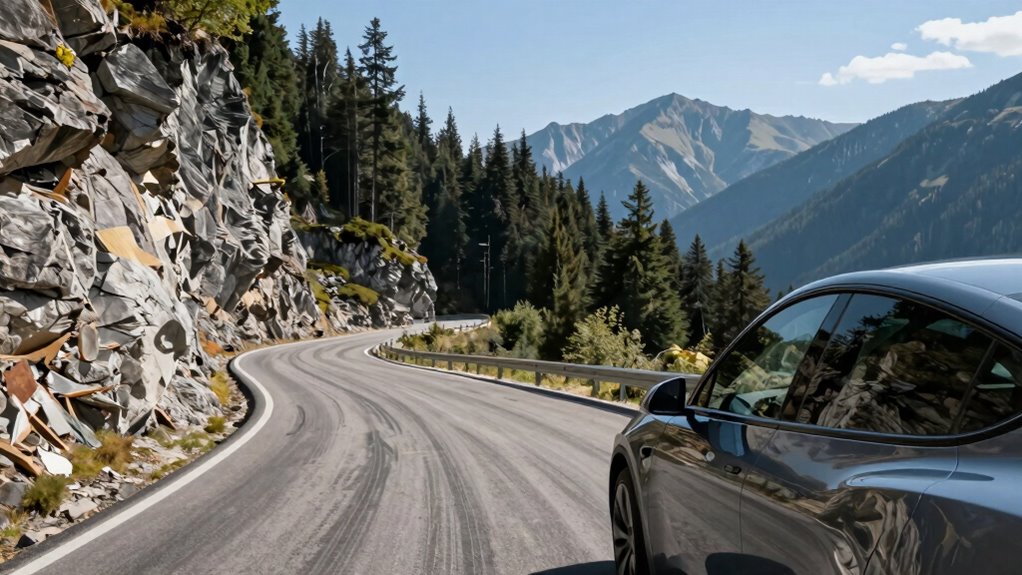
For many first-time electric vehicle (EV) road trippers, the biggest surprise isn’t the scenic views or the open road—it’s how elevation gain can unexpectedly impact your trip. You might have planned your route around beautiful vistas and popular scenic viewpoints, but what often catches travelers off guard is how climbing higher in elevation affects your EV’s range. As you ascend mountains or winding hills, your vehicle’s battery consumes more energy to fight gravity and maintain speed. This means you’ll need to be more strategic about charging infrastructure along your route.
Many scenic routes don’t have charging stations right at the viewpoints, so you need to plan your stops carefully. When you’re heading toward those breathtaking overlooks or mountain summits, it’s tempting to focus solely on the view, but it’s equally important to monitor your battery level and locate nearby charging points beforehand. Elevation gain can cause your range to drop faster than expected, especially if you’re driving through areas with limited charging infrastructure. This might mean detouring for a charging stop or adjusting your pace to conserve energy, which can alter your entire trip schedule.
On the other hand, some scenic viewpoints are located in remote or elevated areas with sparse charging options. If you’re not prepared, you could find yourself in a tricky spot where you’re low on range and no nearby charging stations are available. That’s why understanding the terrain and researching charging infrastructure beforehand is crucial. Modern EV maps and apps can help you identify charging stations along your route, but always double-check their availability, especially in mountainous regions. It’s a good idea to carry a portable charger or plan your stops around existing charging hubs at strategic intervals, ensuring you don’t get stranded in a remote high-altitude area. Additionally, being aware of the terrain profile can help you better anticipate how much energy you’ll need for the trip. It’s also worth noting that your EV’s range can be affected by weather conditions at high elevations. Cooler temperatures and wind can further reduce battery efficiency, compounding the effects of elevation gain. To optimize your energy use, it’s helpful to understand the importance of vehicle efficiency in relation to terrain and weather. Planning for potential range fluctuations based on elevation and weather forecasts can help you avoid last-minute surprises. Being mindful of these factors and climate considerations can help you plan more effectively. So, you’ll want to keep an eye on both the elevation profile and the weather forecast. The key to a smooth trip is balancing your desire to visit scenic viewpoints with the practicalities of charging infrastructure and battery management. By planning ahead and being mindful of how elevation affects your EV, you’ll avoid surprises and enjoy the journey as much as the destination.
As an affiliate, we earn on qualifying purchases.
Frequently Asked Questions
How Does Elevation Gain Affect EV Battery Health Over Long Trips?
Elevation gain can impact your EV’s battery health during long trips by increasing strain, which may accelerate battery degradation over time. Climbing hills demands more power, reducing charging efficiency and stressing the battery further. To minimize this effect, plan your route to avoid steep inclines when possible, and take regular breaks to manage battery temperature. Proper driving habits help preserve your EV’s battery life despite elevation changes.
Can Elevation Changes Impact Charging Station Availability or Access?
Imagine your trip as a mountain climb—elevation changes can create elevation-related challenges, much like tricky switchbacks. These challenges may impact charging station accessibility, especially in remote or hilly areas, making it harder to find stations when you need them. Be prepared for elevation-related challenges by planning your route carefully, knowing where charging stations are, and considering elevation changes to guarantee smooth access along your journey.
What Are the Best Strategies for Managing Elevation Gain in Hilly Terrains?
To manage elevation gain in hilly terrains, focus on terrain adaptation by adjusting your driving style, such as easing off the accelerator on inclines. Keep an altimeter awareness to anticipate steep sections and conserve battery. Plan your route with charging stations near high-elevation areas, and slow down during climbs to reduce energy consumption. These strategies help you maintain efficiency and avoid surprises on your EV journey.
How Do Weather Conditions Interact With Elevation During Road Trips?
Weather conditions markedly interact with elevation during your road trip, affecting your drive and experience. As you ascend, cooler temperatures and possible fog or rain can impact visibility and battery efficiency. At high altitudes, you risk altitude sickness if you’re not prepared. Keep an eye out for scenic viewpoints to take breaks and enjoy the view. Adjust your driving for weather changes, and stay hydrated to stay comfortable at higher elevations.
Are There Specific EV Models Better Suited for High Elevation Routes?
Yes, some EV models are better suited for high elevation routes because they feature advanced thermal management systems that help prevent battery degradation in extreme temperatures. Look for vehicles with robust thermal regulation, as they maintain battery health and range at higher altitudes. Models with efficient cooling systems ensure your battery stays cool and performs at its best, reducing the risk of degradation during steep climbs and extended drives at high elevations.
As an affiliate, we earn on qualifying purchases.
Conclusion
Don’t let unexpected elevation gains deter you from exploring. Sure, they can catch you off guard, but think of them as part of the adventure. With a little planning and awareness, you’ll navigate rises and dips with confidence. Remember, every climb offers a chance to enjoy breathtaking views and a sense of accomplishment. Embrace the journey, knowing that each elevation change adds to the story of your first EV road trip—making it all the more memorable.
high altitude EV battery booster
As an affiliate, we earn on qualifying purchases.
As an affiliate, we earn on qualifying purchases.
As an affiliate, we earn on qualifying purchases.
Fall Picks
fall essentials
As an affiliate, we earn on qualifying purchases.