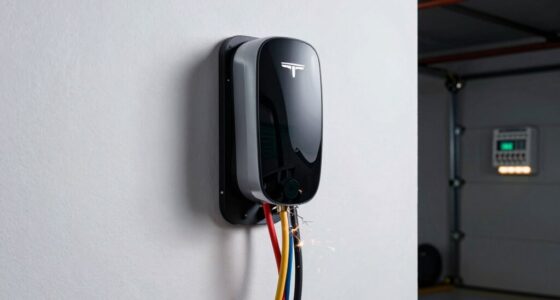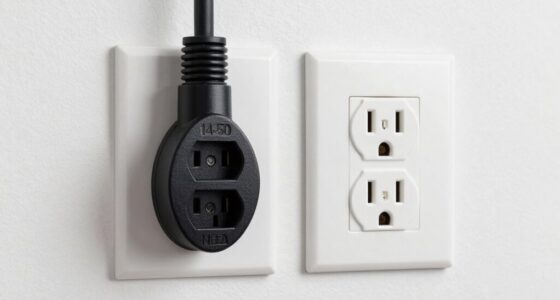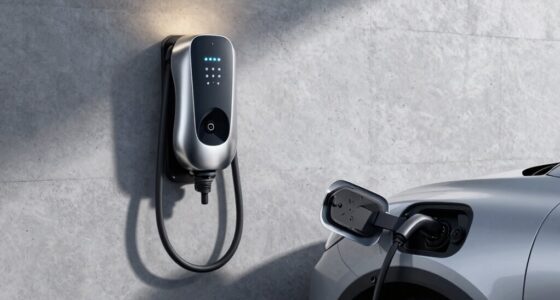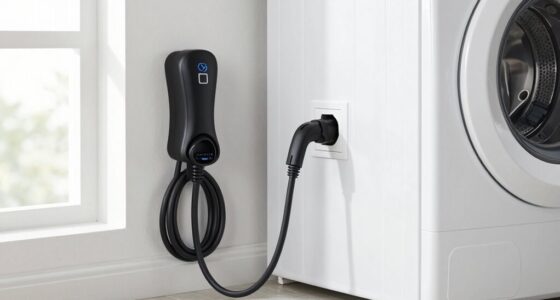
To determine which charger amperage fits your home setup, start by checking your EV’s charging specifications to see its supported current levels. Then, evaluate your home’s electrical capacity by inspecting your main breaker and existing load from appliances. Choose a charger that matches both your vehicle’s needs and your home’s system—30 or 40 amps are common for safety and efficiency, but higher amperages may need upgrades. Keep exploring to learn how to guarantee a safe, ideal charge.
Key Takeaways
- Assess your EV’s supported charging speeds and amperage requirements.
- Evaluate your home’s electrical capacity and existing load with a professional inspection.
- Match the charger’s amperage to your home’s capacity to prevent overloads.
- Ensure wiring can support the desired charger amperage, upgrading if necessary.
- Consult an electrician to confirm compatibility and safety before installation.
Choosing the right amperage for your charger is essential to guarantee safe and efficient charging, especially if you’re powering electric vehicles or large appliances. Your decision depends heavily on understanding your electric vehicle compatibility and assessing your home electrical capacity. Electric vehicle compatibility plays a significant role because different EV models require varying charging speeds and power levels. Some vehicles can handle fast chargers with higher amperage, while others are limited to slower, lower-amperage outlets. Knowing your EV’s specifications helps you determine the optimal charger amperage that maximizes charging efficiency without risking damage or safety issues.
Next, consider your home electrical capacity. Your home’s electrical system has a maximum capacity, determined by your main breaker and wiring. If you select a charger with an amperage that exceeds your available capacity, you risk overloading your system, which could cause circuit breaker trips or even damage to your wiring. To avoid this, you should evaluate your existing electrical load, including appliances and other high-power devices, to see how much capacity remains for a dedicated EV charger. A professional electrical assessment can help you understand whether your current system can support a high-amperage charger or if upgrades are necessary. Additionally, understanding power quality and how it affects your electrical system can help prevent issues related to inconsistent charging performance. Being aware of electrical wiring and its capacity is also crucial to ensure it can handle higher amperages safely.
Choosing the right amperage involves balancing your charging needs with your home’s electrical limits. For most residential settings, a 30-amp or 40-amp charger offers a good compromise, providing faster charging times for electric vehicles while fitting within typical home electrical capacities. If you own an EV that supports rapid charging, and your system can handle it, opting for a higher amperage charger—say, 50 amps or more—can significantly cut down charging time. However, if your home’s electrical capacity is limited or if you’re unsure about your system’s limits, starting with a lower amperage charger and consulting an electrician is a safer choice. It is also important to consider electrical wiring and how it impacts your ability to support higher amperages safely. Ensuring proper electrical safety measures are in place can prevent potential hazards when installing higher amperage chargers.
Being aware of home electrical systems and their configurations can help you better understand limitations and potential upgrades needed for higher amperage support. Ultimately, your goal is to find a charger that matches your electric vehicle’s compatibility and aligns with your home’s electrical capacity. This ensures safe, reliable charging without overburdening your system. Remember, investing in a professional inspection can save you headaches later, helping you select the right amperage and avoid costly upgrades or safety hazards down the line. By carefully considering these factors, you’ll make an informed decision that supports your home’s electrical health and your EV charging needs.
Frequently Asked Questions
Can I Upgrade My Charger Amperage Later?
Yes, you can upgrade your charger amperage later, but consider your battery capacity and desired charging speed first. Upgrading allows faster charging if your battery can handle it, but verify your electrical system supports the increased amperage safely. Consult a professional before making changes to avoid damaging your system. Keep in mind that an upgraded charger can improve charging speed, but only if your battery capacity and wiring accommodate the higher amperage.
Do Higher Amperage Chargers Cost More?
Think of chargers as tools in your toolbox—higher amperage chargers often come with a higher price tag. Yes, they do cost more because they can deliver more power, but you need to guarantee charger compatibility with your device’s amperage limitations. Upgrading later is possible if your setup supports it, but initially choosing a charger with the right amperage prevents potential damage and ensures safe, efficient charging.
Is It Safe to Use a Charger With Higher Amperage?
Using a charger with higher amperage can be safe if your device’s battery compatibility allows it. It typically offers faster charging speed without damaging your device, as long as the charger and device communicate properly. Always check your device’s specifications and manufacturer recommendations. If compatible, higher amperage chargers can safely deliver quicker charging, but using one that exceeds your device’s limits might pose risks.
How Does Charger Amperage Affect Energy Bills?
You’re not off the hook when it comes to charger amperage and energy bills. Higher amperage chargers can boost energy consumption, leading to increased costs if used continuously. But if you choose a charger with the right amperage for your device, you avoid wasting energy and keep costs in check. Remember, the right fit helps trim down the cost implications, making your energy expenses more manageable.
Can Multiple Chargers Share the Same Outlet?
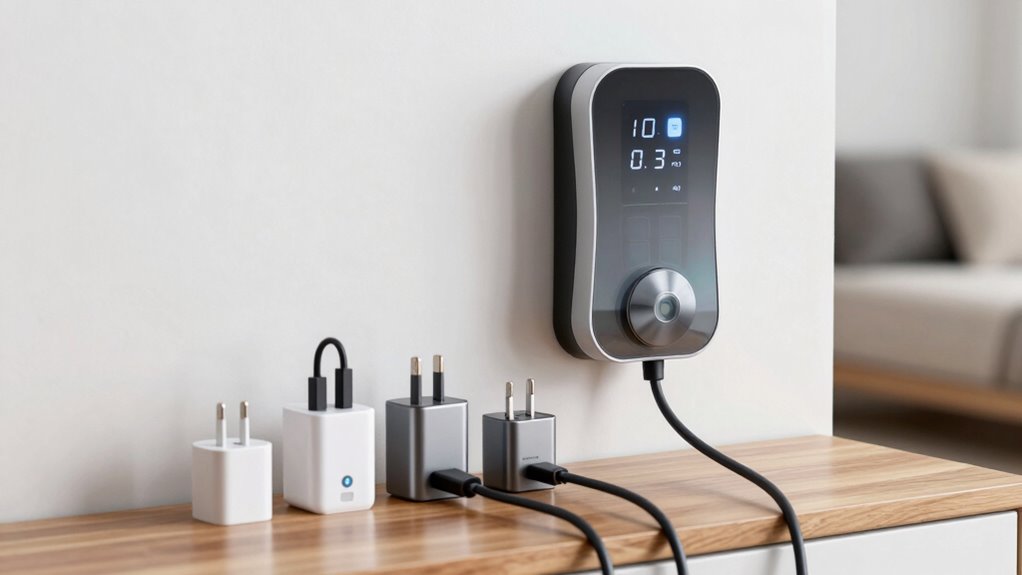
Yes, multiple chargers can share the same outlet, but you need to ensure outlet compatibility and power supply limitations. Check if your outlet can handle the combined amperage of all chargers to prevent overloads. Using a power strip with built-in safety features helps distribute power safely. Always verify the amperage ratings and ensure your circuit can support the total load, avoiding potential electrical hazards.
Conclusion
Ultimately, choosing the right charger amperage depends on your home’s needs and your device demands. By balancing your current capacity with future flexibility, you guarantee safe, swift, and satisfying charging. Remember, don’t disregard details — double-check your electrical system and device requirements. Making mindful, measured decisions means you’ll master your setup, maximize your device’s potential, and maintain a safe, sound, and seamless charging experience. Stay smart, stay safe, and stay charged!