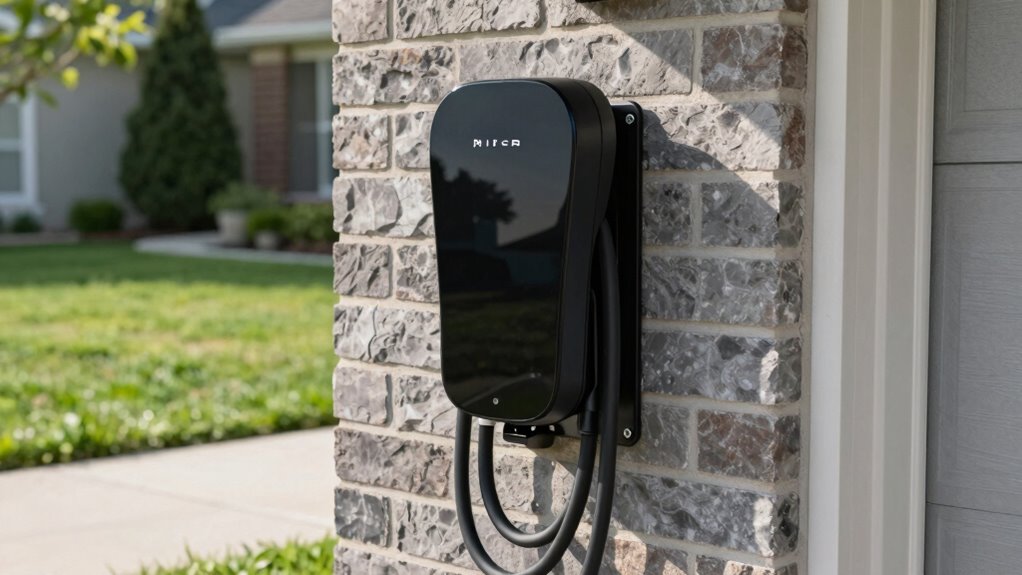
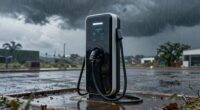
Before mounting an outdoor EV charger, make certain it’s compatible with your solar panels and can handle your energy needs. Protect it from theft and vandalism with security features like lockable enclosures and proper lighting. Choose weatherproof equipment rated for outdoor use and plan installation in a convenient, secure spot. Verify your electrical system supports outdoor wiring and follow safety standards. To discover more about securing and optimizing your outdoor charger, keep exploring the essentials.

Get backup power and energy gear delivered free with Prime
- Fast, free delivery on millions of items
- Prime Video, Amazon Music and more included
- Member-only deals all year
Key Takeaways
- Ensure the charger is weatherproof and rated for outdoor use to withstand environmental elements.
- Verify your electrical system’s capacity and proper wiring for outdoor installation.
- Implement security measures like lockable enclosures and proper lighting to prevent theft and vandalism.
- Consider solar compatibility and energy management systems to optimize renewable energy use.
- Follow local safety codes and select a strategic location balancing convenience, security, and protection.
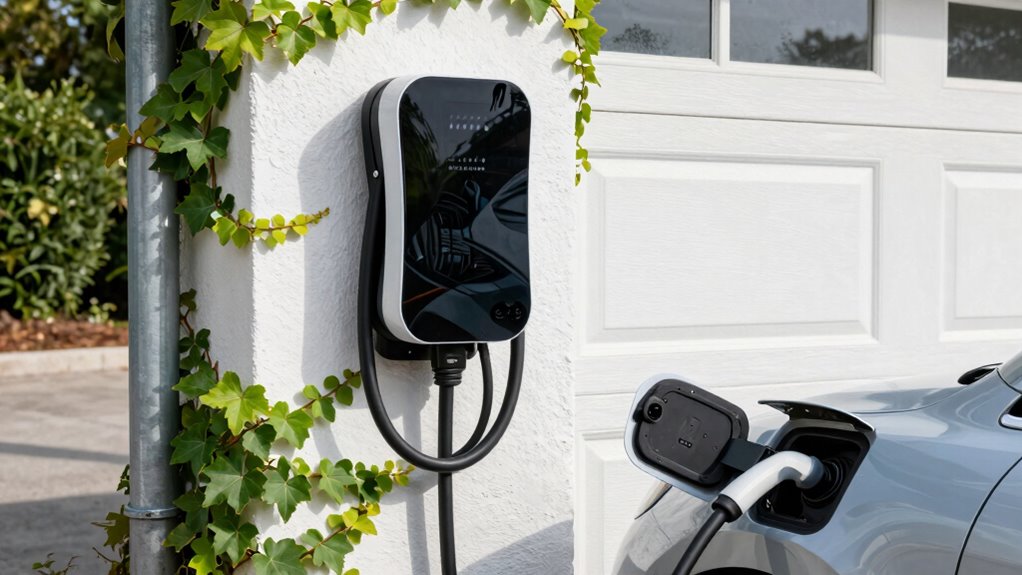
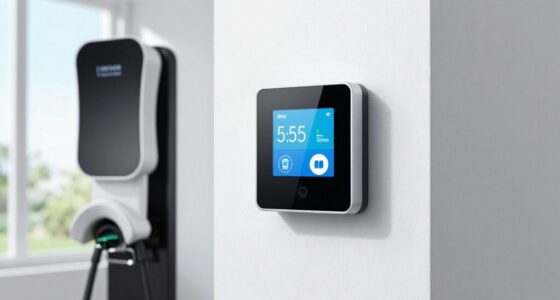
Mounting an EV charger outside your garage can be a convenient way to keep your electric vehicle ready to go, but it’s important to understand the key factors involved before installation. One of the first things to consider is solar compatibility. If you have or plan to install solar panels, you’ll want to ensure your chosen charger can work seamlessly with your solar system. Some chargers are designed to integrate with solar energy, allowing you to maximize the use of renewable power and reduce your reliance on the grid. This integration can lead to significant savings over time, especially if your solar setup is robust. However, not all chargers are compatible with solar power, so it’s essential to verify this before making a purchase. You should also think about your energy needs and the capacity of your solar system to supply enough power for both your household and charging your vehicle efficiently. Considering power management systems can help optimize energy distribution and prevent overloads. Additionally, understanding the flushing mechanisms of your existing home fixtures can provide insights into how to manage overall water and energy efficiency, which is increasingly relevant in modern home upgrades.
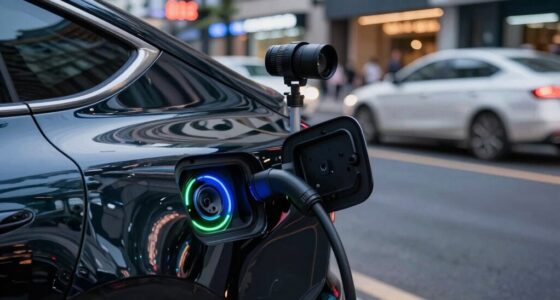
Security concerns are another critical aspect to address. When you place a charger outside, it becomes vulnerable to theft, vandalism, or accidental damage. To protect your investment, you might consider installing a lockable enclosure or a tamper-proof mounting system. Additionally, choosing a charger with built-in security features, such as surveillance camera compatibility or alarm systems, can provide extra peace of mind. Proper lighting around the installation site can also deter potential thieves and vandals. Keep in mind that outdoor installations may require weatherproof equipment to withstand the elements, preventing damage from rain, snow, or extreme temperatures. Securing the electrical connections and ensuring proper grounding is essential not just for safety but also to prevent tampering. Furthermore, understanding emerging trends in digital publishing can help you stay informed about advances in electric vehicle infrastructure and security technology, ensuring your installation remains up-to-date. Staying informed about security technology is crucial for protecting your outdoor charger and maintaining reliable access.
As an affiliate, we earn on qualifying purchases.
Frequently Asked Questions
How Weather-Resistant Are Outdoor EV Chargers?
Outdoor EV chargers are designed with weather protection and durability standards that keep them functioning in various conditions. They’re built to withstand rain, snow, and extreme temperatures, ensuring reliable charging regardless of the weather. Make sure to check the charger’s IP rating and durability standards to confirm it offers sufficient weather resistance. Proper installation and sealing also help protect the unit, extending its lifespan and maintaining ideal performance.
What Security Measures Protect Outdoor Chargers From Theft?
To protect your outdoor EV charger from theft, you should install theft deterrents like lockable enclosures or tamper-proof mounts. Adding security cameras around the area acts as a visual deterrent, making potential thieves think twice. You can also consider alarm systems or motion sensor lights for added security. These measures help safeguard your investment and give you peace of mind, knowing your charger is well-protected from theft.
Can Existing Electrical Systems Support Outdoor EV Chargers?
About 60% of homes may need electrical upgrades to support outdoor EV chargers. Your existing electrical wiring and power capacity determine if your system can handle the additional load. You should have a professional evaluate your electrical system to make sure it meets the charger’s requirements. Upgrades might involve increasing circuit capacity or installing dedicated circuits, which help prevent overloads and ensure safe, reliable charging outside your garage.
How Long Does It Take to Install an Outdoor Charger?
Installing an outdoor charging station typically takes about 4 to 8 hours, depending on factors like your home’s electrical system and power capacity. If your existing system supports it, installation is quicker; if upgrades are needed, it may take longer. A professional assesses your power capacity first, then mounts the charger and connects it safely. Planning for a full day guarantees proper setup and testing for reliable, outdoor use.
Are There Specific Permits Required for Outdoor EV Charger Installation?
Think of permits as the gatekeepers to your EV charging project. You’ll need to check permit requirements specific to your area, as they guarantee regulatory compliance and safety standards. Many jurisdictions require permits for outdoor EV charger installation to prevent future issues. Failing to obtain these can cause delays or fines. Always consult local building codes and authorities to smoothly navigate permit processes and keep your installation on the right side of the law.
As an affiliate, we earn on qualifying purchases.
Conclusion
Before mounting an EV charger outside your garage, consider safety, accessibility, and local regulations. Guarantee proper installation, protect it from the elements, and plan for future needs. Think about convenience, security, and maintenance. Prepare for your EV journey by making informed choices, prioritizing safety, and embracing adaptability. With the right setup, you’ll enjoy seamless charging, peace of mind, and confidence for years to come. Charge smart, stay safe, and drive forward.
As an affiliate, we earn on qualifying purchases.
outdoor EV charger security system
As an affiliate, we earn on qualifying purchases.
As an affiliate, we earn on qualifying purchases.
Halloween Picks
halloween
As an affiliate, we earn on qualifying purchases.