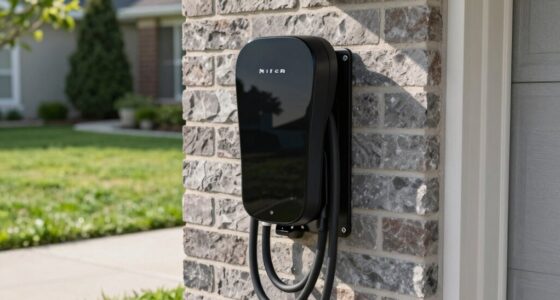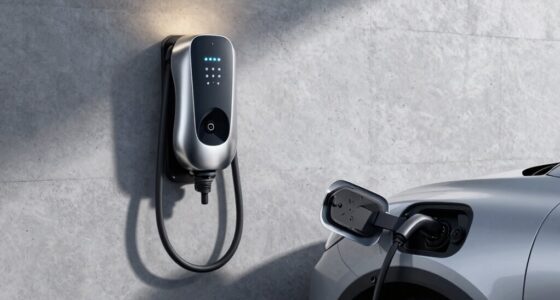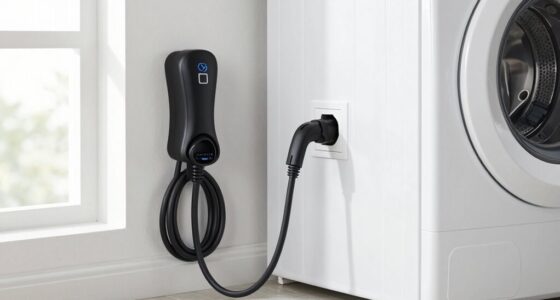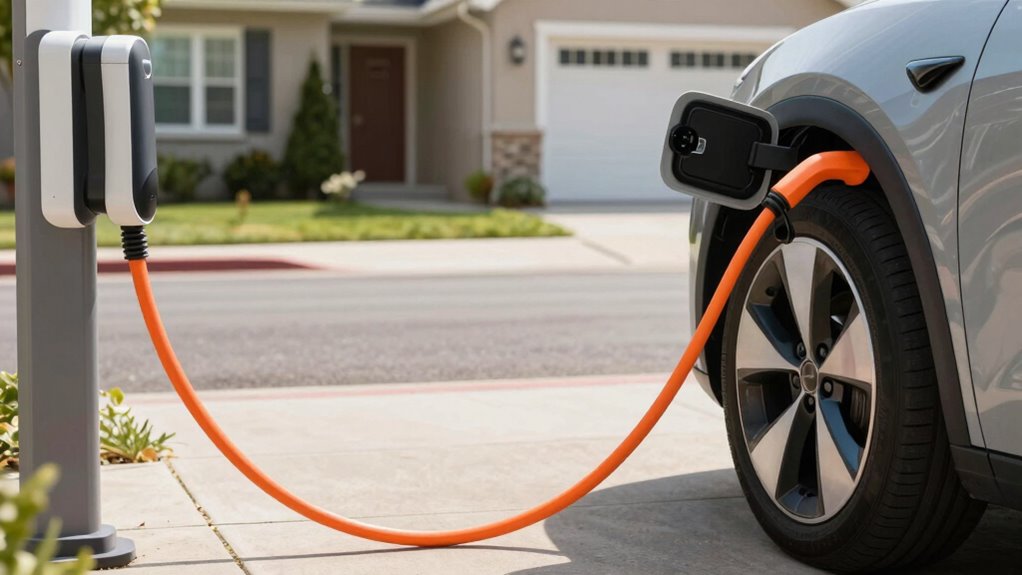

The length of your charging cable greatly influences how easy and safe it is to connect your EV at home. A cable that’s too short makes reaching the charging port difficult, especially if your station isn’t well-placed, while an overly long cable can cause clutter and tripping hazards. Adjustable or retractable cables give you flexibility, and proper station placement minimizes wear and tear. Keep exploring to discover how smart setup choices can boost your home charging convenience even more.
Key Takeaways
- Proper cable length ensures easy connection without excessive slack or tension, improving usability and safety.
- Too short cables make parking and charging difficult, especially with suboptimal station placement.
- Excessively long cables create clutter, increase tripping risks, and reduce overall convenience.
- Adjustable or retractable cables offer flexibility, adapting to different vehicle positions and home layouts.
- Strategic station placement minimizes cable length needs, enhancing durability and simplifying daily charging routines.

When it comes to home charging for electric vehicles, cable length plays a vital role in your overall convenience. The right cable length can make charging simpler and more efficient, while a poorly chosen length can cause frustration. If your cable is too short, you might find yourself struggling to connect comfortably, especially if your charging station isn’t positioned optimally. Conversely, a cable that’s too long can create clutter, posing tripping hazards or making it difficult to keep your space tidy. Balancing cable length with your home’s layout is key to ensuring a smooth charging experience. Additionally, considering eco-friendly charging accessories can further enhance your setup by reducing waste and promoting sustainable practices.
Wireless options are gaining popularity, offering an alternative to traditional cable-based charging. These systems eliminate the need for long cables altogether, providing a more flexible and clutter-free solution. With wireless charging stations, you just park your vehicle in the right spot, and the charging process begins seamlessly. This can be especially advantageous if your parking space is limited or if you want to avoid the hassle of managing cables daily. However, wireless charging still requires a base station installed at the appropriate location, which brings us to the importance of charging station placement.
Wireless charging offers a clutter-free, flexible solution but requires careful station placement for optimal convenience.
Proper placement of your charging station directly impacts cable length effectiveness. Ideally, you want your station positioned close enough to your parking spot so that even a short cable can reach comfortably. If your station is placed too far away, you’ll need a longer cable, which can be unwieldy and increase wear and tear over time. Additionally, choosing an optimal location can help minimize the cable length needed and improve overall accessibility. On the other hand, if you position the station too close to walls or obstructions, you may limit your vehicle’s parking options or make it difficult to park correctly. Thoughtful placement ensures that your cable length is sufficient without excess slack or tension. Being mindful of home layout can help optimize both cable length and station placement for maximum convenience.
In many cases, adjustable or retractable cables can help bridge the gap between ideal placement and practical needs. These options let you extend or shorten the cable as needed, giving you flexibility without sacrificing convenience. When planning your setup, consider not just current needs but also potential changes, like adding another vehicle or rearranging your driveway. Proper cable length and charging station placement work hand-in-hand to create a charging setup that’s both practical and adaptable, reducing frustration and making your EV experience as effortless as possible.
Frequently Asked Questions
How Does Cable Length Affect Charging Speed?
Cable length doesn’t directly affect charging speed, but it can impact your charging efficiency and flexibility. Longer cables might cause minor power loss, slightly reducing efficiency, though usually not noticeable. However, a longer cable offers better flexibility, letting you charge comfortably without stretching or repositioning your vehicle. Shorter cables are more efficient but less flexible, so choose a length that balances your convenience with ideal charging performance.
Are Longer Cables More Prone to Damage?
Sure, longer cables seem like a great idea—until you realize they’re more prone to damage. Irony? They’re actually more vulnerable to wear and tear because they stretch and tangle more easily. Cable durability takes a hit, making them less reliable over time. So, while you might think longer is better, it often leads to more frequent repairs or replacements, proving that sometimes, shorter really is smarter.
What’s the Ideal Cable Length for Different Home Setups?
The ideal cable length depends on your home setup, but generally, a 15-20 foot cable offers flexibility without clutter. This length helps with cable organization, keeping your space tidy and safe, while also considering aesthetic considerations so it doesn’t look messy. If you have a larger garage or driveway, go for longer cables, but make certain they remain manageable and don’t compromise safety or aesthetics.
Can Extending a Cable Impact Safety During Charging?
Extending a cable can increase safety hazards, as longer cords are more prone to damage, wear, and tripping accidents—statistics show that improper cable management causes 30% of electrical injuries. When you extend a cable, you’re risking exposed wiring or loose connections, leading to potential electric shocks or fires. Good cable management is essential to keep your charging setup safe, ensuring cords are secure, undamaged, and properly routed to avoid hazards.
How Do Cable Length and Portability Influence Daily Use?
Longer cables can enhance user convenience by allowing you to reach more parking spots comfortably without moving your vehicle. However, they may be less portable, making cable storage more challenging and potentially cluttered. Shorter cables are easier to store and transport, but they might limit your flexibility. Consider your daily routine to find the right balance, ensuring your cable length suits your charging needs while maintaining ease of use and storage.
Conclusion
Imagine your charging cable as the lifeline to your electric vehicle’s heartbeat. When it’s just the right length, it’s like a trusty bridge spanning your home and car, making daily charging seamless. But if it’s too short, you’re stranded in inconvenience; too long, and you’re tangled in frustration. So, choose your cable wisely—because in the dance of convenience, the right length keeps your rhythm smooth and your mornings bright.