Solar power inverters range from compact 12V units for individual appliances to 48V hybrid systems built for larger solar and battery setups. My best overall pick is the SUNGOLDPOWER 10,000W 48V Solar Hybrid Inverter with Dual MPPT, which pairs high output with two solar inputs for buyers planning a substantial system. The SUMRY 4000W Hybrid is a more approachable 24V option, while the POWLAND 12,000W Hybrid stands out for buyers who need split-phase output and WiFi monitoring. The main tradeoffs are system voltage, continuous output, solar-controller capability, and how much installation complexity you can manage. Read on for the full comparison, ranking logic, and guidance on matching an inverter to your panels, batteries, and loads.

Get backup power and energy gear delivered free with Prime
- Fast, free delivery on millions of items
- Prime Video, Amazon Music and more included
- Member-only deals all year
Key Takeaways
- System voltage separates small inverter setups from larger solar systems: the 12V models suit modest loads or vehicle use, while the 24V and 48V hybrids better match larger battery banks and solar arrays.
- Dual MPPT appears among several high-capacity hybrid options: it can help manage separate solar arrays, but buyers still need to check panel voltage and current limits against their own modules.
- Split-phase output is a specific advantage, not a general upgrade: the POWLAND and selected SUNGOLDPOWER models target installations that need both 120V and 240V loads.
- High wattage claims do not settle the choice: continuous output, surge duration, battery voltage, and load-starting needs all matter more than a peak figure alone.
- The lineup includes two distinct buying paths: standalone 12V inverters offer simpler appliance backup, while hybrid units combine solar charging and inverter functions but call for more planning and installation care.
| Vansdon 3000W Pure Sine Wave Power Inverter, 12V DC to 120V AC, 6000W Surge, LCD Display, 3 AC Outlets, USB-C, USB, and Wired Remote |  | Best for 12V Pure Sine Wave Setups | Continuous output: 3000W | Peak output: 6000W | Input voltage: 12V DC | VIEW LATEST PRICE | See Our Full Breakdown |
| SUMRY 4000W Hybrid Solar Inverter, 24V DC to 120V AC |  | Best for a 24V Entry-Level Hybrid System | Peak output: 8000W | Input voltage: 24V DC | Output voltage: 120V AC | VIEW LATEST PRICE | See Our Full Breakdown |
| SUNGOLDPOWER 10,000W 48V Solar Hybrid Inverter with Dual MPPT | 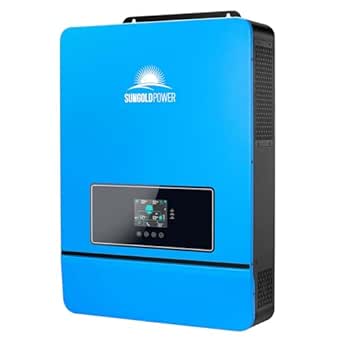 | Best for High-Capacity Split-Phase Solar | Peak output: 20,000W | Battery voltage: 48V | Output voltage: 120/240V split phase or 120V single phase | VIEW LATEST PRICE | See Our Full Breakdown |
| 5000W Power Inverter 12V DC to 120V/110V AC for Vehicles |  | Best for High Output from a 12V Source | Continuous output: 5000W | Peak output: 10,000W | Input voltage: 12V DC | VIEW LATEST PRICE | See Our Full Breakdown |
| Sungoldpower 10,000W 48V Split-Phase Solar Inverter Charger | | Best for High-Output Whole-Home Systems | Peak output: 20,000W | Battery voltage: 48V | Output: 120V/240V split phase or 120V single phase | VIEW LATEST PRICE | See Our Full Breakdown |
| Cantonape 3000W 12V DC to 110V/120V AC Power Inverter with LCD Display |  | Best for Basic 12V Device Loads | Input voltage: 12V DC | Output voltage: 110V/120V AC | Continuous output: 3,000W | VIEW LATEST PRICE | See Our Full Breakdown |
| SUMRY 3600W Hybrid Solar Inverter Charger with 120A MPPT Controller |  | Best for Battery-Optional 24V Systems | Peak output: 7,200W | Input voltage: 24V DC | Output voltage and waveform: 110V/120V AC, pure sine wave | VIEW LATEST PRICE | See Our Full Breakdown |
| SUNGOLDPOWER 10,000W 48V Split-Phase Solar Inverter with Dual MPPT | 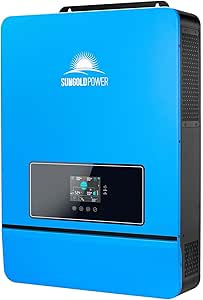 | Best for Connected, Monitorable 48V Systems | Peak output: 20,000W | Input voltage: 48V DC | Output: 120V or 120V/240V | VIEW LATEST PRICE | See Our Full Breakdown |
| PowMr 4000W 24V Hybrid Solar Inverter with 100A MPPT Controller |  | Best for Monitored 24V Mid-Range Systems | Peak output: 8,000W | Input voltage: 24V DC | Output voltage and waveform: 120V AC, pure sine wave | VIEW LATEST PRICE | See Our Full Breakdown |
| 5000W 12V DC to 110V/120V AC Power Inverter with LCD Display and Wireless Remote |  | Best for Remote-Controlled High Output | Continuous output: 5000W | Peak output: 10000W | Input voltage: 12V DC | VIEW LATEST PRICE | See Our Full Breakdown |
| BELTTT 2000W Pure Sine Wave Inverter, 12V DC to 120V AC |  | Best for Sensitive Loads | Continuous power: 2000W | Surge power: 4000W | Input voltage: 12V DC | VIEW LATEST PRICE | See Our Full Breakdown |
| POWLAND 12,000W Hybrid Solar Inverter with WiFi, 48V Battery Compatibility, Dual MPPT, and Split-Phase Output |  | Best for Expandable Home Solar Systems | Listed output power: 10,000W; product title also states 12,000W | Battery input: 48V | Output voltage and waveform: 240V, pure sine wave | VIEW LATEST PRICE | See Our Full Breakdown |
| BELTTT 3000W Pure Sine Wave Inverter, 12V DC to 120V AC, 6000W Peak |  | Best Midrange Pure Sine Wave Pick | Continuous power: 3000W | Peak power: 6000W | Input voltage: 12V DC | VIEW LATEST PRICE | See Our Full Breakdown |
| solar power inverter | Peak output | Input voltage | Waveform | Output voltage |
|---|---|---|---|---|
| Vansdon 3000W Pure Sine Wave P | 6000W | 12V DC | Pure sine wave | 110–120V AC |
| SUMRY 4000W Hybrid Solar Inver | 8000W | 24V DC | Pure sine wave | 120V AC |
| SUNGOLDPOWER 10,000W 48V Solar | 20,000W | — | Pure sine wave | 120/240V split phase or 120V single phase |
| 5000W Power Inverter 12V DC to | 10,000W | 12V DC | Modified sine wave | 110/120V AC |
| Sungoldpower 10,000W 48V Split | 20,000W | — | — | — |
| Cantonape 3000W 12V DC to 110V | 6,000W | 12V DC | Modified sine wave | 110V/120V AC |
| SUMRY 3600W Hybrid Solar Inver | 7,200W | 24V DC | — | — |
| SUNGOLDPOWER 10,000W 48V Split | 20,000W | 48V DC | — | — |
| PowMr 4000W 24V Hybrid Solar I | 8,000W | 24V DC | — | — |
| 5000W 12V DC to 110V/120V AC P | 10000W | 12V DC | Modified sine wave | — |
| BELTTT 2000W Pure Sine Wave In | — | 12V DC | Pure sine wave | 110V/120V AC |
| POWLAND 12,000W Hybrid Solar I | — | — | — | — |
| BELTTT 3000W Pure Sine Wave In | — | 12V DC | Pure sine wave | 110V/120V AC |
More Details on Our Top Picks
Vansdon 3000W Pure Sine Wave Power Inverter, 12V DC to 120V AC, 6000W Surge, LCD Display, 3 AC Outlets, USB-C, USB, and Wired Remote
The Vansdon is a straightforward choice for buyers who already have a 12V battery bank and need clean AC power without installing a full hybrid system. Its 3000W pure sine wave output is a better fit for sensitive electronics than the TOPBULL 5000W, which uses modified sine wave output, though the TOPBULL offers more continuous capacity. The Vansdon’s LCD remote puts voltage, output, and error information where it can be checked without standing beside the inverter; its long cable can help with a more flexible installation. Three outlets, USB-A, USB-C, and a hardwired terminal add connection choices, but high-draw appliances need the terminal, not a regular outlet. This is an inverter, not an integrated solar charge controller, so buyers must supply the battery and charging equipment separately.
Pros:- Pure sine wave output is suited to sensitive electronics.
- LCD remote reports battery voltage, output, and error codes over a 22.9-foot cable.
- Offers three AC outlets, a hardwired terminal, USB-A, and 30W USB-C.
- Includes dual cooling fans, circuit protections, battery cables, and a three-year warranty.
Cons:- Requires a separate 12V battery and solar charge controller.
- High-power appliances require a hardwired connection.
- Its 3000W continuous rating is below the TOPBULL 5000W inverter’s stated capacity.
Best for: RV and off-grid users with a 12V battery system who want pure sine wave power, remote monitoring, and several device connections.
Not ideal for: Buyers building an all-in-one solar system, or anyone needing more than 3000W continuous output without moving to a higher-capacity setup.
- Continuous output:3000W
- Peak output:6000W
- Input voltage:12V DC
- Output voltage:110–120V AC
- Waveform:Pure sine wave
- Efficiency:>91%
- USB-C output:30W
- AC outlets:3
- Warranty:3 years
Our verdict“Choose the Vansdon if your 12V system needs clean AC power and useful remote monitoring, but not an integrated solar charger.”
SUMRY 4000W Hybrid Solar Inverter, 24V DC to 120V AC
For a buyer assembling a modest solar setup around a 24V battery bank, the SUMRY combines the inverter and a substantial MPPT charger in one unit. Its 140A MPPT controller and support for utility, solar, and battery power make it more system-oriented than the Vansdon, which converts battery power but does not include a solar charger. The 6.25-inch touchscreen also gives this model a more direct control interface than a remote-centered inverter. Battery-free daytime operation may suit some installations, but it depends on operating conditions; I would not treat it as a substitute for battery backup. Its 4000W rated output calls for careful load planning, and its 24V architecture is less suited to larger systems than the 48V SUNGOLDPOWER 10,000W model.
Pros:- Combines a 4000W pure sine wave inverter with a 140A MPPT charge controller.
- Accepts solar, utility, and battery power with configurable priorities.
- Supports AGM, gel, lead-acid, lithium-ion, and LiFePO4 batteries.
- Large touchscreen provides an onboard interface for system settings.
Cons:- Requires a 24V battery system when batteries are used.
- Battery-free daytime operation is conditional and does not replace stored backup power.
- Its 4000W rated output is well below the 10,000W SUNGOLDPOWER 48V hybrid inverter.
Best for: Home, cabin, or workshop owners building a 24V solar system who want integrated MPPT charging and selectable solar, utility, and battery power.
Not ideal for: Buyers with a 12V setup, those needing 120/240V split-phase output, or users who expect battery-free operation to provide backup power.
- Peak output:8000W
- Input voltage:24V DC
- Output voltage:120V AC
- Waveform:Pure sine wave
- Charge controller:140A MPPT
- Maximum PV input:5600W, 350V DC
- Battery compatibility:AGM, gel, lead-acid, lithium-ion, and LiFePO4
- Display:6.25-inch LCD with touch buttons
Our verdict“Pick the SUMRY for a 24V solar installation that benefits from an integrated MPPT charger, and skip it if you need higher output or split-phase power.”
SUNGOLDPOWER 10,000W 48V Solar Hybrid Inverter with Dual MPPT
The SUNGOLDPOWER is the most capable choice here for a larger installation that needs 10,000W of pure sine wave output and 120/240V split-phase service. Its dual MPPT controllers and 11,000W maximum PV input give it more solar-array capacity than the SUMRY 4000W, while its 48V battery architecture suits a higher-output system better than a 12V vehicle inverter. It can also run in single-phase 120V mode and supports several battery types, plus battery-free operation. Wi-Fi monitoring and time-slot scheduling add useful control for owners managing a more involved setup. The tradeoff is scale: the unit weighs 53.5 pounds, and a battery-based system needs 48V equipment. This is far more inverter than a small RV or basic cabin setup requires.
Pros:- Provides 10,000W pure sine wave output with 120/240V split-phase or 120V single-phase operation.
- Dual MPPT controllers support up to 11,000W of PV input.
- Supports multiple battery chemistries and battery-free operation.
- Includes Wi-Fi monitoring, time-slot scheduling, and multiple communication interfaces.
Cons:- Battery-based use requires a 48V system.
- At 53.5 pounds, installation and placement require more planning than for smaller inverters.
- Its capacity and system features may be excessive for users who only need a few AC outlets.
Best for: Owners of larger homes, workshops, or off-grid systems who need substantial 120/240V output, dual MPPT inputs, and configurable charging.
Not ideal for: RV users, small-cabin owners, and buyers with 12V or 24V battery systems who do not need high output or split-phase service.
- Peak output:20,000W
- Battery voltage:48V
- Output voltage:120/240V split phase or 120V single phase
- Waveform:Pure sine wave
- MPPT controllers:2
- Maximum PV input:11,000W
- Maximum battery charging current:200A
- Weight:53.5 lb
Our verdict“Choose this SUNGOLDPOWER for a large 48V installation needing split-phase output and dual MPPT charging, not for a compact or low-load setup.”
5000W Power Inverter 12V DC to 120V/110V AC for Vehicles
The TOPBULL targets buyers who want a high stated output from a 12V source, with four AC outlets, USB connections, and a remote rated for up to 200 feet. Its 5000W continuous and 10,000W peak figures exceed the Vansdon’s 3000W and 6000W ratings, making it the higher-capacity option on paper for vehicle or off-grid use. The key compromise is its modified sine wave output: unlike the pure sine wave Vansdon or either hybrid inverter in this group, it may not suit every sensitive or motor-driven appliance. Its multiple outlets do not change that waveform limitation, and high sustained loads also demand careful battery and cable planning. This is a vehicle-style inverter, not a hybrid unit with an integrated MPPT solar charger.
Pros:- Offers 5000W continuous output and 10,000W peak output from a 12V DC source.
- Four 20A AC outlets provide several direct connection points.
- Includes USB-A, 30W USB-C, and additional AC terminals.
- Remote control is specified to work up to 200 feet away.
Cons:- Modified sine wave output may not be compatible with sensitive electronics or some appliances.
- Does not include an integrated MPPT solar charge controller.
- The 12V input and high stated output require careful planning for the battery and wiring system.
Best for: Vehicle, truck, or RV owners with a suitable 12V power system who need multiple AC connections and prioritize stated output capacity over pure sine wave power.
Not ideal for: Buyers powering sensitive electronics or appliances that require pure sine wave output, or anyone seeking an inverter with integrated solar charging.
- Continuous output:5000W
- Peak output:10,000W
- Input voltage:12V DC
- Output voltage:110/120V AC
- Waveform:Modified sine wave
- Frequency:60Hz
- AC outlets:4 × 20A
- USB-C output:30W
- Dimensions:15.94 × 7.09 × 4.72 inches
Our verdict“Consider the TOPBULL if you need multiple outlets and high stated output from 12V, but choose a pure sine wave model for sensitive loads.”
Sungoldpower 10,000W 48V Split-Phase Solar Inverter Charger
For a larger 48V solar setup, this model brings 10,000W of rated output, split-phase 120V/240V power, and two built-in MPPT controllers into one unit. That combination can simplify a system designed to run both standard household circuits and 240V loads, while 200A maximum battery charging gives it substantial charging capacity. Compared with the SUMRY 3600W Hybrid Solar Inverter Charger, it is aimed at far heavier loads and supports parallel operation with up to six units; the tradeoff is a larger, more demanding installation. It can also run without a battery, though buyers should plan around the system’s specific operating requirements. At 53.5 pounds, it is not a casual one-person mounting job, and it only makes sense for buyers prepared to build around a 48V system.
Pros:- 10,000W rated output with 120V/240V split-phase support
- Two built-in MPPT controllers and up to 200A battery charging
- Supports multiple battery chemistries and battery-free operation
- Can operate in parallel with up to six units
Cons:- Battery-based setups require a compatible 48V battery system
- At 53.5 pounds, mounting and handling take planning
- Its high capacity may be unnecessary for modest household loads
Best for: Homeowners building a 48V solar system that needs split-phase output, high inverter capacity, and room to expand.
Not ideal for: RV owners, small off-grid setups, or anyone seeking a light, plug-in inverter; its 48V system requirements and 53.5-pound chassis call for a more involved installation.
- Peak output:20,000W
- Battery voltage:48V
- Output:120V/240V split phase or 120V single phase
- Solar controllers:2 built-in MPPT controllers
- Maximum battery charging current:200A
- Maximum PV open-circuit voltage:500V DC
- Parallel operation:Up to 6 units
- Weight:53.5 lb
Our verdict“Choose this for a substantial 48V installation needing split-phase output and expansion potential, not for a small or portable solar setup.”
Cantonape 3000W 12V DC to 110V/120V AC Power Inverter with LCD Display
This Cantonape is a 12V-to-AC inverter, rather than an all-in-one solar charger: it converts battery power but does not include an MPPT controller for connecting solar panels directly. That makes it a simpler fit for buyers who already have a 12V battery-and-charging setup and need several AC outlets, plus USB ports, for everyday devices. Its modified sine wave output is the main limitation. Compared with the pure-sine SUMRY 3600W Hybrid Solar Inverter Charger, it is less suited to sensitive electronics or appliances that require cleaner AC power, but it avoids the complexity of a larger hybrid system. The LCD reports operating information and fault codes, while the remote adds convenience; note that its separate 12V 23A battery is required. Rated power also needs to be matched carefully to the battery and wiring.
Pros:- Four AC outlets and four USB ports accommodate several devices
- LCD shows voltage, battery capacity, load, and fault codes
- Includes a remote controller and built-in cooling fan
- Provides overload, short-circuit, overheating, and polarity protections
Cons:- Modified sine wave output is less suitable for some electronics and appliances
- Does not include a solar charge controller
- Remote controller requires a separate 12V 23A battery
Best for: 12V battery-system owners who need multiple outlets for compatible loads and want an LCD plus remote control.
Not ideal for: Solar buyers wanting an integrated MPPT charger, or anyone powering sensitive electronics or appliances that need pure sine wave output.
- Input voltage:12V DC
- Output voltage:110V/120V AC
- Continuous output:3,000W
- Peak output:6,000W
- Waveform:Modified sine wave
- Outlets:4 AC outlets and 4 USB ports
- Display:LCD
- Efficiency:>90%
- Weight:2.6 kg
Our verdict“Pick this as a basic inverter for compatible loads on an existing 12V battery setup, but choose a pure-sine hybrid model for sensitive equipment or direct solar charging.”
SUMRY 3600W Hybrid Solar Inverter Charger with 120A MPPT Controller
The SUMRY suits buyers who want a 24V hybrid unit that combines an inverter, a 120A MPPT controller, and a 100A AC battery charger. Its pure sine wave output is a more appliance-friendly choice than the Cantonape 3000W inverter’s modified sine wave, while its 3,600W rated output keeps it below the 4,000W PowMr. The SUMRY’s standout flexibility is battery-free operation under specified conditions, but it is not a universal no-battery mode: PV input must exceed 120V and there must be no grid connection. That condition matters when planning panel strings and backup power. Its LCD and built-in electrical and thermal protections help with local monitoring, though remote monitoring requires a separately sold module. Choose it for a moderate 24V system, not a high-load split-phase installation.
Pros:- Combines inverter, 120A MPPT controller, and 100A AC charger
- Pure sine wave output suits a wider range of household loads
- Supports several battery types, including LiFePO4
- Battery-free operation is supported under specified PV and grid conditions
Cons:- Battery-free mode requires PV input above 120V and no grid connection
- Remote monitoring module is optional and sold separately
- Its 3,600W rated output is below the PowMr 4000W model
Best for: Off-grid users planning a moderate 24V system who want integrated solar and AC charging, with the option to operate without a battery under specific conditions.
Not ideal for: Buyers needing 120V/240V split phase, higher output than 3,600W, or battery-free operation while connected to the grid.
- Peak output:7,200W
- Input voltage:24V DC
- Output voltage and waveform:110V/120V AC, pure sine wave
- MPPT solar charge controller:120A
- AC battery charger:100A
- PV input voltage range:60V–500V DC
- Maximum PV input power:4,200W
- Weight:8.5 kg
Our verdict“Choose the SUMRY for an integrated, moderate-output 24V system with conditional battery-free flexibility, rather than for larger loads or split-phase power.”
SUNGOLDPOWER 10,000W 48V Split-Phase Solar Inverter with Dual MPPT
This model targets buyers who want 10,000W output and split-phase capability in a 48V solar inverter, with dual MPPT controllers and battery charging up to 200A built in. It shares the core high-output profile of the Sungoldpower 10,000W 48V Split-Phase Solar Inverter Charger, including support for multiple battery types and battery-free operation. The distinguishing detail in the supplied specifications is CAN, USB, and RS485 communication, which can better suit systems that need equipment interfaces. Like that other 10,000W unit, this is a heavy, fixed-installation component—not a compact alternative to the 24V SUMRY or PowMr. Its 54-pound weight and 48V battery requirement call for careful system and mounting plans. The 500V PV open-circuit limit and time-based charging features also make array and operating schedules part of the design.
Pros:- 10,000W rated output with 120V/240V split-phase support
- Dual MPPT controllers and up to 200A battery charging are built in
- Includes CAN, USB, and RS485 communication
- Supports multiple battery types and battery-free operation
Cons:- Battery-based operation requires a compatible 48V system
- At 54 pounds, installation and handling need preparation
- Its high output and system features may exceed the needs of smaller arrays
Best for: Solar-system builders seeking high 48V capacity, split-phase output, and communication ports for a more integrated installation.
Not ideal for: Portable-power buyers or small 12V/24V system owners; this unit is heavy and designed around a high-capacity 48V setup.
- Peak output:20,000W
- Input voltage:48V DC
- Output:120V or 120V/240V
- Solar controllers:2 MPPT
- Battery charging current:Up to 200A
- Maximum PV open-circuit voltage:500V DC
- Communication:CAN, USB, and RS485
- Weight:54 lb
Our verdict“Choose this for a substantial 48V split-phase system where communication interfaces matter; smaller systems are better matched to the SUMRY or PowMr.”
PowMr 4000W 24V Hybrid Solar Inverter with 100A MPPT Controller
The PowMr is a strong fit for a 24V system that needs more inverter capacity than the SUMRY 3600W, without stepping up to the large 48V Sungoldpower models. It offers 4,000W rated output, pure sine wave power, and a built-in 100A MPPT controller; Wi-Fi monitoring and an LCD add visibility into system operation. Its stated 10ms transfer time may suit installations that need quick switching, while battery-free operation offers another configuration option. That flexibility still depends on correct array, load, and wiring design: the product data specifically calls for careful planning around load and startup surges. The PowMr supports LiFePO4 and lead-acid batteries, a narrower listed range than the SUMRY’s. Buyers who want more charging current should compare its 100A controller with the SUMRY’s 120A; those who value monitoring and somewhat higher rated output may prefer the PowMr.
Pros:- 4,000W rated pure sine wave output with 8,000W peak capacity
- Integrated 100A MPPT controller and battery-free operation support
- Wi-Fi monitoring, LCD, and multiple communication ports
- 10ms transfer time is specified
Cons:- Load and startup surge requirements need careful planning
- Listed battery compatibility is limited to LiFePO4 and lead-acid
- Its 100A MPPT rating is below the SUMRY’s 120A controller
Best for: 24V solar-system owners who want 4,000W pure-sine output, built-in MPPT charging, and Wi-Fi monitoring.
Not ideal for: Buyers needing split-phase 120V/240V, a 48V high-output system, or a setup that does not allow careful surge and wiring calculations.
- Peak output:8,000W
- Input voltage:24V DC
- Output voltage and waveform:120V AC, pure sine wave
- MPPT charge current:100A
- Maximum PV open-circuit voltage:500V
- Connectivity:Wi-Fi, RS232, RS485, CAN, dry contact
- Transfer time:10ms
- Weight:15.9 lb
Our verdict“Pick the PowMr for a monitored 24V system needing 4,000W pure-sine output, but favor the SUMRY if a higher-rated MPPT controller is the priority.”
5000W 12V DC to 110V/120V AC Power Inverter with LCD Display and Wireless Remote
This model is the high-output pick for buyers who want to run several AC devices from a 12V battery and value a remote they can use from a distance. Its 5000W continuous rating and four AC outlets offer more stated capacity and plug access than the BELTTT 3000W, though the rating alone does not remove the need to match loads and battery capacity carefully. The 150-foot wireless remote and LCD status readouts can make it easier to check load and battery information without standing beside the inverter. The main compromise is its modified sine wave: compared with the pure-sine BELTTT models, it is a less suitable choice for sensitive electronics or equipment that calls for clean AC power. It also needs a 12V battery source, which can demand substantial current at high loads.
Pros:- 5000W continuous and 10000W peak ratings provide more stated output than the BELTTT 3000W.
- Four AC outlets allow multiple devices to connect directly.
- LCD reports voltage, battery capacity, load, and error codes.
- Wireless remote has a stated range of 150 feet, with built-in fault protections.
Cons:- Modified sine wave output may not suit sensitive or inductive equipment.
- A 12V battery must supply high current at heavy loads.
- Only one USB port is listed, limiting direct device charging.
Best for: RV and vehicle users with a suitable 12V battery bank who need multiple AC outlets, high stated output, and remote status access.
Not ideal for: Buyers powering sensitive electronics or loads that require pure sine wave AC, or those building a 24V or 48V solar system.
- Continuous output:5000W
- Peak output:10000W
- Input voltage:12V DC
- Output voltage and frequency:110V/120V AC, 60Hz
- Waveform:Modified sine wave
- Outlets:4 AC outlets, 1 USB port
- Remote range:150 feet
- Dimensions and weight:16.93 × 7.09 × 5.51 inches; 9.9 pounds
Our verdict“Choose this for remote-monitored, high-output use from a 12V battery when modified sine wave power is appropriate for your equipment.”
BELTTT 2000W Pure Sine Wave Inverter, 12V DC to 120V AC
The BELTTT 2000W is the more measured choice for a 12V setup where pure sine wave output matters more than maximum wattage. Its 2000W continuous capacity is below the BELTTT 3000W, but both use pure sine wave output; this smaller model makes more sense when expected loads fit its rating and a lower capacity inverter is sufficient. The LCD gives a live view of voltage, battery, and load status, while its sockets, hardwire port, and 23-foot cabled remote offer flexibility for RVs and off-grid installations. The tradeoff is that 12V input still limits high-load practicality: substantial power draw can put a heavy demand on the battery side. Buyers seeking a whole-home solar inverter should compare it with the POWLAND hybrid, which handles solar, battery, and grid power rather than only converting battery DC.
Pros:- Pure sine wave output is suited to loads that call for a cleaner AC waveform.
- 2000W continuous and 4000W surge ratings cover moderate inverter loads.
- LCD shows voltage, battery, and load status.
- Includes dual AC sockets, USB, hardwire connection, remote, and multiple protections.
Cons:- Lower continuous capacity than the BELTTT 3000W.
- Requires a 12V battery, which can mean high current draw as loads increase.
- Voltage and display adjustments are limited to a small range.
Best for: RV owners and off-grid users with a 12V battery system who need clean AC for compatible sensitive or inductive loads within a 2000W continuous limit.
Not ideal for: Users needing more than 2000W continuously, a 48V home solar system, or an inverter that integrates solar and grid inputs.
- Continuous power:2000W
- Surge power:4000W
- Input voltage:12V DC
- Output voltage:110V/120V AC
- Waveform:Pure sine wave
- Conversion efficiency:Greater than 93%
- Ports:Dual AC sockets, 20A outlet, 5V/2.1A USB, hardwire port
- Remote:23-foot cable
Our verdict“Pick this BELTTT when clean AC and useful monitoring matter more than the higher output offered by its 3000W sibling.”
POWLAND 12,000W Hybrid Solar Inverter with WiFi, 48V Battery Compatibility, Dual MPPT, and Split-Phase Output
Unlike the 12V battery inverters in this group, the POWLAND is a hybrid solar system unit: it accepts solar input, supports grid and battery power, and can run in battery-free mode. Dual MPPT controllers and a 90–500V DC solar input range give system planners more options for arranging panels, while 48V battery compatibility suits a larger installation better than the BELTTT 2000W or 3000W vehicle-oriented models. WiFi monitoring and parallel connection for up to six units add scope for a system that may grow. The key caution is the conflicting power description: the title says 12,000W, while the listed output power is 10,000W. I would verify the exact rated output and system requirements before sizing a home around it. Its 46-pound weight and hybrid installation needs also make it a very different, more involved purchase than a portable inverter.
Pros:- Works with solar, battery, and grid power, with a battery-free operating mode.
- Dual MPPT controllers support solar array input across a stated 90–500V DC range.
- Supports 48V LiFePO4 and lead-acid batteries.
- WiFi monitoring and parallel connection for up to six units allow expansion.
Cons:- Product information gives conflicting 12,000W and 10,000W power figures.
- At 46 pounds, it is far less portable than the BELTTT battery inverters.
- Hybrid system setup and 48V compatibility are unsuitable for buyers seeking a simple 12V plug-in inverter.
Best for: Home solar planners seeking a 48V hybrid inverter with dual MPPT, battery-free operation, monitoring, and a path to parallel expansion.
Not ideal for: RV or vehicle users seeking a compact 12V inverter, and buyers who need unambiguous rated output figures before system design.
- Listed output power:10,000W; product title also states 12,000W
- Battery input:48V
- Output voltage and waveform:240V, pure sine wave
- Solar input voltage:90–500V DC
- MPPT controllers:Dual
- Battery compatibility:48V LiFePO4 and lead-acid
- Parallel capacity:Up to 6 units
- Display and monitoring:OLED display, WiFi monitoring
- Dimensions and weight:24.41 × 17.13 × 5.12 inches; 46 pounds
Our verdict“Consider this for an expandable 48V home solar installation, but confirm its rated output before choosing system components.”
BELTTT 3000W Pure Sine Wave Inverter, 12V DC to 120V AC, 6000W Peak
The BELTTT 3000W sits between the BELTTT 2000W and the 5000W modified-sine model in stated continuous capacity, while retaining pure sine wave output. That combination suits users whose loads exceed the smaller BELTTT’s 2000W rating but who do not want to trade to modified sine wave just to get higher stated output. Its LCD tracks input and output voltage, battery status, and load, and the 23-foot wired remote can be placed where it is easy to reach. Several connection options—including dual AC sockets, a 20A outlet, USB, and hardwire—make it more adaptable than a basic outlet-only unit. The main constraint is still the 12V battery input, which can call for a capable battery and wiring at higher loads. This is a battery inverter, not a hybrid solar controller like the POWLAND.
Pros:- 3000W continuous and 6000W peak output provide more capacity than the BELTTT 2000W.
- Pure sine wave output supports loads that require that waveform.
- LCD shows input and output voltage, battery status, and load.
- Offers AC, 20A, USB, and hardwire connections, plus a 23-foot wired remote.
Cons:- Requires a 12V battery source, which can draw substantial current under heavy loads.
- Does not provide the solar, grid, or battery-free hybrid functions of the POWLAND.
- Output voltage adjustment is limited to a small range.
Best for: RV, truck, and off-grid users with a capable 12V battery setup who need more continuous capacity than a 2000W inverter and prefer pure sine wave output.
Not ideal for: Buyers building a 48V solar-plus-grid system, or users whose loads exceed 3000W continuously.
- Continuous power:3000W
- Peak power:6000W
- Input voltage:12V DC
- Output voltage:110V/120V AC
- Waveform:Pure sine wave
- Conversion efficiency:Greater than 93%
- Outputs:Dual AC sockets, 20A outlet, 5V/2.1A USB, hardwire port
- Remote:23-foot cable
Our verdict“Choose this for a 12V setup needing more pure-sine capacity than the 2000W BELTTT, without requiring hybrid solar features.”
How We Picked
I ranked these solar power inverters by how well their stated design fits real buyer needs, rather than by headline wattage alone. I compared system voltage, inverter output, surge claims where provided, pure sine wave output where specified, MPPT availability, hybrid charging functions, split-phase capability, and practical features such as displays, remote controls, and WiFi. I also considered whether a model’s role is clear: a 12V standalone inverter should be judged as an appliance-power option, not as a substitute for a full 48V solar system.
The order favors useful capability with a clearly defined audience. Versatile hybrid models with higher-voltage battery support and multiple MPPT inputs rank ahead for whole-system planning, while simpler 12V units rank better for smaller, narrower jobs. A large wattage label does not automatically earn a higher place: buyers must match continuous output and input requirements to their equipment. Product specifications supplied here do not establish every compatibility or installation detail, so I treat unknowns as questions buyers should verify rather than assume.
| solar power inverter | Waveform |
|---|---|
| Vansdon 3000W Pure Sine Wave P | Pure sine wave |
| SUMRY 4000W Hybrid Solar Inver | Pure sine wave |
| SUNGOLDPOWER 10,000W 48V Solar | Pure sine wave |
| 5000W Power Inverter 12V DC to | Modified sine wave |
| Sungoldpower 10,000W 48V Split | — |
| Cantonape 3000W 12V DC to 110V | Modified sine wave |
| SUMRY 3600W Hybrid Solar Inver | — |
| SUNGOLDPOWER 10,000W 48V Split | — |
| PowMr 4000W 24V Hybrid Solar I | — |
| 5000W 12V DC to 110V/120V AC P | Modified sine wave |
| BELTTT 2000W Pure Sine Wave In | Pure sine wave |
| POWLAND 12,000W Hybrid Solar I | — |
| BELTTT 3000W Pure Sine Wave In | Pure sine wave |
Factors to Consider When Choosing Solar Power Inverters
Choosing among these models starts with the system you are building, not the biggest number on the product label. I would work through loads, battery voltage, solar-array design, and output requirements before deciding whether a standalone inverter or a hybrid unit fits the job.
1. Match inverter output to real loads
List the appliances you expect to run at the same time and check both their running watts and startup demand. Motors, pumps, and compressors can briefly draw far more power at startup than their normal operating label suggests. A large peak or surge rating may help with that moment, but it does not mean the inverter can sustain that output. Add a sensible margin for simultaneous use, while avoiding an oversized unit that pushes you toward a larger battery and heavier cabling than your setup needs. If you cannot find a clear continuous rating or surge duration, ask the seller or consult the manual before sizing around it.
2. Choose 12V, 24V, or 48V around the whole system
Battery voltage affects more than the inverter: it shapes battery-bank wiring, current, cable size, and the equipment you can connect. For the same power, a lower-voltage system draws more current, which can make cable selection and voltage drop harder to manage. That is one reason the 12V models in this roundup fit smaller or vehicle-based setups better, while 24V and 48V hybrid models suit larger installations. Do not buy a higher-voltage inverter assuming it can work with a lower-voltage battery bank. Confirm the battery’s nominal voltage, supported chemistry, and charging settings before purchase.
3. Check solar input limits before counting MPPT channels
MPPT describes how a controller tracks a solar array’s output; it does not mean every panel arrangement will work. Compare the inverter’s allowed PV voltage and current with the panel string’s open-circuit voltage, operating voltage, and current, including the effect of cold weather on voltage. Dual MPPT can be useful when roof faces or array groups have different sun exposure, but it cannot compensate for exceeding input limits. Also check whether the inverter includes a solar charge controller or expects separate charging hardware. Wiring panels based on wattage alone is a common mismatch that can damage equipment or prevent reliable operation.
4. Decide whether you need a hybrid inverter or a standalone unit
A standalone inverter converts battery power to AC, which can be a straightforward choice for a vehicle, cabin, or selected backup loads. Hybrid models may combine inversion with solar charging and other charging functions, reducing the number of separate devices but increasing setup decisions. Before paying for those functions, check how the unit handles grid or generator input, battery charging, and backup behavior during an outage. Confirm whether the inverter can support the operating mode you want rather than assuming that “hybrid” means automatic whole-home backup. If your needs are limited to a few AC appliances, a simpler inverter may be easier to install and maintain.
5. Confirm output type and household compatibility
Most small appliances use 120V AC, but some home equipment requires 240V or split-phase service. A split-phase inverter is only useful if its output arrangement, transfer behavior, and capacity match the loads and electrical panel involved. Pure sine wave output is a sensible priority for sensitive electronics and many motor-driven devices, but check the appliance manufacturer’s requirements rather than relying on a broad compatibility claim. Also confirm outlet type, grounding instructions, and whether the unit is intended for fixed wiring or plug-in use. A high-wattage inverter without the right output configuration can still be the wrong fit for your home.
6. Budget for installation, protection, and upkeep
The inverter is only one part of a working system: batteries, appropriately sized conductors, overcurrent protection, disconnects, and safe mounting all affect performance and safety. High-current 12V units can require especially substantial cabling, so the installation may be less simple than the compact form suggests. Hybrid systems add configuration tasks, including battery charging parameters and solar input settings. Review the manual, warranty terms, ventilation needs, and service access before committing to a fixed installation. Paying more for monitoring or multiple MPPT inputs makes sense when those features solve a real system need; otherwise, spend effort on correct sizing and electrical protection first.
Frequently Asked Questions
Can I connect a 12V inverter directly to solar panels?
Usually, solar panels should not be connected to an inverter’s battery terminals unless its instructions explicitly describe that arrangement. A typical setup routes panel output through a compatible solar charge controller to a battery, then connects the inverter to the battery bank. Some hybrid models include an MPPT controller and accept solar input directly at dedicated PV terminals, but their voltage and current limits still apply. Check the wiring diagram and input specifications for the exact model before connecting anything. Incorrect wiring can damage the inverter, controller, or battery.
Should I choose a 24V or 48V inverter for a larger solar system?
For a system with substantial loads, 48V can reduce DC current compared with 24V at the same power, which can ease cable and connection demands. The right choice still depends on your battery bank, charge equipment, panel configuration, and inverter compatibility. A 24V hybrid may fit a moderate setup and avoid replacing equipment you already own. Do not mix voltage classes casually: the battery, inverter, charger, and other DC components need to support the same system voltage. Plan the full system before selecting the inverter.
Does a dual-MPPT inverter let me use any combination of solar panels?
No. Dual MPPT gives you two tracking inputs, which can be helpful for separate arrays, but each input has its own voltage and current boundaries. Panel strings connected to one tracker generally need a compatible electrical configuration, and cold-weather open-circuit voltage can exceed the limit even when the array seems safe under normal conditions. Different panel orientations may suit separate trackers, but mismatched panels on the same string can reduce performance. Use the inverter’s manual and panel specifications to design each string, or have a qualified solar installer check the plan.
Do I need split-phase output to power my home during an outage?
Only if the loads you want to run require the output arrangement provided by a split-phase system. Many common household devices use 120V, while some larger appliances and equipment use 240V. A split-phase inverter may serve the latter, but its capacity, transfer features, panel connection, and installation requirements must match your home. It does not automatically provide whole-house backup or make every circuit safe to energize. Map the essential loads and have an electrician confirm the connection method before buying.
Can a 3000W or 4000W inverter run appliances rated near that wattage?
Possibly, but the rating alone does not tell you whether the inverter can run the appliance continuously or handle its startup surge. Check the unit’s continuous output, surge capacity and duration, AC voltage, and the appliance’s operating and starting demands. You also need a battery and wiring system capable of supplying the required DC current without excessive voltage drop. If several appliances will run together, add their loads rather than sizing for one device at a time. Leave room for startup and simultaneous demand instead of treating a headline wattage as a guaranteed operating target.
Conclusion
For a larger solar installation, my best overall recommendation is the SUNGOLDPOWER 10,000W 48V Solar Hybrid Inverter with Dual MPPT, provided its PV inputs and system voltage match your design. The best value direction is a 24V hybrid such as the SUMRY 4000W or PowMr 4000W, with the choice depending on their exact charging and input requirements. For a premium, high-capacity setup, the POWLAND 12,000W is the standout when WiFi and split-phase output serve a real need; buyers needing a simpler starting point should look first at the SUMRY 4000W hybrid and verify its setup requirements. For compact or vehicle use, compare the 12V Vansdon and BELTTT units by output, outlets, and remote features, while the BELTTT 2000W suits more modest loads. Match the battery voltage and actual loads before choosing: those two decisions will narrow this lineup more reliably than wattage claims alone.
Halloween Picks
halloween
As an affiliate, we earn on qualifying purchases.