
By analyzing your home energy data from smart meters, you can identify when your household uses the most power and find low-demand times. Use this info to shift your EV charging to off-peak hours, saving money and reducing environmental impact. Unplug unused devices and monitor energy spikes to improve efficiency. Following these steps helps you make smarter charging choices, and you’ll discover more tips to optimize your habits as you go along.
Key Takeaways
- Analyze smart meter data to identify low demand periods for optimal EV charging times.
- Monitor energy usage patterns to avoid peak hours and reduce charging costs.
- Detect appliances causing unnecessary energy spikes and unplug them during charging.
- Use data visualization tools to track and adjust your charging habits over time.
- Set specific goals for off-peak charging to enhance savings and sustainability efforts.
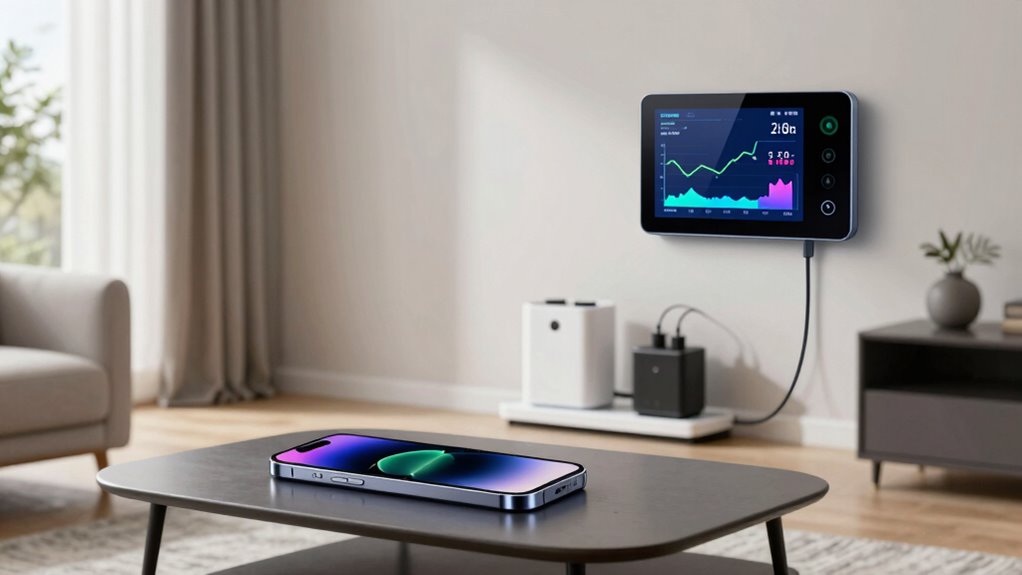
Understanding your home energy data is a powerful step toward improving your charging habits. When you pay attention to how much energy your household consumes, you gain valuable insights into your daily routines and how your devices, including electric vehicle chargers, contribute to your overall energy use. One of the most effective ways to gather this information is through smart metering. Smart meters provide real-time data on your electricity consumption, which allows you to see exactly when and how much energy you’re using throughout the day. This data helps you identify patterns, such as peak usage times or periods of low activity, so you can adjust your charging schedule accordingly.
Smart meters reveal your energy patterns, helping you charge your EV more efficiently and save money.
By analyzing your usage patterns, you can pinpoint the times when your energy demand is naturally lower. For example, you might notice that most of your household’s energy consumption happens during evening hours, which could coincide with your current charging routine. With this knowledge, you can shift your EV charging to off-peak times—say, late at night or early morning—when electricity rates are often cheaper and the grid experiences less strain. This not only saves you money but also reduces the overall environmental impact of your energy use.
Smart metering also helps you catch inefficiencies or unexpected spikes in energy consumption. Maybe you realize that certain appliances are drawing power even when not in use, or that your charging habits are contributing to unnecessary energy peaks. Recognizing these energy consumption patterns empowers you to make smarter choices, like unplugging devices when they’re not needed or scheduling your charging during the most efficient times. Additionally, external factors such as weather can influence your energy use, and tracking these can help you optimize your habits further. Incorporating energy management strategies can further enhance your ability to conserve power and reduce costs.
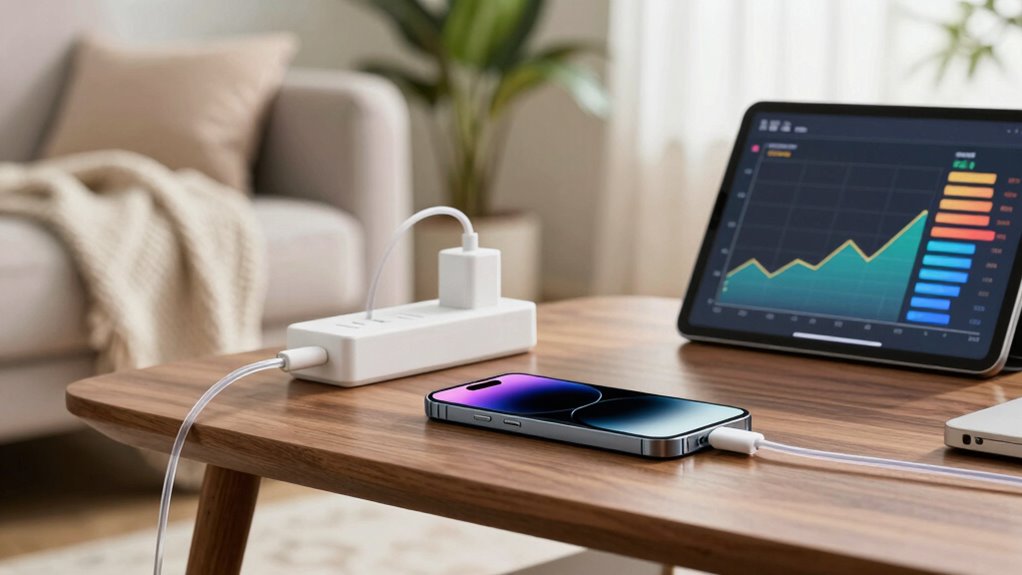
Over time, these small adjustments can lead to significant savings on your energy bills. Furthermore, understanding your home’s energy data enables you to set more precise goals for your charging habits. You might aim to limit your EV charging to a specific window each night or monitor how weather conditions affect your energy use and adapt accordingly. Many smart meters come with apps or online dashboards that visualize your data, making it easier to track your progress and stay motivated to optimize your habits.
In short, leveraging smart metering and analyzing your usage patterns puts you in control of your energy consumption. It’s about becoming more aware of how and when you use electricity and then applying that knowledge to charge your electric vehicle more efficiently, economically, and sustainably. Real-time data from smart meters enhances your ability to make informed decisions about energy use and contributes to a more sustainable lifestyle. By doing so, you improve your habits, save money, and contribute to a healthier environment—all without the need for complex or costly technology upgrades.
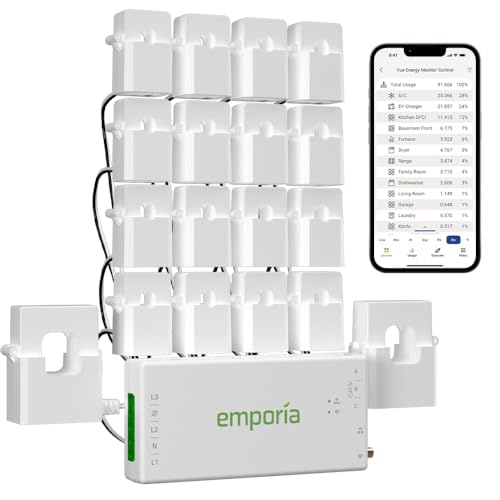
Emporia Vue 3 Home Energy Monitor – Smart Home Automation Module and Real Time Electricity Usage Monitor, Power Consumption Meter, Solar and Net Metering for UL Certified Safe Energy Monitoring
- UL Certified Safe Energy Monitoring: Certified for safety and reliability
- Easy Installation in Circuit Panel: Supports various home electrical systems
- Real-Time Energy Monitoring: 24/7 management and control of energy
As an affiliate, we earn on qualifying purchases.
As an affiliate, we earn on qualifying purchases.
Frequently Asked Questions
What Types of Home Data Are Most Useful for Tracking Charging Habits?
Smart meters and energy analytics are the most useful home data for tracking your charging habits. Smart meters provide real-time energy consumption, helping you see when and how much energy your vehicle uses. Energy analytics analyze this data to identify patterns and suggest *best* charging times. By monitoring this information, you can improve efficiency, reduce costs, and better manage your overall energy use, making your charging habits more sustainable and economical.
How Can I Ensure My Home Data Remains Private and Secure?
To keep your home data private and secure, you should guarantee your devices use data encryption, which protects your information during transmission. Also, review and understand your privacy policies to know how your data is collected and shared. Regularly update your device firmware and security settings, and choose strong, unique passwords. These steps help safeguard your charging habits data from unauthorized access and maintain your privacy.
What Tools or Apps Are Recommended for Analyzing Home Energy Data?
You should explore apps that connect with your smart meter and energy dashboard, like Sense, Neurio, or EnergyHub. These tools analyze your energy consumption, visualize patterns, and help you identify savings opportunities. They offer real-time data, detailed reports, and user-friendly interfaces, empowering you to make informed decisions. By leveraging these apps, you can monitor your home’s energy use more effectively and optimize your charging habits effortlessly.
How Often Should I Review My Home Data to Improve Charging Efficiency?
You should review your home data at least monthly to maximize energy savings and guarantee data accuracy. Regular checks help you spot inefficiencies and adjust your charging habits promptly. By staying consistent, you’ll understand your energy patterns better and make informed decisions that improve charging efficiency over time. Frequent reviews keep your data accurate, so you can confidently optimize your energy use and achieve better cost savings.
Can Basic Home Data Predict Future Energy Consumption Patterns?
Think of your home data as a weather vane for energy forecasting—when accurate, it reveals future patterns. With precise data, you can predict peaks and troughs in energy use, helping you optimize charging times. While basic data offers useful insights, its accuracy determines prediction reliability. By regularly reviewing and refining your data, you become a skilled navigator, steering your energy consumption toward efficiency and savings.

Level 2 EV Charger, 24Amp Adjustable, 25FT Cord, NEMA 14-30 & 14-50P, J1772
- Universal Compatibility: Works with most J1772 EVs and PHEVs
- Fast Level 2 Charging: Delivers 5× faster charging, 20 miles/hour
- Adjustable Charging Settings: Customizable current from 8A to 24A
As an affiliate, we earn on qualifying purchases.
As an affiliate, we earn on qualifying purchases.
Conclusion
By harnessing simple home data, you can transform your charging habits and save energy like never before. Tracking your usage isn’t just a small step—it’s a game-changing move that can slash your electricity bills and boost efficiency dramatically. Don’t underestimate the power of these small insights; they hold the potential to revolutionize your energy routine and make you a true champion of sustainable living. Start today, and watch your habits—and your savings—skyrocket to astronomical heights.
energy consumption data visualization tools
As an affiliate, we earn on qualifying purchases.
As an affiliate, we earn on qualifying purchases.

TP-Link 𝗧𝗮𝗽𝗼 Smart Plug Wi-Fi Mini, Energy Monitoring, Compatible with Alexa & Google Home & Samsung SmartThings, Timer, 15A/1800W Max, ETL Certified, 2.4G Wi-Fi Only, Tapo P115(4-Pack)
- Energy Monitoring: Track energy use with charts and stats
- Cost Estimation: Estimate energy bills and optimize costs
- Smart Device Charging: Auto power cut-off at low battery
As an affiliate, we earn on qualifying purchases.
As an affiliate, we earn on qualifying purchases.