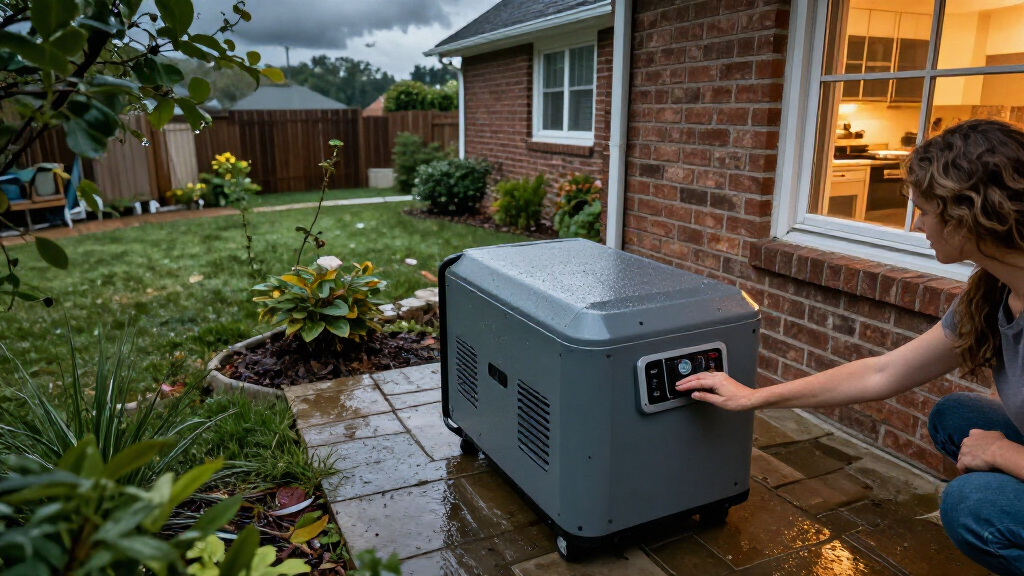
Choosing the right whole house generators for backup power requires balancing automatic reliability against fuel flexibility and upfront cost. My top recommendation is the Generac 14 kW Whole-Home Standby Generator because it offers the best balance of capacity, automatic transfer speed, and smart monitoring for most average-sized homes. For those needing higher power without permanent installation, the Westinghouse WGen11500DFc stands out with its dual-fuel capability and safety sensors. The primary tradeoff you face is between automatic standby units that start themselves but require professional installation, and portable generators that are cheaper and flexible but require manual operation and safe outdoor placement. Continue reading to see which of these 13 models fits your specific household needs and budget.

Get backup power and energy gear delivered free with Prime
- Fast, free delivery on millions of items
- Prime Video, Amazon Music and more included
- Member-only deals all year
Complete the kit

Key Takeaways
- Standby generators from Generac dominate the automatic backup space, while Westinghouse leads in high-output portable flexibility.
- Cellular connectivity has become a standard feature on premium standby units, allowing remote monitoring without relying on home Wi-Fi.
- Tri-fuel portable models offer the highest fuel versatility but often come with significantly higher maintenance complexity compared to dual-fuel units.
- kW rating alone does not determine suitability; the number of transfer switch circuits and load management strategies matter more for daily comfort.
- Noise levels and placement restrictions often dictate whether a portable or standby unit is feasible for suburban lots with HOA rules.
| DuroMax XP13000EH 13,000-Watt Dual-Fuel Portable Generator |  | Best Portable High-Output Pick | Fuel: Gasoline or propane | Running wattage: 10,500 watts | Starting wattage: 13,000 watts | VIEW LATEST PRICE | See Our Full Breakdown |
| Westinghouse WGen9500DF Dual-Fuel Portable Generator |  | Best Portable Pick for Longer Listed Runtime | Fuel: Gasoline or propane | Running wattage: 9,500 watts gasoline; 8,500 watts propane | Peak wattage: 12,500 watts gasoline; 11,200 watts propane | VIEW LATEST PRICE | See Our Full Breakdown |
| Generac 10kW Whole Home Standby Generator with Transfer Switch and Cellular Connectivity |  | Best for Smaller Automatic Backup Loads | Output: 10,000 watts | Fuel: Natural gas or liquid propane | Transfer switch: Automatic, 16-circuit | VIEW LATEST PRICE | See Our Full Breakdown |
| Generac 14 kW Whole-Home Standby Generator with Transfer Switch and Cellular Connectivity |  | Best Mid-Range Automatic Standby Pick | Output: 14,000 watts | Fuel: LP or natural gas | Transfer switch: Automatic, 200 amp | VIEW LATEST PRICE | See Our Full Breakdown |
| Generac 26 kW Whole-Home Standby Generator with Transfer Switch and Cellular Connectivity | | Best for Higher-Capacity Automatic Backup | Output: 26 kW | Starting wattage: 26,000 watts | Fuel: Propane or natural gas | VIEW LATEST PRICE | See Our Full Breakdown |
| Westinghouse WGen11500DFc Dual-Fuel Portable Generator with CO Sensor | 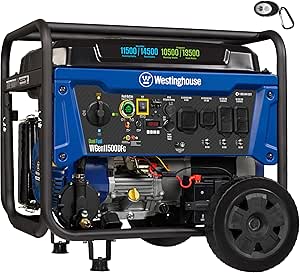 | Best High-Output Portable Backup | Peak wattage: 14,500 watts | Running wattage: 11,500 watts | Fuel type: Gasoline and propane | VIEW LATEST PRICE | See Our Full Breakdown |
| Generac Guardian 22 kW Home Standby Generator with Transfer Switch and Wi-Fi Monitoring |  | Best for Automatic Whole-Home Backup | Power output: 22,000 watts (22 kW) | Fuel type: Natural gas or LP gas | Voltage: 240 volts | VIEW LATEST PRICE | See Our Full Breakdown |
| Generac 18 kW Whole-Home Standby Generator with 200 Amp Transfer Switch and Cellular Connectivity | | Best for Moderate-Load Standby Backup | Wattage: 18,000 watts | Fuel compatibility: Natural gas or LP | Voltage: 240 volts | VIEW LATEST PRICE | See Our Full Breakdown |
| Generac 22 kW Whole-Home Standby Generator with Transfer Switch and Cellular Connectivity | | Best Connected 22 kW Standby Pick | Wattage: 22,000 watts (22 kW) | Fuel type: Natural gas or liquefied petroleum gas | Voltage: 240 volts | VIEW LATEST PRICE | See Our Full Breakdown |
| Generac 24 kW Whole-Home Standby Generator with Transfer Switch and Cellular Connectivity | | Best for Higher-Capacity Standby Backup | Wattage: 24,000 watts (24 kW) | Fuel type: Propane or natural gas | Voltage: 240 volts | VIEW LATEST PRICE | See Our Full Breakdown |
| Westinghouse WGen11500TFc Tri-Fuel Portable Generator |  | Best Tri-Fuel Flexibility for Mid-Size Homes | Peak Wattage: 14,500 watts | Running Wattage: 11,500 watts | Fuel Types: Gasoline, Propane, Natural Gas | VIEW LATEST PRICE | See Our Full Breakdown |
| Westinghouse WGen20000TFc Tri-Fuel Portable Generator |  | Best High-Capacity Portable Power | Peak Wattage: 28,000 watts | Running Wattage: 20,000 watts | Fuel Types: Gasoline, Propane, Natural Gas | VIEW LATEST PRICE | See Our Full Breakdown |
| Generac 26 kW Whole Home Standby Generator |  | Best Automated Whole-Home Solution | Wattage: 26,000 watts | Fuel Type: Natural Gas, Propane | Starting Wattage: 26,000 watts | VIEW LATEST PRICE | See Our Full Breakdown |
| whole house generators for backup power | Voltage | Weight | Warranty | Transfer switch |
|---|---|---|---|---|
| DuroMax XP13000EH 13,000-Watt | 240 volts | 234 pounds | — | — |
| Westinghouse WGen9500DF Dual-F | 120/240 volts | — | 3-year limited | — |
| Generac 10kW Whole Home Standb | 120 volts | 384 pounds | 5-year limited | Automatic, 16-circuit |
| Generac 14 kW Whole-Home Stand | 240 volts | 391 pounds | — | Automatic, 200 amp |
| Generac 26 kW Whole-Home Stand | 240 volts | 524 pounds | 5-year limited | Automatic, 200 amp |
| Westinghouse WGen11500DFc Dual | — | — | — | — |
| Generac Guardian 22 kW Home St | 240 volts | 466 pounds | 5-year limited warranty | 200 amp, NEMA 3R |
| Generac 18 kW Whole-Home Stand | 240 volts | 426 pounds | — | Automatic 200 amp |
| Generac 22 kW Whole-Home Stand | 240 volts | 451 pounds | 5-year limited warranty | Automatic 200 amp |
| Generac 24 kW Whole-Home Stand | 240 volts | 461 pounds | 5-year limited warranty | Automatic 200 amp |
| Westinghouse WGen11500TFc Tri- | — | — | 3-year limited residential | — |
| Westinghouse WGen20000TFc Tri- | — | — | 3-year limited residential | — |
| Generac 26 kW Whole Home Stand | — | 524 pounds | 5-year limited warranty | — |
More Details on Our Top Picks
DuroMax XP13000EH 13,000-Watt Dual-Fuel Portable Generator
The DuroMax XP13000EH is the portable choice here for households that want substantial output without installing a permanent standby unit. Its 10,500 running watts and 50-amp transfer-switch-ready outlet can support a substantial set of home circuits when paired with a suitable transfer setup. Gasoline and propane flexibility helps when one fuel is harder to obtain. Compared with the Westinghouse WGen9500DF, the DuroMax offers more listed running and starting wattage, but the Westinghouse provides a specified runtime of up to 12 hours on its 6.6-gallon tank; the DuroMax listing gives only three hours, so buyers should verify runtime under their expected load. At 234 pounds, it is also heavy despite its wheels. I’d choose it for output and fuel choice, not hands-off operation: unlike the Generac standby models, it needs manual setup and starting.
Pros:- Dual-fuel operation offers a choice between gasoline and propane.
- 10,500 running watts and a 50-amp transfer-switch-ready outlet suit substantial backup loads.
- Electric start simplifies starting compared with recoil-only portable units.
- All-metal frame, copper windings, and no-flat tires support rugged use.
Cons:- At 234 pounds, it takes effort and planning to move despite the wheels.
- The listed three-hour runtime is short and does not specify the load at which it applies.
- Unlike a standby generator, it does not automatically start when utility power fails.
Best for: Homeowners who want high portable output, use a transfer switch, and value the ability to run on either gasoline or propane.
Not ideal for: Buyers seeking automatic outage response or long, clearly specified operation between refueling; this portable unit requires manual operation and its listed runtime is only three hours.
- Fuel:Gasoline or propane
- Running wattage:10,500 watts
- Starting wattage:13,000 watts
- Engine:500 cc, 4-stroke OHV
- Voltage:240 volts
- Runtime:3 hours (as listed)
- Weight:234 pounds
- Transfer connection:50-amp transfer-switch-ready outlet
Our verdict“Choose the DuroMax if you want strong portable, dual-fuel output and can manage manual operation and refueling.”
Westinghouse WGen9500DF Dual-Fuel Portable Generator
The Westinghouse WGen9500DF fits buyers who want a portable backup source with a clearly specified run between refueling: its 6.6-gallon tank is rated for up to 12 hours, though actual runtime depends on load. Remote, electric, and recoil starting give more ways to get it running than the DuroMax XP13000EH’s electric-start setup, while the VFT display shows voltage, frequency, and engine hours. Output reaches 9,500 running watts on gasoline and 8,500 on propane, so it sits below the DuroMax in listed running power but offers useful operating information and a stated runtime. It can connect to a transfer switch, yet remains a manual portable generator, unlike the Generac standby models that start automatically. Its weight and bulk still call for a planned storage spot and help moving it.
Pros:- Up to 12 hours of listed runtime on a 6.6-gallon gasoline tank.
- Runs on gasoline or propane, with separate output ratings for each fuel.
- Remote, electric, and recoil starting provide multiple start options.
- VFT display reports voltage, frequency, and engine hours.
Cons:- At 9,500 running watts on gasoline, it has less listed output than the DuroMax XP13000EH.
- Its heavy-duty size and weight make storage and movement more demanding.
- Portable operation requires manual deployment and does not provide standby-style automatic outage response.
Best for: Households that prefer a portable dual-fuel generator with a long stated gasoline runtime, remote starting, and display-based operating information.
Not ideal for: Buyers who need automatic whole-home backup or more running output than the DuroMax XP13000EH provides.
- Fuel:Gasoline or propane
- Running wattage:9,500 watts gasoline; 8,500 watts propane
- Peak wattage:12,500 watts gasoline; 11,200 watts propane
- Engine:457 cc, 4-stroke OHV
- Fuel tank capacity:6.6 gallons
- Runtime:Up to 12 hours
- Starting methods:Remote, electric, and recoil
- Voltage:120/240 volts
- Warranty:3-year limited
Our verdict“Choose the WGen9500DF if a long stated gasoline runtime and remote starting matter more than the DuroMax’s higher running output.”
Generac 10kW Whole Home Standby Generator with Transfer Switch and Cellular Connectivity
For homeowners who want backup power to begin without wheeling out a generator, the Generac 10kW standby offers automatic outage detection and an included 16-circuit transfer switch. It runs on natural gas or liquid propane, connecting it to household fuel arrangements rather than requiring a portable unit’s separate gasoline tank. Its 10,000-watt rating is the lowest among the three Generac standby options in this group, making it a better fit for a planned selection of circuits than for buyers seeking the broader capacity of the 14kW or 26kW models. Built-in cellular monitoring adds remote status and control through Mobile Link, but the premium subscription requirement adds an ongoing cost for those app features. At 384 pounds, it is a fixed installation, not a unit to reposition casually.
Pros:- Automatically detects utility outages and supplies backup power.
- Includes an automatic 16-circuit transfer switch.
- Runs on natural gas or liquid propane.
- Built-in cellular connectivity supports remote monitoring and control.
Cons:- Its 10,000-watt rating is lower than the 14kW and 26kW Generac standby options in this group.
- Mobile Link premium subscription is required for app features.
- At 384 pounds, it requires a permanent installation rather than portable use.
Best for: Homeowners seeking automatic backup for a selected group of household circuits, with natural-gas or propane fuel and cellular monitoring.
Not ideal for: Households planning to back up heavier or broader loads that may call for the 14kW or 26kW Generac models, or buyers unwilling to pay for app features requiring a subscription.
- Output:10,000 watts
- Fuel:Natural gas or liquid propane
- Transfer switch:Automatic, 16-circuit
- Voltage:120 volts
- Connectivity:Built-in cellular; Mobile Link premium subscription required
- Weight:384 pounds
- Dimensions:47.3 × 25.6 × 30.7 inches
- Warranty:5-year limited
Our verdict“Choose this Generac when automatic backup for a defined set of circuits matters more than the higher capacity of the 14kW and 26kW models.”
Generac 14 kW Whole-Home Standby Generator with Transfer Switch and Cellular Connectivity
The Generac 14kW is the middle-capacity standby option in this group, pairing automatic outage response with a 200-amp automatic transfer switch. Compared with the 10kW Generac, its higher output gives buyers more room to plan for household loads; compared with the 26kW model, it avoids stepping all the way up to the lineup’s highest listed capacity. That makes it a sensible candidate for homes whose needs exceed a smaller standby setup but do not call for the 26kW unit. LP or natural-gas operation and cold-start support suit permanent residential backup, while the fully enclosed stainless-steel design is intended for outdoor placement. Cellular monitoring is included, but Mobile Link real-time updates and maintenance alerts require a premium subscription. Its 391-pound weight also means installation is a fixed-site job.
Pros:- 14,000 watts of listed output exceeds the 10kW Generac standby model.
- Automatic 200-amp transfer switch supports automatic outage response.
- Runs on LP or natural gas and includes cold-start support.
- Fully enclosed stainless-steel design is suited to permanent outdoor installation.
Cons:- Provides less listed output than the 26kW Generac in this group.
- Mobile Link real-time updates and maintenance alerts require a premium subscription.
- At 391 pounds, it is a fixed-installation system rather than a portable backup source.
Best for: Homeowners who want automatic whole-home backup with more listed capacity than the 10kW model, but do not need the 26kW option.
Not ideal for: Buyers with heavier planned loads who need the 26kW model’s higher output, or anyone seeking portable backup or subscription-free app alerts.
- Output:14,000 watts
- Fuel:LP or natural gas
- Transfer switch:Automatic, 200 amp
- Voltage:240 volts
- Connectivity:Cellular; premium subscription required for real-time updates and maintenance alerts
- Weight:391 pounds
- Dimensions:46.4 × 26.3 × 30.7 inches
- Material:Stainless steel
Our verdict“Pick the 14kW Generac if you want automatic standby power above the 10kW model’s capacity without moving to the 26kW tier.”
Generac 26 kW Whole-Home Standby Generator with Transfer Switch and Cellular Connectivity
Among these five options, the Generac 26kW is the clear high-capacity standby choice for homeowners who want a permanently installed system to start automatically when utility power fails. Its 26kW output is well above the 10kW and 14kW Generac models, giving buyers more capacity to plan around, although actual supported loads depend on the home and installation. The included automatic 200-amp transfer switch separates it from the portable DuroMax and Westinghouse units, which need manual setup and operation. It runs on propane or natural gas and adds cold-start support and oil-level sensors. Those advantages come with a 524-pound fixed-installation footprint and a premium subscription requirement for Mobile Link remote monitoring. I’d favor it for larger backup plans, not for buyers who only need a smaller circuit set.
Pros:- 26kW output is substantially higher than the 10kW and 14kW Generac options in this group.
- Automatically starts when utility power is interrupted.
- Automatic 200-amp transfer switch is included.
- Propane or natural-gas operation, cold-start support, and oil-level sensors support standby use.
Cons:- At 524 pounds, it requires permanent installation and is the heaviest option among these five products.
- Mobile Link remote monitoring requires a premium subscription.
- Its higher capacity may be more than a household needs for a smaller backup plan.
Best for: Homeowners planning higher-capacity automatic backup who have suitable natural-gas or propane service and want a 200-amp transfer switch.
Not ideal for: Buyers with modest backup needs, limited space for a fixed installation, or no interest in paying for subscription-based remote monitoring.
- Output:26 kW
- Starting wattage:26,000 watts
- Fuel:Propane or natural gas
- Transfer switch:Automatic, 200 amp
- Voltage:240 volts
- Frequency:60 hertz
- Weight:524 pounds
- Dimensions:46.4 × 26.3 × 30.7 inches
- Warranty:5-year limited
Our verdict“Choose the 26kW Generac for higher-capacity automatic backup, and favor the 10kW or 14kW models if your planned loads are smaller.”
Westinghouse WGen11500DFc Dual-Fuel Portable Generator with CO Sensor
The WGen11500DFc suits homeowners who want substantial outage capacity but do not want a permanently installed standby unit. Its 11,500 running watts, 240-volt output, and 50-amp outlet give it more home-backup headroom than the Westinghouse WGen9500DF, while gasoline and propane options add flexibility if one fuel is harder to obtain. Remote and electric starting also make operation simpler than relying on a pull start.
That flexibility comes with hands-on upkeep: unlike the Generac Guardian 22 kW, this portable model will not start automatically when utility power fails, and the transfer switch is separate. Its 9.5-gallon tank supports up to 19 hours of runtime, but moving a heavy-duty generator and arranging safe outdoor operation require planning. The CO sensor and low-oil shutdown add useful safeguards, not a substitute for correct placement.
Pros:- 11,500 running watts provide substantial portable backup output.
- Gasoline and propane compatibility offers fuel choice.
- Remote key fob and electric starting simplify startup.
- CO sensing, low-oil shutdown, and less than 5% THD add safety and power-quality features.
Cons:- A transfer switch is sold separately, adding planning and installation needs.
- Its heavy-duty size makes moving and storage more demanding than with smaller portable models.
- It requires manual setup and operation rather than automatic outage response.
Best for: Homeowners who want high-output backup for selected household circuits and value gasoline-or-propane flexibility over automatic standby operation.
Not ideal for: People who need automatic whole-home changeover during an outage or do not have a practical way to move, store, and operate a large portable generator outdoors.
- Peak wattage:14,500 watts
- Running wattage:11,500 watts
- Fuel type:Gasoline and propane
- Engine:550cc, 4-stroke OHV
- Tank capacity:9.5 gallons
- Runtime:Up to 19 hours
- Outlets:L14-30R 30A and 14-50R 50A
- Safety features:CO sensor, automatic low-oil shutdown, and overload protection
Our verdict“Choose the WGen11500DFc if you want high-output, dual-fuel portable backup and can manage manual setup instead of automatic standby service.”
Generac Guardian 22 kW Home Standby Generator with Transfer Switch and Wi-Fi Monitoring
The Generac Guardian 22 kW is the clearest fit here for homeowners who want backup power to take over without someone wheeling out a portable unit. It detects utility loss and starts automatically, while the included 200-amp transfer switch handles the connection to the home. Natural gas or LP supply can keep it ready without storing gasoline, a meaningful difference from the portable Westinghouse WGen11500DFc.
Its Wi-Fi Mobile Link monitoring adds remote status and maintenance alerts, and the 22 kW output gives it more stated capacity than Generac’s 18 kW model in this lineup. The tradeoff is a more involved installation: this 466-pound standby unit calls for a suitable site, fuel connection, and professional electrical work. Buyers who want a lower-output standby option may find the 18 kW Generac a more fitting match; this model favors greater capacity over a smaller installation footprint.
Pros:- Automatically starts when utility power is lost.
- Includes a 200-amp outdoor transfer switch.
- Runs on natural gas or LP gas, avoiding gasoline refills.
- Wi-Fi monitoring provides remote status and maintenance alerts.
Cons:- Professional installation is recommended and requires electrical and fuel planning.
- At 466 pounds, the unit is difficult to handle and needs a permanent installation site.
- Its fixed installation offers less location and use flexibility than a portable generator.
Best for: Homeowners seeking automatic, permanently installed backup with a 200-amp transfer switch, a continuous natural-gas or LP supply, and remote status checks.
Not ideal for: Buyers who need a portable unit, cannot arrange professional installation or a gas connection, or have household loads that fit a lower-output standby generator.
- Power output:22,000 watts (22 kW)
- Fuel type:Natural gas or LP gas
- Voltage:240 volts
- Engine:Generac G-Force 1000 Series
- Engine displacement:999 cubic centimeters
- Transfer switch:200 amp, NEMA 3R
- Monitoring:Wi-Fi with Mobile Link
- Weight:466 pounds
- Warranty:5-year limited warranty
Our verdict“Pick the Guardian 22 kW for automatic, higher-capacity standby backup when you can support a permanent gas-fed installation.”
Generac 18 kW Whole-Home Standby Generator with 200 Amp Transfer Switch and Cellular Connectivity
This Generac 18 kW standby model is a sensible step down from the 22 kW Generac options for households whose backup plan does not require the highest capacity in this group. It still provides automatic outage response and a 200-amp transfer switch, so the key convenience of standby power remains. Natural gas or LP compatibility also avoids the stored-gasoline routine associated with the Westinghouse WGen11500DFc portable generator.
Its built-in cellular connectivity can support remote monitoring through Mobile Link, but the product description says remote monitoring and control require a premium subscription. The stated cold-start support and design aimed at reducing snow or ice intrusion may appeal in winter-prone areas, though the 426-pound installation still needs a proper site and professional planning. Compared with the 22 kW Guardian, it trades output headroom for a lower-capacity fit; buyers with larger simultaneous loads should look higher.
Pros:- Automatic startup supplies backup when utility power is lost.
- Includes an automatic 200-amp transfer switch.
- Natural gas or LP fuel compatibility supports a fixed standby setup.
- Cold-start support and snow- and ice-conscious design suit challenging winter conditions.
Cons:- 18 kW provides less output headroom than the 22 kW Generac standby options.
- Remote monitoring and control require a Mobile Link premium subscription.
- At 426 pounds, it requires a permanent installation site and professional planning.
Best for: Homeowners who want automatic standby backup and a 200-amp transfer switch but expect their planned loads to fit an 18 kW output.
Not ideal for: Households with high simultaneous power demands, or buyers who want cellular remote monitoring and control without a premium subscription.
- Wattage:18,000 watts
- Fuel compatibility:Natural gas or LP
- Voltage:240 volts
- Transfer switch:Automatic 200 amp
- Connectivity:Built-in cellular; Mobile Link app
- Weight:426 pounds
- Dimensions:46.4 x 26.3 x 30.7 inches
- Material:Stainless steel
Our verdict“Choose this model if 18 kW matches your planned household loads and you want automatic standby operation without stepping up to a 22 kW unit.”
Generac 22 kW Whole-Home Standby Generator with Transfer Switch and Cellular Connectivity
This Generac 22 kW pairs automatic outage response with an included 200-amp transfer switch, making it a stronger match for hands-off home backup than the portable WGen11500DFc. Its natural gas or LP compatibility lets homeowners use a fixed fuel supply, while built-in cellular connectivity supports Mobile Link monitoring and control. A five-year limited warranty is also listed, giving this model a clear warranty advantage over the 18 kW Generac in this batch, whose supplied specifications do not list a warranty.
Compared with the Generac Guardian 22 kW, this version specifies cellular rather than Wi-Fi monitoring and highlights cold- and snow-weather design features. The app’s premium subscription requirement limits the value of its connected controls, and the 451-pound enclosure calls for a planned permanent installation. Its 22 kW output sits below the 24 kW model here, so buyers anticipating heavier simultaneous loads may prefer that higher-output option.
Pros:- Automatically detects outages and supplies residential backup power.
- Runs on natural gas or liquid propane.
- Includes an automatic 200-amp transfer switch and built-in cellular connectivity.
- Lists a 5-year limited warranty and cold- and snow-weather design features.
Cons:- Mobile Link remote monitoring and control require a premium subscription.
- At 451 pounds, it needs a permanent, professionally planned installation.
- Its 22 kW output is lower than the 24 kW Generac in this roundup.
Best for: Homeowners who want 22 kW of automatic standby capacity, an included transfer switch, cellular monitoring, and a listed five-year limited warranty.
Not ideal for: Buyers who need more than 22 kW, want app monitoring without a paid subscription, or cannot arrange a permanent gas-fed installation.
- Wattage:22,000 watts (22 kW)
- Fuel type:Natural gas or liquefied petroleum gas
- Voltage:240 volts
- Transfer switch:Automatic 200 amp
- Connectivity:Built-in cellular; Mobile Link premium subscription required
- Weight:451 pounds
- Dimensions:46.4 x 26.3 x 30.7 inches
- Materials:Aluminum and steel
- Warranty:5-year limited warranty
Our verdict“Choose this 22 kW model for connected, automatic standby backup and a listed five-year warranty, but compare the 24 kW version if your planned loads need more output.”
Generac 24 kW Whole-Home Standby Generator with Transfer Switch and Cellular Connectivity
Among the standby models in this batch, the Generac 24 kW offers the most stated output, making it the one to compare first if your household expects several substantial loads to run together. It retains the automatic 200-amp transfer switch and cellular connectivity found on the 22 kW Generac, while adding 2 kW of output headroom. Like that smaller model, it runs on propane or natural gas, so it avoids the fuel storage and manual startup associated with the portable Westinghouse WGen11500DFc.
Higher capacity does not remove the installation tradeoffs: this 461-pound standby unit needs a permanent site and a compatible fuel connection. The Mobile Link app’s remote features require a premium subscription, and the supplied specifications do not identify a cellular-versus-natural-gas output split. Compared with the Generac 22 kW cellular model, this is the better fit for larger planned loads, but it is a poor match if 22 kW already covers the home’s needs.
Pros:- 24 kW output provides more stated capacity than the 22 kW standby option in this batch.
- Automatically supplies backup power during outages.
- Supports propane or natural gas and includes an automatic 200-amp transfer switch.
- Includes built-in cellular connectivity and a 5-year limited warranty.
Cons:- Mobile Link remote monitoring and control require a premium subscription.
- Its 461-pound weight calls for a permanent installation site and professional planning.
- Requires a suitable fuel supply, unlike a portable generator that can be fueled separately.
Best for: Homeowners planning to run larger or more simultaneous household loads who want automatic standby backup and have a natural-gas or propane supply.
Not ideal for: Buyers whose planned backup loads fit a 22 kW model, who lack a suitable gas connection, or who want remote app features without a premium subscription.
- Wattage:24,000 watts (24 kW)
- Fuel type:Propane or natural gas
- Voltage:240 volts
- Transfer switch:Automatic 200 amp
- Connectivity:Built-in cellular; Mobile Link premium subscription required for app features
- Engine type:Internal combustion
- Weight:461 pounds
- Dimensions:46.4 x 26.3 x 30.7 inches
- Warranty:5-year limited warranty
Our verdict“Choose the 24 kW Generac if your planned household loads justify more output than the 22 kW model and you can support a permanent fuel-fed installation.”
Westinghouse WGen11500TFc Tri-Fuel Portable Generator
This unit stands out for its triple-fuel versatility, allowing you to switch between gasoline, propane, or natural gas depending on availability and preference. Compared to the DuroMax XP13000EH, which is limited to dual-fuel operation, this Westinghouse model offers greater flexibility during extended outages when specific fuel supplies might dwindle. The 11,500 running watts are sufficient to power essential circuits, including refrigeration and central air conditioning, making it a robust choice for mid-sized households. However, it is a heavy, stationary-style portable unit that requires significant effort to move, unlike smaller inverters. While it lacks the automatic start of standby generators like the Generac 26 kW, it provides a cost-effective backup solution for those willing to manually manage their power supply.
Pros:- Operates on gasoline, propane, or natural gas
- Long 19-hour runtime on a full tank
- Clean power output supports sensitive electronics
- Includes CO sensor for enhanced safety
Cons:- Transfer switch is not included
- Heavy weight makes relocation difficult
- Requires manual startup during outages
Best for: Homeowners who want the security of three fuel options and have the physical ability to manage a heavy portable unit during emergencies.
Not ideal for: Those seeking a fully automated system that starts without human intervention, or individuals with limited storage space or mobility.
- Peak Wattage:14,500 watts
- Running Wattage:11,500 watts
- Fuel Types:Gasoline, Propane, Natural Gas
- Runtime:Up to 19 hours at 25% load
- Engine:550cc 4-stroke OHV
- THD:< 5%
- Warranty:3-year limited residential
Our verdict“A solid choice for those prioritizing fuel flexibility over automatic convenience.”
Westinghouse WGen20000TFc Tri-Fuel Portable Generator
With 20,000 running watts, this generator delivers nearly double the power of the Westinghouse WGen11500TFc, making it suitable for larger homes with high electrical demands. It maintains the triple-fuel capability, ensuring you can keep the lights on regardless of fuel shortages. The massive 999cc engine handles heavy loads like well pumps and multiple air conditioning units with ease. However, this power comes at the cost of size and weight; it is a formidable piece of equipment that is difficult to maneuver without assistance. Unlike the Generac 26 kW Standby, it does not automatically sense outages, meaning you must physically start it and connect it to your home’s transfer switch during a crisis.
Pros:- Massive 20,000-watt running capacity
- Compatible with gas, propane, and natural gas
- Low harmonic distortion protects electronics
- Long runtime with large fuel tank
Cons:- Extremely heavy and bulky
- No automatic start feature
- Transfer switch sold separately
Best for: Owners of large homes or small businesses needing massive backup capacity who can manage a heavy, manual-start unit.
Not ideal for: Users with limited physical strength, tight storage areas, or those who require automated power restoration.
- Peak Wattage:28,000 watts
- Running Wattage:20,000 watts
- Fuel Types:Gasoline, Propane, Natural Gas
- Runtime:Up to 15 hours at 25% load
- Engine:999cc 4-stroke OHV V-Twin
- THD:< 5%
- Warranty:3-year limited residential
Our verdict“The ultimate portable powerhouse for large properties that need substantial wattage on demand.”
Generac 26 kW Whole Home Standby Generator
This standby generator offers a level of convenience that portable units cannot match, as it automatically detects power outages and starts within seconds. Unlike the Westinghouse WGen20000TFc, which requires manual intervention and fuel management, this Generac model runs on your existing natural gas or propane supply, eliminating the need to store or refill fuel. The built-in cellular connectivity allows for remote monitoring via the Mobile Link app, providing peace of mind even when you are away from home. The tradeoff is the ongoing cost of the premium subscription for app features and the higher upfront installation complexity. It is a permanent fixture designed for seamless integration into your home’s electrical system, rather than a portable asset.
Pros:- Automatic start during power outages
- Runs on continuous natural gas or propane
- Remote monitoring via cellular connectivity
- 5-year limited warranty with support
Cons:- Premium subscription required for app features
- Heavy and requires professional installation
- Not portable or usable off-grid
Best for: Homeowners who value convenience and automation, and have a continuous natural gas or propane line available.
Not ideal for: Renters, those without a fixed fuel line, or buyers looking for a portable backup solution for camping or jobsites.
- Wattage:26,000 watts
- Fuel Type:Natural Gas, Propane
- Starting Wattage:26,000 watts
- Weight:524 pounds
- Dimensions:46.4 x 26.3 x 30.7 inches
- Warranty:5-year limited warranty
- Connectivity:Cellular (Mobile Link)
Our verdict“Ideal for those who want a set-and-forget backup system that integrates seamlessly with home infrastructure.”
How We Picked
I evaluated these 13 models by prioritizing reliability during extended outages and ease of use for the average homeowner. Standby units were ranked based on transfer switch quality, automatic start reliability, and the robustness of their remote monitoring systems. Portable units were judged on fuel flexibility, CO safety features, and total wattage output relative to their physical footprint. I also considered the long-term maintenance burden, favoring models with widely available service networks and clear maintenance schedules.
The ranking logic favors automatic operation for primary backup needs, meaning standby generators generally outrank portables unless the portable offers unique versatility or cost advantages. Within the standby category, models with cellular connectivity outrank those relying solely on Wi-Fi, as internet outages often accompany power failures. Within portables, dual-fuel models with CO sensors are preferred over single-fuel units for safety and fuel security during supply chain disruptions.
Factors to Consider When Choosing Whole House Generators For Backup Power
Selecting a backup power solution is not just about wattage; it is about matching the technology to your home’s infrastructure and your tolerance for manual intervention.Standby vs. Portable: The Reliability Tradeoff
Standby generators automatically detect power loss and start within seconds, restoring electricity without you lifting a finger. This is the only true ‘whole house’ solution for critical systems like sump pumps and security systems. However, they require permanent installation, a natural gas or propane line, and a significant upfront investment. Portable generators are cheaper and can be moved, but they must be started manually and connected via heavy-duty cords or a manual transfer switch. If you value convenience and have the budget, standby units are superior. If you rent, have a tight budget, or need power for job sites as well, portables offer necessary flexibility.
Fuel Source Availability and Storage
Natural gas is the most convenient fuel for standby units because it requires no storage and never runs out, provided the utility infrastructure remains intact. Propane is a strong alternative if you do not have a gas line, though it requires a large on-site tank and periodic refilling. For portable models, dual-fuel (gasoline and propane) offers the best security, allowing you to switch fuels if gasoline supplies dwindle during long emergencies. Tri-fuel models add diesel capability, which is useful for heavy-duty applications but adds complexity and cost for typical residential users. Assess what fuel sources are reliably available in your area before committing to a specific generator type.
Sizing: Why kW Rating Is Not Enough
A 14 kW generator can power most essential circuits in a medium-sized home, while a 26 kW unit can run central air conditioning and multiple high-draw appliances simultaneously. However, raw kW numbers do not tell the whole story. You must account for starting watts versus running watts, especially for motors like fridges and AC units. Many buyers make the mistake of undersizing by only counting running watts, leading to frequent overload trips. Use a detailed home energy audit to calculate your peak load, and choose a unit with a 20-25% buffer above your calculated needs to handle surge currents without strain.
Transfer Switches and Load Management
A transfer switch is mandatory for safe operation to prevent backfeeding the grid, which is dangerous for utility workers and illegal in most areas. Automatic transfer switches are standard on standby units, while portables require manual switches or interlock kits. The quality and amperage of the switch matter; a 200-amp switch allows for whole-home coverage, while 50-amp or 100-amp switches limit you to specific circuits. Some modern systems use load management to cycle non-essential appliances off automatically when demand exceeds capacity, allowing a smaller generator to power a larger home effectively. This feature is worth the extra cost if you want to avoid buying a larger, more expensive unit.
Connectivity and Remote Monitoring
Modern generators increasingly include Wi-Fi and cellular connectivity, allowing you to monitor status, fuel levels, and error codes from your smartphone. This is particularly valuable for standby units that sit outside and may fail to start silently if you are not present. Cellular connectivity is generally more reliable than Wi-Fi during storms, as local networks often fail when power is out. For portable units, connectivity is less critical but still useful for tracking maintenance intervals. If you travel frequently or have a secondary home, prioritize models with robust remote monitoring apps to catch issues before they become emergencies.
Frequently Asked Questions
Can I run a central air conditioner on a 14 kW generator?
It depends on the size of your AC unit and the efficiency of its compressor. A 14 kW generator can typically handle a 3-4 ton central air conditioner, provided you are not running other high-draw appliances like electric ranges or large water heaters simultaneously. However, older or less efficient units may have higher starting surges that trip the generator. If AC is a priority, consider a 20-24 kW unit or look for generators with soft-start technology that reduces surge load. Always check the specific running and starting wattage requirements of your AC unit against the generator’s continuous output rating.
Do I need a permit to install a whole house standby generator?
Yes, most municipalities require electrical and mechanical permits for installing a permanent standby generator. These permits ensure the installation meets local building codes, including proper grounding, ventilation, and setback distances from windows and property lines. Attempting to install without a permit can result in fines, voided insurance claims, and safety hazards. Your installer should handle the permitting process, but you should verify their credentials and ask for copies of the approved permits. HOA rules may also impose additional restrictions on placement and noise levels, so check with your community guidelines before purchasing.
How often should I service my backup generator?
Manufacturers typically recommend servicing a standby generator every 200-400 hours of operation or annually, whichever comes first. Regular maintenance includes changing the oil and filters, checking spark plugs, and inspecting the battery and cooling system. Neglecting maintenance is the leading cause of generator failure during actual outages. Portable generators require similar care but may need more frequent fuel stabilizer use if they sit idle for months. Scheduling a professional annual checkup is a wise investment to guarantee reliability when you need it most.
Is a portable generator safer than a standby unit for my family?
Standby generators are generally safer because they are professionally installed with proper exhaust routing and automatic transfer switches, eliminating the risk of carbon monoxide poisoning inside the home. Portable generators emit deadly CO fumes and must be placed outdoors, at least 20 feet from windows and doors. Many modern portable models, like the Westinghouse WGen11500DFc, include CO sensors that shut the unit down if fumes are detected nearby, adding a layer of safety. However, the manual nature of portables introduces human error, such as forgetting to disconnect from the grid or placing the unit too close to the house. Standby units remove these variables entirely.
Can I use a portable generator as a permanent whole-house backup?
While you can connect a large portable generator to a manual transfer switch, it is not designed for permanent, hands-off operation. Portables lack automatic start capabilities, meaning you must go outside in bad weather to start them during an outage. They also require frequent refueling and are louder than standby units. Additionally, most portable generators are not certified for continuous 24/7 operation, which can lead to premature wear or warranty voiding. For a true ‘set it and forget it’ solution, a standby generator is the correct choice. Use portables for temporary or supplemental power needs.
Conclusion
Choosing the right backup power solution comes down to your specific priorities. For most homeowners seeking reliable, automatic protection, the Generac 14 kW Whole-Home Standby Generator is the Best Overall choice, offering smart features and sufficient capacity for typical loads. If you need maximum power and have a larger home, the Generac 26 kW model is the Best Premium option. For those who prefer flexibility and lower upfront costs, the Westinghouse WGen9500DF serves as the Best Value portable pick, providing dual-fuel versatility. Beginners or those with tighter budgets should look at the DuroMax XP13000EH as a Best for Beginners entry into high-output portable power, keeping in mind the manual operation requirements. Assess your fuel access and home size carefully before making your final decision.