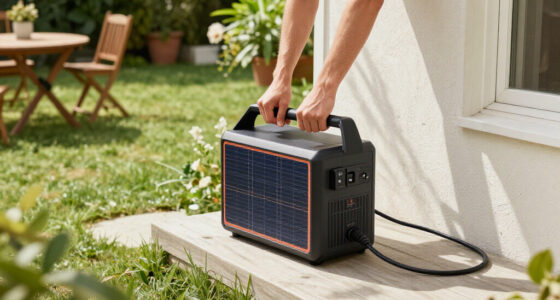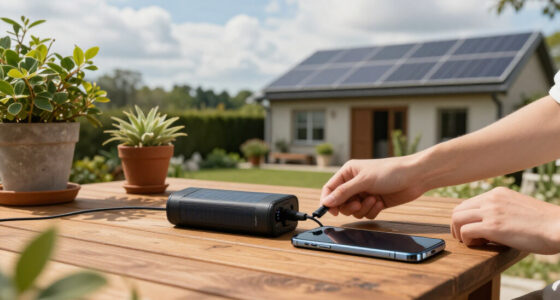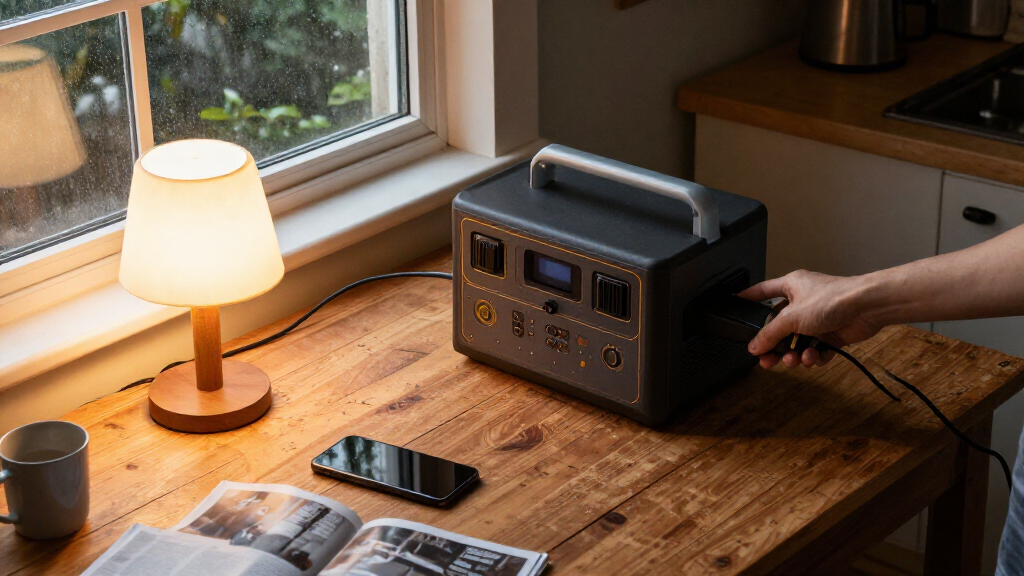

Choosing the best portable power stations requires balancing raw capacity against weight and recharge speed. The EF ECOFLOW DELTA Pro stands out as the best overall pick for those needing massive 3600Wh capacity and high-wattage output for heavy appliances. For campers prioritizing portability, the Jackery Explorer 300 offers a lightweight solution for essentials, while the BLUETTI Elite 100 V2 hits the sweet spot for mid-range versatility. Most buyers face a tradeoff between battery chemistry lifespan and upfront cost, with newer LFP models offering longer durability. Continue reading to see how these fifteen models compare in performance, build quality, and practical application.

Get backup power and energy gear delivered free with Prime
- Fast, free delivery on millions of items
- Prime Video, Amazon Music and more included
- Member-only deals all year
Complete the kit

Key Takeaways
- LFP (LiFePO4) battery chemistry is now standard in most mid-to-high-tier models, offering 3000+ cycle lifespans compared to older NMC batteries.
- Charging speed has become a primary differentiator, with models like the EcoFlow DELTA series recharging from 0 to 80% in under an hour via AC.
- High-wattage output (2000W+) is necessary for induction cooktops and microwaves, but often adds significant weight and cost to the unit.
- Expandability is a key feature in premium models, allowing users to start small and add extra battery units later rather than buying a massive unit upfront.
- Solar input capabilities vary widely; some budget-friendly units lack fast solar charging, making them less ideal for off-grid extended trips.
| EF ECOFLOW DELTA Pro Portable Power Station | 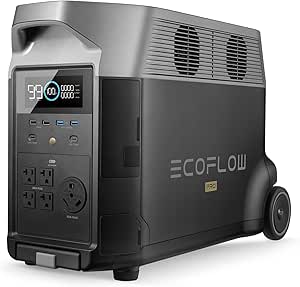 | Best High-Capacity Home Backup | Battery Capacity: 3600Wh | AC Output: 3600W (4500W with X-Boost) | Weight: 99 lbs | VIEW LATEST PRICE | See Our Full Breakdown |
| BLUETTI Elite 100 V2 Portable Power Station |  | Best Fast-Charging Mid-Range | Battery Capacity: 1024Wh | AC Output: 1800W (3600W Surge) | Weight: 25 lbs | VIEW LATEST PRICE | See Our Full Breakdown |
| EF ECOFLOW DELTA 3 Max Portable Power Station |  | Best Balanced Performance | Battery Capacity: 2048Wh | AC Output: 2400W (3400W X-Boost) | Weight: Approx. 40 lbs | VIEW LATEST PRICE | See Our Full Breakdown |
| Jackery Explorer 300 Portable Power Station |  | Best Entry-Level Compact | Battery Capacity: 292Wh | AC Output: 300W (600W Surge) | Weight: 7.1 lbs | VIEW LATEST PRICE | See Our Full Breakdown |
| Anker SOLIX S2000 Portable Power Station |  | Best Long-Life Battery | Battery Capacity: 2,010Wh | AC Output: 1,500W (3,000W Peak) | Weight: 35.7 lbs | VIEW LATEST PRICE | See Our Full Breakdown |
| Jackery Explorer 1000 v2 Portable Power Station |  | Best for Brand Ecosystem Loyalty | Battery Capacity: 1,070Wh | AC Output: 1,500W continuous / 3,000W surge | Battery Type: LFP (LiFePO4) | VIEW LATEST PRICE | See Our Full Breakdown |
| OUPES Mega 1 Portable Power Station |  | Best for Scalability and UPS Use | Capacity: 1024Wh (expandable to 5120Wh) | Continuous Output: 2000W | Surge Output: 4500W | VIEW LATEST PRICE | See Our Full Breakdown |
| Anker SOLIX C1000 Portable Power Station |  | Best Compact Form Factor | Battery Capacity: 1,056Wh | Continuous Output: 1,800W | Surge Output: 2,400W | VIEW LATEST PRICE | See Our Full Breakdown |
| Anker SOLIX C1000 Gen 2 Portable Power Station |  | Best for Fast Recharging Speed | Battery Capacity: 1,024Wh | Continuous Output: 2,000W | Peak Output: 3,000W | VIEW LATEST PRICE | See Our Full Breakdown |
| BLUETTI Elite 200 V2 Portable Power Station | 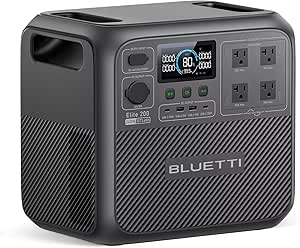 | Best for High Output and Durability | Capacity: 2,073.6Wh | Continuous Output: 2,600W | Power Lifting Output: 3,900W | VIEW LATEST PRICE | See Our Full Breakdown |
| Jackery HomePower 3600 Plus Portable Power Station |  | Best Heavy-Duty Backup | Battery Capacity: 3584Wh | AC Output: 3600W (7200W in parallel) | Battery Chemistry: LiFePO4 (LFP) | VIEW LATEST PRICE | See Our Full Breakdown |
| BLUETTI Elite 30 V2 Portable Power Station |  | Best Compact Emergency Kit | Battery Capacity: 288Wh | Continuous Output: 600W | Peak Output: 1500W (Power Lifting) | VIEW LATEST PRICE | See Our Full Breakdown |
| Jackery Explorer 2000 v2 Portable Power Station |  | Best All-Rounder for RVs | Battery Capacity: 2042Wh | AC Output: 2200W | Battery Chemistry: LiFePO4 | VIEW LATEST PRICE | See Our Full Breakdown |
| EBL Acc2400 Portable Power Station |  | Best Value for High Output | Battery Capacity: 1843.2Wh | Max Output: 2400W | Surge Output: 4800W | VIEW LATEST PRICE | See Our Full Breakdown |
| EF ECOFLOW DELTA 3 Portable Power Station |  | Best for Fast Charging | Battery Capacity: 1024Wh | AC Output: 1800W | Recharge Time: 56 minutes | VIEW LATEST PRICE | See Our Full Breakdown |
| portable power station | Battery Capacity | Weight | AC Output |
|---|---|---|---|
| EF ECOFLOW DELTA Pro Portable | 3600Wh | 99 lbs | 3600W (4500W with X-Boost) |
| BLUETTI Elite 100 V2 Portable | 1024Wh | 25 lbs | 1800W (3600W Surge) |
| EF ECOFLOW DELTA 3 Max Portabl | 2048Wh | Approx. 40 lbs | 2400W (3400W X-Boost) |
| Jackery Explorer 300 Portable | 292Wh | 7.1 lbs | 300W (600W Surge) |
| Anker SOLIX S2000 Portable Pow | 2,010Wh | 35.7 lbs | 1,500W (3,000W Peak) |
| Jackery Explorer 1000 v2 Porta | 1,070Wh | 23.8 lbs | 1,500W continuous / 3,000W surge |
| OUPES Mega 1 Portable Power St | — | — | — |
| Anker SOLIX C1000 Portable Pow | 1,056Wh | — | — |
| Anker SOLIX C1000 Gen 2 Portab | 1,024Wh | 11.3 kg | — |
| BLUETTI Elite 200 V2 Portable | — | — | — |
| Jackery HomePower 3600 Plus Po | 3584Wh | 77.2 lbs | 3600W (7200W in parallel) |
| BLUETTI Elite 30 V2 Portable P | 288Wh | 9.5 lbs | — |
| Jackery Explorer 2000 v2 Porta | 2042Wh | 39.5 lbs | 2200W |
| EBL Acc2400 Portable Power Sta | 1843.2Wh | 54 lbs | — |
| EF ECOFLOW DELTA 3 Portable Po | 1024Wh | 12.5 kg | 1800W |
More Details on Our Top Picks
EF ECOFLOW DELTA Pro Portable Power Station
This unit stands out for its massive expandability, allowing users to scale capacity up to 25kWh with additional batteries, a feature most competitors like the Jackery Explorer 1000 v2 cannot match in this price bracket. It delivers a steady 3600W output, sufficient for running high-draw appliances like space heaters or power tools that would trip smaller units. However, this raw power comes at a physical cost; at 99 lbs, it is far less portable than the Anker SOLIX S2000, making it unsuitable for frequent camping trips. The X-Boost technology is a key differentiator, enabling it to handle devices that exceed its rated wattage by lowering voltage, which extends its utility beyond standard limits. While the initial investment is high, the modular design offers long-term flexibility that fixed-capacity stations lack, making it a serious tool for homeowners preparing for extended outages rather than casual weekend users.Pros:- Expandable capacity up to 25kWh with extra batteries
- 3600W continuous output handles heavy-duty appliances
- X-Boost mode allows powering devices up to 4500W
- Multiple charging methods including EV stations
Cons:- Extremely heavy at 99 lbs, limiting portability
- High upfront cost compared to smaller units
Best for: Homeowners seeking robust emergency backup for high-wattage appliances who plan to expand capacity over time.
Not ideal for: Campers or RV travelers who need lightweight, easily transportable power sources due to its heavy weight.
- Battery Capacity:3600Wh
- AC Output:3600W (4500W with X-Boost)
- Weight:99 lbs
- Expandability:Up to 25kWh
- Ports:15 total outputs
- Charging Methods:AC, Solar, EV, Car, Generator
Our verdict“Choose this if you need serious home backup power and have the space and strength to manage its bulk.”
BLUETTI Elite 100 V2 Portable Power Station
This model excels in recharge speed, hitting 80% charge in just 45 minutes, a significant advantage over the Jackery Explorer 300 which takes four hours. Its 1024Wh capacity strikes a balance between portability and utility, weighing in at 25 pounds, making it manageable for car camping where the EF ECOFLOW DELTA Pro would be impractical. The inclusion of a UPS function with sub-10ms switchover makes it viable for keeping home office equipment online during brief grid failures, a feature often missing in cheaper competitors. While the LiFePO4 battery promises over 4,000 cycles, the 1800W rated output is lower than the Anker SOLIX S2000, limiting its ability to run heavy-duty appliances like microwaves or coffee makers simultaneously. It is a smart choice for users who prioritize quick turnaround times and reliable electronics backup over raw high-wattage power.Pros:- Rapid charging to 80% in 45 minutes
- Built-in UPS with <10ms switchover time
- Lightweight 25 lb design for easy transport
- Quiet 30dB operation in silent mode
Cons:- Lower 1800W output limits high-draw appliance use
- Fast vehicle charging requires separate accessory
Best for: Digital nomads and home office users who need fast recharging and reliable UPS backup for sensitive electronics.
Not ideal for: Users needing to run multiple high-wattage appliances simultaneously due to the 1800W output limit.
- Battery Capacity:1024Wh
- AC Output:1800W (3600W Surge)
- Weight:25 lbs
- Charging Time:45 mins to 80%
- UPS Switchover:≤10ms
- Battery Type:LiFePO4
Our verdict“Ideal for those who value speed and reliability for electronics over raw power for heavy appliances.”
EF ECOFLOW DELTA 3 Max Portable Power Station
Positioned as a versatile all-rounder, this station offers 2048Wh capacity and 2400W output, surpassing the BLUETTI Elite 100 V2 in both storage and power delivery. The X-Boost feature extends this to 3400W, allowing it to handle demanding tools that the Jackery Explorer 1000 v2 might struggle with. Its LiFePO4 battery ensures long-term durability, while the 10ms transfer time supports seamless home backup, similar to the Anker SOLIX S2000. However, the 1.13-hour recharge time to 80% is slower than the BLUETTI’s 45 minutes, requiring more planning for rapid reuse. While it lacks the extreme scalability of the EF ECOFLOW DELTA Pro, it offers a more manageable footprint for RVs and job sites. This model is best for users who need a reliable, high-wattage solution without the bulk of the largest units on the market.Pros:- 2400W output with X-Boost up to 3400W
- 2048Wh capacity supports longer runtimes
- LiFePO4 battery for extended lifespan
- 10ms UPS transfer for home backup
Cons:- Recharge time is slower than top competitors
- Solar panels sold separately
Best for: RV owners and job site workers needing high wattage and capacity without extreme weight.
Not ideal for: Users prioritizing the fastest possible recharge times for frequent, short-cycle usage.
- Battery Capacity:2048Wh
- AC Output:2400W (3400W X-Boost)
- Weight:Approx. 40 lbs
- Charging Time:1.13 hours to 80%
- Transfer Time:10ms
- Battery Type:LiFePO4
Our verdict“A strong contender for those needing a balance of high power and manageable size for mobile work.”
Jackery Explorer 300 Portable Power Station
This unit is designed for minimalists and beginners, offering a 292Wh capacity in a lightweight 7.1-pound package. Unlike the BLUETTI Elite 100 V2, it lacks high-wattage output, making it unsuitable for appliances like coffee makers or space heaters, but it is perfect for charging laptops, phones, and small fans. The LiFePO4 battery provides a lifespan of over 4,000 cycles, outlasting many older lithium-ion models in this size class. While the 300W output is a strict limit, the 600W surge can briefly handle motor-starting devices. Compared to the Anker SOLIX S2000, it offers a fraction of the power and capacity, but its portability and simplicity make it an ideal first purchase for casual campers or emergency kits. It is not a replacement for home backup systems but serves well as a personal power bank for day trips.Pros:- Lightweight 7.1 lb design for easy carrying
- LiFePO4 battery rated for 4,000+ cycles
- Multiple ports for simultaneous charging
- Affordable entry point into power stations
Cons:- Low 292Wh capacity limits runtime
- 300W output cannot handle most appliances
Best for: Beginners, day-trippers, and emergency kit builders who need to charge small electronics.
Not ideal for: Users needing to run appliances over 300W or those requiring extended off-grid runtime.
- Battery Capacity:292Wh
- AC Output:300W (600W Surge)
- Weight:7.1 lbs
- Battery Type:LiFePO4
- Ports:6 total
- Charge Time:4 hours (AC)
Our verdict“Perfect for light-duty use and beginners who prioritize portability over power.”
Anker SOLIX S2000 Portable Power Station
The standout feature here is the 10,000-cycle battery life, significantly outpacing the EF ECOFLOW DELTA 3 Max and BLUETTI Elite 100 V2 in terms of longevity. With 2,010Wh capacity and 1,500W continuous output, it is well-suited for running refrigerators and small appliances for extended periods, claiming up to 35 hours of fridge runtime. While its 35.7 lbs weight is heavier than the BLUETTI Elite 100 V2, it remains portable enough for RV use, unlike the EF ECOFLOW DELTA Pro. The UPS switchover is under 10ms, ensuring sensitive electronics stay online during outages. However, the 1,500W rated output is lower than the EF ECOFLOW DELTA 3 Max, meaning it may struggle with high-draw tools like circular saws or large microwaves. This station is ideal for users who plan to keep the unit for years and prioritize durability and steady, moderate power over peak performance.Pros:- Up to 10,000 battery charge cycles
- 2,010Wh capacity for extended runtime
- UPS switchover under 10ms
- Compact footprint for its capacity
Cons:- 1,500W output limits high-draw appliances
- No 12V DC port for car accessories
Best for: Long-term owners who prioritize battery longevity and reliable appliance backup over peak wattage.
Not ideal for: Users needing to run high-wattage power tools or heavy appliances simultaneously.
- Battery Capacity:2,010Wh
- AC Output:1,500W (3,000W Peak)
- Weight:35.7 lbs
- Battery Cycles:Up to 10,000
- UPS Switchover:<10ms
- Solar Input:Up to 400W
Our verdict“A durable, long-lasting option for those who want a reliable backup system that lasts for years.”
Jackery Explorer 1000 v2 Portable Power Station
The Jackery Explorer 1000 v2 stands out for users already invested in the Jackery ecosystem, particularly those who own compatible solar panels. While its 1,070Wh LFP battery offers solid capacity, the proprietary solar compatibility is a significant constraint compared to the more open standards found in competitors like the Anker SOLIX C1000. I appreciate the foldable handle and the surprisingly light 23.8-pound weight, which makes it manageable for car camping. However, the 1-hour emergency charge mode requires app intervention, which can be a hurdle if you are not tech-savvy. If you do not already own Jackery panels, the OUPES Mega 1 offers a more flexible charging path. This unit is reliable but feels slightly restrictive for buyers wanting third-party accessory freedom.Pros:- Lightweight 23.8 lb design with a foldable handle for easy transport
- High cycle life LFP battery rated for over 4,000 cycles
- App-controlled emergency charging reduces full recharge to 1 hour
- Multiple output ports including 3 AC outlets and 100W USB-C
Cons:- Solar charging is locked to Jackery-branded panels only
- Fast charging requires enabling a specific mode via the app
- Solar panels are not included in the box
Best for: Users who already own Jackery solar panels and want a seamless, app-integrated charging experience.
Not ideal for: Buyers who want to use third-party solar panels or prefer hardware-based charging controls without app dependency.
- Battery Capacity:1,070Wh
- AC Output:1,500W continuous / 3,000W surge
- Battery Type:LFP (LiFePO4)
- Weight:23.8 lbs
- Charging Time:1 hour (emergency mode)
- Cycle Life:Over 70% capacity after 4,000 cycles
- Solar Compatibility:Jackery solar panels only
Our verdict“Choose this if you are already in the Jackery ecosystem; otherwise, its proprietary limitations make it less flexible than competitors.”
OUPES Mega 1 Portable Power Station
The OUPES Mega 1 differentiates itself with expandable capacity, allowing users to add extra batteries to reach 5,120Wh, a feature absent in the fixed-capacity Anker SOLIX C1000. Its 2,000W continuous output and 4,500W surge handle heavy appliances better than the Jackery 1000 v2. The sub-20ms UPS transfer time is robust enough for protecting sensitive electronics during brief outages. Recharging to 80% in 36 minutes is competitive, though combining AC and solar for 26 minutes requires specific setups. The main drawback is that expansion requires purchasing compatible extra batteries, adding to the long-term cost. For those needing a system that grows with their energy needs, this offers more headroom than the BLUETTI Elite 200 V2’s single-unit high capacity.Pros:- Capacity expands up to 5120Wh with extra battery units
- Fast recharging to 80% in 36 minutes via AC
- UPS backup with <20ms transfer time for connected devices
- High 4500W surge rating handles power-hungry tools
Cons:- Expansion requires buying separate, compatible extra batteries
- Weight and dimensions are not explicitly listed in standard specs
Best for: Homeowners who need a UPS backup and want the option to expand energy storage capacity later.
Not ideal for: Users who need a fixed-capacity solution immediately and do not want to manage multiple battery modules.
- Capacity:1024Wh (expandable to 5120Wh)
- Continuous Output:2000W
- Surge Output:4500W
- AC Recharge Time:0–80% in 36 minutes
- UPS Transfer Time:<20ms
- Battery Chemistry:LiFePO4
- Cycle Life:3500+ cycles
Our verdict“This is the best choice for those who anticipate needing more power later and value UPS reliability.”
Anker SOLIX C1000 Portable Power Station
The Anker SOLIX C1000 is engineered for portability, boasting a footprint 15% smaller than comparable 1kWh units. This makes it significantly easier to pack than the bulkier Jackery Explorer 1000 v2. The 1,800W continuous output is sufficient for most camping appliances, though it trails the OUPES Mega 1 in surge capacity. Its UltraFast recharging hits 80% in 43 minutes, but this speed is contingent on using the Anker app, which adds a layer of complexity. The LFP battery is rated for 3,000 cycles and a 10-year lifespan, offering strong long-term value. While the BLUETTI Elite 200 V2 offers more raw power, the Anker C1000 strikes a better balance for those prioritizing space-saving design over maximum output.Pros:- 15% smaller size compared to similar capacity competitors
- Reaches 80% charge in just 43 minutes
- 10-year lifespan battery with 3,000 cycles
- 11 ports allow simultaneous charging of many devices
Cons:- Fast charging mode requires smartphone app integration
- Limited operating temperature range (68–122°F)
Best for: Campers and RV users who are tight on storage space and prioritize a compact, lightweight design.
Not ideal for: Users who need to charge without smartphone access or those requiring higher surge wattage for heavy tools.
- Battery Capacity:1,056Wh
- Continuous Output:1,800W
- Surge Output:2,400W
- Recharge Time:80% in 43 minutes
- Size Advantage:15% smaller than competitors
- Battery Type:LiFePO4
- Ports:11 total ports
Our verdict“Pick this if you need high capacity in the smallest possible package and don’t mind app-based controls.”
Anker SOLIX C1000 Gen 2 Portable Power Station
The Anker SOLIX C1000 Gen 2 improves on its predecessor by offering a 2,000W continuous output and a 3,000W peak, making it more versatile than the original C1000. It recharges fully in 49 minutes, which is faster than the Jackery 1000 v2’s default time. The UPS switchover under 10 ms is exceptionally fast, suitable for sensitive computer equipment, outperforming the OUPES Mega 1’s 20ms threshold. However, the solar input is capped at 600W, which may feel limiting for rapid off-grid recharging compared to higher-input competitors. The discrepancy in outlet counts between marketing materials and specs requires attention. This model is a refined, faster-charging option for those who need reliable backup power without the bulk of larger units like the BLUETTI Elite 200 V2.Pros:- Full AC recharge in just 49 minutes
- UPS switchover time under 10 ms for sensitive electronics
- Higher 2000W continuous output than many 1kWh rivals
- LiFePO4 battery retains 80% capacity after 4,000 cycles
Cons:- Solar input capped at 600W, limiting fast solar refills
- Inconsistency in listed outlet/device counts in documentation
Best for: Tech-heavy users who need ultra-fast UPS protection for computers and quick recharging between uses.
Not ideal for: Users who rely heavily on solar for primary charging, as the 600W input limit slows down refills.
- Battery Capacity:1,024Wh
- Continuous Output:2,000W
- Peak Output:3,000W
- Full AC Recharge:49 minutes
- UPS Switchover:Under 10 ms
- Solar Input:600W max
- Weight:11.3 kg
Our verdict“This is the fastest-charging option in its class, ideal for users who need power back online in under an hour.”
BLUETTI Elite 200 V2 Portable Power Station
The BLUETTI Elite 200 V2 is a powerhouse with 2,600W continuous output and 2,073.6Wh capacity, nearly double the energy of the Anker SOLIX C1000 Gen 2. Its 6,000-cycle battery life is the longest in this lineup, ensuring longevity for daily users. The Power Lifting mode reaches 3,900W, allowing it to run high-draw appliances like space heaters, which the OUPES Mega 1 struggles with at sustained levels. However, the runtime spec of 3 minutes listed in some documentation is confusing and likely refers to a specific high-load test case, not general use. Charging speed depends on compatible equipment, which can be a friction point. This is the best pick for those who need serious power and durability, accepting the larger size and weight trade-off.Pros:- 2,600W continuous output handles heavy household appliances
- Battery rated for over 6,000 charge cycles
- Power Lifting mode boosts peak output to 3,900W
- Supports diverse charging sources including generators and cars
Cons:- Confusing runtime specifications in documentation
- Fastest charging requires specific compatible equipment
Best for: Users who need to run high-wattage appliances and want the longest possible battery lifespan.
Not ideal for: Backpackers or small-space campers, as this unit is significantly larger and heavier than 1kWh options.
- Capacity:2,073.6Wh
- Continuous Output:2,600W
- Power Lifting Output:3,900W
- Battery Cycle Life:Over 6,000 cycles
- AC Outlets:4
- UPS Backup:≤15ms
- Charging Sources:Solar, AC, Car, Generator
Our verdict“This is the most durable and powerful option for heavy-duty use, though it sacrifices portability for capacity.”
Jackery HomePower 3600 Plus Portable Power Station
This unit stands out for its massive 3584Wh capacity and ability to deliver 7200W output when two units run in parallel. Unlike the lighter EF ECOFLOW DELTA 3, which tops out at 1800W, this Jackery model handles heavy-duty appliances like well pumps or large heaters without breaking a sweat. The LFP battery offers 6,000 cycles, ensuring longevity that outweighs the 77.2-pound weight. While the EBL Acc2400 offers similar wattage, the Jackery’s expandability up to 43kWh across multiple units makes it a superior long-term investment for serious off-grid setups. The wheeled design mitigates the bulk, but it remains a stationary solution rather than a grab-and-go option.Pros:- Massive 3584Wh base capacity with expandability up to 43kWh
- Parallel operation doubles output to 7200W for heavy loads
- LFP battery rated for 6,000 cycles ensures long lifespan
- Wheels and telescopic handle assist with moving the heavy unit
Cons:- Extremely heavy at 77.2 pounds
- Solar panels are sold separately
- Overkill capacity for simple camping trips
Best for: Homeowners needing whole-house backup or users running high-draw appliances like well pumps and space heaters.
Not ideal for: Campers or RVers who prioritize portability, as 77 pounds and a bulky form factor make transport difficult.
- Battery Capacity:3584Wh
- AC Output:3600W (7200W in parallel)
- Battery Chemistry:LiFePO4 (LFP)
- Cycle Life:6,000 cycles
- Weight:77.2 lbs
- Expandability:Up to 43kWh
- Warranty:5 Years
Our verdict“Choose this if you need serious, expandable home backup power and can tolerate the significant weight.”
BLUETTI Elite 30 V2 Portable Power Station
At just 9.5 pounds, this station is the lightest option in this lineup, making it ideal for emergency kits or short camping trips where space is tight. It lacks the raw capacity of the Jackery Explorer 2000 v2, offering only 288Wh, but its 10ms UPS transfer time is impressive for a device this small, protecting sensitive electronics during outages. The 1500W Power Lifting Mode allows it to run devices that technically exceed its 600W continuous rating, provided they have resistive loads. Compared to the EF ECOFLOW DELTA 3, it charges faster (45 minutes to 80%) but cannot sustain power for long periods. It is a specialist tool for backup, not a primary power source.Pros:- Ultra-portable at only 9.5 pounds
- Fast 10ms UPS switching protects sensitive electronics
- Quick charging: 0–80% in 45 minutes
- Power Lifting Mode handles up to 1500W resistive loads
Cons:- Low 288Wh capacity limits runtime
- Solar panel not included in the box
- Cannot run high-draw inductive loads for extended periods
Best for: Users needing a lightweight backup for routers, medical devices, or phones during short power outages.
Not ideal for: Long-term camping or running high-wattage appliances like microwaves or coffee makers for more than a few minutes.
- Battery Capacity:288Wh
- Continuous Output:600W
- Peak Output:1500W (Power Lifting)
- UPS Transfer Time:<10ms
- Weight:9.5 lbs
- Charging Time:70 mins (0-100%)
- Outlets:9 Total
Our verdict“Buy this for its portability and fast UPS backup, but skip it if you need hours of runtime for high-wattage devices.”
Jackery Explorer 2000 v2 Portable Power Station
This model hits the sweet spot between the massive Jackery HomePower 3600 Plus and the compact BLUETTI Elite 30 V2. With 2042Wh capacity and 2200W output, it powers most RV appliances, from coffee makers to electric grills, without the bulk of larger home backup units. The LiFePO4 battery ensures durability, while the 20ms UPS switching adds reliability for home use. It is significantly lighter than the EBL Acc2400 at 39.5 pounds, making it easier to load into a vehicle. While the EF ECOFLOW DELTA 3 charges faster, the Jackery’s established ecosystem and robust build quality make it a safer bet for users who prioritize reliability over peak recharge speed.Pros:- Balanced 2042Wh capacity for versatile use
- 2200W output handles most household appliances
- Lighter than comparable 2kWh units at 39.5 lbs
- Quiet operation (<30dB) during charging
Cons:- Heavier than compact competitors
- Solar panels sold separately
- UPS switching is slower than BLUETTI Elite 30 V2
Best for: RV owners and campers who need reliable power for mid-sized appliances and moderate runtime.
Not ideal for: Users needing to power heavy-duty tools like table saws or those wanting the fastest possible recharge times.
- Battery Capacity:2042Wh
- AC Output:2200W
- Battery Chemistry:LiFePO4
- Weight:39.5 lbs
- UPS Switching:20ms
- AC Charging:0-80% in 66 mins
- USB-C PD:100W
Our verdict“The ideal choice for RVers who want a balance of power, portability, and proven reliability.”
EBL Acc2400 Portable Power Station
The EBL Acc2400 delivers 2400W output and 1843.2Wh capacity at a price point that often undercuts premium brands like EF ECOFLOW. It features 12 charging connections, including four AC outlets, which is more than the Jackery Explorer 2000 v2 offers. The LiFePO4 battery rated for 3,500 cycles provides decent longevity, though it trails the 6,000 cycles of the Jackery HomePower 3600 Plus. At 54 pounds, it is heavier than the Jackery 2000 v2 but lighter than the 3600 Plus. This station is best for users who need high wattage for power tools or multiple devices simultaneously but do not require the absolute longest battery lifespan or premium build materials.Pros:- High 2400W output with 4800W surge
- 12 total charging ports for simultaneous device use
- LiFePO4 battery with 3,500+ cycle rating
- Fast 0.1-second emergency backup switching
Cons:- Heavy at 54 lbs
- Inconsistent product data regarding weight and dimensions
- Lower cycle life compared to top-tier competitors
Best for: DIYers and job-site workers who need high wattage and multiple outlets without paying for premium branding.
Not ideal for: Users who prioritize maximum battery cycle life or ultra-quiet operation in residential settings.
- Battery Capacity:1843.2Wh
- Max Output:2400W
- Surge Output:4800W
- AC Outlets:4
- Total Ports:12
- Weight:54 lbs
- Cycle Life:3,500+ cycles
Our verdict“A solid, cost-effective option for high-output needs, provided you can overlook the heavier weight.”
EF ECOFLOW DELTA 3 Portable Power Station
The EF ECOFLOW DELTA 3 redefines convenience with a 56-minute full charge, far outpacing the Jackery Explorer 2000 v2 and EBL Acc2400. Its 1024Wh capacity is moderate, sitting between the tiny BLUETTI Elite 30 V2 and the larger 2kWh units, making it perfect for weekend trips or short outages. The 1800W output handles most small appliances, and the ability to expand to 5kWh offers a growth path that the EBL Acc2400 lacks. While it weighs 12.5kg (27.5 lbs), it is manageable for most users. The tradeoff is that expansion requires specific EcoFlow batteries, locking you into their ecosystem, but the speed and versatility make it a top pick for modern users.Pros:- Extremely fast 56-minute full recharge
- Expandable capacity up to 5kWh with add-on batteries
- Powers up to 13 devices simultaneously
- 5-year warranty covers the LiFePO4 battery
Cons:- Expansion requires proprietary EcoFlow batteries
- Moderate 1024Wh capacity limits long-run time
- Heavier than the BLUETTI Elite 30 V2
Best for: Tech-savvy campers and digital nomads who value rapid recharging and expandable capacity.
Not ideal for: Users needing to run heavy-duty appliances like refrigerators or space heaters for extended periods.
- Battery Capacity:1024Wh
- AC Output:1800W
- Recharge Time:56 minutes
- Max Expansion:5kWh
- Battery Chemistry:LiFePO4
- Cycle Life:4,000 cycles to 80%
- Weight:12.5 kg
Our verdict“Ideal for users who hate waiting for their power station to recharge and want room to grow.”
How We Picked
I evaluated these units based on three core pillars: power density, recharge efficiency, and versatility. Power density measures how much energy is stored per pound, which matters for campers hauling gear. Recharge efficiency looks at AC and solar input speeds, a critical factor for users who need to top up quickly between uses. Versatility considers the variety of output ports and the ability to run high-draw appliances without overloading the system.
Ranking logic prioritized reliability and battery chemistry. I favored models using LFP batteries for their longevity and safety profile, placing them higher than older NMC-based competitors unless the price difference was substantial. I also weighed the availability of expansion options, as this allows a single unit to serve multiple use cases, from weekend camping to home emergency backup.
Factors to Consider When Choosing Best Portable Power Stations
Selecting the right power station isn’t just about picking the biggest number. It involves understanding how you will use the unit, where you will store it, and what you expect to plug into it.Understanding Battery Chemistry: LFP vs. NMC
Lithium Iron Phosphate (LFP) batteries have largely replaced older Lithium Nickel Manganese Cobalt (NMC) cells in the premium segment. LFP cells offer a lifespan of 3,000 to 6,000 cycles, meaning they retain 80% capacity after years of daily use. In contrast, NMC batteries typically degrade after 500 to 1,000 cycles. While NMC units are lighter and cheaper, they require replacement sooner. If you plan to use the station daily or as a permanent home backup, the higher upfront cost of LFP pays off over time. For occasional weekend campers, a lighter NMC model might still make sense due to reduced weight.
Capacity vs. Weight: The Portability Tradeoff
There is a direct correlation between Wh (Watt-hours) capacity and physical weight. A 1000Wh unit might weigh 20 pounds, while a 3600Wh unit can exceed 100 pounds. I recommend matching capacity to your actual consumption, not your fear of running out. Most campers only need 500-1000Wh for phones, lights, and small fans. Buying a 3000Wh unit for these tasks means hauling unnecessary weight. However, if you need to run a coffee maker or a space heater, you cannot compromise on capacity. Assess your total watt-hours needed per day before deciding if the extra weight is justified.
Output Watts: What Can You Actually Run?
The AC output wattage determines which appliances you can operate. A 500W station cannot run a 1000W microwave, even if it has the battery capacity. Pure sine wave inverters are standard now, which is good for sensitive electronics, but you must check the surge rating. Induction cooktops and refrigerators often have high startup surges that can trip a station’s safety cutoff. If you plan to run kitchen appliances, look for models with at least 2000W continuous output and 4000W surge capacity. For digital devices only, a 600W output is sufficient and keeps the unit smaller.
Recharge Speed and Solar Compatibility
Waiting 5-8 hours for a full recharge is frustrating if you are in a hurry or relying on limited sunlight. Fast AC charging is a major upgrade, with top-tier models reaching 80% charge in under 60 minutes. When evaluating solar input, check the maximum MPPT input wattage. A unit that accepts 500W of solar can recharge in a few hours with two panels, while a unit limited to 100W might take all day. If you go off-grid, solar compatibility is more important than AC speed. Ensure the unit supports the voltage and amperage of the solar panels you own or plan to buy.
Expandability and Future-Proofing
Some power stations are standalone, while others support expansion batteries that plug in to double or triple capacity. This feature is valuable if your needs might grow. You can buy a smaller, cheaper unit for current trips and add a battery block later for home backup. Standalone units are often more compact but offer no path to upgrade. If you anticipate needing more power in the future, choose a model with a modular ecosystem. This prevents you from having to replace the entire unit when your energy requirements increase.
Frequently Asked Questions
Can I plug a portable power station into my home wall outlet to charge it?
Yes, all units on this list can be recharged via a standard AC wall outlet. However, charging speeds vary dramatically. Budget models may take 6-10 hours to reach 100%, while premium models with fast-charging technology can reach 80% in under an hour. If you need to recharge overnight or during short breaks, prioritize models with high AC input wattage. Always use the provided charging cable to avoid damaging the internal controller.
How many watts do I need for a CPAP machine?
A typical CPAP machine consumes between 30 and 60 watts, depending on whether it uses a humidifier. For a single night of use (8 hours), you would need roughly 240-480Wh of capacity. The Jackery Explorer 300 or BLUETTI Elite 30 V2 are suitable for this specific purpose because they are lightweight and sufficient for the load. If you use a heated humidifier, your wattage draw increases, so you should opt for a 500Wh+ model to have a safety margin.
Is it safe to leave a portable power station plugged in constantly?
Most modern power stations have Battery Management Systems (BMS) that stop charging once the battery is full to prevent overcharging. However, keeping a lithium battery at 100% for months can slightly accelerate degradation. For long-term storage, I recommend storing the unit at around 50-80% charge. If you are using it as a home backup, it is acceptable to leave it plugged in, but try to discharge it to 50% and recharge it every few months to keep the cells healthy.
Can I run a coffee maker or microwave with these units?
Yes, but only with specific models. You need a unit with a continuous AC output of at least 1000W for a small coffee maker and 1200-1500W for a standard microwave. The EcoFlow DELTA Pro, Anker SOLIX S2000, and BLUETTI Elite 200 V2 are capable of this. Smaller units like the Jackery Explorer 300 cannot handle these high-draw appliances and will shut down to protect themselves. Always check the appliance’s starting wattage, which is often higher than the running wattage.
What is the difference between LiFePO4 and Lithium-Ion batteries in these stations?
LiFePO4 (LFP) batteries are heavier but last much longer, often offering 3,000+ charge cycles compared to 500-1,000 for traditional Lithium-Ion (NMC). LFP is also more stable and less prone to thermal runaway, making it safer for hot environments. While NMC batteries are lighter and cheaper, they degrade faster with frequent use. For daily use or long-term ownership, LFP is the better investment. For occasional, light camping trips where weight is critical, NMC might still be a viable option.
Conclusion
Choosing the right power station depends entirely on your primary use case. For best overall performance and heavy-duty home backup, the EF ECOFLOW DELTA Pro is unmatched in capacity and speed. If you are looking for best value for general camping, the BLUETTI Elite 100 V2 offers a balanced mix of power and portability. Beginners should start with the Jackery Explorer 300 for its simplicity and light weight. For those needing best premium features with expandability, the Anker SOLIX S2000 provides robust build quality and high output. Evaluate your wattage needs and weight tolerance before making your final choice.