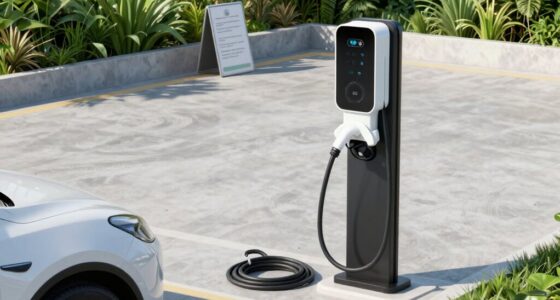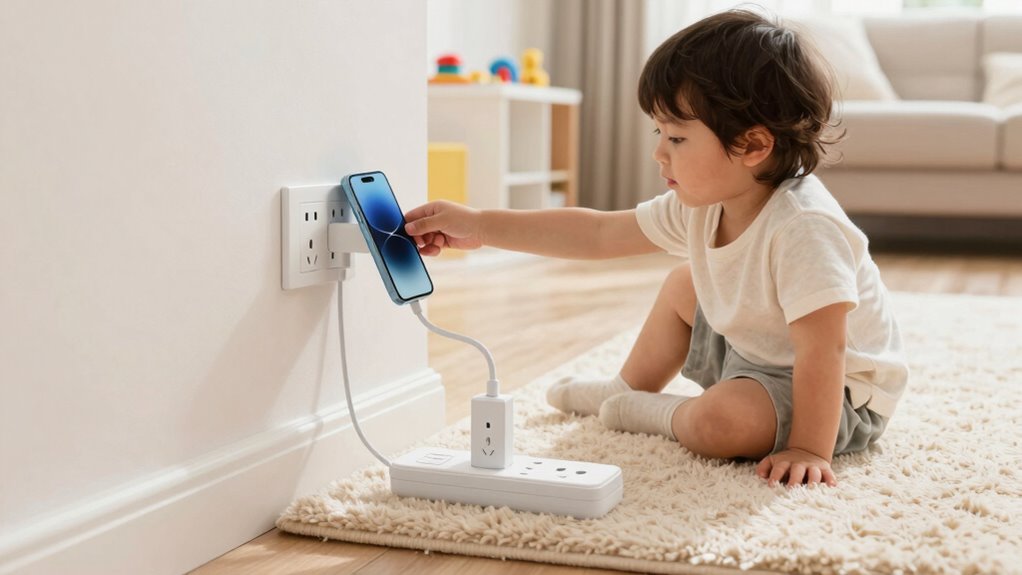

To keep children safe around charging equipment, always supervise them during charging and keep cables out of reach or hidden. Use only original chargers, regularly check for wear, and replace damaged accessories immediately. Avoid charging near water and never leave devices unattended overnight. Set up charging stations on high, stable surfaces away from play areas, and use surge protectors with childproof covers. Want to learn more safety tips? Keep exploring for extra ways to protect your little ones.

Get backup power and energy gear delivered free with Prime
- Fast, free delivery on millions of items
- Prime Video, Amazon Music and more included
- Member-only deals all year
Key Takeaways
- Keep chargers out of children’s reach when not in use and supervise during charging.
- Use only original, undamaged chargers and cables to prevent malfunctions.
- Set up charging stations on high, stable surfaces away from children’s play areas.
- Educate children about the dangers of tampering with cords, ports, and batteries.
- Avoid charging devices near water or damp environments to prevent electrical hazards.
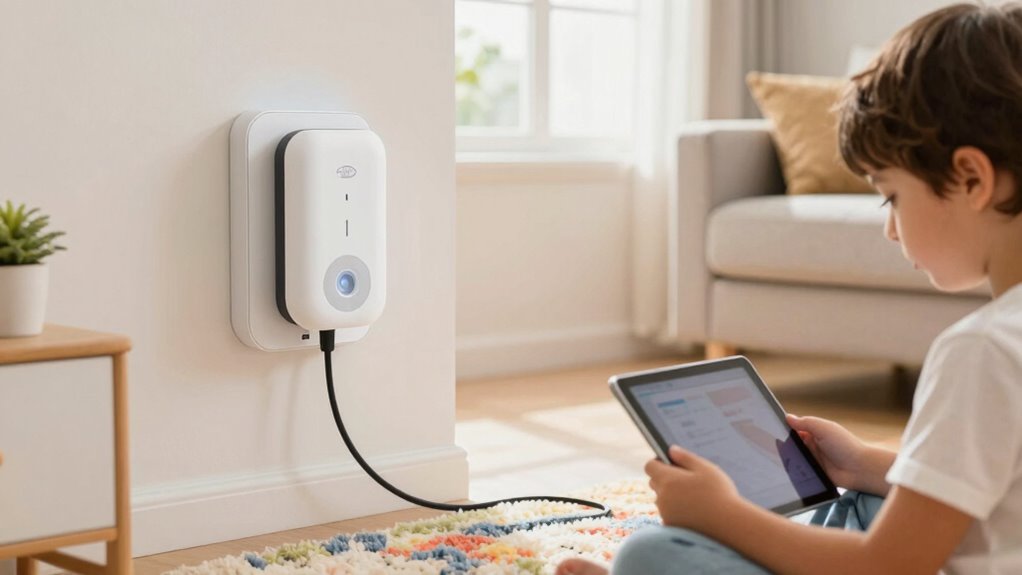
With children increasingly exposed to electronic devices, ensuring their safety around charging equipment is more important than ever. Kids are naturally curious, and that curiosity can lead them to explore chargers, cables, and power outlets. As a parent or caregiver, your goal is to minimize risks related to battery safety and electrical hazards. One of the most effective ways to do this is by keeping chargers out of reach when not in use and supervising children during device use. Never leave charging cables lying around where children can grab them, as they might pull or chew on the cables, risking electrical shock or damage to the device. Secure cords with cable organizers or hide them behind furniture to prevent accidental pulling or tripping hazards.
When it comes to battery safety, it’s crucial to use only the original chargers and cables provided by the device manufacturer. Cheap or counterfeit chargers can malfunction, overheat, or supply inconsistent power, increasing the risk of battery damage or even fire. Always inspect chargers and cables regularly for signs of wear or damage, such as fraying or exposed wires. If you notice any defects, replace the accessories immediately. Educate children about the dangers of inserting objects into charging ports or tampering with cables. Explaining that chargers are not toys helps build awareness and encourages cautious behavior. Understanding battery safety and how to handle electronic accessories properly is essential for a safe home environment. Additionally, teaching children about electricity awareness can help them better understand the potential hazards.
To reduce electrical hazards, avoid charging devices near water or in damp areas, since moisture significantly increases the risk of electrical shock. Never leave devices charging unattended for long periods, especially overnight, as overcharging or faulty wiring could cause overheating. Use surge protectors with childproof covers to add an extra layer of safety, preventing accidental unplugging or interference. When setting up a charging station, choose a high, stable surface away from areas where children play or sleep, and ensure that cords are not stretched across walkways where they could cause trips or pulls. Additionally, opting for vehicle battery trickle chargers with safety features can help prevent overheating and electrical issues during charging. Properly managing cabling safety is essential for reducing risks in a busy household. Incorporating electrical safety guidelines from reputable sources can further enhance household safety and awareness.
By taking these precautions, you can significantly lower the chances of electrical accidents and keep your children safe around charging equipment.
Products Worth Considering

Autel 50A Level 2 EV Charger, 240V Hardwired with 25 ft Cable

Autel 50A Level 2 Hardwired EV Charger with 25 ft J1772 Cable

DEWALT 20V MAX 5-Tool Combo Kit with Drill, Impact Driver, Reciprocating Saw, Circular Saw, Oscillating Tool, Battery and Charger
As an affiliate, we earn on qualifying purchases.
Frequently Asked Questions
Can Children Use Charging Cables Independently?
Children should not use charging cables independently, as adult supervision is essential. You need to supervise them closely and guarantee proper cable management to prevent accidents like choking or electrical shock. Keep cables out of reach when not in use, and teach children about the dangers of charging equipment. By actively supervising and organizing cables, you reduce risks and help your children stay safe around charging devices.
What Are the Signs of Electrical Shock in Children?
Imagine you’re in a scene from a silent film—sudden muscle contractions grab your attention. If your child experiences electrical burns or involuntary jerking movements, these are signs of electrical shock. Look for burns, muscle spasms, or confusion. They might also complain of pain or numbness. Promptly seek medical help if you notice any of these signs, as electrical shock can be serious and requires immediate attention.
Are There Child-Proof Outlets Available?
Yes, there are child-proof outlets available. You can install safe outlet covers that prevent children from inserting objects into the sockets. These covers act as an extra layer of protection, reducing the risk of electrical shock. Look for secure, easy-to-use safe outlet covers designed specifically for children. By using these child-proof outlets, you make your home safer and give yourself peace of mind knowing little hands can’t access dangerous electrical areas.
How Should I Store Charging Equipment When Not in Use?
When not in use, you should store charging equipment in a secure, out-of-reach location to guarantee storage safety. Use a dedicated drawer or cabinet to keep cords and chargers organized, reducing clutter and preventing accidental contact. Wrap cords neatly to prevent damage and avoid tangling. By maintaining proper equipment organization, you minimize risks and create a safer environment for children, making sure charging devices are safely tucked away when idle.
Is It Safe to Leave Charging Devices Plugged in Overnight?
Leaving charging devices plugged in overnight isn’t entirely safe. Studies show that electrical fires caused by charging hazards are responsible for many home incidents annually. For battery safety, it’s best to unplug devices once they’re fully charged to prevent overheating or potential fires. Keeping chargers out of children’s reach also minimizes risks. Always follow manufacturer guidelines for safe charging practices to guarantee your home’s safety and your children’s protection.
Conclusion
Remember, the charging equipment is more than just wires and plugs; it’s a symbol of technology’s power and promise. By staying vigilant, you’re shielding your child from unseen dangers, like a guardian standing watch over a precious flame. Your careful attention keeps their innocence shining bright, safe from sparks of harm. In your hands, safety becomes a guiding light, illuminating a path where curiosity and caution walk side by side, nurturing their growth and wonder.