To reduce tripping risks around home charging equipment, manage your cables carefully by securing cords with clips or adhesive hooks and keeping them away from walkways. Consider using cable covers or ramps to protect and conceal cables in high-traffic areas. Opt for wireless charging options to eliminate cords altogether where possible. Proper placement, ensuring good lighting, and staying organized can prevent accidents and keep your space safe. Keep exploring to discover more effective safety tips.

Get backup power and energy gear delivered free — and shop member deals
- Fast, free delivery on millions of items
- Access to Prime Big Deal Days deals on October 6–7
- Prime Video, Amazon Music and more included
Key Takeaways
- Use wireless charging stations to eliminate cords and reduce trip hazards.
- Secure cords with clips, hooks, or cable covers along walls or edges.
- Keep cords organized and away from high-traffic walkways or driveways.
- Create well-lit, designated charging areas to improve visibility and safety.
- Regularly inspect and maintain cords to prevent damage and potential hazards.

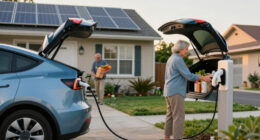
If you charge your electric vehicle at home, reducing tripping hazards around your charging station is essential for safety. One effective way to do this is by exploring wireless charging options. Wireless chargers eliminate the need for cords altogether, removing a common trip hazard from your driveway or garage. When you use wireless charging pads or stations, there’s no need to worry about tangled cords or extending cables across walkways, which often leads to accidents. This technology makes charging more seamless and safer, especially if you have kids or pets around.
However, if you prefer traditional corded chargers, managing those cords properly becomes crucial. Proper cord management prevents tripping and protects your cables from damage. Use cable clips or adhesive hooks to secure cords along walls or under door thresholds, keeping them out of high-traffic areas. Avoid leaving loose cables sprawled across walkways, as they can easily cause someone to trip. When possible, run cords along the edges of your driveway or garage floor, and ensure they are anchored securely. You can also use cord covers or ramps designed specifically for protecting and concealing cables, which not only keeps cords out of the way but also prevents wear and tear that could lead to electrical hazards. Implementing proper cable management techniques is essential for maintaining a safe and organized charging environment. Additionally, choosing cords made from durable materials can help prevent damage over time. Incorporating region-specific design elements can help create a more integrated and aesthetically pleasing setup around your charging station.
Maintaining good cord management practices goes hand in hand with your overall safety strategy. Keep charging areas well-lit so you can easily see cords and potential hazards. Encourage everyone in your household to be mindful of the charging station and avoid leaving cords in walkways. Considering electric vehicle safety measures can further enhance your safety setup and prevent accidents. By combining wireless charging options with effective cord management, you create a safer environment around your home charging station. This approach not only reduces tripping risks but also prolongs the life of your cables and equipment, making your EV charging experience more convenient and secure.
wireless charging station for home
As an affiliate, we earn on qualifying purchases.
As an affiliate, we earn on qualifying purchases.
Frequently Asked Questions
Are There Specific Cables Designed to Minimize Tripping Hazards?
Yes, there are cables designed to minimize tripping hazards. Look for cables with flat or low-profile designs, which are easier to manage and less likely to cause trips. Use cable management solutions like clips, sleeves, or channels to keep cords organized and out of walkways. Proper cable management is essential for tripping prevention, so regularly check and adjust your setup to guarantee safety around your home charging equipment.
How Often Should Charging Cords Be Inspected for Damage?
Think of your charging cords as lifelines; neglecting them can lead to unexpected breaks. You should inspect your cords for damage at least once a month, focusing on signs of cord wear like fraying, cracks, or exposed wires. An ongoing inspection schedule keeps you aware of potential hazards, ensuring your charging setup remains safe. Regular checks help prevent accidents before they happen, keeping your home secure and your devices powered smoothly.
Can Outdoor Weather Conditions Affect Charging Cable Safety?
Outdoor weather conditions can definitely affect your charging cable’s safety. Weather resilience is vital, as exposure to rain, snow, or extreme sunlight can degrade insulation and connectors, increasing electrical hazards. Environmental impact, like moisture or dirt, can cause corrosion or short circuits. To keep safe, make sure your cables are rated for outdoor use, inspect regularly, and store them properly when not in use. This minimizes risks and prolongs your equipment’s lifespan.
Are There Recommended Storage Solutions for Charging Equipment?
Imagine a homeowner finding their charging cable tangled and a tripping hazard. To prevent this, use secure storage solutions like wall-mounted hooks or dedicated cabinets. Proper cord organization keeps cables neat and accessible, reducing trip risks and damage. Investing in a weatherproof storage box also shields equipment from outdoor elements. These simple steps guarantee your charging setup remains safe, organized, and easy to use, protecting both your family and your vehicle.
What Safety Accessories Can Enhance Charging Area Safety?
You can enhance your charging area safety by using wireless charging pads, which eliminate the need for cords that can cause tripping hazards. Installing child safety covers on outlets and securing cables out of children’s reach further prevents accidents. Additionally, consider using cable management clips and non-slip mats to keep cords organized and stable. These safety accessories create a safer environment, especially when children are around, reducing risks and promoting peace of mind.
cable management clips and hooks
As an affiliate, we earn on qualifying purchases.
As an affiliate, we earn on qualifying purchases.
Conclusion
By following these simple tips, you can keep your home charging area safe and free from tripping hazards. Regularly inspect cords and equipment, keep walkways clear, and use proper cable management. Remember, a tidy charging space is a safer space—like keeping your own personal cobblestone street free of unexpected obstacles. Stay vigilant, and you’ll enjoy a worry-free charging experience. After all, safety isn’t just a modern concern; even the pioneers knew the importance of a clear path!
cable covers for floor and driveway
As an affiliate, we earn on qualifying purchases.
As an affiliate, we earn on qualifying purchases.
electric vehicle charging cable organizer
As an affiliate, we earn on qualifying purchases.
As an affiliate, we earn on qualifying purchases.
Fall Picks
fall essentials
As an affiliate, we earn on qualifying purchases.