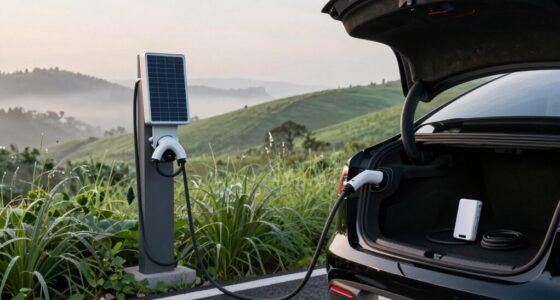
Before switching to an EV, understand that charging infrastructure varies and may require planning, especially for long trips. Expect some initial challenges with operational procedures and a learning curve for using chargers and apps. Recognize that range can decrease in cold weather or high speeds, and maintenance costs are generally lower but still need budgeting, especially for batteries. Staying informed about industry updates will help set realistic goals, and if you keep exploring, you’ll discover more ways to make your progression smoother.

Get backup power and energy gear delivered free with Prime
- Fast, free delivery on millions of items
- Prime Video, Amazon Music and more included
- Member-only deals all year
Key Takeaways
- Research local charging infrastructure and plan charging stops to avoid inconveniences during longer trips.
- Understand that EV range may decrease in cold weather or under heavy use, affecting trip planning.
- Budget for potential maintenance costs, including battery health assessments and eventual replacements.
- Familiarize yourself with EV operation, charging procedures, and compatible chargers to minimize the learning curve.
- Keep informed about industry advancements and infrastructure developments to set accurate expectations.

Switching to an electric vehicle (EV) can be an exciting step toward a more sustainable future, but it’s important to set realistic expectations from the start. One of the first things to consider is the charging infrastructure in your area. Unlike traditional gasoline stations, charging stations for EVs are still growing, and their availability can vary widely depending on where you live. If you rely heavily on quick refueling, you’ll want to research the local charging options beforehand. Some neighborhoods might lack fast chargers, forcing you to plan longer stops or install a home charger if possible. Understanding your typical driving habits and the proximity to charging stations helps you avoid surprises and makes the transition smoother.
Research local charging options and plan accordingly for a smoother EV ownership experience.
Another aspect to keep in mind is maintenance costs. Many people assume EVs will be cheaper to maintain since they have fewer moving parts than internal combustion engines. While that’s generally true, it doesn’t mean maintenance costs are nonexistent. You’ll still need to budget for regular checkups, battery health assessments, and potential repairs. The battery, which is the heart of your EV, can eventually degrade, leading to costly replacements if not properly cared for. Although EVs tend to have lower maintenance costs overall, it’s wise to prepare for these expenses so you’re not caught off guard. Regular servicing, such as tire rotations and brake checks, also remains essential, and some EV-specific components might require specialized attention. Additionally, battery longevity is an important factor to consider, as it can influence long-term ownership costs. Being aware of how battery technology is evolving can help you make more informed decisions about your EV’s lifespan and potential upgrades.
Expectations around range are another critical point. Many EVs today boast impressive ranges, but they won’t always match the convenience of refueling a gasoline car in just minutes. Cold weather, high speeds, and using the heater can all reduce your vehicle’s range. This means you should plan your trips accordingly and be mindful of how far you can go on a single charge. Overestimating your EV’s range can lead to inconvenience or even getting stranded, so it’s better to be cautious and plan for charging stops on longer journeys. Furthermore, understanding the charging process can help you better manage your expectations and reduce any frustration during the transition. Additionally, learning about charger types and their compatibility with your vehicle can save you time and effort when searching for charging stations.
Finally, it’s worth acknowledging that owning an EV is a learning curve. You might encounter unfamiliar procedures, such as how to operate your home charging station or navigating apps for locating charging points. While these challenges are manageable, setting the right expectations helps you adapt more quickly. Additionally, staying informed about emerging industry trends can help you make better decisions and optimize your ownership experience. Overall, understanding these realities ensures you’re prepared for the adjustment, helping you enjoy the benefits of your new EV without unnecessary frustrations.
Products Worth Considering

DEWALT 20V MAX 1/4-Inch Impact Driver Kit with Battery and Charger (DCF787D1)

Autel Home EV Charger up to 50A J1772 Hardwired Level 2 Charger with 25 ft Cable

NOCO Boost GB150 3000A UltraSafe Jump Starter, 12V Lithium Battery Booster
As an affiliate, we earn on qualifying purchases.
Frequently Asked Questions
How Long Does It Take to Charge an EV Fully?
It usually takes about 4 to 12 hours to fully charge an EV, depending on your charging infrastructure and the battery size. Fast chargers can do it in around 30 minutes to a few hours, while home chargers take longer. Keep in mind, as EVs become more popular, improved charging infrastructure will make charging quicker and more convenient. Plus, proper battery recycling helps sustain the environment and supports the industry.
Are EVS Suitable for Long-Distance Travel?
EVs can be suitable for long-distance travel if you plan carefully, especially considering the charging infrastructure along your route. Modern fast chargers make quick top-ups possible, reducing downtime. Keep in mind, EVs generally have a lower environmental impact than traditional cars, especially when charged with renewable energy. With good planning, you can enjoy extended trips without sacrificing convenience or sustainability, making EVs a practical choice for long journeys.
What Is the Typical Lifespan of an EV Battery?
Battery breakdowns typically last between 8 to 15 years, depending on usage and maintenance. You’ll notice battery degradation over time, affecting range. To keep your EV energized, rely on robust charging infrastructure and proper care. With regular charging and mindful driving, your EV battery can serve you well for many years, providing reliable performance while you enjoy eco-friendly adventures.
How Much Do EV Maintenance Costs Usually Amount To?
You’ll typically spend about $300 to $700 annually on EV maintenance costs, mostly on tire rotations, brake checks, and fluid replacements. Because EVs have fewer moving parts, maintenance is cheaper than traditional cars. Keep in mind, proper battery recycling can help maintain resale value, which tends to stay higher for EVs with well-maintained batteries. Regular upkeep guarantees you maximize your EV’s lifespan and overall value.
Can I Install a Home Charging Station Myself?
Installing a home charging station is doable if you’re handy, but it’s not a walk in the park. You’ll need to handle home wiring safely, and depending on your setup, installation costs can be quite steep. While DIY might save money, it’s often best to hire a licensed electrician to guarantee everything’s up to code and safe. Don’t underestimate the complexity—safety always comes first with electrical work.
Conclusion
As you stand by your new EV, it’s like catching a glimpse of a sunrise—bright and promising, yet revealing that the journey ahead has its moments of darkness and light. By setting realistic expectations now, you’ll navigate this shift smoothly, appreciating the quiet hum of efficiency and the occasional charging pause. Remember, embracing the ups and downs will make your EV experience more rewarding, turning everyday drives into moments of discovery and sustainability.