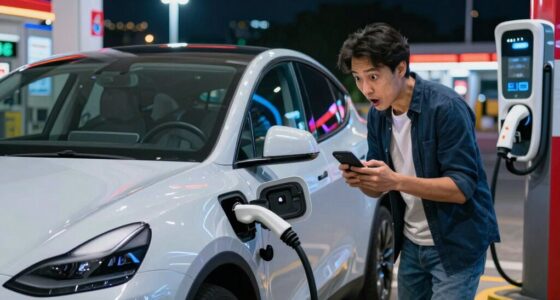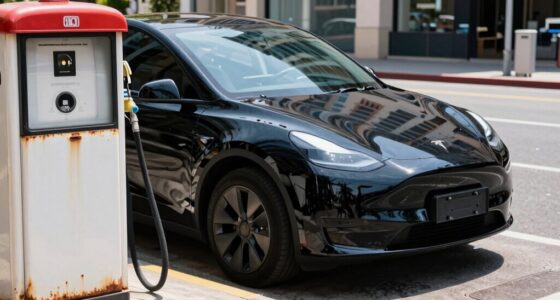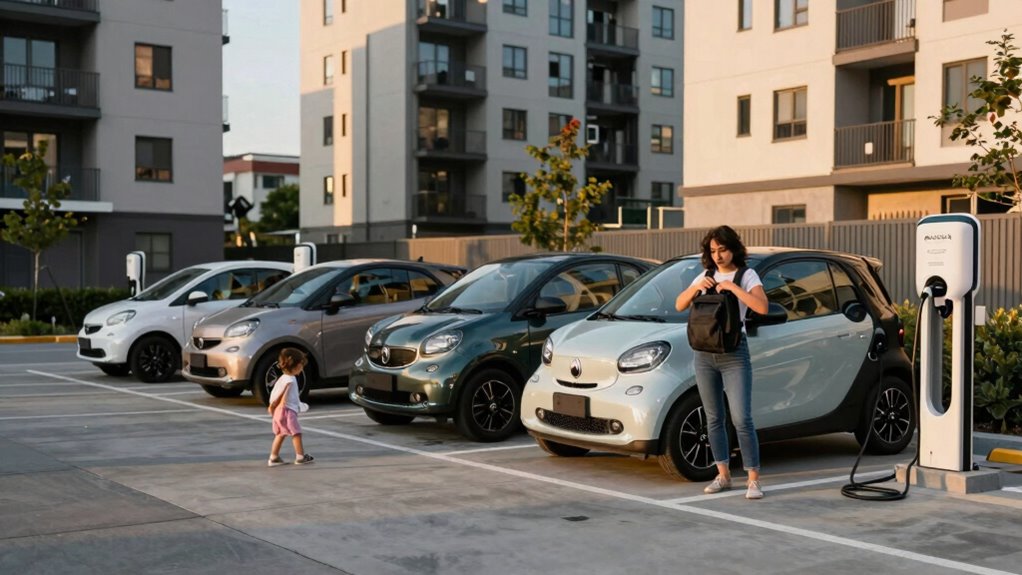

Owning an EV in an apartment can be tough because you often lack access to dedicated chargers and face limited parking options. Public chargers might be scarce, busy, or broken, forcing you to carefully plan your trips and rely on backup solutions like portable chargers. Some overcome these hurdles through community efforts, advocating for building-installed chargers, or exploring alternative energy sources. Stay tuned to discover effective ways to navigate these challenges and make EV ownership easier for apartment dwellers.

Get backup power and energy gear delivered free with Prime
- Fast, free delivery on millions of items
- Prime Video, Amazon Music and more included
- Member-only deals all year
Key Takeaways
- Limited access to dedicated charging stations due to lack of private parking or building restrictions.
- Dependence on public chargers requires careful trip planning and can be unreliable or inconvenient.
- Community coordination and advocacy are necessary to improve shared infrastructure and influence management decisions.
- Safety concerns and monitoring needs complicate the setup of charging solutions in apartment buildings.
- Alternative options like portable chargers, solar power, and backup generators help mitigate charging limitations.
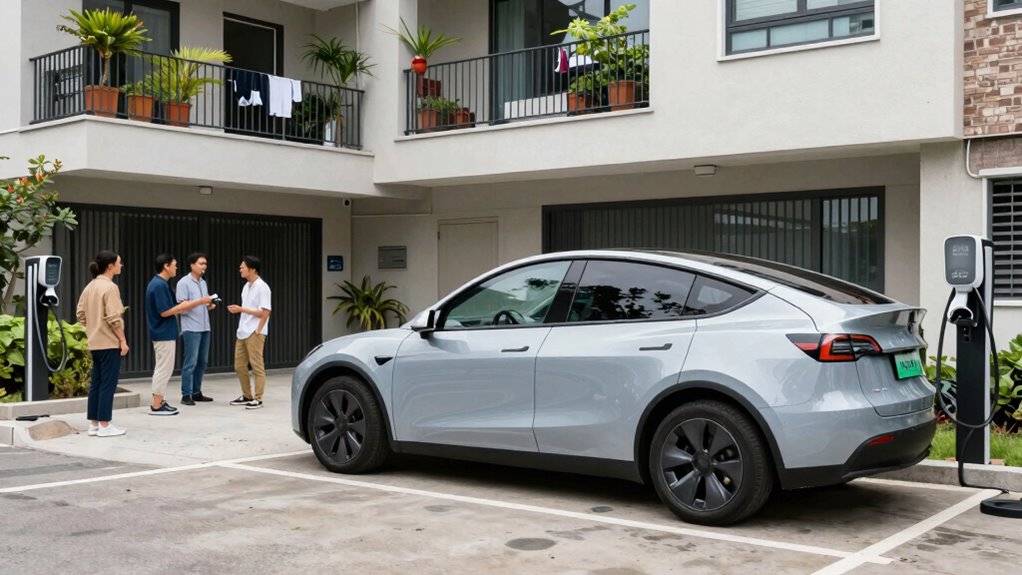
Owning an electric vehicle (EV) in an apartment setting often comes with unique hurdles that can make charging and maintaining your car more complicated. Unlike homeowners with dedicated garages or driveways, you might not have direct access to a personal charging station. This means you need to steer through the available charging infrastructure carefully. Public chargers can be sparse or inconsistent, forcing you to plan your trips around charging station locations and availability. Relying on these public options can lead to inconvenience and uncertainty, especially if chargers are busy or broken. To overcome this, some apartment residents collaborate with property managers or neighboring tenants to establish more reliable charging solutions. Community coordination becomes essential; by pooling resources or advocating for installed chargers, you can create a more accessible charging environment for everyone. Smart home technology, like garage security and leak detectors, can also help monitor and manage your charging setup more effectively, ensuring safety and reliability. Additionally, understanding local regulations and policies can help residents navigate and influence building management decisions regarding EV infrastructure.
Since you don’t control the building’s electrical setup, installing a dedicated charger often isn’t straightforward. You might face restrictions from property management or face logistical hurdles like limited electrical capacity. This can slow down your charging routine or force you to depend heavily on public charging stations, which aren’t always in ideal locations. Some residents get creative by using portable chargers or charging during off-peak hours to minimize disruptions. Others work with building management to explore installing shared charging stations, emphasizing the importance of sustainable transportation options. Building a community effort can help sway decisions, making it easier for everyone to benefit from better charging infrastructure. Incorporating battery inverter generators can also serve as a backup power source, helping maintain your EV’s charge when traditional options are limited. Furthermore, staying informed about government incentives and policies can encourage the development of more comprehensive charging solutions in apartment complexes. Exploring renewable energy sources like solar panels can contribute to more sustainable and cost-effective charging options for apartment residents.
As an affiliate, we earn on qualifying purchases.
Frequently Asked Questions
How Do Apartment Residents Access Public Charging Stations Effectively?
You access public charging stations effectively by researching nearby options through apps or websites that show wireless charging and other station types. You prioritize charging station accessibility, choosing locations close to your residence or workplace. You can also join local EV groups for tips on the best spots. Using these strategies, you minimize inconvenience and guarantee your EV stays charged, even without dedicated apartment charging infrastructure.
Are There Government Incentives for EV Owners in Apartments?
Did you know that over 30% of EV owners live in apartments? Yes, some government incentives do support you. Many programs now offer rebates or grants specifically for installing charging infrastructure in apartment complexes. However, your ability to access these incentives often depends on your apartment lease agreement and local policies. Check with your landlord or local authorities to see if you’re eligible for financial help to install charging stations.
What Are the Long-Term Costs of EV Ownership for Renters?
The long-term costs of EV ownership for renters include ongoing EV maintenance and battery longevity concerns. You’ll spend less on fuel but should budget for regular maintenance, like tire rotations and brake checks. Battery health impacts range and resale value, so you might face costly replacements if not properly cared for. Despite these expenses, EVs can save you money over time, especially with incentives and lower fuel costs.
How Do Parking Regulations Impact EV Charging Options?
Parking restrictions and charging limitations act like invisible walls around your EV dreams, making charging tricky in apartment complexes. When parking rules are strict or limited, finding a spot with accessible charging becomes a game of chance. Restricted access means you might have to park far away or rely on public chargers, which can be crowded or unavailable. These regulations shape your EV journey, often forcing you to adapt or compromise.
Can Shared Parking Facilities Support Multiple EVS Efficiently?
Shared parking facilities can support multiple EVs efficiently if they incorporate shared infrastructure designed for high capacity. To prevent charging congestion, you should consider installing multiple chargers and smart charging technology that manages load distribution. Proper planning guarantees each EV gets ample power without delays, making shared parking a practical solution. This setup helps residents charge conveniently while maximizing the use of available space and infrastructure.
As an affiliate, we earn on qualifying purchases.
Conclusion
While apartment living presents unique EV ownership challenges, it’s not impossible. You might worry about limited charging options or building restrictions, but many find creative solutions like shared chargers or portable EVSE units. With a bit of flexibility and planning, you can enjoy the benefits of electric driving without owning a personal garage. Don’t let perceived barriers hold you back—adaptation is key, and the shift to electric is more accessible than you think.
As an affiliate, we earn on qualifying purchases.
As an affiliate, we earn on qualifying purchases.
Fall Picks
fall essentials
As an affiliate, we earn on qualifying purchases.