
Regenerative braking in EVs captures energy normally lost during braking by using the electric motor as a generator. This process converts kinetic energy into electrical energy, which is stored in the battery for later use. It reduces brake wear, extends vehicle range, and improves efficiency. Thermal management and system components work together to optimize energy recovery and keep parts within safe temperatures. Exploring further reveals how these systems evolve and benefit sustainable transportation.
Key Takeaways
- Regenerative braking captures kinetic energy during deceleration and converts it into electrical energy for storage.
- The electric motor acts as a generator during braking, redirecting energy to recharge the vehicle’s battery.
- Energy recovery reduces heat waste common in traditional brakes, enhancing overall vehicle efficiency.
- The control system manages energy flow to prevent overcharging and optimize power distribution.
- Regenerative braking extends driving range, lowers brake wear, and supports sustainable energy use in EVs.
What Is Regenerative Braking and How Does It Work?

Regenerative braking is a technology that captures and reuses energy typically lost during braking. When you apply the brakes, the system increases the braking force to slow down the vehicle. Instead of converting all kinetic energy into heat like traditional brakes, regenerative braking redirects some of that energy into the electric motor. This process alters the energy flow, turning the motor into a generator that charges the battery. As you brake, the system smoothly engages, converting the vehicle’s momentum into electrical energy. This not only helps slow your car but also recycles energy that would otherwise be wasted. By managing the braking force efficiently, regenerative braking maximizes energy recovery, improving overall vehicle efficiency and extending your driving range. European innovation in electric vehicle technology continues to advance, making regenerative braking systems more effective and widespread, especially as projector technology improves to enhance user experience. Additionally, ongoing advancements aim to integrate these systems seamlessly with smart home technologies for improved monitoring and control.
The Components Behind Regenerative Braking Systems
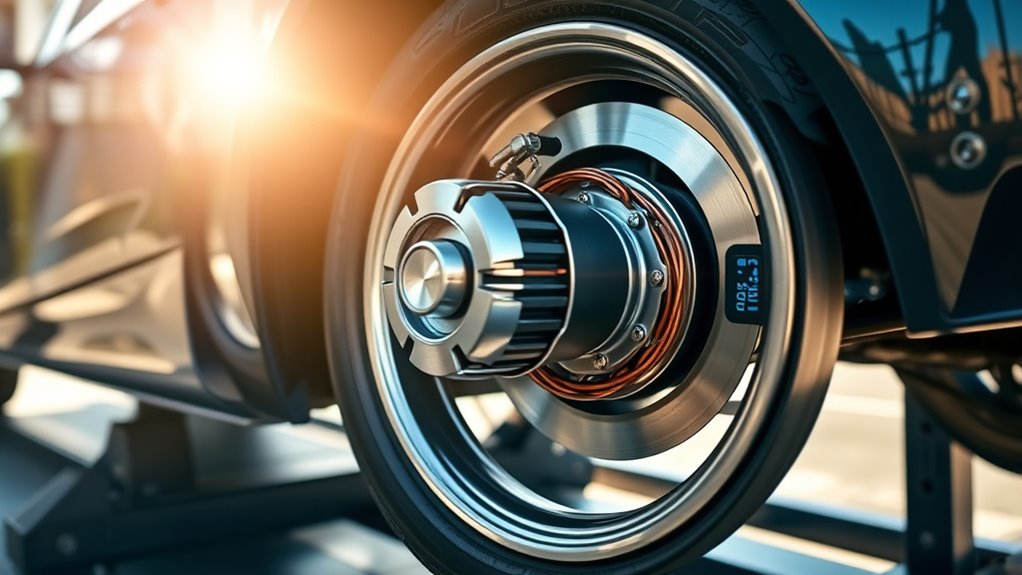
To effectively recover energy during braking, regenerative systems rely on several key components working together seamlessly. The electric motor plays a dual role, acting as both a drive device and a generator during braking. When you apply the brakes, the motor switches to generate electricity from the vehicle’s momentum. The control module manages this process by monitoring speed, braking force, and battery charge. It coordinates the motor’s function, ensuring efficient energy transfer and safe operation. The control module also regulates power flow to prevent overcharging the battery. Additionally, the system’s power management ensures optimal energy distribution between the motor and battery. This integration of components allows for seamless energy recovery, maximizing efficiency without compromising vehicle performance. Together, these components enable your vehicle to convert kinetic energy into electrical energy, which is stored for later use, boosting overall efficiency and extending your driving range.
Comparing Regenerative and Traditional Braking Methods

Have you ever wondered how regenerative braking compares to traditional methods? With traditional brakes, you rely on friction to stop your vehicle, which wastes energy as heat. Regenerative braking, however, captures some of that energy, improving braking efficiency and conserving energy. To visualize this, consider the table below:
| Aspect | Traditional Braking | Regenerative Braking |
|---|---|---|
| Energy Capture | None, energy lost as heat | Recovers energy for reuse |
| Braking Efficiency | Lower, depends on friction | Higher, recycles energy |
| Wear and Tear | More brake component wear | Less brake wear, less maintenance |
| Energy Conservation | Minimal | Significant savings |
This comparison shows that regenerative braking offers superior energy conservation and efficiency, making EVs smarter and more sustainable. Additionally, understanding energy recovery systems can help drivers optimize their driving habits for even greater efficiency.
Benefits of Regenerative Braking for Electric Vehicles

Regenerative braking helps you recover energy that would otherwise be lost, making your electric vehicle more efficient. This process extends your driving range and reduces the frequency of needing to recharge. Plus, it minimizes brake wear, saving you money on maintenance over time. Additionally, understanding smart energy management can optimize how regenerative braking is integrated with your overall home or vehicle energy systems.
Energy Recovery Efficiency
Ever wondered how efficiently regenerative braking recovers energy in electric vehicles? The answer depends on several factors, including thermal management and system integration. Effective thermal management ensures that components like batteries and power electronics stay within ideal temperatures, preventing energy loss and maintaining high recovery efficiency. Seamless system integration allows the regenerative braking system to work smoothly with other vehicle systems, maximizing energy recovery without compromising safety or comfort. When these elements are well-designed, you get a higher energy recovery efficiency, meaning more of the vehicle’s kinetic energy converts back into usable electrical power. Proper ventilation considerations can also enhance component cooling and performance, further improving recovery efficiency. Incorporating thermal management techniques can significantly reduce energy loss and optimize system performance, leading to better overall efficiency. Additionally, system calibration plays a crucial role in ensuring optimal energy recovery during different driving conditions. Implementing system diagnostics can help identify and address issues that may reduce recovery efficiency, ensuring consistent performance. This enhancement not only boosts overall efficiency but also helps you get the most out of your EV’s braking system, making every stop more energy-conscious.
Extended Driving Range
By capturing and reusing energy during braking, regenerative systems considerably extend your vehicle’s driving range. This process relies on efficient energy storage, where recovered energy is stored in batteries or supercapacitors for later use. The system integration between the regenerative braking components and the vehicle’s energy management system ensures seamless energy flow, maximizing recovery without disrupting driving comfort. As a result, your EV becomes more efficient, needing fewer charges over longer distances. This increased range is especially beneficial on long trips or in urban environments with frequent stops. By optimizing how energy is recovered and stored, regenerative braking helps you get the most out of your electric vehicle’s battery capacity, making each charge last longer and reducing overall energy consumption. Additionally, incorporating connected equipment and apps can further enhance the efficiency of energy recovery systems through real-time monitoring and optimization.
Reduced Brake Wear
Reduced brake wear is one of the key advantages of regenerative braking systems in electric vehicles. Because regenerative braking uses the motor to slow the car, your brake pads experience less friction and wear. This extends brake pad longevity, meaning you won’t need replacements as often. As a result, your maintenance costs decrease over time. Additionally, less frequent brake pad replacements reduce the environmental impact of disposing of worn components. You’ll also notice less brake dust accumulating on wheels, keeping your vehicle cleaner. To maximize these benefits, verify your regenerative system is functioning properly and use conventional brakes sparingly. Proper system maintenance of your regenerative braking system ensures optimal performance and longevity. Regular checks can help detect any issues early, maintaining efficiency and safety. For optimal results, it’s important to understand system performance and how to troubleshoot potential problems effectively. Being aware of system efficiency can help you ensure your regenerative braking system is operating at its peak.
Impact on Battery Life and Vehicle Range
Regenerative braking can substantially influence your vehicle’s battery life and overall range. By recapturing energy during deceleration, it reduces the strain on your battery, helping improve its longevity over time. This process allows your EV to store energy that would otherwise be lost as heat, making more efficient use of each charge. As a result, your vehicle’s autonomy increases, allowing you to travel further between charges. Additionally, proper use of regenerative braking**** can further enhance efficiency and safeguard battery health. However, frequent or aggressive braking can accelerate battery wear if not properly managed. Most modern EVs optimize regenerative braking to balance energy recovery and battery health. When used effectively, regenerative braking enhances your vehicle’s range without compromising battery longevity, enabling a more sustainable and reliable driving experience.
How Regenerative Braking Contributes to Sustainability
Regenerative braking helps you save energy by capturing it that would otherwise be wasted during deceleration. This process lowers your vehicle’s carbon footprint and reduces harmful emissions. Additionally, it encourages the use of renewable energy sources, supporting a more sustainable transportation system. Incorporating Free Floating technology can further enhance efficiency and adaptability in electric vehicles. By integrating trusted business solutions, consumers can access reliable maintenance and support to maximize these energy-saving features.
Reducing Energy Waste
By capturing and reusing energy that would otherwise be wasted during braking, regenerative braking systems considerably enhance overall efficiency. This process directly supports energy conservation and waste reduction in electric vehicles. Instead of losing kinetic energy as heat, the system recovers it and stores it for later use, minimizing energy loss. This not only boosts the vehicle’s range but also reduces the demand on external energy sources. To maximize sustainability, regenerative braking encourages you to drive more smoothly, avoiding sudden stops. Key benefits include:
- Decreased energy waste during deceleration
- Improved overall energy efficiency
- Reduced reliance on external power sources
- Incorporating auditory processing techniques can further optimize the feedback mechanisms involved in energy recovery systems.
Lowering Carbon Emissions
Since regenerative braking recovers energy that would otherwise be lost as heat, it plays a significant role in lowering carbon emissions from vehicles. By improving overall efficiency, EVs produce fewer emissions during operation. Urban planning that supports compact cities and shared transportation can amplify these benefits, reducing the need for long trips and decreasing reliance on fossil fuels. Additionally, integrating renewable infrastructure, like solar-powered charging stations, further minimizes the carbon footprint of electric vehicles. When regenerative braking is combined with cleaner energy sources and thoughtful urban design, it helps create sustainable transportation systems. This synergy not only cuts emissions but also encourages a shift toward environmentally friendly mobility, making cities cleaner and healthier for everyone. Research-backed explainers can help individuals make more sustainable choices that benefit the planet. Moreover, advancements in energy recovery systems continue to enhance the efficiency of regenerative braking, maximizing energy conservation during vehicle operation.
Promoting Renewable Use
Regenerative braking not only boosts vehicle efficiency but also promotes the use of renewable energy sources. By capturing energy during deceleration, EVs reduce reliance on fossil fuels and support a cleaner electric grid. This technology encourages urban planning strategies that integrate renewable energy infrastructure, making cities more sustainable. When more EVs use regenerative braking, the demand on the electric grid shifts toward renewable sources like wind and solar. This creates a positive feedback loop, fostering greater investment in renewable energy projects. You can contribute to this shift by choosing EVs with regenerative braking technology. Ultimately, this promotes a more sustainable transportation ecosystem, reduces pollution, and helps accelerate the transition to a greener future.
- Supports renewable energy integration
- Reduces dependence on fossil fuels
- Encourages sustainable urban planning
Challenges and Limitations of Regenerative Braking

While regenerative braking offers significant energy recovery benefits, it faces several challenges that limit its effectiveness. One major issue is thermal limitations; the system’s components can overheat during frequent braking, reducing efficiency or causing damage. Additionally, system complexity increases as engineers try to balance energy recovery with safety and reliability. This complexity can lead to higher costs and maintenance needs.
| Challenge | Impact | Solution Example |
|---|---|---|
| Thermal limitations | Overheating reduces system lifespan | Improved cooling systems |
| System complexity | Higher costs and maintenance | Simplified control algorithms |
| Limited braking zones | Reduced energy recovery in some conditions | Adaptive braking systems |
Future Developments in Energy Recovery Technologies

Advancements in energy recovery technologies are poised to overcome current limitations of regenerative braking systems. In the future, wireless energy transfer could enable seamless, contactless charging and energy recycling, reducing system complexity. Integrating with a smart grid allows EVs to feed excess energy back into the grid, enhancing overall efficiency. You might see:
Future energy recovery will feature wireless transfer and smart grid integration for greater efficiency and sustainability.
- Wireless energy transfer for more efficient energy recovery
- Smarter energy management using AI to optimize recovery and distribution
- Enhanced vehicle-to-grid (V2G) systems to balance supply and demand
These innovations promise to boost EV efficiency, reduce reliance on traditional charging stations, and promote sustainable energy use. As technology progresses, energy recovery will become more integrated, flexible, and capable of supporting broader renewable energy goals.
Frequently Asked Questions
Can Regenerative Braking Be Used in All Weather Conditions?
Regenerative braking can be used in most weather conditions, but weather variability affects brake performance. In wet, icy, or snowy conditions, you should be cautious because braking distances increase, and regenerative braking may be less effective. Many EVs automatically adjust brake systems to maintain safety. So, while you can rely on regenerative braking, always adapt your driving to current weather conditions to guarantee ideal safety and brake performance.
How Does Regenerative Braking Affect Vehicle Handling and Stability?
Regenerative braking can influence your vehicle’s handling and stability by affecting vehicle weight transfer. When you brake, it shifts weight forward, impacting handling dynamics. Since regenerative systems use electric motors to slow the car, they often provide smooth deceleration, which helps maintain stability. However, aggressive use might slightly alter handling, so you should adjust your driving to accommodate changes in weight transfer, ensuring safety and control during braking.
Are There Any Safety Concerns With Regenerative Braking Systems?
Is regenerative braking a Pandora’s box of safety concerns? Not really. You might worry about increased brake wear or system reliability, but modern systems are designed with multiple safeguards. They reduce brake wear and improve reliability, making them safe. However, occasional issues like sudden deceleration or system malfunctions can occur, so staying aware and maintaining your EV’s brake system guarantees your safety isn’t compromised.
What Maintenance Is Required for Regenerative Braking Components?
You need to follow a regular maintenance schedule for your regenerative braking system to make certain it works properly. Check the braking system components, such as sensors and controllers, periodically for wear or damage. Keep the brake fluid topped up and inspect brake pads for wear since they work alongside regenerative braking. Regular maintenance helps prevent issues, maintains safety, and ensures your EV’s braking system remains efficient and reliable over time.
How Do Different EV Brands Implement Regenerative Braking Technology?
Different EV brands implement regenerative braking technology in unique ways, focusing on optimizing energy recovery and battery management. Some use aggressive regen settings for maximum energy recovery, while others prioritize smooth progression for driver comfort. You’ll notice that brands like Tesla and Nissan leverage advanced algorithms to enhance efficiency, ensuring energy recovery is maximized without compromising driving experience. This tailored approach helps extend battery life and improves overall vehicle performance.
Conclusion
Imagine your electric vehicle as a clever squirrel, storing acorns for later. Regenerative braking acts like that squirrel, capturing energy you’d normally waste and saving it for a rainy day. With over 70% efficiency in energy recovery, it’s like giving your car a secret stash of power. Embracing this technology means boosting your range and helping the planet, proving that small actions can make a big difference in our sustainable journey.