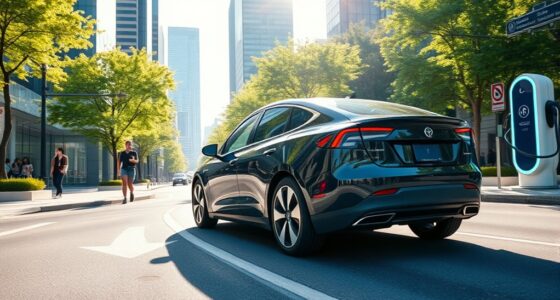
Electric vehicles (EVs) run solely on batteries and produce no emissions, while hybrids combine a gasoline engine with an electric motor that recharges itself. Plug-in hybrids can be charged externally and offer short electric-only trips before switching to gas. Your choice depends on your driving habits, budget, and access to charging stations. To understand which fits your lifestyle best and explore their benefits further, keep exploring the details ahead.
Key Takeaways
- EVs run solely on batteries with no gas engine, offering zero emissions and longer electric ranges.
- Hybrids combine gas and electric power, switching seamlessly, without needing external charging.
- Plug-in Hybrids can be charged externally, operate on electric mode for short trips, and switch to gas for longer drives.
- EVs typically have higher upfront costs but lower maintenance and fuel expenses, with widespread charging infrastructure growing.
- Hybrids and Plug-in Hybrids offer flexibility without extensive charging needs, with varying environmental impacts and long-term savings.

ChargePoint HomeFlex Level 2 EV Charger J1772 – Fast Smart Battery Power Charging at Home for Electric Automobile Vehicles – Hardwired for Electric Car
Charge with Confidence: ChargePoint builds reliable, flexible EV charging stations for home, business, and fleets. Get 24/7 support…
As an affiliate, we earn on qualifying purchases.
As an affiliate, we earn on qualifying purchases.
What Is an Electric Vehicle (EV)?
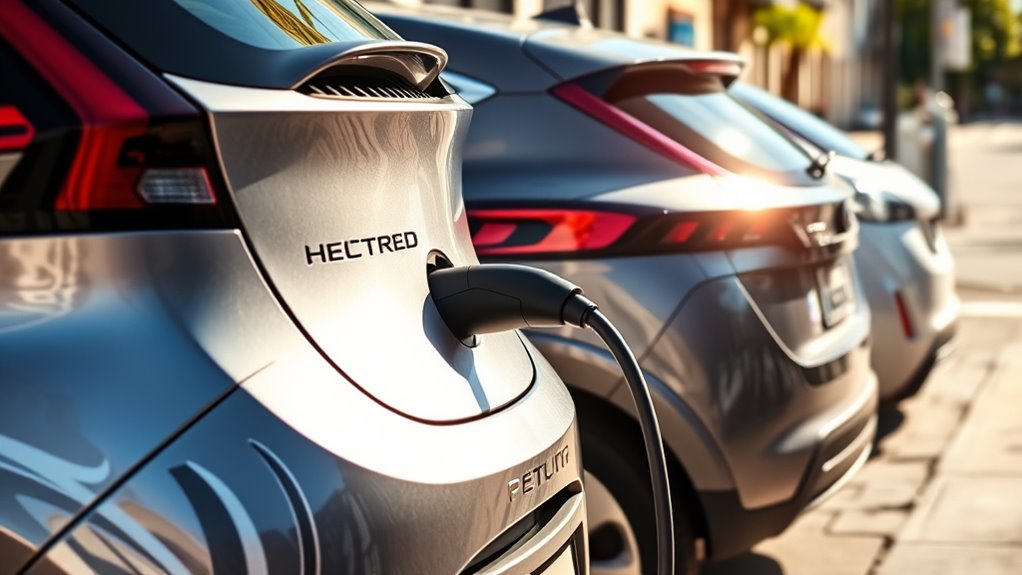
An electric vehicle (EV) is a car that runs entirely on electricity stored in batteries. Advances in battery technology have made EVs more efficient, with longer ranges and faster charging times. Unlike traditional cars, EVs don’t rely on gasoline; instead, they depend on rechargeable batteries, which you can top up at charging stations. Charging stations are becoming more widespread, making it easier for you to find a place to power up your vehicle during long trips or daily commutes. With no internal combustion engine, EVs produce zero tailpipe emissions, which benefits the environment. The convenience of home charging and the expanding network of public charging stations are making EV ownership increasingly practical and attractive for drivers looking to reduce their carbon footprint. Moreover, European cloud innovation is supporting the development of smart charging infrastructure to optimize energy use and enhance the sustainability of electric transportation.

Turtle Wax Hybrid Solutions Complete Ceramic Car Care Kit, Includes Car Wash, Spray Wax, Detailer, Interior Cleaner, Tire & Wheel Cleaner, Tire Shine, Microfiber Accessories & Brush (10 Piece Kit)
TOTAL CERAMIC CAR CARE KIT: This car cleaning kit has everything you need for a top to bottom…
As an affiliate, we earn on qualifying purchases.
As an affiliate, we earn on qualifying purchases.
How Do Traditional Hybrids Work?

Traditional hybrids use both a gasoline engine and an electric motor to power your vehicle, switching seamlessly between them. They feature a hybrid power source that combines both elements for better efficiency, while regenerative braking recovers energy during deceleration. Automatic engine management coordinates these systems to optimize performance and fuel savings without any effort on your part. Additionally, high refresh rates can improve responsiveness and driving dynamics, especially in stop-and-go traffic. Incorporating advanced battery technology can further enhance the overall efficiency and longevity of the hybrid system. Understanding auditory processing is also important for recognizing how these vehicles communicate system status and alerts to drivers. Moreover, the integration of electric components can influence the vehicle’s overall performance and maintenance requirements, with proper piercing care and hygiene being essential for those with body piercings to prevent infections and ensure comfort.
Hybrid Power Source
Hybrid vehicles combine a gasoline engine with an electric motor to maximize fuel efficiency and reduce emissions. They rely on advanced battery technology to store energy and seamlessly switch between power sources. When driving, the system uses hybrid synergy to determine whether to use the engine, electric motor, or both, depending on conditions. This process improves efficiency and performance. Specifically:
- The electric motor assists during acceleration and low-speed driving, conserving fuel.
- The battery recharges through regenerative braking and engine power, extending range without plugging in.
- The system intelligently manages power, switching between electric and gasoline modes for ideal efficiency.
This hybrid power source creates a smooth driving experience while reducing reliance on fossil fuels. It’s a clever blend of technology and mechanics working together.
Regenerative Braking System
When you brake or slow down in a hybrid vehicle, the regenerative braking system kicks in to recover energy that would otherwise be lost as heat. Instead of relying solely on traditional brakes, this system captures braking energy and converts it into electrical energy. This energy recovery process stores power in the battery, helping to recharge it and improve overall efficiency. This process not only extends your fuel economy but also reduces brake wear, since the conventional brakes are used less frequently. By harnessing braking energy that would normally go to waste, the regenerative braking system makes hybrids more energy-efficient and environmentally friendly. Additionally, the system contributes to the overall Free Floating design of the vehicle, optimizing energy use without the need for complex mechanical linkages. The energy recovery process is a key feature that distinguishes hybrid vehicles from conventional cars.
Automatic Engine Management
Automatic engine management in hybrid vehicles coordinates when and how the gasoline engine and electric motor operate to maximize efficiency. This system seamlessly switches between power sources based on driving conditions, battery charge, and driver input. It ensures smooth acceleration and deceleration, much like autonomous driving assists in maintaining ideal performance. To keep everything running smoothly, the system also monitors tire pressure, which affects overall efficiency. Here’s how it works:
- It activates the electric motor during low-speed or stop-and-go traffic to save fuel.
- It switches to the gasoline engine for sustained high speeds or when battery charge is low.
- It adjusts engine activity based on real-time data, including tire pressure and driving habits, for maximum efficiency.
This intelligent management helps hybrid cars deliver better mileage without sacrificing power.

Lectron Level 1 EV Charger – ETL Certified, 120V, 15 Amp, 16 ft Extension Cord & J1772 Cable – Portable Electric Car Charger for J1772 EVs and Plug-in Hybrid Vehicles
Lectron Level 1 EV Charger – ETL Certified, 120V, 15 Amp, 16 ft Extension Cord & J1772 Cable…
As an affiliate, we earn on qualifying purchases.
As an affiliate, we earn on qualifying purchases.
The Functionality of Plug-In Hybrids
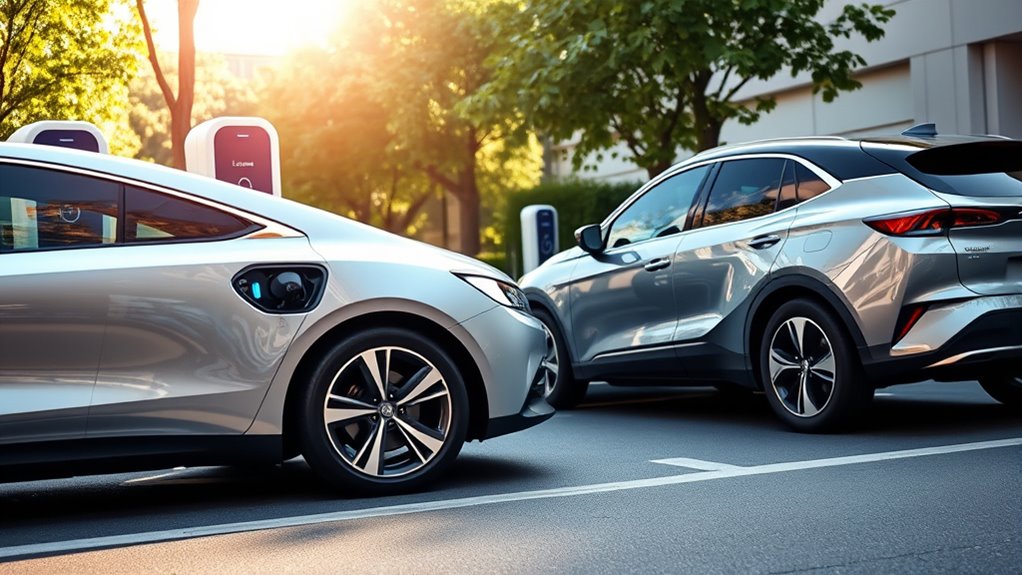
Plug-in hybrids let you charge the battery directly, so you can drive on electric power alone for short trips. When the battery runs out, the gas engine kicks in to keep you moving. Understanding how to charge and switch between electric and gas modes helps you get the most out of your vehicle. Additionally, smart appliances in your vehicle can optimize energy use and improve efficiency during operation. Since these systems often rely on performance cookies to analyze how the vehicle’s features are used, they can be fine-tuned to enhance overall efficiency. Properly managing charging habits is essential to maximize electric driving and reduce fuel consumption. Incorporating energy management systems can further help monitor and optimize your vehicle’s power usage for better performance and longevity. Moreover, implementing battery management techniques can extend the lifespan of your hybrid’s battery and ensure consistent performance.
Charging Process Explained
Understanding how plug-in hybrids charge is essential to maximizing their efficiency. When you plug in your vehicle, it relies on its battery capacity to store electric energy. Charging involves connecting to charging stations or standard outlets, which replenish the battery’s power. Here’s how it works:
- You connect your vehicle to a charging station or outlet, ensuring proper voltage and compatibility.
- The vehicle’s onboard charger converts AC power into DC to store in the battery.
- Charging time varies based on battery capacity and the power output of the station, affecting how quickly your vehicle is ready to go electric again.
Knowing these steps helps you optimize charging routines and better utilize your plug-in hybrid’s electric capabilities.
Electric Vs Gas Use
Once your plug-in hybrid is charged, it switches seamlessly between electric and gas power to enhance performance and efficiency. When running on electricity, you use less gas, reducing emissions and saving money. The electric motor handles short trips and city driving, while the gas engine kicks in for longer journeys. To keep your vehicle running smoothly, avoid frequent deep discharges that can impact the battery lifespan. Regularly charging at accessible charging stations ensures you maximize electric use and minimize gas consumption. Over time, the vehicle intelligently balances both power sources, extending your overall range. Knowing when to rely on electric versus gas helps you save fuel and maintain optimal performance, making your plug-in hybrid a versatile, eco-friendly choice. Incorporating home charging strategies can further improve your efficiency and convenience. Additionally, understanding battery management can help prolong the lifespan of your vehicle’s battery and ensure consistent performance. Practicing mindful energy consumption habits can also contribute to optimizing your vehicle’s overall efficiency and reducing operating costs. Proper battery maintenance not only safeguards your investment but also helps maintain peak vehicle performance over time. Moreover, being aware of vehicle diagnostics can help identify potential issues early, preventing costly repairs and ensuring your hybrid operates at peak efficiency.

2026 Upgraded Level 1&2 Portable EV Charger, 8-16Amp Adjustable Current & Timer, 110V-240V, NEMA 5-15 & 6-20 Plug, 21Ft EV Charging Cable, J1772 Electric Car Charger for All PHEV/EV Charging Cord
[2026 INTELLIGENT CHARGING UPGRADE — PRECISION CONTROL MEETS SMART SCHEDULING] After surveying 100K+ U.S. EV owners, the Raylix…
As an affiliate, we earn on qualifying purchases.
As an affiliate, we earn on qualifying purchases.
Differences in Fuel Efficiency and Range

Certainly! Here’s the revised MY ARTICLE SUBHEADING CONTENT with the requested additions:
—
Have you ever wondered how the different types of vehicles compare when it comes to fuel efficiency and range? Here’s what you need to know:
- EVs typically have the best fuel economy because they don’t rely on gas, but their driving range can be limited, often between 150-370 miles. Proper battery management can help extend their range and performance. Additionally, the quality of the battery and its maintenance impact overall longevity and efficiency.
- Hybrids combine gas and electric power, offering decent fuel economy with a driving range usually over 400 miles, thanks to their gas engine.
- Plug-in hybrids can run on electric for shorter distances (20-50 miles) and switch to gas afterward, providing flexibility and a total range that exceeds 500 miles in some cases.
- Managing vehicle energy sources effectively can help optimize range and efficiency based on your driving needs.
Your choice depends on your driving habits and how far you usually travel.
Charging Requirements and Infrastructure

Electric vehicles (EVs), hybrids, and plug-in hybrids each require different charging setups, which can influence how convenient they are for daily use. EVs depend heavily on charging stations and infrastructure expansion to support longer trips and quick recharges, while hybrids need minimal charging, often just a standard outlet. Plug-in hybrids require more frequent charging than traditional hybrids but less than EVs, making access to charging points important. To help you understand, here’s a quick overview:
| Vehicle Type | Charging Needs | Infrastructure Focus |
|---|---|---|
| EV | Level 2, fast chargers | Expanding charging stations |
| Hybrid | No charging required | Minimal infrastructure |
| Plug-In Hybrid | Regular household outlet, Level 2 | Growing charging networks |
Your choice depends on your access to Charging infrastructure and how much you rely on reliable infrastructure.
Cost Considerations for Each Type

When considering the upfront and long-term expenses, each vehicle type presents different cost considerations. Your choice impacts initial costs and future savings.
- EVs typically have higher upfront expenses due to expensive batteries, but offer significant cost savings on fuel and maintenance over time.
- Hybrids usually cost less upfront than EVs, yet provide moderate savings through improved fuel efficiency.
- Plug-in hybrids fall somewhere in between, with higher initial costs than traditional hybrids but potential savings if you frequently use electric mode.
Ultimately, your decision depends on how much you can invest initially and how much you aim to save on fuel and maintenance in the long run.
Environmental Impact and Emissions

While all three vehicle types aim to reduce environmental impact, they do so in different ways. EVs produce zero tailpipe emissions, markedly lowering your carbon footprint. Hybrids reduce emissions by switching between gasoline and electric power, resulting in moderate emissions reduction. Plug-in hybrids can operate on electric power alone for short distances, offering better emissions reduction than traditional hybrids but still producing some emissions when running on gas. The table below highlights their environmental impact:
| Vehicle Type | Emissions Reduction | Carbon Footprint |
|---|---|---|
| Electric Vehicles | Highest | Lowest (zero tailpipe) |
| Hybrid | Moderate | Reduced |
| Plug-In Hybrid | Good | Slightly higher than EVs |
Choosing the right vehicle impacts your environmental footprint considerably.
Maintenance and Repair Needs
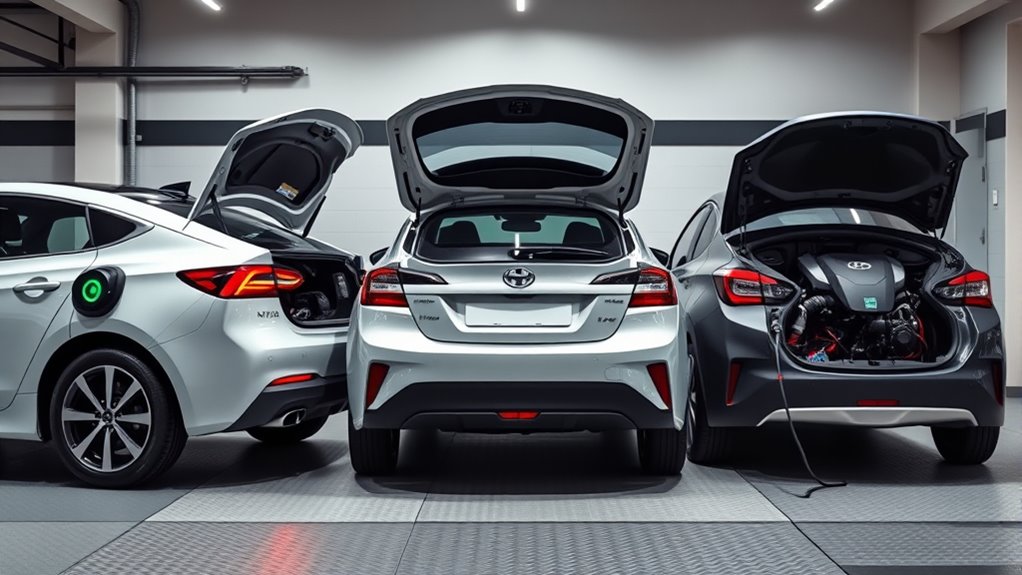
Maintenance and repair needs vary considerably among EVs, hybrids, and plug-in hybrids. EVs generally have fewer moving parts, which means lower repair complexity and less frequent maintenance. Their battery longevity is vital; most batteries last 8-10 years with proper care, but replacements can be costly. Hybrids combine traditional and electric systems, making repairs more complex due to dual components. They often require regular checks on both the engine and battery system. Plug-in hybrids fall in between: their batteries are larger than hybrids but smaller than EVs, impacting repair costs and battery longevity.
To summarize:
- EVs have simpler maintenance but costly battery replacements.
- Hybrids involve complex repairs due to combined systems.
- Plug-in hybrids require balancing battery longevity with repair needs.
Which Option Fits Your Lifestyle Best?

Choosing the right vehicle depends heavily on your lifestyle and daily driving habits. If most of your trips are short and stop-and-go, a plug-in hybrid might suit you, thanks to its ability to run on electric power for short distances. For longer commutes or frequent highway driving, an EV could be ideal, especially as battery technology improves, offering greater range. Hybrids are versatile, blending gas and electric power to adapt to various driving habits without charging concerns. Consider this table:
| Driving Habit | Best Option |
|---|---|
| Short daily trips | Plug-in hybrid |
| Long commutes | EV (with good range) |
| Mixed trips | Hybrid |
| Frequent highway use | EV with fast charging |
| Limited charging access | Hybrid |
Match your driving habits with battery tech advancements for the best fit.
Frequently Asked Questions
How Long Do EV Batteries Typically Last Before Replacement?
Your EV battery typically lasts between 8 to 15 years before needing replacement, depending on usage and climate. Battery degradation gradually reduces range, but most manufacturers offer warranties covering 8 years or up to 100,000 miles. When it’s time for replacement, costs can be significant, often ranging from $5,000 to $15,000. Proper maintenance and charging habits can help extend battery life and delay replacement costs.
Can Hybrid Vehicles Operate Solely on Electric Power?
Your hybrid vehicle can operate solely on electric power, but only for a limited time. It depends on the battery capacity and electric range, which typically covers short commutes or city driving. While it might feel like you’re gliding on air, the engine kicks in once the battery depletes. This seamless shift helps save fuel, but for extended electric driving, a plug-in hybrid offers a longer electric range.
Are Plug-In Hybrids Eligible for Government Incentives?
Yes, plug-in hybrids are eligible for government incentives, but eligibility criteria vary by location. You should check your local programs, as some offer discounts or tax credits for qualifying vehicles. These incentives aim to encourage eco-friendly driving, so understanding specific requirements—such as battery capacity or vehicle price—is essential. If you meet the criteria, taking advantage of these incentives can substantially reduce your overall purchase cost.
How Do Charging Times Vary Between Different EV Models?
Like a chariot racing through the sky, your EV’s charging times vary based on the model’s charging speed and the available charging infrastructure. Some vehicles can recharge in under 30 minutes with fast chargers, while others may take several hours with standard outlets. Always consider your daily driving needs and the charging options nearby, as these factors influence how quickly your EV can be ready for the road again.
What Are the Resale Values for EVS Compared to Hybrids?
You’ll find that EVs generally have lower resale values than hybrids due to faster battery depreciation, which impacts their appeal in the resale market. Hybrids tend to hold their value better because their batteries last longer and the technology is more established. If you’re considering resale value, hybrids might be a safer bet, as they’re less affected by battery concerns, making them more attractive to future buyers.
Conclusion
Choosing between an EV, hybrid, or plug-in hybrid is like finding the perfect puzzle piece for your lifestyle. Consider your daily commute, access to charging stations, and environmental goals. Each option has its own rhythm—some run on electricity alone, others blend power sources seamlessly. By understanding their differences, you’ll find the one that fits your life like a glove, making your driving journey smoother and greener than ever before.