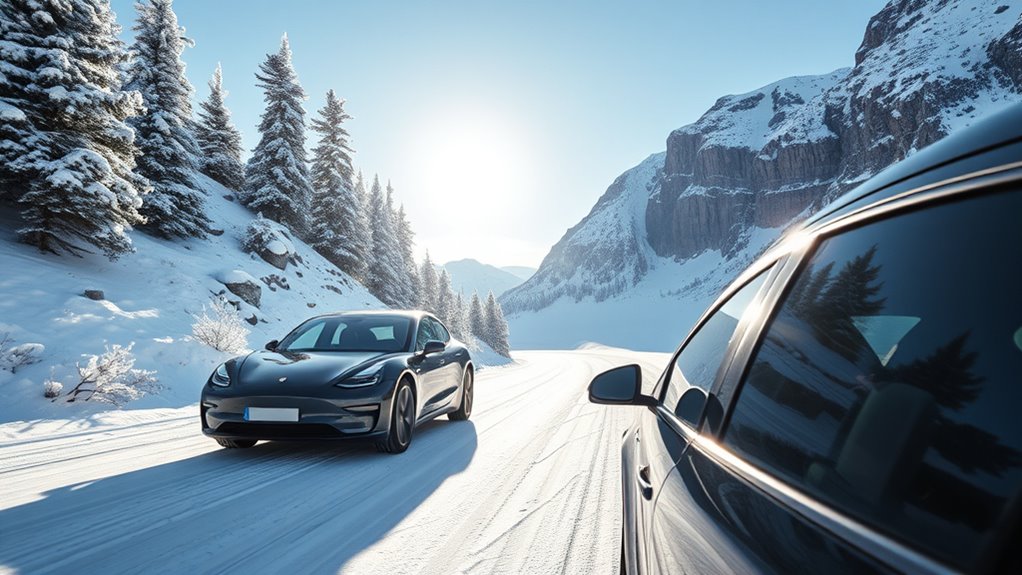

Norway’s success with electric vehicles in cold climates shows that strategic infrastructure, like heated charging stations and placements in heated garages, is essential. Innovation in battery thermal management helps maintain performance during harsh winters. Community engagement and supportive policies foster widespread adoption, while renewable energy ensures reliable power year-round. These combined efforts overcome winter challenges and demonstrate how technology and collaboration can make EVs viable even in freezing conditions—discover key lessons to inspire your own transition.

Get backup power and energy gear delivered free — and shop member deals
- Fast, free delivery on millions of items
- Access to Prime Big Deal Days deals on October 6–7
- Prime Video, Amazon Music and more included
Key Takeaways
- Norway’s reliance on renewable hydropower ensures a stable, clean energy supply for EV charging year-round.
- Strategic infrastructure design, like heated garages and covered chargers, effectively addresses cold climate challenges.
- EVs equipped with advanced thermal management systems maintain performance and range in freezing temperatures.
- Community engagement and government incentives foster widespread EV adoption despite harsh winter conditions.
- Norway’s integrated approach offers scalable lessons for other cold regions aiming to promote EV use sustainably.

Have you ever wondered how electric vehicle systems adapt to cold climates? In Norway, a country known for its chilly winters, they’ve made remarkable progress, demonstrating how innovative solutions and community engagement can overcome climate challenges. One key factor behind their success is the integration of renewable energy sources, particularly hydropower, which provides clean, reliable electricity even during the darkest, coldest months. This abundant renewable energy not only powers homes and industries but also fuels the electric vehicle infrastructure. When communities are invested in sustainable energy, it becomes easier to support widespread EV adoption. Local governments actively promote renewable energy projects, encouraging residents to embrace electric vehicles by offering incentives, building charging stations, and educating the public about environmental benefits. This collective effort fosters a sense of ownership and pride, making it more likely for individuals to shift from traditional combustion engines to EVs.
Norwegian cities have also tailored their charging infrastructure to withstand cold weather, ensuring vehicles remain operational and charged despite freezing temperatures. Strategically placed chargers are often located in heated garages or covered areas, reducing the risk of battery freezing and degradation. Furthermore, the vehicles themselves are designed with cold climate adaptations, such as battery thermal management systems that keep batteries at ideal temperatures. These innovations allow EVs to retain their range and performance in winter conditions, dispelling the misconception that cold weather hampers electric vehicle efficiency. The combination of technological advancements and community involvement creates a robust ecosystem that encourages consistent EV use year-round.
Community engagement plays a vital role in Norway’s success story. Residents are not only passive recipients of policies but active participants in shaping their transportation future. Local initiatives, workshops, and information campaigns foster a culture of sustainability, inspiring more people to consider electric vehicles as a practical, eco-friendly alternative. This grassroots support helps drive policy changes and infrastructure development, making EV adoption more accessible and appealing. In essence, Norway’s approach shows that when communities rally around renewable energy and support each other through education and shared goals, overcoming the hurdles posed by cold climates becomes achievable. Their experience offers valuable lessons for other regions facing similar challenges, proving that with collective effort, technological ingenuity, and a focus on sustainability, electric vehicles can thrive even in the harshest environments.
Frequently Asked Questions
How Do EVS Programs Adapt to Extreme Winter Conditions?
You can adapt EV programs to extreme winter conditions by implementing innovative charging solutions like heated charging stations that prevent ice buildup and guarantee reliable power. Additionally, winter adaptations such as insulating battery packs and optimizing vehicle heating systems help maintain performance in cold temperatures. These measures ensure continuous operation, keep drivers safe, and promote confidence in EV use even during harsh winter months.
What Safety Measures Are in Place During Cold Climate EVS Projects?
You’ll find that safety measures are thoughtfully designed to keep you secure during cold climate EV projects. Battery safety is prioritized with advanced thermal management, preventing overheating or freezing issues. Vehicle insulation is enhanced to maintain ideal battery performance and passenger comfort. Regular safety checks, emergency protocols, and driver training further ensure everyone’s wellbeing, making cold-weather EV use safe and reliable while you enjoy the journey.
How Do EVS Participants Cope With Limited Daylight Hours?
You cope with limited daylight hours by prioritizing indoor activities and using light therapy to boost your mood and energy. Staying active indoors, like exercising or engaging in hobbies, helps combat fatigue. Light therapy lamps simulate sunlight, making a significant difference in maintaining your well-being. Additionally, maintaining a regular schedule and connecting with others can help you stay positive and motivated during darker months.
What Are the Most Common Challenges Faced in Cold Climate EVS Projects?
You face challenges like battery degradation due to cold temperatures, which reduces EV efficiency and range. Limited charging infrastructure in remote areas makes it hard to keep vehicles powered, especially during harsh winters. You might also struggle with maintaining batteries and ensuring reliable charging stations. Overcoming these issues requires investing in better technology and expanding charging networks, helping you adapt and succeed in cold climate EV projects.
How Is Energy Efficiency Prioritized in EVS Infrastructure in Norway?
While the chilly environment offers unique challenges, you’ll find Norway’s focus on renewable integration and policy incentives keeps energy efficiency at the forefront. The country emphasizes smart infrastructure and incentives that encourage efficient EV use, reducing energy waste. By aligning regulations with renewable sources, Norway guarantees its EV infrastructure remains sustainable and resilient, helping you benefit from a system that’s both environmentally friendly and economically sound, even in the coldest months.
Conclusion
So, as you consider EV adoption in cold climates, remember Norway’s success shows it’s possible with the right strategies. Don’t just believe the theory that cold weather hampers EVs—test it. Norway proves that with proper technology and infrastructure, EVs thrive even in freezing temperatures. Embrace innovation and plan ahead, because the key isn’t just climate, but how you adapt. Your efforts can turn challenges into opportunities, proving that cold weather doesn’t have to limit electric mobility.
Evergreen bestsellers Picks
bestsellers
As an affiliate, we earn on qualifying purchases.