TL;DR

Get backup power and energy gear delivered free — and shop member deals
- Fast, free delivery on millions of items
- Access to Prime Big Deal Days deals on October 6–7
- Prime Video, Amazon Music and more included
Solar-powered outdoor string lights use panels that convert sunlight into electricity, then store that energy in rechargeable batteries for evening use. Choose a sunny panel location, check brightness and weather ratings, and expect about 8–12 hours of light on a full charge, depending on the model and conditions.
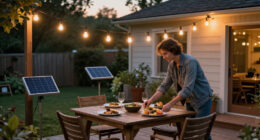
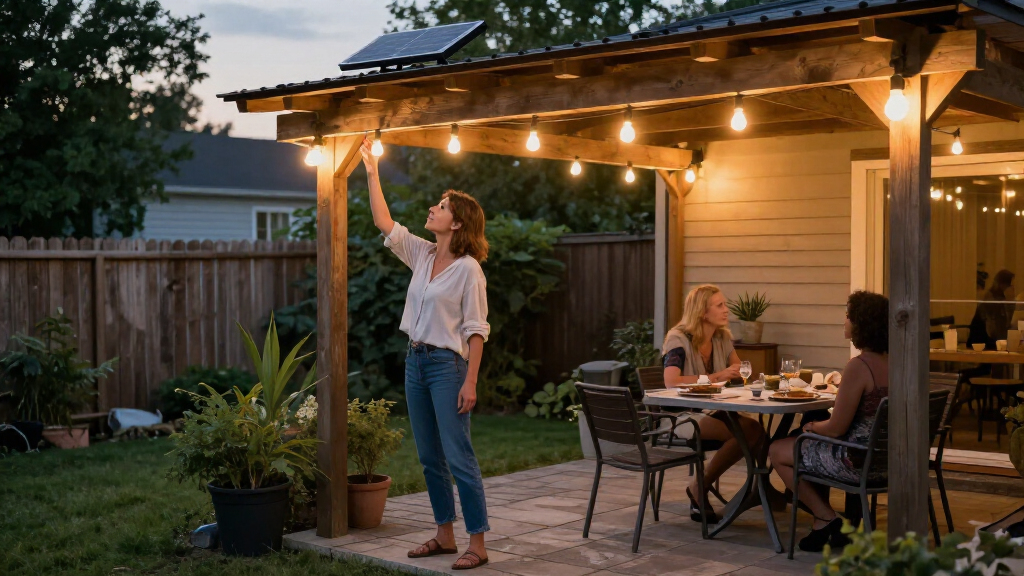
A patio can look warm and welcoming at sunset, then turn into a dark patch the moment dinner starts. Solar-powered outdoor string lights solve that problem without an outdoor outlet or a run of electrical cable: a small panel collects daytime sunlight, and the lights glow after dusk.
They’re easy to hang, but not magic. Shade, battery condition, bulb brightness, and weather exposure all affect the result. This guide explains how the lights work, how to choose a set for your space, and how to install and care for it so your summer evenings don’t end with a mysterious strand of dim bulbs.
You’ll also find practical guidance on lumens, charging time, and IP ratings—the details that help you tell cozy decorative lighting from a setup that can handle a rainy garden party.
Aim for 6–8 hours of direct sunlight to support a full charge; shade can shorten the 8–12-hour typical runtime.
Treat 10–50 lumens per bulb as a useful reference range, not a promise that every string will light a large area.
Check the product’s IP rating and instructions before leaving it exposed to heavy rain or snow.
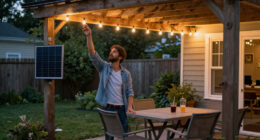
Place the panel in sun even when the bulbs hang in shade; a model with a separate panel makes this easier.
Clean the panel and check the rechargeable battery before replacing the whole string.
How solar string lights turn sunshine into evening glow
Solar-powered outdoor string lights use a panel that converts sunlight into electricity, stores the energy in a rechargeable battery, and supplies that stored power to LED bulbs after dark. Most sets switch on automatically at dusk, so you can enjoy a soft row of light without plugging anything in or remembering to flip a switch.
The basic setup has three parts: the solar panel, a battery—often lithium-ion or NiMH—and the light string. During the day, the panel charges the battery; at night, the battery powers the LEDs. A typical set needs around 6–8 hours of direct sunlight for a full charge and may run for 8–12 hours, though cloudy weather and shade can shorten that window. This is why rated runtime is best understood as a condition-dependent estimate, not a guarantee: the panel must collect enough energy during the day to meet the bulbs’ demand that night.
Think of the battery as a small evening reserve, not an unlimited supply. If the panel sits under a dense maple tree, it may collect too little energy to carry the lights through a long dinner. Move the panel into a sunny patch, even if that means attaching it to a fence several feet away from the bulbs. Many models let you separate the panel from the string for exactly this reason. The tradeoff is a little more installation work and a cable to route, but that flexibility can matter more than choosing a string with extra bulbs: more bulbs cannot make up for a panel that never gets enough sun.
LED bulbs use little power and can last up to 25,000 hours, according to the supplied product data. The battery usually wears out sooner—often after 1–3 years with proper care—so check whether your chosen model lets you replace it. A replaceable battery can save you from discarding an otherwise useful strand. It also means the product’s useful life may depend less on the battery’s first charge capacity and more on whether a compatible replacement is available.
solar-powered outdoor string lights
As an affiliate, we earn on qualifying purchases.
As an affiliate, we earn on qualifying purchases.
Choose brightness and style for the way you use your yard
Solar string lights work best as ambient lighting: they soften a patio, mark a path, or add a welcoming glow, but they don’t always replace a bright porch fixture. The supplied data puts many bulbs in the range of 10–50 lumens each. A strand with more bulbs or higher output can feel brighter, but spacing, shade, and the total layout shape what you see. Lumens describe light output, not how evenly it reaches your space; bulbs spread far apart can leave dark gaps even when their individual output looks suitable on paper.
For example, a 20-bulb globe strand draped above a small bistro table can make dinner feel cozy without washing out the night sky. The same strand may leave a wide lawn too dim for a game of cards. For reading, food prep, or steps, pair decorative lights with a dedicated outdoor fixture rather than expecting one string to do every job. The distinction is practical as well as atmospheric: brighter strings may improve visibility, but they can reduce the soft, low-glare mood people want from decorative lighting and may use stored energy faster.
Style changes the mood. Edison-style bulbs give off a nostalgic amber look, globe bulbs spread a softer pool of light, and colored or color-changing LEDs suit parties. Some sets offer steady, flashing, dimming, or color modes. More settings add flexibility, but they can also make controls more fiddly and drain the battery faster at higher brightness. If dependable all-evening light matters more than changing effects, a simpler model or a lower brightness setting may be the better fit.
Before buying, measure the route and note where you can anchor the strand. A 30-foot string may sound long until you zigzag it across a pergola. If you want to hang lights over a six-foot-wide patio, sketch the layout and allow extra length for gentle dips between supports. That small bit of planning prevents a tight, straight line that looks more like a clothesline than a warm canopy. It also helps you avoid stretching the wire taut, which can put unnecessary strain on sockets and anchor points.
weatherproof solar string lights with separate panel
As an affiliate, we earn on qualifying purchases.
As an affiliate, we earn on qualifying purchases.
Check these five details before you buy
The best set for your yard depends on sunlight, brightness, weather exposure, and how you plan to hang it. A bargain strand may work beautifully on a sunny balcony, while a larger, replaceable-battery model may suit a shaded pergola better. Use these checks to compare products without getting distracted by bulb shape alone. The useful question is not simply which set has the longest advertised runtime, but whether its panel, battery, and output make sense together for your conditions.
- Panel placement: Look for a panel that can sit in direct sun, ideally with a long lead if the hanging area stays shaded. A south-facing fence or open garden bed may charge more reliably than the roof of a covered porch. A longer lead adds flexibility but also gives you more cable to route and secure; it is worthwhile when moving the panel is the difference between meaningful sun exposure and persistent shade.
- Brightness and purpose: Check lumens per bulb and the number of bulbs. For a dinner table, gentle ambient light may be enough; for stairs, add a brighter, purpose-built light source. Consider the whole arrangement as well as the product figures: close spacing and a smaller area can make modest bulbs feel effective, while a long span may look sparse or dim.
- Battery and runtime: Compare the stated runtime and charging conditions. A claimed 12-hour run generally assumes a well-charged battery, not a panel tucked behind a chimney. A larger battery can store more energy, but it cannot compensate indefinitely for poor daily charging; look for realistic performance information and whether the battery can be replaced when its capacity declines.
- Weather rating: Read the manufacturer’s IP rating and instructions. “Weather-resistant” alone doesn’t tell you how a product handles driving rain, snow, or standing water. The rating helps you compare protection, but it does not replace installation guidance: exposed connectors or a panel mounted where water collects can still create problems.
- Build and repair options: Check for sturdy wire, rust-resistant fittings, replaceable batteries, and compatible extensions. Some strings connect; others don’t, even if their plugs look similar. Better construction may cost more up front, but it can reduce the chance that one damaged connection or depleted battery makes the entire set unusable.
Price can help set expectations: the provided market range is roughly $20 to more than $100, with cost varying by length, battery, construction, and smart features. If you’re lighting a small balcony, a simple set may be all you need. For a large pergola exposed to wind and rain, spending more on durable materials and a replaceable battery can be the better long-term choice. Extra features are valuable only if they solve a real constraint—such as a panel that needs to reach a sunny spot or a battery you can renew—rather than merely adding settings you may rarely use.
As an affiliate, we earn on qualifying purchases.
Install your lights so they charge well and hang safely
How to install solar string lights: place the panel in direct sun, map the strand before hanging, secure it to suitable supports, and test it after dark. The order matters. A beautifully hung string won’t shine for long if a roof overhang shadows the panel for most of the day. Treat panel placement and hanging layout as related but separate decisions: the bulbs can be where you want them while the panel goes wherever it can collect useful sunlight.
- Test the sunlight. Watch the panel location for a few hours on a clear day. Choose a spot that gets strong sun rather than a corner shaded by a fence or tree. A quick check helps catch shade from an overhang or moving branches before you commit to mounting hardware.
- Lay out the route. Measure the span and mark anchor points. For a 12-foot pergola, a few inches of slack between attachment points helps the line form a relaxed curve. Planning the route also reveals whether the supplied string is long enough without stretching it or leaving an awkward excess loop.
- Use suitable supports. Follow the product instructions and secure the lights to solid posts, hooks, or a purpose-made guide wire. Don’t let the string hang from the small solar panel cable or pull hard against a bulb socket. Supporting the strand properly reduces strain on delicate electrical connections, especially when wind makes the lights sway.
- Position and test the panel. Angle it toward open sky, switch the set on, and cover the panel briefly to check that the lights respond to darkness. This confirms the dusk sensor works, but it does not prove the battery is fully charged; allow a sunny day before judging the real runtime.
- Review the setup after dusk. Check for uneven brightness, trip hazards, and bulbs that touch leaves or fabric. Adjust before the next gathering. Darkness makes it easier to spot glare and gaps that are hard to judge in daylight.
One common example: you hang a string around a shady deck, then wonder why it goes dark by 10 p.m. The fix may be as simple as moving the panel to a sunny fence and keeping the lights on the deck. Keep the installation within the product’s instructions, and don’t attach lights where wind can whip the strand into a window or where people can snag it. A secure, slightly relaxed route is usually a better compromise than pulling the string tight for a perfectly straight line.
solar garden string lights with high IP rating
As an affiliate, we earn on qualifying purchases.
As an affiliate, we earn on qualifying purchases.
Make the lights last through rain, cold, and cloudy weeks
Weather ratings and a clean panel have a bigger effect on reliability than fancy modes. Outdoor sets are often water-resistant, but products vary in what they can handle. Check the manufacturer’s IP rating and guidance before leaving a strand up through heavy rain, snow, or freezing weather; don’t assume every set is built for every climate. A suitable rating reduces risk, but matching the product to the actual exposure matters too: a sheltered eave and an open, wind-driven location are not the same environment.
Dust, pollen, and bird marks can coat a panel until its surface looks dull. Wipe it gently with a soft damp cloth when you notice grime, then let it dry. For instance, after a windy week in spring, a quick panel wipe may help restore charging better than switching the bulbs through every mode in search of a fix. Keeping the panel clear matters because any layer that blocks sunlight reduces the energy available to refill the battery; that shortfall can show up later as early shutoff, even if the bulbs themselves are working normally.
Cold weather can also reduce battery performance. If your lights run for only a few hours during a grey winter stretch, that doesn’t automatically mean they’re broken: shorter days and weak sun leave less energy to store. If the model allows it, follow its storage instructions and bring the panel or set indoors during harsh conditions. Never open a sealed electrical part or use a damaged cable. Taking lights down for severe weather may protect them, but it trades convenience for a longer useful life, so follow the product’s limits rather than assuming year-round installation is always best.
When the lights dim, troubleshoot in a calm order: confirm the switch is on, clear the panel, check that it gets daylight, and give the battery a full sunny day to charge. If the lights still fade quickly after several bright days, the rechargeable battery may be near the end of its 1–3-year service life. Replace it only with a compatible type approved by the manufacturer. This sequence helps separate a temporary energy shortage from battery wear, so you don’t replace a battery—or the whole set—when a shaded or dirty panel is the real cause.
Know what solar lights can—and can’t—replace
Solar-powered outdoor string lights can cut the need for plug-in decorative lighting, but they are not a substitute for every outdoor light. They avoid running an electrical cord to an outlet, and their energy source is sunlight, which the panel collects without adding a separate electricity charge for operation. Your actual savings depend on what you would otherwise use and how often the lights run. The main benefit may be convenience and placement rather than a dramatic bill reduction: there is no outlet to reach, but dependable light still depends on daylight and battery storage.
That makes them a good fit for a renter’s balcony, a garden gate, or a pergola far from the house. Imagine setting a table outside without trailing an extension cord across the doorway. You get a gentler, safer-looking route through the space, while the panel charges in a sunny spot nearby. The separate panel is particularly useful when the best place for the bulbs is not the best place for sunlight, though its lead and mounting location need to be planned.
There are tradeoffs. A shaded garden may not provide enough sun for dependable nightly use, and decorative output may not meet the needs of a dark stairway or work area. Smart features such as app scheduling, Bluetooth or Wi-Fi control, and color changes can add convenience, but they also make the product more complex. Check whether the model needs a hub, a nearby network, or a particular phone app before paying extra. If the set spends much of the day in shade, those features won’t solve the underlying energy limitation; a brighter wired fixture or another lighting source may be more dependable for essential visibility.
Use solar strings for atmosphere, then add task lighting where you need clear visibility. A soft amber canopy can make a patio inviting; a separate rated fixture should handle steps, cooking, and other spots where you need to see details.
Some newer designs use monocrystalline panels, flexible panel placement, modular lengths, and recyclable materials. Those features can help with fit or durability, but the practical test remains simple: can you place the panel in sun, does the brightness suit your use, and can the set handle the weather where it will hang? Weigh each feature against a real need—flexibility may solve a shaded layout, while modular lengths may simplify a particular installation—but avoid treating newer technology alone as evidence of better nightly performance.
Frequently Asked Questions
How long do solar string lights stay on after a full charge?
Many sets run for about 8–12 hours after a full charge, though brightness settings, battery capacity, shade, and cloud cover change the result. A panel that gets 6–8 hours of direct sunlight has a better chance of charging fully than one tucked under a porch roof.
Are solar string lights bright enough for outdoor dinners?
They’re often bright enough for ambient dinner lighting, especially over a small table or patio. Check lumens per bulb and the number of bulbs; add a separate light for reading, cooking, or stairs if you need clear task lighting.
Can I hang the bulbs in shade and put the panel in the sun?
Yes, if the model has a separate panel and enough cable to reach a sunny spot. For example, you can drape bulbs along a shaded pergola and attach the panel to a nearby open fence, following the manufacturer’s mounting instructions.
Can solar string lights stay outside in rain and snow?
Some are made for outdoor exposure, but weather protection varies. Check the specific IP rating and the manufacturer’s directions before leaving a set out in heavy rain, snow, or freezing conditions.
Why do my solar string lights turn off early?
A dirty panel, limited sun, a high brightness setting, or an aging battery can all shorten runtime. Clean the panel, give it a full sunny day, and check the battery instructions; many rechargeable batteries last around 1–3 years with proper care.
Conclusion
Choose solar string lights for the job they do best: adding a welcoming glow without a cord across your yard. Measure your layout, give the panel a sunny home, and match bulb brightness and weather protection to the way you use the space. Those basics matter more than a long list of app features.
When dusk settles and the bulbs warm the table with a soft amber shine, good placement pays off. Give the panel the sun, and let the evening take care of itself.
Fall Picks
fall essentials
As an affiliate, we earn on qualifying purchases.