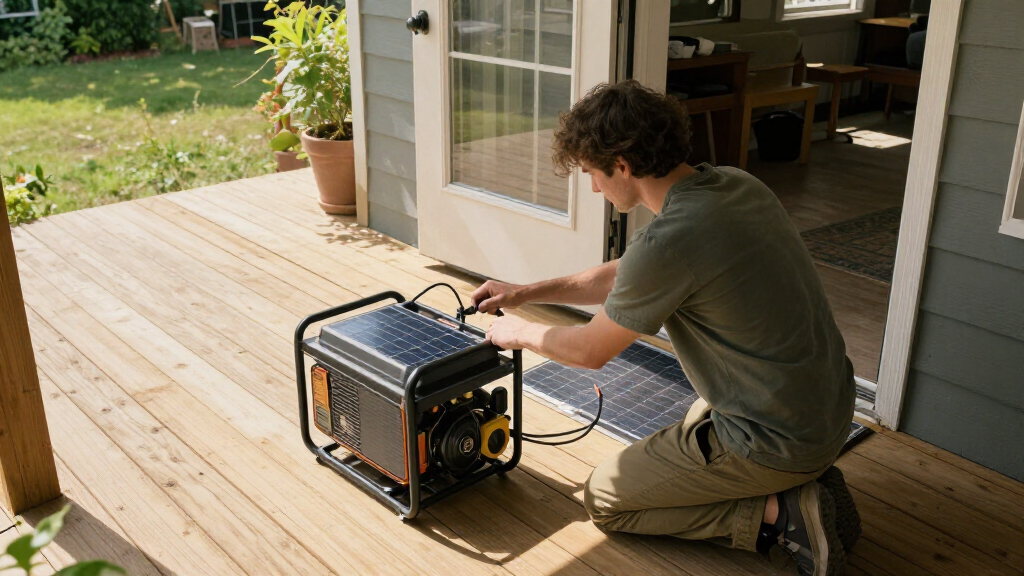

Home solar generators pair a battery power station with solar panels so you can keep essentials running through outages without fuel, fumes, or noise. After comparing 14 current options, the Jackery Solar Generator 5000 Plus stands out as the best overall pick for whole-home backup thanks to its 5040Wh capacity, expandable design, and high output that can run major appliances. For smaller budgets or apartments, the Anker SOLIX C1000 Gen 2 offers an impressive balance of capacity and fast recharging, while budget-friendly kits like the ABOK Ark3600 with three 200W panels deliver serious solar input for less. The main tradeoff in this category is capacity versus cost and portability: big systems can run refrigerators and HVAC circuits but cost more and weigh over 100 pounds, while compact kits are easy to move but only power devices. Panel wattage matters too — the difference between a 40W and a 600W solar array determines whether you recharge in a day or a week. Keep reading for the full breakdown, including who each model suits and which ones to skip.

Get backup power and energy gear delivered free — and shop member deals
- Fast, free delivery on millions of items
- Access to Prime Big Deal Days deals on October 6–7
- Prime Video, Amazon Music and more included
Complete the kit


Key Takeaways
- The Jackery 5000 Plus earned the top spot because it is the only kit here with enough capacity and output (5040Wh, expandable) to realistically back up multiple home circuits, not just appliances.
- Budget kits under 300Wh — the MARBERO M823, ZeroKor, EnginStar, and Apowking — all share the same limitation: their bundled 40–60W panels take multiple sunny days to refill the battery, making them emergency device chargers rather than true home backup.
- Solar input wattage varied more than battery size across this lineup, and it proved the better predictor of real-world usefulness during multi-day outages; kits with 400–600W of panels recovered far faster than single-panel rivals.
- Several Jackery models overlap heavily (2000 v2, HomePower 3000, and both HomePower 3600 Plus variants), and the differences came down to expandability and bundled panels rather than core performance — knowing which config you need saves real money.
- The Anker SOLIX models were the strongest challengers to Jackery‘s dominance, matching capacity at similar tiers with faster wall recharging, which matters most for buyers who recharge from the grid between outages rather than relying on sun.
| Jackery Solar Generator 5000 Plus with Two 200W Solar Panels, 5040Wh |  | Best Whole-Home Backup | Battery capacity: 5,040Wh | Expandable capacity: Up to 60kWh | Surge output: 14,400W | VIEW LATEST PRICE | See Our Full Breakdown |
| Jackery Solar Generator 1000 v2 with 200W Solar Panel |  | Best Midsize All-Rounder | Battery capacity: 1,070Wh | Battery type: LFP | AC output: 1,500W | VIEW LATEST PRICE | See Our Full Breakdown |
| ABOK Ark3600 Portable Power Station with Three 200W Solar Panels |  | Best Expandable Value | Capacity: 3,840Wh, expandable to 11,520Wh | AC input: 1,500W | PV input: Up to 2,000W | VIEW LATEST PRICE | See Our Full Breakdown |
| Anker SOLIX C1000 Gen 2 Portable Power Station |  | Best for Fast Recharging | Battery capacity: 1,024Wh | Output power: 2,000W | Peak output: 3,000W | VIEW LATEST PRICE | See Our Full Breakdown |
| ZeroKor 300W Portable Power Station with 60W Solar Panel | 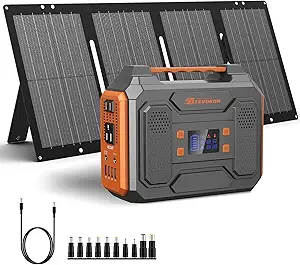 | Best Budget Starter Kit | Output: 300W max | Solar panel: 60W monocrystalline, 20.5% efficiency | AC outlets: 2 (300W max) | VIEW LATEST PRICE | See Our Full Breakdown |
| Jackery Explorer 2000 v2 Portable Power Station with Two 200W Solar Panels |  | Best Fast-Charging Mid-Size Backup | Battery Capacity: 2042Wh LiFePO4 | AC Output: 2200W, 3 outlets | USB-C PD: 100W | VIEW LATEST PRICE | See Our Full Breakdown |
| Anker SOLIX S2000 Portable Power Station, 2,010Wh, 1,500W |  | Best Charging Flexibility | Battery Capacity: 2,010Wh LFP | Continuous Output: 1,500W (3,000W peak) | Solar Input: Up to 400W | VIEW LATEST PRICE | See Our Full Breakdown |
| Jackery Explorer 300 Portable Power Station with 40W Solar Panel |  | Best Beginner Solar Kit | Battery Capacity: 292Wh LiFePO4 | Ports: 2 AC, 100W USB-C PD, 2 USB-A, 120W car port | Charge Cycles: 4,000+ to 70% capacity | VIEW LATEST PRICE | See Our Full Breakdown |
| Jackery HomePower 3600 Plus Portable Power Station with Two 200W Solar Panels |  | Best Whole-Home Backup Kit | Capacity: 3,584Wh, expandable to 43kWh | AC Output: 3,600W (7,200W parallel) | Voltage: 120V; 240V in parallel | VIEW LATEST PRICE | See Our Full Breakdown |
| Jackery HomePower 3600 Plus Portable Power Station, 3584Wh |  | Best Expandable Base Unit | Capacity: 3,584Wh, expandable to 21kWh per unit | AC Output: 3,600W (7,200W parallel) | Voltage: 120V; 240V in parallel | VIEW LATEST PRICE | See Our Full Breakdown |
| Jackery HomePower 3000 Portable Power Station with 2 SolarSaga 200W Panels |  | Best for Whole-Room Home Backup | Capacity: 3072Wh | AC output: 3600W (7200W surge) | Battery chemistry: LiFePO4, 4,000 cycles to 70% capacity | VIEW LATEST PRICE | See Our Full Breakdown |
| EnginStar 300W Portable Power Station with 60W Foldable Solar Panel |  | Best Value Solar Kit for Weekend Campers | Battery capacity: 296Wh | AC output: 300W, 2 × 110V pure sine wave | Output ports: 8 total, including USB-C (18W) and 12V/24V DC | VIEW LATEST PRICE | See Our Full Breakdown |
| Apowking 300W Portable Power Station with 40W Solar Panel |  | Best Ultralight Emergency Kit | Battery capacity: 220Wh (60,000mAh) | Peak output: 600W (300W rated) | AC outlets: 2 × 110V pure sine wave | VIEW LATEST PRICE | See Our Full Breakdown |
| MARBERO M823 Portable Power Station with 60W Foldable Solar Panel, 237Wh, 300W Pure Sine Wave |  | Best Budget Pick for Device Charging | Battery capacity: 237Wh (64,000mAh) | AC output: 2 outlets, 300W rated / 375W peak, pure sine wave | USB ports: 2 × QC3.0 (18W), 2 × 15W, 1 × USB-C PD 18W | VIEW LATEST PRICE | See Our Full Breakdown |
| home solar generator | Battery capacity | AC output | Weight |
|---|---|---|---|
| Jackery Solar Generator 5000 P | 5,040Wh | — | — |
| Jackery Solar Generator 1000 v | 1,070Wh | 1,500W | 23.8 lbs |
| ABOK Ark3600 Portable Power St | — | — | — |
| Anker SOLIX C1000 Gen 2 Portab | 1,024Wh | — | 11.3 kg (about 25 lbs) |
| ZeroKor 300W Portable Power St | — | — | — |
| Jackery Explorer 2000 v2 Porta | 2042Wh LiFePO4 | 2200W, 3 outlets | 39.5 lbs (station) |
| Anker SOLIX S2000 Portable Pow | 2,010Wh LFP | — | 35.7 lbs |
| Jackery Explorer 300 Portable | 292Wh LiFePO4 | — | 7.5 lbs |
| Jackery HomePower 3600 Plus Po | — | 3,600W (7,200W parallel) | — |
| Jackery HomePower 3600 Plus Po | — | 3,600W (7,200W parallel) | — |
| Jackery HomePower 3000 Portabl | — | 3600W (7200W surge) | — |
| EnginStar 300W Portable Power | 296Wh | 300W, 2 × 110V pure sine wave | 6.5 lbs |
| Apowking 300W Portable Power S | 220Wh (60,000mAh) | — | 5 lbs |
| MARBERO M823 Portable Power St | 237Wh (64,000mAh) | 2 outlets, 300W rated / 375W peak, pure sine wave | — |
More Details on Our Top Picks
Jackery Solar Generator 5000 Plus with Two 200W Solar Panels, 5040Wh
This is the heavyweight of the lineup, and it earns that status through sheer capability. With 7,200W of continuous output and support for 240V circuits, it can run central appliances that would overwhelm everything else here — the ABOK Ark3600, for instance, tops out at 3,600W and can’t feed 240V devices at all. The 5,040Wh base capacity is already enough for a full day of essential household loads, and expansion up to 60kWh means this can grow into a genuine off-grid power system rather than staying a big battery in the garage.
The tradeoff is scale. Two bundled 200W panels barely dent a battery this size, so buyers serious about solar recharging will need to invest in a much larger array to hit the advertised 4,000W input. Panels also ship separately, which adds delivery friction. Compared with the Jackery 1000 v2, this is a different category of purchase — one for whole-house resilience, not camping trips.
Pros:- 7,200W output runs large appliances, with 14,400W surge for motor starts
- 240V support covers well pumps, dryers, and EV-level loads
- Expandable from 5,040Wh to 60kWh for whole-home scaling
- LiFePO₄ chemistry rated for up to 11 years of daily cycling
Cons:- Two included 200W panels are undersized relative to the battery’s 4,000W solar input ceiling
- Solar panels ship separately, complicating delivery and setup
Best for: Homeowners who want to run major appliances like HVAC, well pumps, or electric dryers through outages and may expand toward whole-home energy independence
Not ideal for: Campers, apartment dwellers, or anyone on a modest budget — it’s far more capacity and cost than portable use justifies
- Battery capacity:5,040Wh
- Expandable capacity:Up to 60kWh
- Surge output:14,400W
- Output voltage:120V and 240V
- Maximum solar input:4,000W
- Battery chemistry:LiFePO₄
- Included solar panels:Two 200W panels
Our verdict“If your goal is true whole-home backup rather than gadget power, this is the only option in the lineup built to grow into that job.”
Jackery Solar Generator 1000 v2 with 200W Solar Panel
The 1,000Wh class is where portability and usefulness meet, and the 1000 v2 handles that balance better than most. Its 1,500W AC output comfortably covers a mini-fridge, CPAP machine, laptops, and lights simultaneously — a real step up from the 300W options like the ZeroKor, which can’t run anything with a heating element or motor. At 23.8 lbs with a foldable handle, it still moves from closet to car without effort, unlike the ABOK Ark3600 further up this list.
Compared with the similarly sized Anker SOLIX C1000, the Jackery counters the Anker’s faster AC recharge with a more generous port selection — three AC outlets plus USB-C PD 100W — and app-based charging modes. The honest drawback: that advertised one-hour wall recharge requires enabling an emergency mode in the app, and solar is slow, hitting only 80% in six hours from the single bundled panel. Buyers wanting rapid solar recovery should look at the Anker instead.
Pros:- 1,500W output powers multiple appliances at once
- Genuinely portable at 23.8 lbs with a folding handle
- Versatile port mix including 100W USB-C PD
- LFP battery rated to retain over 70% capacity after 4,000 cycles, backed by a 5-year warranty
Cons:- One-hour AC charging requires enabling an emergency mode in the app
- Solar recharge is slow — roughly 6 hours to reach 80% with the included panel
- Panel and station ship separately
Best for: Households and campers who want a do-everything unit for fridge-and-devices backup and off-grid weekends without hauling a 50-pound station
Not ideal for: Anyone expecting to run a microwave, space heater, or power tools — 1,500W rules out high-draw appliances
- Battery capacity:1,070Wh
- Battery type:LFP
- AC output:1,500W
- Surge peak:3,000W
- Weight:23.8 lbs
- Included solar panel:200W
- Ports:3 AC, 2 USB-C, 1 USB-A, 1 DC car port
- Solar charging time:80% in 6 hours with 200W panel
- Warranty:5 years
Our verdict“The most balanced pick in the roundup for buyers who want serious-but-portable power for both emergencies and recreation.”
ABOK Ark3600 Portable Power Station with Three 200W Solar Panels
The Ark3600 occupies a smart middle ground: more backup muscle than the Jackery 1000 v2, far cheaper territory than the Jackery 5000 Plus, and it ships with three 200W panels instead of two — the most bundled solar in this batch. That matters, because 600W of array gets you meaningfully closer to self-sustaining recharge than the 200–400W kits elsewhere here. With 3,840Wh expandable to 11,520Wh, it can back up a fridge, router, and lights for days rather than hours.
Where it falls short of the 5000 Plus is raw output: 3,600W handles most household loads but not 240V appliances, so it’s not a whole-home substitute. The headline 1.29-hour recharge also requires combining 1,500W AC with full 2,000W solar input under ideal sunlight — realistic recovery will be slower. Still, with 15 ports and Bluetooth app control, this pick makes the most sense for buyers who want large-capacity backup without paying for the flagship tier.
Pros:- 3,840Wh capacity expandable to 11,520Wh for longer outages
- Three included 200W panels — the largest bundled array in this batch
- 15 output ports run many devices simultaneously
- Combines AC and solar input for genuinely fast recharges when conditions allow
Cons:- Advertised fastest recharge depends on optimal sunlight and dual-input conditions
- No 240V output limits compatibility with high-voltage appliances
Best for: Suburban homeowners who need multi-day fridge-and-essentials backup and want the largest included solar kit without flagship pricing
Not ideal for: Buyers with 240V appliances or whole-house ambitions — the 3,600W ceiling and 120V-only output rule those out
- Capacity:3,840Wh, expandable to 11,520Wh
- AC input:1,500W
- PV input:Up to 2,000W
- AC recharge time:About 3 hours
- Output ports:15
- Battery cycle life:Over 4,000 charge cycles
- Included solar panels:Three 200W panels
Our verdict“The strongest capacity-per-dollar play here, ideal for essentials-level home backup with room to grow.”
Anker SOLIX C1000 Gen 2 Portable Power Station
If the Jackery 1000 v2 is the balanced all-rounder, the SOLIX C1000 is its impatient sibling. Its standout trait is recharge speed: 49 minutes from a wall outlet and 1.8 hours from solar at the 600W input ceiling — roughly triple the Jackery’s panel-only pace with a comparable battery. For storm-prep scenarios where the sun returns for only a few hours, that difference decides whether you finish the day full or half-empty.
It also leads on features the others lack: UPS switchover under 10ms lets it sit between a wall outlet and a sensitive load — a CPAP, aquarium, or desktop computer — without interruption during an outage. Output is a healthy 2,000W. The compromises are a modest 1,024Wh capacity that caps how long you can run things, and a leaner port layout than the Jackery’s, with some conflicting official device-count claims. No panels are included, so budget for an array or treat this as an AC-first backup unit.
Pros:- 49-minute AC recharge is the fastest in this batch
- 600W solar input recharges in roughly 1.8 hours
- Sub-10ms UPS switchover protects sensitive devices seamlessly
- 2,000W output exceeds the Jackery 1000 v2’s 1,500W
Cons:- No solar panel included despite strong solar input support
- Smaller port selection than similarly sized rivals, with inconsistent device-count specs
Best for: Buyers who prioritize rapid turnaround between uses and want UPS-grade protection for outage-sensitive electronics like CPAP machines or computers
Not ideal for: Extended-outage planners — 1,024Wh drains quickly, and no solar panel is included, so it needs a separate array for solar operation
- Battery capacity:1,024Wh
- Output power:2,000W
- Peak output:3,000W
- AC recharge time:49 minutes at 1,600W
- Maximum solar input:600W (60V)
- Solar recharge time:1.8 hours
- UPS switchover:Under 10 ms
- Battery cycle life:At least 80% capacity after 4,000 cycles
- Weight:11.3 kg (about 25 lbs)
Our verdict“The pick for buyers who value speed and seamless switchover over maximum capacity or included panels.”
ZeroKor 300W Portable Power Station with 60W Solar Panel
Everything else in this roundup assumes you’re backing up appliances; the ZeroKor makes a different promise — affordable first steps into solar power. The bundled 60W monocrystalline panel with 20.5% conversion efficiency, plus AC and car charging, gives beginners three ways to refill the battery, and the outputs (two AC, three USB, DC) cover phones, tablets, fans, cameras, and small lights without fuss. The built-in flashlight with reading and SOS modes is a thoughtful touch for emergency kits.
The 300W ceiling is the honest limit: no refrigerators, microwaves, or medical devices with compressors, which even the Jackery Explorer 300 class and certainly the Jackery 1000 v2 can handle better. The panel’s junction box also isn’t waterproof, so it needs careful placement outdoors. Compared with the EnginStar and MARBERO alternatives in this roundup, the ZeroKor stands out mainly for its complete accessory bundle — car cables and adapters included — making it a true open-the-box kit rather than a battery you finish buying later.
Pros:- Complete kit includes panel, AC adapter, and car-charging cables
- Three recharge methods: AC, 12V car port, and solar
- Multiple output types cover phones, small fans, lights, and cameras
- Built-in flashlight with reading and SOS emergency modes
Cons:- Hard 300W output cap excludes refrigerators and most appliances
- Solar panel junction box is not waterproof, limiting outdoor mounting options
Best for: First-time buyers, campers, and emergency-kit builders who need device charging and small electronics covered on a tight budget
Not ideal for: Anyone needing fridge, medical equipment, or appliance backup — the 300W limit rules out nearly all motor-driven or heating devices
- Output:300W max
- Solar panel:60W monocrystalline, 20.5% efficiency
- AC outlets:2 (300W max)
- DC output:9V–12.6V, 10A max
- USB ports:3 × 5V/3A plus quick-charge port
- Recharge methods:AC outlet, 12V car port, 13V–23V solar panel
- Safety features:Short-circuit, over-current, over-voltage, overload, and overheat protection
Our verdict“A sensible, low-commitment entry point for device-level backup — as long as you accept it will never run a fridge.”
Jackery Explorer 2000 v2 Portable Power Station with Two 200W Solar Panels
This pairing of the Explorer 2000 v2 with two 200W panels stands out for one thing most rivals in this capacity class can’t match: recharge speed. An 80% AC charge in 66 minutes means that during a multi-day outage you can top up at a friend’s house or a charged outlet in about an hour, while the Anker SOLIX S2000 leans on flexibility instead. Compared with the Jackery Explorer 300 kit, this moves from device charging into real appliance territory — a fridge, microwave, or CPAP machine for extended stretches — with a 2200W inverter that clears the surge of most kitchen appliances. The 20 ms UPS switching also lets it sit between your router and wall outlet as an always-ready backup. The tradeoff is weight: at nearly 40 lbs for the station alone, it’s a home-and-car unit, not a backpack one.
Pros:- Fast AC charging reaches 80% in 66 minutes, unusual at this capacity
- 2200W inverter runs most household appliances, not just electronics
- Includes two 200W solar panels so it’s a complete kit out of the box
- 20 ms UPS switching supports always-connected backup for routers and PCs
Cons:- Solar recharge takes about 6 hours even with both panels in good sun
- Power station and panels may arrive in separate shipments, complicating gifting or returns
Best for: Homeowners who want fridge-and-appliance backup during outages without installing a fixed system
Not ideal for: Hikers or campers counting ounces — at 39.5 lbs it’s too heavy to carry far from the car
- Battery Capacity:2042Wh LiFePO4
- AC Output:2200W, 3 outlets
- USB-C PD:100W
- Solar Panels:Two 200W included
- AC Charging:80% in 66 minutes
- Solar Charging:~6 hours with 400W
- UPS Switching:20 ms
- Weight:39.5 lbs (station)
Our verdict“The mid-size pick for buyers who prioritize getting back to full charge quickly between outages rather than maximum capacity.”
Anker SOLIX S2000 Portable Power Station, 2,010Wh, 1,500W
Where the Explorer 2000 v2 wins on AC recharge speed, the Anker SOLIX S2000 wins on how many ways you can feed it: wall outlet, solar, gas generator, alternator charger, or car outlet — six methods total. For RV owners and anyone who lives between power sources, that flexibility matters more than raw wattage. Its 1,500W continuous output sits below the Jackery’s 2200W, so it’s better suited to lights, laptops, a TV, and a small fridge than to a microwave or power tools. In return you get a genuinely compact body — 8.2 × 11.1 × 12.7 inches and 35.7 lbs — and an eight-outlet layout that lets a whole household charge at once. Its UPS switchover under 10 ms is actually faster than the Jackery’s, making it the stronger always-connected desk or media-center backup. Note it lacks a 12V DC port, which will annoy some campers.
Pros:- Six recharge methods including alternator and car charging for road use
- Sub-10 ms UPS switchover, faster than comparable Jackery models
- Eight outlets let multiple devices and family members charge simultaneously
- Compact footprint and 35.7 lb weight make it easy to store and move
Cons:- No 12V DC port limits compatibility with some car-style accessories
- 1,500W continuous output restricts which appliances it can run
Best for: RV owners and multi-scenario users who recharge from varied sources and need one compact station for everything
Not ideal for: Buyers who need to run high-draw appliances like microwaves or hair dryers — 1,500W continuous won’t clear them
- Battery Capacity:2,010Wh LFP
- Continuous Output:1,500W (3,000W peak)
- Solar Input:Up to 400W
- Outlets:8
- UPS Switchover:Under 10 ms
- Recharge Methods:AC, solar, generator, alternator, car outlet
- Weight:35.7 lbs
Our verdict“Choose this over faster-charging rivals if your power sources change weekly and versatility beats peak wattage.”
Jackery Explorer 300 Portable Power Station with 40W Solar Panel
This is the entry point of the roundup, and it earns that spot by doing the basics well at a carry-anywhere size. At 7.5 lbs with an integrated handle, it goes where the Explorer 2000 v2 simply can’t — tents, cabins, festival campsites. The 292Wh capacity and 300W output mean phones, cameras, drones, headlamps, and a laptop, not appliances — buyers expecting fridge runtime should jump straight to the Anker SOLIX S2000. What makes this kit better than the similarly sized MARBERO M823 or EnginStar bundles is the LiFePO4 chemistry rated past 4,000 cycles, so a beginner buying today will still have a healthy battery years into the hobby. Six ports, including a 100W USB-C PD, let it run a small camp’s worth of devices at once. Be realistic about the panel: 40W means roughly 7.5 hours of good sun to reach 80%.
Pros:- Truly portable at 7.5 lbs with an integrated carry handle
- LiFePO4 cells rated for over 4,000 cycles outlast typical entry-level batteries
- Six ports, including 100W USB-C PD, charge multiple devices at once
- Complete starter kit includes the solar panel and all cables
Cons:- The included 40W panel is slow — about 7.5 hours to reach 80% in good conditions
- 300W rated output rules out nearly all kitchen appliances
Best for: First-time solar buyers and car campers who want a light, durable kit for devices, not appliances
Not ideal for: Anyone planning home outage backup — 292Wh won’t run a refrigerator even briefly
- Battery Capacity:292Wh LiFePO4
- Ports:2 AC, 100W USB-C PD, 2 USB-A, 120W car port
- Charge Cycles:4,000+ to 70% capacity
- Solar Charging:~7.5 hours to 80% with included 40W panel
- Weight:7.5 lbs
Our verdict“The smartest way to test whether solar fits your lifestyle before committing to a whole-home system.”
Jackery HomePower 3600 Plus Portable Power Station with Two 200W Solar Panels
This is the most complete package in the batch: a 3,584Wh, 3,600W station plus two 200W panels, positioned between the mid-size Explorer 2000 v2 and the massive Solar Generator 5000 Plus. The differentiator is expandability — up to 21kWh per unit, 43kWh with multiple units, and 240V output at 7,200W when run in parallel. That means it can start as an outage workhorse running a fridge, freezer, and lights for a day, then grow into something that backs up well pumps or an electric dryer later. Unlike the Anker SOLIX S2000, it also accepts gas-generator input, giving you a recharge path during extended cloudy-weather outages. The wheels and telescopic handle are welcome at this weight class. Tradeoffs: 240V needs a second unit, and the two included panels barely scratch this capacity — plan on adding panels for meaningful solar recovery.
Pros:- Expandable from 3,584Wh up to 43kWh across linked units
- 3,600W output runs heavy loads; 7,200W and 240V available in parallel
- Four charging paths including gas generator input for extended outages
- Wheels and telescopic handle make an otherwise heavy unit movable
Cons:- 240V output and 7,200W only unlock with a second unit in parallel
- Two 200W panels are undersized for a battery this large — serious solar needs added panels
Best for: Homeowners building a scalable backup system who want panels included now and expansion later
Not ideal for: Apartment dwellers or occasional campers — it’s far more capacity, size, and cost than they need
- Capacity:3,584Wh, expandable to 43kWh
- AC Output:3,600W (7,200W parallel)
- Voltage:120V; 240V in parallel
- Charging Options:Hybrid AC+DC, AC, solar, gas generator
- Recharge Time:2 hrs hybrid; 4 hrs solar
- Battery Cycles:6,000 cycles (10-year claimed lifespan)
- Solar Panels:Two 200W included
- Transport:Wheels and telescopic handle
Our verdict“The strongest choice for buyers who want whole-home capability today and a growth path tomorrow, panels included.”
Jackery HomePower 3600 Plus Portable Power Station, 3584Wh
This is the same HomePower 3600 Plus hardware as the panel-inclusive version, sold as a station only — and that’s a legitimate strategy, not a drawback, if you already own panels or plan to buy higher-wattage ones. The two 200W panels in the sibling kit would take many hours to meaningfully refill 3,584Wh, so buyers intending a serious solar array may prefer spending their budget on the battery first. Specs match the kit version: 3,600W output, expansion to 43kWh, 240V in parallel, 6,000-cycle LFP cells, and a 2-hour hybrid recharge that beats most rivals in this class, including the ABOK Ark3600. Compared with the Explorer 2000 v2, it doubles the runtime headroom and adds generator input. The honest caveats: 240V still requires a second unit, and hybrid fast charging needs both AC and DC sources simultaneously.
Pros:- Same 3,584Wh, 3,600W platform as the kit version, expandable to 43kWh
- Lets buyers pair it with larger third-party or existing solar arrays
- 2-hour hybrid recharge is among the fastest at this capacity
- 6,000-cycle LFP cells support a claimed 10-year service life
Cons:- No solar panels included, so it’s not usable as a solar generator without a separate purchase
- 240V output only works with a second unit in parallel
Best for: Buyers who already own solar panels or want to choose their own array and prioritize battery capacity per dollar
Not ideal for: First-time solar buyers who want a complete out-of-the-box kit — this ships with no panels
- Capacity:3,584Wh, expandable to 21kWh per unit
- AC Output:3,600W (7,200W parallel)
- Voltage:120V; 240V in parallel
- Recharge Time:2 hrs hybrid AC+DC; 2.5 hrs AC; 4 hrs solar
- Battery Cell Type:LFP, 6,000 cycles
- Charging Options:Hybrid AC+DC, AC, solar, gas generator
- Portability:Wheels and telescopic handle
Our verdict“Pick this over the panel bundle if you’re building a custom solar setup and want the battery foundation first.”
Jackery HomePower 3000 Portable Power Station with 2 SolarSaga 200W Panels
This option stands out as the only unit in this batch that can genuinely back up a home. With 3,072Wh of capacity and 3,600W of AC output, it runs refrigerators, space heaters, and workstations — tasks that the EnginStar 300W or MARBERO M823 simply cannot touch, since those models max out at small electronics. The ≤20ms UPS transfer means a computer or CPAP machine keeps running through an outage without rebooting, which is the feature that separates true home backup units from big camping batteries. Its LiFePO4 chemistry rated for 4,000 cycles also outlasts the lithium-ion cells in the smaller picks here. The tradeoff is weight, cost, and practicality: this is not something you toss in a backpack. Buyers wanting less capacity should look at the Jackery Explorer 2000 v2 instead of overspending here.
Pros:- 3,600W output with 7,200W surge runs most household appliances
- UPS mode switches in under 20ms so sensitive devices stay powered
- LiFePO4 battery rated for 4,000 cycles for years of reliable service
- Fast hybrid recharging in roughly 1.7 hours
Cons:- Heavy and bulky compared with portable rivals, limiting mobility
- Power station and solar panels ship separately, so packages may arrive on different days
Best for: Homeowners who want automatic, appliance-level backup power during outages without installing a fixed generator
Not ideal for: Campers and casual users — at this capacity and weight it is overkill and awkward compared with sub-300Wh options like the MARBERO M823
- Capacity:3072Wh
- AC output:3600W (7200W surge)
- Battery chemistry:LiFePO4, 4,000 cycles to 70% capacity
- UPS transfer time:≤20ms
- Included solar panels:2 × 200W SolarSaga
- Recharge time:1.7 hours hybrid AC/DC; 2.2 hours AC only
- Ports:AC, USB-C, USB-A, DC, TT-30 RV
Our verdict“If you need real home backup that keeps a fridge and electronics alive through an outage, this is the pick — everyone else should buy smaller and cheaper.”
EnginStar 300W Portable Power Station with 60W Foldable Solar Panel
This kit makes the most sense for buyers who want a complete solar charging setup at an entry price. The 296Wh station plus a foldable 60W panel covers the basics of off-grid power: phones, tablets, cameras, drone batteries, and a small fan or lights. Compared with the Apowking 300W, the EnginStar offers more capacity (296Wh vs 220Wh) and a more powerful 60W panel, which translates to meaningfully faster solar recharges at camp. Its eight output ports and two pure sine wave outlets give it flexibility the smaller MARBERO matches but does not exceed. The catch is the same one that plagues every 300W unit here: no kettles, hair dryers, or induction cooktops. And the listing is vague about solar panel inclusion, so confirm the panel ships with the station before ordering.
Pros:- Includes a foldable 60W monocrystalline panel at 23% conversion efficiency
- Eight output ports plus two pure sine wave AC outlets
- Three charging sources: solar, wall outlet, and 12V car socket
- Full recharge in roughly 3 hours from the wall
Cons:- 300W rated output cannot run most household appliances
- Product listing gives conflicting information about whether the solar panel is included
Best for: Budget-conscious campers and van-lifers who want paired solar charging for phones, cameras, and small devices
Not ideal for: Anyone planning to run kitchen appliances or power tools — the 300W ceiling rules out nearly everything with a heating element
- Battery capacity:296Wh
- AC output:300W, 2 × 110V pure sine wave
- Output ports:8 total, including USB-C (18W) and 12V/24V DC
- Included solar panel:60W monocrystalline, 23% efficiency
- Recharge time:About 3 hours
- Weight:6.5 lbs
- Charge cycles:1,000+
Our verdict“A sensible starter solar kit for small-device camping, provided the solar panel actually ships with your order.”
Apowking 300W Portable Power Station with 40W Solar Panel
At 5 lbs with a 40W panel included, this is the lightest complete solar kit in the lineup, aimed squarely at people who carry their power with them. Compared with the EnginStar 300W, you trade away capacity and panel wattage — 220Wh versus 296Wh, and a 40W panel versus 60W — in exchange for a smaller pack that fits in a car kit or hiking bin. The built-in 300-lumen area light is a genuinely useful emergency feature the EnginStar and MARBERO only partially match with directional flashlights. Its ten DC connectors also make it unusually good at powering 12V devices like car fridges and air pumps. The real cost is recharge patience: a 40W panel feeding a 220Wh battery means slow solar days, and the 600W peak surge is not enough to start most motor-driven appliances.
Pros:- Featherweight 5 lb station with a compact foldable panel
- Built-in ~300-lumen area light covering up to 100 sq. ft.
- Ten DC connectors for 12V devices like fridges and pumps
- Four USB ports including PD and QC fast charging
Cons:- 40W panel recharges the 220Wh battery slowly
- 300W rated output rules out higher-power appliances despite the 600W surge rating
Best for: Car-campers, road-trippers, and emergency-prep buyers who want a light grab-and-go kit with lighting built in
Not ideal for: Anyone off-grid for multiple days relying on solar alone — the 40W panel recharges too slowly to keep up with regular use
- Battery capacity:220Wh (60,000mAh)
- Peak output:600W (300W rated)
- AC outlets:2 × 110V pure sine wave
- Included solar panel:40W monocrystalline, 24% cell efficiency
- USB ports:4, including USB-C PD and QC fast charge
- LED light:~300 lumens, 5000K, up to 100 sq. ft.
- Weight:5 lbs
Our verdict“The lightest way to carry solar backup and lighting in one box — just do not expect fast solar recharges or appliance power.”
MARBERO M823 Portable Power Station with 60W Foldable Solar Panel, 237Wh, 300W Pure Sine Wave
This model is better suited to buyers whose priority is straightforward device charging with a solar option rather than raw capacity. Sitting between the Apowking (220Wh) and EnginStar (296Wh) in capacity, the M823 pairs its 237Wh battery with a full 60W foldable panel at 21.5–23.5% conversion, so it recharges faster off-grid than the Apowking kit despite the similar price territory. The port layout is generous — four USB-A ports plus an 18W USB-C — making it a strong fit for families charging multiple phones and tablets at once. The flashlight with strobe and SOS modes adds emergency utility. The limits are clear, though: 300W rated output with a 375W peak means overloading it risks damage, and it shares the small-device ceiling of every compact unit here.
Pros:- Includes a 60W foldable panel with up to 23.5% conversion efficiency
- Five USB ports plus USB-C PD for charging many devices at once
- Pure sine wave AC output is safe for sensitive electronics
- Flashlight includes strobe and SOS emergency modes
Cons:- 375W peak surge is tight, and devices exceeding 300W can damage the unit
- Lithium-ion chemistry offers fewer lifecycle years than LiFePO4 rivals like the Jackery HomePower 3000
Best for: Households and campers who mainly need to keep phones, tablets, cameras, and small gadgets charged with solar backup
Not ideal for: Buyers with medical devices, laptops under heavy load, or any appliance needs — the 375W peak leaves almost no headroom beyond small electronics
- Battery capacity:237Wh (64,000mAh)
- AC output:2 outlets, 300W rated / 375W peak, pure sine wave
- USB ports:2 × QC3.0 (18W), 2 × 15W, 1 × USB-C PD 18W
- DC output:12–16.8V, 10A (14A max)
- Included solar panel:60W foldable, 21.5–23.5% conversion
- Flashlight modes:Flashlight, strobe, SOS
Our verdict“A well-rounded, affordable solar kit for keeping small electronics alive at camp or during short outages.”
How We Picked
My ranking logic starts with one question: can this kit actually back up a home? I grouped the 14 products into tiers by battery capacity (under 300Wh, 1000–2100Wh, 3000Wh and above), because capacity determines what you can run — a 237Wh unit powers phones and a CPAP, while a 5040Wh unit can carry a refrigerator, lights, and router through a long outage. Within each tier, I weighed inverter output (whether it can start and run appliances like fridges or microwaves), solar input capacity (how fast the bundled panels can refill the battery in real conditions), and expandability (whether you can add batteries or panels later instead of replacing the whole system).
Usability and build quality acted as tiebreakers: pure sine wave inverters ranked above modified sine, app control and clear displays ranked above bare-bones interfaces, and a track record of battery management safety features counted heavily for units meant to live indoors. I also penalized kits where the bundled panel wattage was badly mismatched to the battery size — a common pattern in the budget tier that quietly undermines the value of a large battery. Finally, I factored versatility: kits that work as both home backup and portable camping power ranked above single-purpose units at the same capacity.
Factors to Consider When Choosing Home Solar Generators
Before settling on a specific kit, it helps to understand the broader landscape of home solar generators — the mistakes buyers make most often involve sizing, panel matching, and misunderstanding what these systems can realistically replace.Size Your Battery to Your Actual Load, Not the Marketing
The most common mistake is buying capacity you do not need — or worse, capacity that only looks sufficient. Start by listing the appliances you genuinely must run during an outage: for most homes that is a refrigerator (roughly 1–2 kWh per day), a router and phones, some LED lighting, and possibly a CPAP or medical device. That math typically lands between 1,000Wh and 3,600Wh for a day or two of coverage, which is why mid-tier kits dominate this roundup. Systems above 5,000Wh make sense when you want to add a well pump, space heater, or window AC unit, but they cost roughly double and weigh over 100 pounds, so they belong in one fixed spot. A useful exercise: multiply each appliance’s wattage by the hours you would run it daily, add 20% for inverter losses, and buy against that number rather than a vague feeling of “more is safer.” Also remember that depth of discharge and capacity fade mean a battery rated at 1,000Wh will deliver closer to 800–900 usable watt-hours within a few years.
Match Your Solar Array to Your Battery — and Your Weather
Panel wattage is where cheap kits quietly fail. A 40W or 60W panel paired with a 296Wh battery sounds reasonable until you run the numbers: in real-world conditions (panels rarely hit rated output outside ideal sun), a 60W panel delivers maybe 35–45 watts per peak hour, meaning a full recharge takes several sunny days. If you want true solar self-sufficiency, aim for a panel array that can refill your battery in one good sun day — roughly 400W of panels for a 2,000Wh battery and 600W+ for a 3,600Wh unit. Latitude, season, and roof angle all cut into panel output, so buyers in northern climates should over-provision by 30–50%. Another consideration often missed: panel placement flexibility. Foldable briefcase panels need daily repositioning; rigid roof- or rail-mounted panels work unattended but add installation complexity. Some budget kits also use panels with proprietary connectors, which locks you into that brand when you want to expand.
Inverter Output Determines What You Can Run — Not Battery Size
Buyers fixate on watt-hours and overlook continuous and peak inverter ratings, but this spec decides whether your fridge or microwave will actually start. Compressor-based appliances draw a surge of two to three times their running wattage at startup, so a 700W refrigerator may need over 1,500W momentarily. That is why 300W units — no matter how affordable — cannot back up a kitchen, and why 2,000W+ inverters appear throughout the top of this roundup. Pure sine wave output matters too if you plan to run sensitive electronics, audio equipment, or anything with a variable-speed motor, since modified sine wave can cause buzzing, heat, and long-term damage. Also check the inverter’s duty cycle: some units throttle output when the battery is low or the unit is warm, which can drop you below an appliance’s requirement mid-outage. If you want to power a well pump, sump pump, or anything with a large induction motor, verify the surge rating before buying, not during your first outage.
LiFePO4 Chemistry Is Worth Paying More For
Battery chemistry is the single best predictor of long-term value in this category. Lithium iron phosphate (LiFePO4) cells are rated for 3,000–6,000 charge cycles — roughly a decade of daily cycling — while older NMC lithium cells typically manage 500–1,000 cycles before degrading to about 80% capacity. Since a solar generator is mostly a battery in a box, a chemistry that lasts four times longer changes the per-year cost of ownership dramatically, even at a higher sticker price. LiFePO4 is also more thermally stable, which matters for a device that lives inside your home near your family. The tradeoff is weight and size: LiFePO4 packs less energy per pound, which is why the most portable budget kits often still use NMC. My advice: for fixed home backup, insist on LiFePO4 and check the cycle-life rating in the spec sheet; only choose NMC when light weight is the deciding factor, such as for a kit you will carry to a campsite or keep in a vehicle.
Think Expansion Before You Buy
The smartest buyers treat their first solar generator as the first module of a system, not a final purchase. Several kits in this roundup support add-on battery packs and higher-wattage panel arrays, letting you start with 3,600Wh today and double later without discarding your original investment. Before buying, check three things: whether extra batteries are still manufactured and widely available, whether the expansion increases inverter output or only capacity, and whether the expansion cables and connectors are included or sold separately. A related trap is proprietary ecosystems — some brands lock expansion to their own batteries at premium prices, while others accept any compliant panel or battery. If you anticipate growing your system (adding solar to cut electric bills, backing up more circuits, or adding an EV-charging capability), prioritize modularity over getting the absolute most watt-hours per dollar today. Buyers who skip this step often end up buying a second complete unit within two years, which costs far more than a well-chosen expandable platform.
Know What a Solar Generator Cannot Replace
Setting expectations correctly prevents the most expensive regret in this category. A solar generator — even the 5,000Wh flagship — is not a replacement for a whole-house standby generator or a full rooftop solar system with home battery backup. It cannot run central air conditioning, electric water heating, electric dryers, or an EV charger for any meaningful duration; those loads consume more power in an hour than most kits store in total. Where solar generators genuinely excel: silent indoor operation with zero fuel storage or carbon monoxide risk, instant setup with no electrician, and the ability to recharge for free from the sun during extended grid failures when gas stations lose power too. Many households ultimately land on a hybrid approach — a solar generator for essentials during short outages, with a fuel generator as backstop for multi-day events. If your area experiences frequent multi-day outages and you need HVAC, budget for a standby system or plan on load-shedding discipline with your solar generator.
Frequently Asked Questions
Can a solar generator actually run my refrigerator during an outage?
It depends on both capacity and inverter output, and both must clear the bar. A typical refrigerator consumes 1–2 kWh per day and needs a surge of 1,200–1,800 watts when the compressor kicks on, so a 300W unit cannot handle it regardless of battery size. Kits in the 1,000–2,000Wh range with at least a 1,500W inverter (like the Anker SOLIX C1000 Gen 2 or Jackery 2000 v2) can run a fridge for roughly a day, while 3,600–5,000Wh systems stretch that to two or three days. Factor in solar recharge too: with 400W of panels in decent sun, you can roughly offset a refrigerator’s daily draw indefinitely. To be certain, check your fridge’s nameplate wattage and multiply the running watts by three to estimate the surge your inverter must absorb.
Why do the budget kits come with such small solar panels?
Cost is the main driver — panels are expensive relative to the small batteries in sub-$300 kits, so manufacturers bundle minimal panels to hit a price point. A 40W or 60W panel will technically recharge a 237–296Wh battery, but only over multiple sunny days in real conditions, which limits the kit to device charging and occasional small loads. If you like a budget power station but want faster solar recovery, you can usually pair it with a larger third-party panel, provided the charge controller input limit and connector type allow it. Check the maximum solar input wattage in the specs — many small units cap at 100–150W input, which is the real bottleneck. That input ceiling, not panel price, is why budget kits cannot be upgraded into fast solar chargers.
What is the difference between the several Jackery HomePower models in this lineup?
The HomePower line overlaps heavily, and the differences come down to capacity, expandability, and what is bundled. The HomePower 3000 with two SolarSaga 200W panels sits at the entry point — solid capacity with a complete solar kit included. The two HomePower 3600 Plus entries share the same 3,584Wh base; one ships as a bare power station while the other adds two 200W panels, so the choice depends on whether you already own panels. Across the line, the Plus models support battery expansion, letting you grow capacity later without replacing the unit — a meaningful advantage if your backup needs might increase. If you are choosing between them, decide first whether you need panels bundled (buy the kit versions) and whether future expansion matters (buy the Plus models); otherwise the core inverter and charging performance are similar enough that the cheaper configuration wins.
Is it better to buy one large generator or two smaller ones for the same money?
One large unit usually wins for home backup, but two smaller units make sense in specific situations. A single 3,600–5,000Wh system offers higher inverter output (enough to start appliances), centralized monitoring, and cleaner expansion through add-on batteries — and it avoids managing two recharge schedules. Two 2,000Wh-class units give you redundancy, so a single failure does not take out all your backup power, plus physical flexibility to power devices in separate rooms without running extension cords. The redundancy argument weakens with reputable LiFePO4 brands, which are quite reliable over their rated cycle life. Where two units genuinely shine: households splitting backup between a medical device room and general essentials, or anyone who also wants portable power for camping and vehicles. For pure whole-home outage coverage, put the money into one larger, expandable system.
How long do these batteries last, and what does cycle life actually mean for me?
Cycle life refers to how many full charge-discharge cycles a battery can complete before its capacity fades to about 80% of original — and it is the spec that best predicts how many years your investment lasts. LiFePO4 units rated for 3,000+ cycles, used only during outages a few times a year, will likely outlive their usefulness as technology moves on. Even daily cycling (say, using the system for solar self-consumption to cut electric bills) works out to eight or more years at 3,000 cycles. NMC-based units rated for 500–800 cycles degrade noticeably within two to three years of frequent use, which is why they appear mainly in the lightweight budget tier here. Two habits extend life regardless of chemistry: avoid storing the battery fully depleted (manufacturers recommend topping up every few months), and keep it in a cool, dry location, since heat accelerates capacity loss. Check the cycle-life rating in the spec sheet before buying — brands that do not publish it are usually hiding a lower number.
Conclusion
After comparing all 14 kits, the right choice comes down to what you are actually backing up. For best overall whole-home backup, the Jackery Solar Generator 5000 Plus stands apart with enough capacity and output to run multiple circuits plus room to expand later — this is the pick if outages in your area last more than a day. For best value, the ABOK Ark3600 with three 200W panels delivers serious capacity and genuinely fast solar recovery without the flagship price, while the Anker SOLIX C1000 Gen 2 earns the best mid-size slot with a capacity-to-speed ratio that suits apartments and first-time buyers who want fast wall recharging between events. Budget-conscious buyers should also look at the Anker SOLIX S2000, which undercuts comparable kits while keeping a 1,500W inverter. For beginners who want to learn solar basics cheaply, the EnginStar or ZeroKor 300W kits are honest, low-risk starters — just go in knowing they power devices, not appliances. For portability — camping, van life, or a go-bag — the Jackery Explorer 300 with its 40W panel is the easiest kit here to actually carry. If you need specific capabilities like expandable home backup at a mid-tier price, the Jackery HomePower 3600 Plus (panel-bundled or bare, depending on what you already own) hits that middle ground. Whatever you choose, size the battery to a real load list and match the panels to the battery — those two habits separate a backup system you rely on from one that disappoints during the first outage.
Fall Picks
fall essentials
As an affiliate, we earn on qualifying purchases.