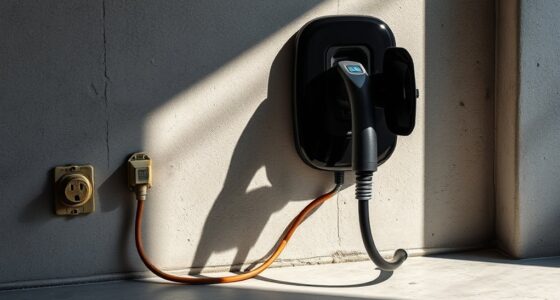
Public chargers can sometimes fail because of complex technology, outdated electrical systems, and environmental factors. Small issues like worn connectors, software glitches, or network outages can quickly disable a station. Extreme weather or vandalism only add to the problem, especially when infrastructure isn’t properly maintained or upgraded. Understanding these challenges helps explain why chargers aren’t always reliable, and if you look further, you’ll discover more about how these issues are addressed.
Key Takeaways
- Inadequate maintenance and infrequent inspections allow small issues to escalate into failures.
- Complex hardware, software, and network components can malfunction, causing station outages.
- Outdated electrical infrastructure may not support high power demands, leading to unreliable charging.
- Environmental exposure and vandalism can damage equipment, increasing the likelihood of failure.
- High usage and poor site selection strain systems, reducing overall station reliability.

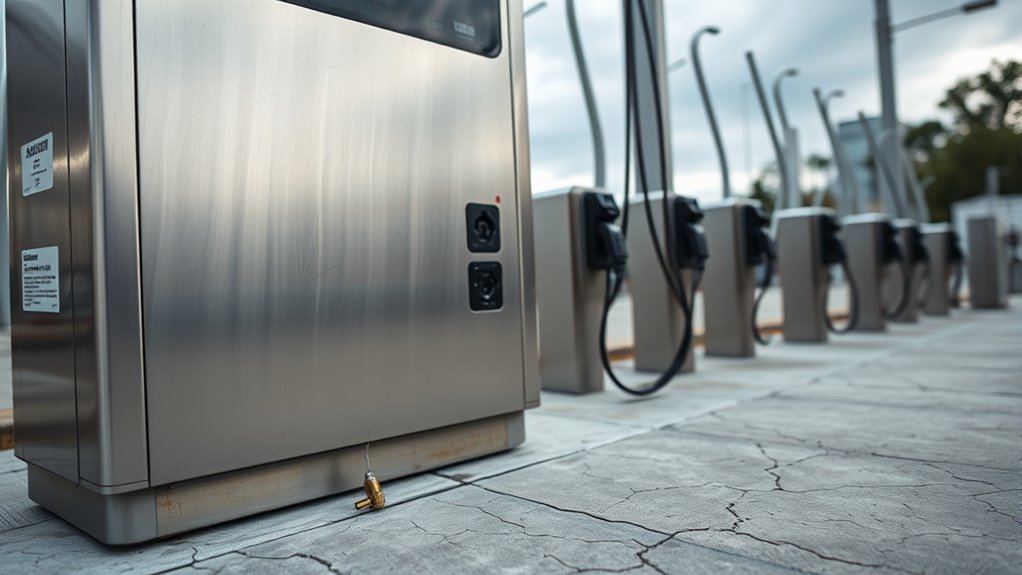
Public charging stations are supposed to make electric vehicle ownership easier, but frequent failures are undermining their reliability. When you rely on these stations to keep your EV charged, encountering a non-functioning charger can be frustrating and inconvenient. Many of these issues stem from inadequate charging station maintenance, which is essential for ensuring consistent operation. If stations aren’t regularly inspected, cleaned, and repaired, small problems can escalate into complete outages. Over time, wear and tear on connectors, screens, and payment systems can cause malfunctions that leave you stranded. Proper maintenance not only prevents these issues but also helps identify potential faults before they become serious. Additionally, the complexity of the technology itself, including hardware, software, and network components, can lead to failures if any part malfunctions. Chargers today are sophisticated machines that combine hardware, software, and network connectivity. If any component fails, the entire station might go offline. Software glitches, network outages, or cybersecurity issues can disrupt service, and repairs often require specialized technicians. Without a proactive approach to managing these technological aspects, failures are more likely, and stations remain offline longer. Moreover, the reliability of public chargers depends heavily on the electrical infrastructure, which must be capable of handling high power loads and frequent usage. Chargers supported by outdated wiring or insufficient power supply are prone to outages or slow charging speeds, especially as demand increases. When the electrical infrastructure isn’t upgraded to meet increasing demand, chargers become unreliable, and system failures become more common. This can mean that even if a station appears to be functional, it might not deliver the power needed, or it could shut down unexpectedly due to overloads or electrical faults. Furthermore, the placement of charging stations impacts their reliability. Stations located in areas prone to weather extremes or vandalism often suffer more frequent issues. Exposure to harsh elements can damage electrical components or corrosion, leading to outages. Vandalism or theft can also disable chargers temporarily or permanently. To mitigate these risks, operators need to invest in protective infrastructure and regular checks, which are often overlooked.
Frequently Asked Questions
How Do Environmental Factors Affect Public Charger Reliability?
Environmental factors, like weather impact and pollution effects, can notably affect public charger reliability. Extreme temperatures, heavy rain, and snow may cause hardware malfunctions or connectivity issues. Pollution buildup can lead to corrosion or dust accumulation, degrading components over time. You might notice chargers failing more often during harsh weather or in polluted areas, as these conditions strain the equipment and increase maintenance needs, reducing overall reliability.
Are There Specific Brands More Prone to Failure?
Certain brands are more prone to failure due to inconsistent brand reliability and varying manufacturer reputation. You might notice that some manufacturers prioritize cost-cutting over quality, leading to more frequent malfunctions, while others focus on durability and customer satisfaction. It’s wise to research user reviews and reliability ratings before trusting a particular brand. By choosing reputable brands known for their durability, you increase your chances of encountering fewer public charger failures.
What Role Does User Error Play in Charger Malfunctions?
User error and user mistakes can substantially contribute to charger malfunctions. If you don’t properly connect your vehicle to the charger or fail to follow instructions, you risk causing damage or errors. Mistakes like using incompatible chargers or not securely plugging in can lead to failures. To avoid this, double-check connections, read instructions carefully, and guarantee you’re using the right charging equipment for your vehicle.
How Often Are Maintenance and Inspections Performed?
Think of public chargers as busy crossroads that need constant attention. Maintenance frequency varies, but many stations undergo inspections weekly or monthly, ensuring smooth operation. Regular inspection schedules catch issues early, like a vigilant guardian, preventing breakdowns before they happen. By staying proactive, service providers keep chargers reliable, so your charging experience remains seamless. Consistent upkeep doesn’t just fix problems—it keeps the entire network running like a well-oiled machine.
Can Software Updates Improve Charger Performance?
Yes, software updates can enhance charger performance. When you update the firmware, it often fixes software glitches that cause failures, enhances compatibility, and adds new features. Firmware upgrades optimize the charger’s operation, making it more reliable and efficient. Regular updates ensure the system runs smoothly, preventing issues that could lead to failure, and help adapt to evolving technology standards, giving you a better charging experience overall.
Conclusion
Think of public chargers like busy highway rest stops—they can get overwhelmed and break down when too many cars try to use them at once. I once waited at a charger that suddenly stopped working just as I was about to leave, feeling stranded like a traveler stuck in a storm. These failures highlight the importance of ongoing maintenance and innovation. By understanding these challenges, we can help guarantee smoother, more reliable charging experiences for everyone.