
To save money charging your EV at night, take advantage of lower, off-peak electricity rates by timing your charging sessions accordingly. Use smart chargers or apps to schedule your vehicle to charge during those cheaper hours, typically late at night or early morning. Keep an eye on utility notifications or online tools to identify the best times. If you want to learn how to maximize those savings and protect your battery, keep exploring these strategies.
Key Takeaways
- Schedule your EV charging during off-peak hours, usually late at night or early morning, when electricity rates are lowest.
- Use smart chargers and apps to automatically optimize charging times based on real-time rate fluctuations.
- Monitor utility notifications and online tools to identify and plan for the most economical low-rate periods.
- Avoid rapid charging and limit to 80-90% battery capacity to reduce costs and prolong battery health.
- Implement load shifting and automation to ensure your EV charges during low-cost, off-peak times consistently.
Understanding Time-of-Use Pricing and How It Works
Understanding time-of-use pricing is essential because it can substantially affect how much you pay for EV charging. With dynamic pricing, electricity rates change throughout the day based on demand. During peak periods, typically when energy consumption is highest, rates are higher to reflect increased demand. Conversely, off-peak times offer lower rates, encouraging you to charge your vehicle when electricity is cheaper. By paying attention to these fluctuations, you can better plan your charging schedule to save money. Peak periods usually occur during the day or early evening, while off-peak hours are often late at night or early morning. Knowing how dynamic pricing works helps you avoid expensive charging times and take advantage of lower rates when demand drops. Energy demand patterns also influence how rates fluctuate over time.
Benefits of Charging Your EV During Off-Peak Hours
Charging your EV during off-peak hours can save you money on electricity bills. It also helps reduce stress on the grid, making energy more reliable for everyone. By shifting your charging times, you benefit your wallet and the environment at the same time.
Lower Electricity Costs
By charging your electric vehicle during off-peak hours, you can substantially lower your electricity costs. Time-of-use rates mean you pay less at night, helping you save money on each charge. Many utility providers offer electric vehicle incentives, making nighttime charging even more affordable. Plus, finding charging station locations with discounted rates during off-peak times is easier than ever. These lower rates reduce your overall expenses and make EV ownership more economical. Additionally, essential oils for cost savings can inspire a greener and more mindful approach to energy consumption. By planning your charging around off-peak hours, you maximize savings and benefit from reduced energy costs. This approach not only saves you money but also encourages smarter energy use, making your EV charging more affordable and sustainable in the long run.
Reduce Grid Stress
Charging your EV during off-peak hours helps balance electricity demand and eases pressure on the power grid. When you do this, you support grid reliability by preventing overloads and reducing the risk of outages. Off-peak charging also encourages the use of renewable energy sources, which are often more available during times of low demand. By shifting your charging times, you help reduce the strain on traditional power plants, making the entire system more resilient. This benefits everyone by maintaining stable electricity supply and decreasing reliance on fossil fuels. Ultimately, your choice to charge at night promotes a cleaner, more reliable energy infrastructure and contributes to a healthier environment. It’s a simple step with significant positive impacts on the grid’s stability and sustainability.
Identifying Off-Peak Periods in Your Area

Understanding when off-peak periods occur in your area is essential for maximizing savings on EV charging. These periods often align with lower demand and rate fluctuations, making them ideal for charging your vehicle. To identify them, consider these key indicators:
- A noticeable drop in electricity rates late at night, usually between midnight and early morning.
- Extended periods during weekdays when the rate remains stable at a lower level.
- Weekend nights where off-peak rates extend beyond weekday hours.
- Utility notifications or online tools that specify peak versus off-peak times.
- Monitoring rate patterns can help you better anticipate when rates are lowest and plan your charging accordingly.
- Paying attention to time-of-use rate structures specific to your utility can further optimize your charging schedule.
- Familiarizing yourself with rate fluctuations helps in planning the most economical times to charge your EV.
Strategies to Optimize Nighttime Charging
To make the most of nighttime charging, you should schedule your charging sessions during off-peak hours whenever possible. Using smart charging devices can help automate this process and make certain you’re always taking advantage of lower rates. Keep an eye on electricity rates, as they can fluctuate, so monitoring them helps you optimize your charging times effectively. Additionally, understanding electricity rate structures can further help you choose the best times to charge your EV at night. Being aware of your utility’s scheduling policies can also aid in planning your charging to maximize savings and efficiency. Familiarity with time-of-use rate plans can provide deeper insights into how different rate periods impact your overall costs. Moreover, reviewing rate plan options regularly ensures you select the most economical plan for your charging habits. By staying informed about rate fluctuations, you can better adapt your charging schedule to save money over time.
Schedule Off-Peak Charging
Scheduling your EV to charge during off-peak hours can considerably reduce your electricity costs. By aligning your charging times with lower rates, you maximize savings and support renewable energy use. To optimize your off-peak charging, consider these strategies:
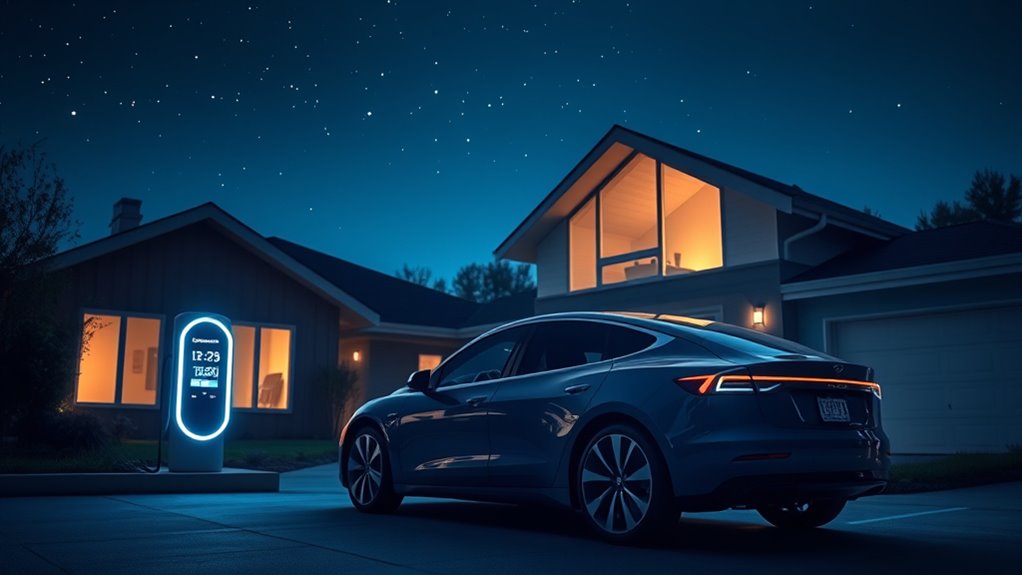
- Picture a quiet, dark neighborhood where your car quietly charges overnight.
- Think about your home’s electric vehicle infrastructure seamlessly powering up without interrupting your routine.
- Visualize the grid absorbing excess renewable energy during low-demand periods.
- Imagine your utility’s smart grid efficiently managing off-peak loads, making your charging both economical and eco-friendly.
- Incorporating smart home automation can help schedule and optimize your EV charging times automatically, enhancing convenience and savings.
- Utilizing time-of-use rates helps you take advantage of lower electricity prices during specific periods, maximizing your savings and reducing your carbon footprint.
- Understanding grid management techniques can further enhance your ability to charge efficiently during optimal times, supporting a reliable and sustainable energy system. Additionally, staying informed about demand response programs can provide additional incentives and flexibility for off-peak charging.
- Being aware of load shifting strategies enables you to better plan your charging schedule to avoid peak hours and further optimize your energy consumption.
Use Smart Charging Devices
Using smart charging devices can substantially enhance your ability to charge efficiently during off-peak hours. These devices automatically schedule your EV to charge when electricity rates are lowest, saving you money. They also help you maintain your vehicle’s performance by preventing overcharging, which can impact vehicle maintenance over time. Additionally, smart chargers improve charging station accessibility by allowing you to monitor and control your charging sessions remotely, ensuring you start charging when a station is available. This reduces wait times and maximizes off-peak electricity use. By integrating these devices into your charging routine, you optimize nighttime charging, extend your vehicle’s lifespan, and make the most of your energy costs. Energy efficiency features in these devices help you maximize your savings while protecting your vehicle’s systems. Incorporating smart technology can further enhance your control and efficiency, making your nighttime charging smarter and more cost-effective. Selecting devices with automatic scheduling can further streamline your charging process and ensure you always take advantage of the lowest rates. Implementing energy management strategies with these devices can lead to even greater savings over time. Additionally, understanding your local time-of-use rates can help you optimize your charging schedule for maximum savings.
Monitor Electricity Rates
Monitoring electricity rates closely allows you to identify the most cost-effective times to charge your EV at night. By tracking rate fluctuations, you can better manage your energy consumption and save money. Here are some ways to do this:
- Check your utility’s online portal regularly for real-time rate updates.
- Use mobile apps that alert you to rate changes during off-peak hours.
- Review your billing history to spot patterns in rate fluctuations.
- Set alerts for when rates drop to ensure you start charging during the lowest-cost periods.
- Consider using a smart home security system that integrates with your energy management setup to optimize charging times and enhance home safety. Additionally, understanding energy consumption patterns can help you anticipate rate changes and plan your EV charging more efficiently. Keeping track of Vetted – Witbeck Vacuums can also provide insights into reliable technology that might support your energy management system.
Tools and Technologies to Help Manage Your Charging Schedule
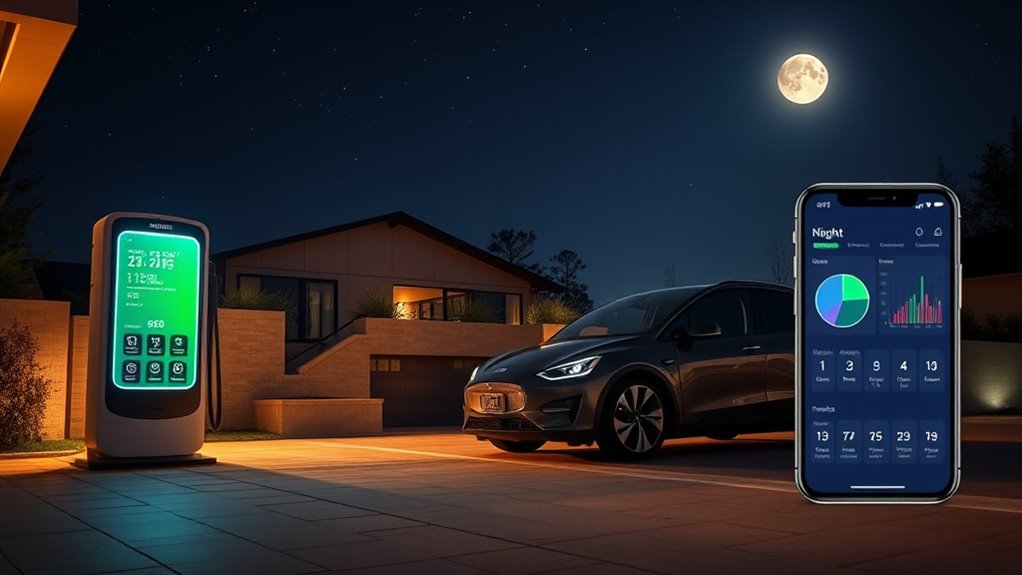
To effectively manage your EV charging costs, you can leverage a variety of tools and technologies designed to optimize your charging schedule. Smart chargers and apps help you set charging times to coincide with lower electricity rates, especially during off-peak hours. Confirm your charging station is compatible with your vehicle to avoid delays or issues. Some tools also include features for battery calibration, which helps maintain your battery’s health and efficiency over time. Real-time energy monitoring allows you to track consumption and adjust your charging habits accordingly. Automated scheduling systems can sync with your utility’s rate structure, ensuring you charge when rates are lowest. Using these tools together offers a seamless way to save money and prolong your EV’s battery life.
Tips for Maximizing Savings and Maintaining Battery Health
Leveraging smart charging tools not only helps you save money but also plays a vital role in maintaining your EV’s battery health. To maximize savings and extend battery longevity, consider these tips:
Smart charging tools save money and help preserve your EV battery’s health.
- Schedule charges during off-peak hours, especially at night, to reduce costs.
- Use slow charging when possible, as slower charging preserves battery health and prolongs lifespan.
- Avoid consistently charging to 100%; aim for 80-90% to minimize stress on the battery.
- Monitor your charging speed to prevent rapid charging, which can accelerate battery wear.
Frequently Asked Questions
How Do I Find My Area’s Specific Off-Peak Hours?
You can find your area’s specific off-peak hours by checking your local utility’s website or contacting them directly. Utility providers often publish detailed peak and off-peak hour schedules, so you know when electricity rates are lowest. Keep in mind, peak hours are typically during the day, while off-peak times are at night. This way, you can plan your EV charging during the cheapest, off-peak periods.
Are There Any Risks to Charging Exclusively at Night?
Charging exclusively at night generally isn’t risky if you follow safety guidelines. However, it could lead to faster battery degradation over time, as consistently deep discharges may affect battery life. To stay safe, confirm your charging setup is properly installed and maintained to prevent electrical safety issues. Always use certified chargers, and avoid overcharging or leaving your vehicle plugged in for extended periods once fully charged.
Can I Set up Automatic Charging Schedules With My Current Charger?
Yes, you can set up automatic charging schedules with your current charger if it’s compatible. Check your charger’s compatibility for scheduling features, as some models support built-in timers or connect to scheduling apps. Using these, you can program your charger to activate during off-peak hours, saving you money. Make sure your charger and app are compatible with your EV and your home’s Wi-Fi for seamless scheduling.
How Do Electricity Rates Vary Seasonally or During Holidays?
You might worry that seasonal rate changes and holiday rate fluctuations complicate savings, but they actually offer opportunities. Electricity rates often vary with seasons, being lower in cooler months and higher during peak summer or winter periods. During holidays, rates may fluctuate due to increased demand or special promotions. By monitoring these changes, you can plan your EV charging during cheaper periods, maximizing savings and avoiding high-cost times.
What Are the Environmental Impacts of Nighttime EV Charging?
Charging your EV at night can lower your carbon footprint if your electricity comes from renewable energy sources. This reduces reliance on fossil fuels, which are major greenhouse gas emitters. However, if your grid relies heavily on coal or natural gas, nighttime charging may still have environmental impacts. To minimize this, consider using renewable energy options or time-of-use rates that encourage cleaner energy use during off-peak hours.
Conclusion
So, next time you enthusiastically plug in your EV at night, remember: while you’re saving money, your battery might be secretly sulking from all those off-peak hours. Ironically, the very times you think are best for your wallet could be the ones quietly wearing out your battery faster. But hey, at least you’re saving some cash—who knew that charging smarter could come with its own little battery rebellion?