TL;DR

Get backup power and energy gear delivered free with Prime
- Fast, free delivery on millions of items
- Prime Video, Amazon Music and more included
- Member-only deals all year
Solar-powered laptop chargers convert sunlight into electrical energy to keep your devices running. Recent advances boost efficiency, portability, and battery storage, making them a practical choice for outdoor use and emergencies.
Imagine working on a remote mountain hike or camping deep in the woods, and your laptop suddenly runs out of juice. No outlets, just bright sunlight. That’s the promise of solar-powered laptop chargers. They let you harness the sun’s free, abundant energy to keep your devices alive, no matter where you are.
In this article, you’ll learn how these chargers work, what recent tech improvements make them better, and the key factors to consider before investing. Whether you’re a digital nomad, outdoor enthusiast, or prepping for emergencies, understanding solar chargers can extend your independence from traditional power sources.
Choose a solar charger with at least 60W output for efficient laptop charging.
Look for models with built-in batteries if you need power during cloudy days or at night.
Foldable, lightweight designs make solar chargers practical for travel and outdoor use.
Recent advances have boosted efficiency to over 23%, making solar chargers more effective in less space.
Always match your device’s wattage and connector compatibility before buying.
How Solar Laptop Chargers Actually Work
Solar laptop chargers function by transforming sunlight into usable electricity through photovoltaic cells. These cells, often made of monocrystalline silicon, absorb sunlight and generate direct current (DC) power. This process is based on the photovoltaic effect, where sunlight energizes electrons within the silicon, creating an electric current. This conversion efficiency—how well the sunlight is turned into usable energy—directly impacts how quickly and effectively your devices can be charged. For example, a panel with higher efficiency can produce more power in less space, which is crucial when portability is a priority.
Once the sunlight is converted, the generated DC power is either directly fed into your device or stored in an integrated battery for later use. This storage capability is vital because sunlight isn’t always available when you need power, such as during cloudy days or at night. Think of it as a portable solar farm: during sunny hours, it collects and stores energy that you can draw from later. The key is the balance between panel size, efficiency, and battery capacity, which determines how much and how quickly you can charge your device. For instance, a typical 60W panel, placed in optimal sunlight, can charge a standard 50Wh laptop battery in about 2-3 hours, but this efficiency drops with less optimal conditions, highlighting the importance of placement and weather considerations.
Products Worth Considering

Autel MaxiCharger Level 2 EV Charger, 40A, 240V, Indoor/Outdoor, 25‑Foot Flexible Cable, NEMA 14‑50 Plug (White)

DEWALT 20V MAX 1/4-Inch Impact Driver Kit with Battery and Charger (DCF787D1)

Milwaukee M18 FUEL 18V Lithium-Ion Brushless Cordless 1 in. Impact Wrench Extended Reach D-Handle Kit with Two 12.0 Ah Batteries
As an affiliate, we earn on qualifying purchases.
What Makes a Solar Charger Good for Your Laptop? 5 Key Factors
- Power Output: The wattage determines how quickly your laptop can be charged. Higher wattage panels, such as 80W or 100W, can deliver more power, reducing the time needed to top up your device. This is especially important if you have a high-performance or power-hungry laptop, as slower charging can be inconvenient or insufficient during limited sunlight hours. Choosing the right wattage involves balancing portability with charging speed; higher wattage panels tend to be bulkier and less portable but offer faster results.
- Compatibility: Ensuring your solar charger can connect securely to your device is critical. Universal models with adjustable connectors or multiple adapters accommodate different laptop brands and models, preventing compatibility issues. Using incompatible connectors or incorrect voltage settings can damage your device or result in ineffective charging, so understanding your device’s power requirements is essential.
- Portability: Since these chargers are often used outdoors, their size and weight matter. Foldable, lightweight panels that fit into a backpack enable mobility without sacrificing power. The design tradeoff is that smaller, portable panels might produce less power or take longer to charge your device, so consider your typical usage scenario—whether quick top-ups or full charges are needed—and choose accordingly.
- Durability: Outdoor environments expose chargers to elements like rain, dust, and rough handling. Rugged materials, water resistance, and sturdy construction ensure longevity and reliable performance. Investing in durable models minimizes the risk of damage and ensures your charger remains functional through various weather conditions, which is critical for outdoor adventurers or emergency preparedness.
- Battery Storage: Built-in batteries allow you to store excess energy collected during sunny periods to be used during cloudy weather or at night. The capacity of these batteries, measured in mAh, determines how much charge you can store—larger capacities support longer device usage without sunlight. This feature is especially valuable when unpredictability of sunlight affects your charging schedule, providing peace of mind and continuous power availability.
For example, a recent model with 80W output, foldable design, and a 10,000mAh battery can fully charge a typical ultrabook twice on a sunny afternoon. The tradeoff is often between size and capacity; larger batteries add weight but provide longer backup power, so assess your needs carefully.
Latest Tech Trends Making Solar Chargers Smarter and Faster
Recent breakthroughs are transforming solar chargers from simple panels into intelligent, high-performance tools. Monocrystalline cells now achieve conversion efficiencies over 23%, up from around 15% five years ago, meaning more power can be generated from less space. This improvement allows for smaller, lighter panels without sacrificing output, which is vital for portability and convenience.
Smart circuitry integrated into newer models detects your device’s power needs and dynamically adjusts the output, ensuring faster, safer charging. This prevents overcharging and reduces heat buildup, which can damage both the charger and your device. Additionally, higher-capacity batteries—such as 20,000mAh or more—enable you to store surplus energy for later use, making your setup more resilient to inconsistent sunlight.
Design-wise, innovations include foldable, lightweight panels with flexible surfaces that conform to your backpack or tent roof. Waterproofing and rugged materials improve durability, allowing chargers to withstand rain or rough handling. For example, a recent model features a waterproof, flexible surface that can be draped over uneven surfaces or attached to a tent, providing continuous power in diverse outdoor conditions.
What You Need to Know Before Buying a Solar Laptop Charger
Choosing the right solar charger requires understanding your specific needs and how different features impact usability and performance. High-wattage panels (like 100W) are ideal for fast charging high-performance laptops, but they tend to be bulkier and less portable. Conversely, smaller panels (around 60W) are more portable but may require longer charging times or supplemental power sources. Assess your typical usage—if you often need quick top-ups during limited sunlight, prioritize higher wattage and larger batteries.
Compatibility is critical: ensure the charger’s connectors and voltage outputs match your device’s specifications to prevent damage and maximize efficiency. For outdoor adventures, durability and weather resistance become more important; look for models with rugged casing, water resistance, and secure connections. If you frequently encounter inconsistent sunlight, a model with a built-in battery provides backup power, ensuring your devices stay charged regardless of weather conditions. Think of your choice as balancing portability, power needs, and environmental resilience to match your lifestyle and plans.
Solar Chargers vs. Traditional Power Banks: Which Wins?
| Feature | Solar Charger |
|---|---|
| Power source | Sunlight: Renewable and free but weather-dependent, requiring optimal conditions for maximum output. |
| Portability | Varies—foldable panels are lightweight and compact, making them ideal for travel; rigid panels tend to be bulkier and less convenient. |
| Charging speed | Dependent on sunlight intensity, panel wattage, and weather conditions. Under ideal conditions, high-wattage panels can charge devices rapidly; otherwise, charging can be slow or incomplete. |
| Use indoors | Limited—solar panels need direct sunlight to generate meaningful power. Near large windows or in bright indoor spaces, some small panels might trickle charge devices, but for consistent power, outdoor sunlight is preferable. |
| Environmental impact | Highly eco-friendly, utilizing renewable solar energy, reducing reliance on grid electricity and decreasing carbon footprint. |
Traditional power banks store grid electricity and provide consistent, reliable power, but they must be charged beforehand, which can be inconvenient if you’re off-grid or in emergencies. Solar chargers excel outdoors or in situations where grid access is unavailable, offering a sustainable, renewable alternative. The tradeoff is weather dependency versus consistent indoor availability. For outdoor enthusiasts and emergency preparedness, solar chargers can provide greater independence and environmental benefits, but for daily indoor use, traditional power banks remain more practical and reliable.
Real-Life Scenario: Camping with a Solar Charger
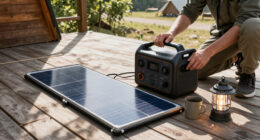
Imagine you’re deep in the Rockies, surrounded by towering pines, with your laptop and camera gear in a backpack. The sun beats down, and you set up a foldable 80W solar panel on a flat rock. Within hours, it’s gathering enough energy to charge your ultrabook, camera batteries, and even power a small portable speaker.
As evening approaches, the built-in battery’s glow keeps your devices alive for a few more hours, letting you upload photos and plan tomorrow’s hike. No power outlet needed — just sunshine, your gear, and a bit of outdoor know-how. This scenario illustrates how solar chargers can extend your outdoor productivity, reduce dependence on fragile power grids, and enhance your adventure experience by ensuring your devices stay powered in remote locations.
Frequently Asked Questions
Can a solar charger fully power my heavy-duty gaming laptop?
Most portable solar chargers are designed for lighter laptops or ultrabooks. High-end gaming laptops often require 150W or more, which current portable panels may struggle to provide efficiently. Check your laptop’s wattage before purchasing.Is indoor use of solar chargers practical?
Indoor use is limited because solar panels need direct sunlight to generate significant power. Near large windows with strong sunlight, some small panels might trickle charge devices, but for reliable charging, outdoor sunlight is best.How long does it take to fully charge a laptop with a solar panel?
It varies with sunlight intensity, panel wattage, and your laptop’s battery size. Under ideal conditions, a 60W panel can fully charge a 50Wh laptop in about 1.5 to 3 hours. Cloudy weather or lower wattage extends this time.Are solar chargers worth the investment for everyday use?
They’re most valuable for outdoor activities, emergencies, or off-grid living. For daily indoor use, traditional chargers are more convenient. But if you love outdoor adventures, solar chargers offer independence and eco-friendliness.What safety features should I look for?
Opt for models with overcurrent, overvoltage, and temperature protection. Reliable brands incorporate circuitry that prevents device damage, ensuring safe, efficient charging in outdoor conditions.Conclusion
Solar-powered laptop chargers aren’t just a gadget — they’re a step toward independence from traditional power grids. With smarter designs, higher efficiency, and greater portability, they unlock new possibilities for working, exploring, and surviving off-grid.
Remember, the best chargers are tailored to your needs. Think about your typical use, environment, and device requirements. As solar tech evolves, powering your laptop with sunshine might become your new normal — bright, simple, and sustainable.