
Choosing between plug-in and hardwired chargers depends on your home’s electrical setup, priorities for flexibility, and long-term needs. If you want easy installation and future relocation, a plug-in charger is a good choice. For a sleek, permanent solution, a hardwired charger offers durability and a tidy appearance, but requires professional installation. To find the best fit for your situation and understand the key factors involved, explore further options and details.
Key Takeaways
- Plug-in chargers offer flexibility and easier installation, ideal for temporary use or future relocation.
- Hardwired chargers provide a sleek, permanent installation with potentially higher durability and safety.
- Consider your home’s power capacity and electrical codes; hardwired units may require professional setup.
- Charging speed and compatibility with your vehicle influence which type suits your lifestyle best.
- Budget, long-term savings, and maintenance ease should guide your choice between the two options.
Understanding the Differences Between Plug-In and Hardwired Chargers
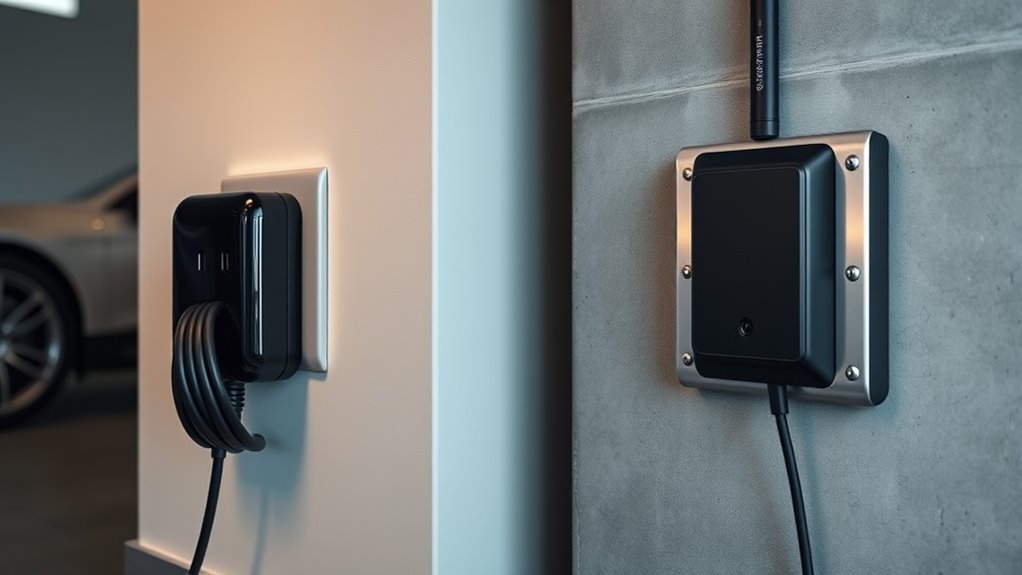
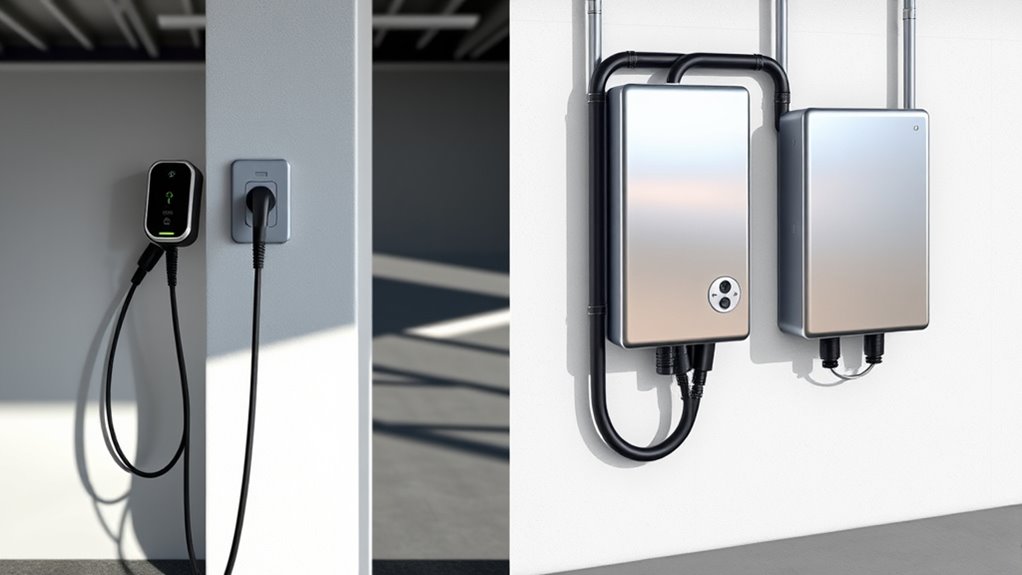
When choosing an electric vehicle charger, understanding the differences between plug-in and hardwired options is essential. Plug-in chargers offer greater charger compatibility, allowing you to easily connect and disconnect as needed. They’re ideal if you want flexibility or plan to relocate your charger in the future. Hardwired chargers, on the other hand, are permanently installed, providing a sleek look that enhances aesthetic integration. They typically require professional installation but tend to be more durable and reliable over time. Consider how each option fits with your home’s setup and your preferences for convenience versus permanence. Proper installation is crucial to ensure safety and optimal performance of your charging system. Additionally, choosing the right type can influence the overall energy efficiency of your home charging setup, especially when integrated with modern smart home technology. For example, integrating with home automation systems can optimize energy usage and monitor charging remotely.
Factors to Consider When Choosing a Charging Solution

Choosing the right charging solution involves evaluating several key factors to make certain it fits your home and lifestyle. Two important considerations are charging speed and aesthetic appeal. Faster charging speeds save you time, so assess your daily driving needs. Aesthetic appeal matters if you prefer a seamless look that complements your home’s design. To help make your decision, consider this table:
| Factor | What to Think About |
|---|---|
| Charging Speed | Do you need quick charges for busy schedules? |
| Aesthetic Appeal | Will the charger blend well with your home’s style? |
| Compatibility | Is the charger compatible with your vehicle? |
Balancing these factors ensures you select a solution that’s both functional and visually pleasing. Additionally, considering installation requirements can prevent unexpected difficulties and costs down the line. Being aware of power supply capacity can also help you choose a charger that operates efficiently without overloading your home’s electrical system. It’s also helpful to think about future upgrades, so your charging setup can adapt as your needs change. Understanding reliability and safety standards ensures the charger you select meets essential quality benchmarks. Furthermore, evaluating cost and warranty options can provide peace of mind over the lifespan of your charger.
Installation Process and Infrastructure Requirements

Installing a plug-in charger is generally straightforward and can often be done by a homeowner with basic electrical knowledge, provided the circuit can support it. You’ll need to contemplate charging station placement carefully—ideally near your parking spot and accessible to your home’s power source. The wiring requirements are minimal compared to hardwired options, usually involving a dedicated outlet and proper circuit protection. Make sure your electrical system can handle the charger’s amperage needs without overloading existing circuits. For hardwired chargers, installation is more complex, requiring professional wiring and possibly upgrading your electrical panel. Proper placement and adherence to electrical wiring requirements are vital for safe, efficient operation. Always consult local codes and a qualified electrician to ensure compliance and safety. Additionally, understanding nanotechnology advancements can influence future innovations in charging infrastructure, potentially affecting charger efficiency and durability. Being aware of modern electrical safety standards can also help prevent common installation issues and ensure long-term reliable operation.
Cost Implications and Long-Term Savings

While the upfront costs of plug-in chargers are typically lower than hardwired options, you might find that long-term savings can vary considerably depending on your usage and energy efficiency. Plug-in chargers generally offer better cost efficiency for those with moderate charging needs because they’re easier to install and upgrade. If you plan to upgrade your system later, plug-in chargers provide more flexibility, allowing you to adapt without extensive rewiring. Hardwired chargers often involve higher initial investments but can deliver savings over time through energy-efficient features and more stable power delivery. Additionally, considering Free Floating options can influence your overall setup and long-term cost-effectiveness. Moreover, understanding the initial installation costs and ongoing operational expenses helps in making a more informed choice. Recognizing the importance of energy consumption can help optimize your charging setup and maximize savings over the lifespan of your system. Evaluating long-term maintenance costs is also crucial in determining which setup offers better overall value. Being aware of net worth and other personal financial factors can also influence your decision, especially when considering potential upgrades or investments. Ultimately, your long-term savings depend on how often you charge, energy rates, and whether you leverage upgrade potential to optimize your charging setup for maximum cost efficiency.
Maintenance, Safety, and Flexibility
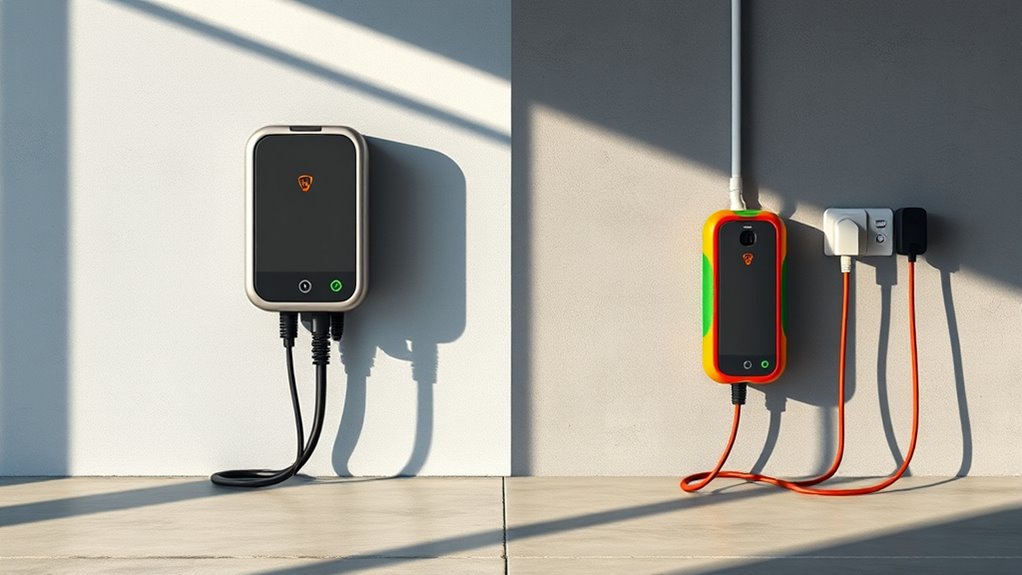
Maintenance, safety, and flexibility are important factors to contemplate when selecting between plug-in and hardwired chargers. Your choice impacts charging compatibility, user convenience, and ongoing upkeep. Consider these points: 1. charging compatibility: Plug-in chargers often support multiple devices easily, enhancing user convenience. Hardwired chargers may require professional upgrades for new models. 2. safety: Hardwired chargers tend to be more secure, reducing accidental disconnections, while plug-ins might loosen over time. Additionally, proper installation can be more straightforward with plug-in options, especially for those unfamiliar with electrical work. 3. Maintenance: Plug-in chargers are easier to replace or repair, offering quick fixes. Hardwired systems need professional service for upgrades or repairs. 4. flexibility: Plug-in chargers adapt to different locations, while hardwired chargers are fixed, limiting flexibility but offering a cleaner setup. Moreover, understanding the electrical requirements is essential to ensure compatibility and safety when choosing between the two options. It’s also important to consider the long-term durability of each system to make a sustainable choice. Additionally, evaluating the installation complexity can help determine which option better suits your technical skills and home setup.
Frequently Asked Questions
Can I Upgrade From a Plug-In to a Hardwired Charger Later?
Yes, you can upgrade from a plug-in to a hardwired charger later. First, check charger compatibility with your vehicle and your home’s electrical system. The installation process involves removing the plug-in unit and wiring a dedicated circuit directly to your electrical panel. It’s best to hire a professional electrician to guarantee safety and compliance with local codes, making the upgrade smooth and secure for long-term use.
Which Charger Type Offers Better Weather Resistance?
Ironically, your hardwired charger might be the superhero against the elements, offering better weather durability and outdoor protection. Unlike plug-in chargers, which can be vulnerable to rain or snow, hardwired units are built to withstand harsh weather conditions. So, if you’re looking for a charger that’s more reliable in bad weather, a hardwired system keeps your EV safe and ready, no matter what Mother Nature throws your way.
Are There Specific Electrical Codes for Hardwired Chargers?
Yes, there are specific electrical codes for hardwired chargers. You need to follow local electrical safety and installation regulations to make certain of proper setup. These codes cover wiring methods, circuit requirements, grounding, and weatherproofing if installed outdoors. Always check with your local authority or a licensed electrician to ensure compliance. Proper adherence minimizes risks and guarantees your hardwired charger operates safely and efficiently.
How Does Charging Speed Differ Between Plug-In and Hardwired Options?
Hardwired chargers generally offer faster charging speeds than plug-in options because they provide a higher power transfer rate, leading to improved charging efficiency. With a dedicated electrical connection, you’ll likely experience more consistent power flow, reducing charging times. In contrast, plug-in chargers depend on standard outlets, which may limit power transfer, resulting in slower charging. So, if speed matters, a hardwired setup could be your better choice.
Can I Use a Portable Charger as a Primary Charging Station?
In the spirit of the roaring twenties, you can absolutely use a portable charger as your primary station. It offers unmatched portable convenience and mobility flexibility, letting you charge your device wherever you go. However, for consistent, fast charging and long-term reliability, a dedicated hardwired or plug-in setup might be better. Nonetheless, if you value flexibility and on-the-move charging, a portable charger can serve as a practical main station.
Conclusion
Ultimately, choosing between plug-in and hardwired chargers is like picking between a trusty companion and a permanent fixture—each has its perks. Think about your home’s needs, budget, and future plans. Will you need flexibility or stability? Remember, the right charger isn’t just about today but your long-term journey. Make an informed choice, and you’ll power your home with confidence—because the best decision is the one that keeps you moving forward seamlessly.