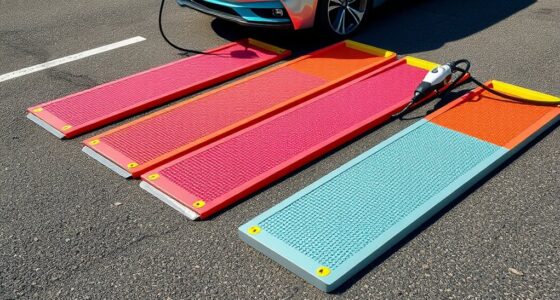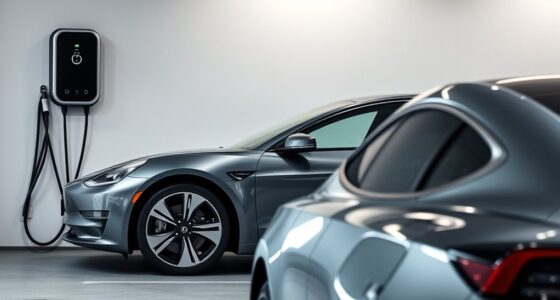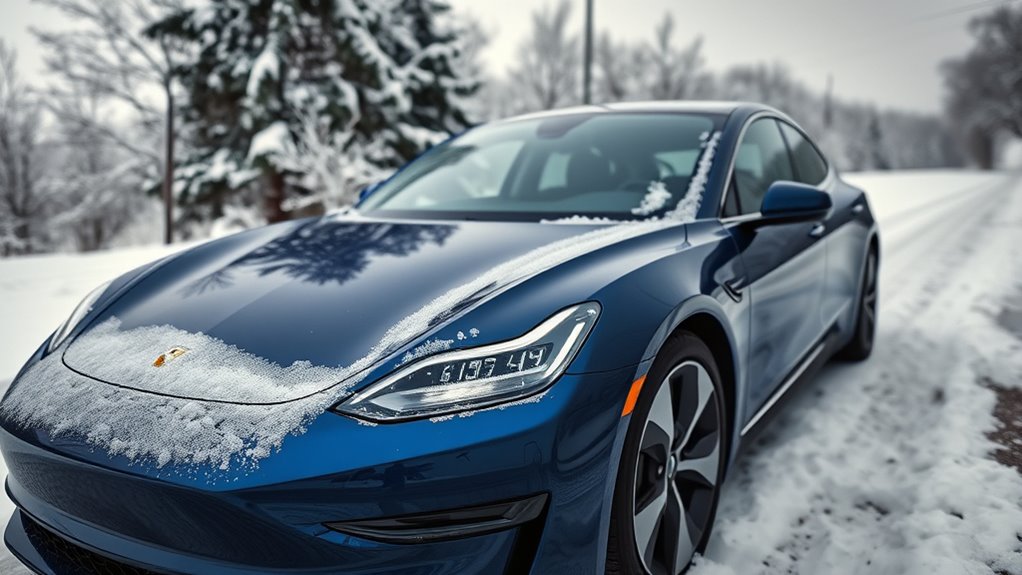

To maximize your EV’s winter range, precondition the battery before driving and keep it plugged in when parked. Use Level 2 chargers for steady power and avoid rapid charging on cold days to prevent overheating. Optimize climate settings by using eco mode and keeping seat heaters minimal. Park in sheltered areas and check tire pressure regularly to maintain traction. Following these tips can boost efficiency and save range—learn more strategies to beat winter’s chill.
Open a free Amazon Business account
Business pricing, bulk buying and tax-exempt orders.
As an affiliate, we earn on qualifying purchases.
Key Takeaways
- Schedule charging during midday or early afternoon when temperatures are warmer to improve efficiency.
- Use thermal management features and vehicle insulation to keep the battery warm during charging.
- Prefer Level 2 chargers over fast chargers to reduce thermal stress and battery degradation in cold conditions.
- Keep the vehicle plugged in when parked to maintain battery temperature and prevent cold-related performance issues.
- Avoid high-power charging during extreme cold to prevent overheating and extend battery lifespan.
As an affiliate, we earn on qualifying purchases.
Precondition Your Battery Before Heading Out

Cold weather can substantially reduce your battery’s efficiency, making it harder to start your vehicle. To combat this, use battery preconditioning to warm up your battery before you hit the road. Many newer EVs offer this feature, allowing you to activate thermal management remotely via a smartphone app or before your trip. Proper thermal management keeps your battery within an ideal temperature range, ensuring better performance and faster charging. Preconditioning not only enhances your vehicle’s ability to start easily but also improves overall range during cold conditions. By taking a few minutes to precondition your battery, you help maintain its health and efficiency in winter weather, making your drive smoother and more reliable. Modern thermal management techniques help optimize your EV’s performance even further in cold climates. Additionally, battery insulation can reduce heat loss and support consistent operation in low temperatures, especially when combined with advanced thermal management systems. Proper battery management is essential for maintaining optimal performance and extending your EV’s lifespan during winter months.
As an affiliate, we earn on qualifying purchases.
Use Level 2 Charging When Possible

Using Level 2 charging speeds up your charging process and gets you back on the road faster. It also puts less stress on your battery, helping it stay healthy in cold weather. Whenever you can, opt for Level 2 charging to save time and protect your battery’s lifespan. Additionally, choosing the right charging method can help maintain your vehicle’s battery health during harsh winter conditions. To further support your battery’s longevity, consider proper charging practices that minimize stress and optimize performance in cold temperatures. Incorporating consistent charging schedules and avoiding frequent full discharges can also enhance your battery’s overall performance. Understanding the importance of balanced designs can help you create a more efficient and reliable charging routine, ultimately benefiting your vehicle’s longevity. Moreover, being aware of Vetted information ensures that your charging strategies are based on trustworthy advice, especially in challenging weather conditions.
Faster Charging Speeds
To charge your vehicle more efficiently in cold weather, it’s best to opt for Level 2 charging whenever possible. Level 2 chargers deliver faster charging speeds, reducing the time your battery spends under strain from cold temperatures. Using quality charging cables ensures a stable connection, preventing interruptions that can lead to battery cooling issues. Cold weather can slow down charging rates and increase the risk of battery cooling, which hampers performance. By choosing Level 2 charging, you minimize these effects, allowing your EV to recharge more quickly and efficiently. Keep your charging cables in good condition and properly rated for winter conditions to avoid unnecessary delays. Additionally, utilizing European cloud infrastructure can enhance the reliability of your charging stations and data management, ensuring smoother operation in winter conditions. Reliable charging network connectivity can also prevent disruptions caused by winter weather, maintaining consistent power supply. Proper battery thermal management is essential to protect your battery from extreme cold, helping to sustain optimal charging rates. Implementing smart charging features can further optimize charging times and efficiency during winter months. Using advanced monitoring systems can help detect and resolve potential cold-weather charging issues before they affect your trip. Faster charging helps you get back on the road sooner and keeps your battery healthier during winter months.
Reduced Battery Strain
Opting for Level 2 charging helps reduce battery strain during cold weather by delivering a steady, controlled flow of power. This gentle charging minimizes thermal management stress, preventing rapid temperature fluctuations that can harm your battery. Proper battery insulation keeps the cell temperature stable, making slow charging even more effective. By avoiding fast charging, you decrease the risk of overheating and excessive thermal cycling, which can degrade battery life over time. This approach helps your EV maintain ideal performance and range in winter conditions. Additionally, consistent, moderate charging allows your thermal management system to work efficiently, ensuring the battery stays within optimal temperature ranges. Overall, using Level 2 charging when possible helps preserve battery health and extends your EV’s lifespan during cold months. Maintaining proper battery temperature is critical for optimal operation in winter conditions.
As an affiliate, we earn on qualifying purchases.
Keep Your EV Plugged In When Parked

When temperatures drop, keeping your EV plugged in when parked helps maintain the battery’s temperature and charge level. Using battery insulation and heated parking options can protect your vehicle from extreme cold, reducing strain on the battery. When your EV remains connected, it can draw power to keep the battery warm, preventing capacity loss caused by cold temperatures. Additionally, cold weather battery management can help extend your vehicle’s range and lifespan. If you park in a heated garage or a designated heated parking spot, your car benefits from a more stable environment, conserving range and improving performance. Staying plugged in also ensures your battery remains at an ideal temperature for charging and driving, especially during prolonged periods of cold weather. Regularly monitoring your vehicle’s battery health can help you identify potential issues early and optimize performance during winter months. Properly managing cold weather impacts on the battery is essential for maintaining optimal performance and avoiding unnecessary degradation. Being aware of charging behavior during winter can further help you adapt your habits to maximize efficiency and battery life.
As an affiliate, we earn on qualifying purchases.
Optimize Your Climate Control Settings

Adjusting your climate control settings can considerably improve your EV’s efficiency in cold weather. To maximize range, use seat heaters instead of the cabin heater when possible, as they warm you efficiently with less energy. Set your window defrosters to a moderate level; fully defrosting consumes energy that could be saved. Preheat your vehicle while it’s still plugged in to avoid draining battery power during drive. Use the vehicle’s eco mode or energy-saving climate settings to reduce power use. Keep interior temperature moderate rather than hot, and opt for seat heating over full cabin warmth when you can. These tweaks help conserve energy, extend your range, and keep you comfortable on winter drives. Proper air quality management inside your vehicle also contributes to overall comfort and safety during cold weather trips, especially when using ventilation systems to circulate fresh air efficiently. Maintaining optimal battery temperature is also essential, as cold temperatures can reduce overall battery performance and range.
Limit Rapid Charging During Cold Days

During cold days, it’s best to limit how often you use rapid charging, since high speeds can strain your battery. Avoid high-power chargers when possible, as they generate more heat and can reduce battery life. Instead, try charging during warmer hours or use slower chargers to protect your battery’s health.
Reduce Fast Charging Frequency
Cold weather can substantially impact your electric vehicle’s battery performance, making fast charging less ideal during chilly days. Frequent use of fast charging can strain your battery, leading to reduced capacity over time. To protect your battery and improve overall efficiency, it’s best to reduce fast charging frequency during winter. This allows your battery to maintain best temperature and avoid unnecessary stress. Limiting rapid charging also helps with battery temperature management, ensuring your EV stays in better shape longer.
You can:
- Plan charging stops at Level 2 chargers instead of fast chargers
- Charge your battery slowly overnight at home
- Use your vehicle’s thermal management features
- Avoid unnecessary fast charging sessions during cold snaps
Avoid High Power Chargers
High power chargers deliver rapid energy transfers that can generate excessive heat and stress your EV’s battery, especially in colder weather. During winter, using fast charging pitfalls become more apparent, as the battery is already vulnerable to cold-related efficiency drops. Relying on high power charger risks can accelerate battery degradation and compromise long-term performance. Cold temperatures limit the battery’s ability to absorb quick charges safely, increasing the chance of overheating or damaging the cells. To protect your EV’s health and maintain ideal range, avoid frequent high power charging during winter. Instead, opt for slower, more controlled charges when possible. This approach reduces thermal stress and helps preserve your battery’s longevity, ensuring your vehicle stays reliable through the cold months.
Charge During Warmer Hours
Charging your EV during warmer parts of the day can help protect your battery from cold-related stress. When you charge in milder temperatures, the battery temperature stays within ideal ranges, reducing the risk of damage and improving longevity. To make the most of this, plan your charging sessions during midday or early afternoon when outdoor temperatures are higher. Keep in mind that charging station accessibility may vary, so locate stations with covered or heated areas for convenience. Limiting rapid charging during cold days also helps prevent rapid battery cooling, which can reduce charging efficiency. By timing your charging sessions wisely, you can safeguard your battery’s health and maintain better overall range in winter conditions.
- Schedule charging during midday warmth
- Seek charging stations with weather protection
- Avoid frequent rapid charges in cold weather
- Monitor your battery temperature regularly
Drive Smoothly and Avoid Aggressive Acceleration

To maximize your vehicle’s efficiency in cold weather, it’s important to drive smoothly and avoid aggressive acceleration. Smooth driving helps reduce power drain and minimizes strain on the battery. Instead of rapid starts, focus on gentle acceleration to conserve energy and extend your range. Consistent, gradual speed changes are more efficient, especially in low temperatures where battery performance drops.
| Driving Technique | Benefit |
|---|---|
| Smooth driving | Reduces energy consumption |
| Gentle acceleration | Prevents unnecessary battery strain |
| Maintaining steady speed | Enhances overall efficiency |
| Avoiding sudden stops | Minimizes energy loss |
Adopting these habits keeps your EV performing ideal in cold conditions.
Use Eco Mode to Conserve Power

Turning on Eco Mode helps you maximize your battery efficiency and stretch your charge further. It automatically reduces power consumption, making cold weather driving less stressful for your battery. By using this feature, you can keep your vehicle running smoothly despite low temperatures.
Maximize Battery Efficiency
When temperatures drop, your battery’s performance can decline quickly, but using Eco Mode helps you conserve power and extend your range. This mode reduces energy consumption by limiting acceleration, heating, and other power-intensive functions. To maximize efficiency, make certain your vehicle’s thermal management system is functioning properly, keeping the battery at an ideal temperature. Good battery insulation also helps retain heat, preventing unnecessary energy drain. By activating Eco Mode, you’re encouraging your vehicle to operate more efficiently despite the cold.
- Limit rapid acceleration and high speeds
- Minimize use of cabin heaters when possible
- Keep your battery insulated with protective covers
- Make sure thermal management systems are functioning correctly
Reduce Power Consumption
Activating Eco Mode is one of the most effective ways to reduce power consumption in cold weather. It limits energy use by adjusting acceleration, heating, and other systems, helping you conserve battery life. To maximize efficiency, consider using energy-efficient accessories, like low-power headlights or heated seats that draw less power. Additionally, improving thermal insulation in your vehicle can help retain heat, reducing the need for the climate control system to work harder. This not only saves energy but also extends your driving range. Keep Eco Mode activated whenever possible, especially during colder days, to make the most of your battery’s capacity. Combining Eco Mode with these strategies ensures you get the best possible range and performance in winter conditions.
Park in a Garage or Sheltered Area

Parking your vehicle in a garage or sheltered area is one of the most effective ways to safeguard its battery during cold weather. Keeping your EV in a garage reduces exposure to freezing temperatures, helping maintain ideal battery performance. Garage parking also minimizes the need for lengthy pre-heating, saving energy and extending your range. Sheltered charging becomes more consistent and efficient when your vehicle is protected from wind and snow. Plus, a garage provides a controlled environment, preventing rapid battery drain caused by outdoor cold. By parking in a garage or sheltered area, you guarantee better battery health and reliable performance throughout winter.
Parking in a garage protects your EV battery from cold and enhances winter performance.
- Protects the battery from extreme cold
- Enhances sheltered charging consistency
- Reduces pre-conditioning energy use
- Keeps your vehicle ready for winter drives
Monitor Your Tire Pressure Regularly

Keeping your tires properly inflated is essential for maintaining peak battery efficiency and vehicle safety during cold weather. Cold temperatures cause tire pressure to drop, which can decrease range and increase tread wear. Regularly check your tire pressure with a reliable gauge, especially before long drives or charging sessions. Properly inflated tires reduce rolling resistance, helping your EV operate more efficiently and extend battery life. Also, keep an eye on tread wear, as worn tires can compromise grip and safety in winter conditions. Under-inflated tires also increase the risk of hydroplaning on icy or wet roads. By maintaining ideal tire pressure and monitoring tread wear, you ensure your EV performs reliably and safely throughout the winter months, maximizing your range and preventing avoidable issues.
Plan Your Routes to Minimize Cold-Related Efficiency Loss

Planning your routes carefully can considerably reduce cold-related efficiency losses in your electric vehicle. Proper route planning helps you avoid areas with heavy traffic or long delays, which can increase battery drain. By choosing shorter, more direct routes with better traffic management, you minimize time spent idling and keep your EV warmer. Consider using navigation apps that highlight real-time traffic conditions and suggest preferable paths. Additionally, avoiding routes through extreme cold zones or shaded roads can help maintain battery temperature. Keeping a steady speed reduces energy consumption caused by frequent stopping and starting. Efficient route planning ensures you maximize range and avoid unnecessary cold exposure, making winter driving safer and more economical.
Careful route planning reduces cold-related EV efficiency losses and maximizes range in winter driving.
- Use navigation apps for real-time traffic updates
- Opt for routes with less congestion
- Avoid shaded or cold-prone areas
- Maintain a steady driving pace
Frequently Asked Questions
How Does Cold Weather Specifically Affect My Ev’s Battery Chemistry?
Cold weather slows down your EV’s battery chemistry, reducing its efficiency and capacity. As temperatures drop, chemical reactions inside the battery become less active, causing less power output. Thermal management systems work harder to keep the battery warm, but they drain energy and can decrease range. To minimize this, pre-condition your vehicle and keep the battery warm before driving, helping maintain ideal battery chemistry and performance in cold conditions.
Can Using Seat Heaters Impact My Vehicle’s Range More Than Cabin Heaters?
Using seat heaters can impact your range more than cabin heaters because they draw less power, making them more efficient. Imagine your seat heater as a small, focused energy source, while the cabin heater is a larger, energy-consuming system. Seat heater efficiency means you stay warm without draining your battery as quickly. So, if you want to conserve range, opt for seat heaters over the cabin heater whenever possible.
Are There Specific Charging Stations Better Suited for Winter Conditions?
Yes, some charging stations are better suited for winter conditions. Look for stations with good accessibility, especially in snowy or icy areas, and those that feature station heating to prevent freezing issues. Heated stations ensure your charging process isn’t interrupted by cold weather, and easy access means you won’t struggle to connect or park in harsh conditions. Choosing these stations helps you maintain reliable charging during winter months.
How Often Should I Check My Tire Pressure During Winter?
You should check your tire pressure at least once a month during winter, as cold temperatures cause it to drop. Regular winter maintenance includes monitoring tire pressure to guarantee ideal traction and safety. Be proactive and check it more often if you experience significant temperature fluctuations. Proper tire pressure prevents uneven wear and improves your EV’s efficiency, helping you maximize your range and stay safe on icy roads.
Does My Ev’s Software Need Updates to Optimize Cold Weather Performance?
Yes, your EV’s software updates are essential for optimizing cold weather performance. Manufacturers often release updates that improve battery management and heating systems, helping your vehicle maintain range and efficiency in low temperatures. Keep your software current by regularly checking for updates, either through your vehicle’s interface or the manufacturer’s app. This proactive step guarantees your EV adapts to winter conditions and maximizes performance and battery longevity during cold weather.
Conclusion
By following these tips, you’ll find your winter drives more efficient and less stressful. It’s funny how a simple habit like preconditioning your battery or parking in a sheltered spot can unexpectedly save you range when you need it most. With just a little planning and mindful driving, you might be surprised at how smoothly your EV handles the cold. After all, staying prepared often turns chilly surprises into seamless winter journeys.
Fall Picks
fall essentials
As an affiliate, we earn on qualifying purchases.