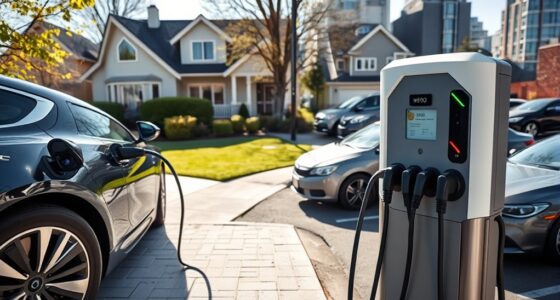
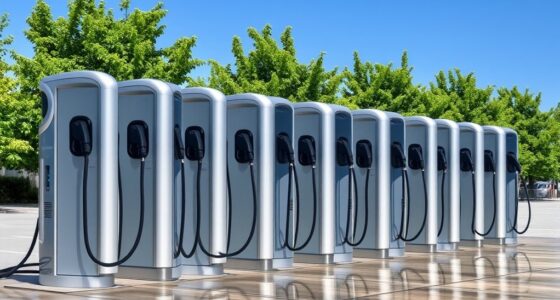
Fast charging can quickly refill your device but accelerates battery wear due to increased heat and chemical stress. Slow charging delivers energy more gradually, helping to preserve your battery’s lifespan by reducing heat buildup and chemical degradation. If you want your device’s battery to last longer, sticking to slower, steady charging is better. To learn how to optimize your charging habits and protect your battery’s health, keep exploring for more insights.
Key Takeaways
- Slow charging preserves battery capacity and reduces degradation by generating less heat and voltage fluctuation.
- Fast charging offers convenience but accelerates battery wear and shortens overall lifespan due to increased heat and chemical stress.
- Regular slow charging helps maintain battery health and extends device longevity, while frequent fast charging should be used sparingly.
- Proper heat management during fast charging is essential to prevent damage and prolong battery life.
- For optimal battery longevity, use slow charging for daily routines and reserve fast charging for emergencies.

DBPOWER 5000A Jump Starter, 74Wh Car Battery Jump Starter for Up to 10.0L Gas and 8.0L Diesel Engine, 12V Portable Jump Box Battery Pack with Display, LED Light, Jumper Cables, and Storage Case
5000A Powerful Jump Starter - The Z07 car battery jump starter can easily start 12V vehicles with up...
As an affiliate, we earn on qualifying purchases.
How Fast Charging Works and Its Advantages
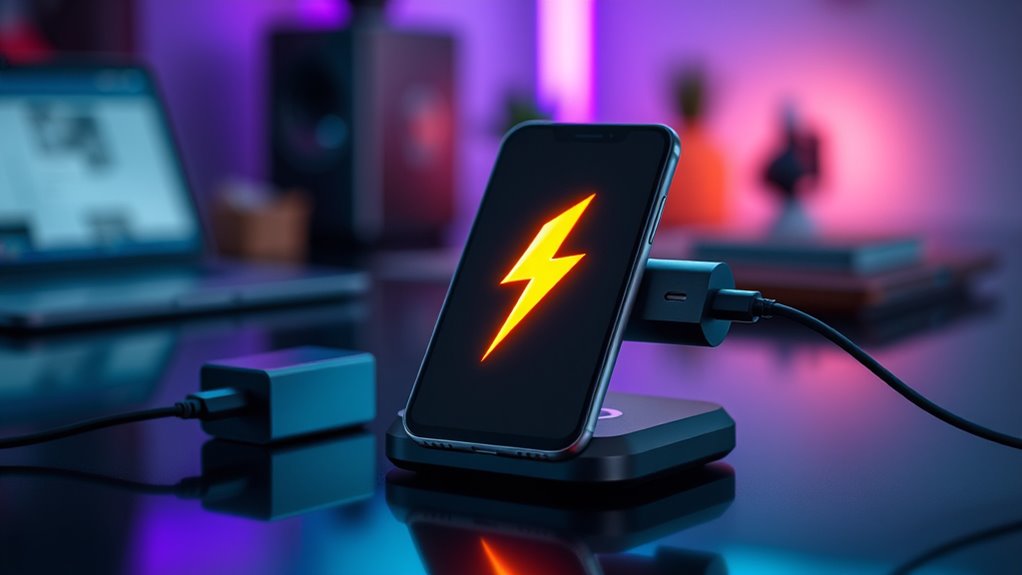
Have you ever wondered how fast charging can power up your device in just minutes? It works by delivering a higher current and voltage, allowing your battery to recharge quickly without damaging it. Wireless charging has made this even more convenient, enabling you to simply place your device on a compatible pad for rapid power boosts. Some cutting-edge devices incorporate solar powered batteries, which can harness sunlight to recharge faster during the day, complementing fast charging capabilities. This combination ensures you’re not tied to a wall socket when you need a quick boost. Fast charging technology optimizes the flow of energy, reducing downtime and keeping you connected longer. It’s a game-changer for busy lifestyles that demand rapid, reliable power sources. Smart appliance integration can further enhance your charging routines by automating device management and energy optimization, contributing to Calm and organized homes that help you better manage your devices and charging routines to stay connected effortlessly. Additionally, some smart chargers utilize thermal management techniques to prevent overheating during rapid charging sessions, ensuring safety and prolonging battery lifespan. Proper battery maintenance practices also play a critical role in extending overall battery health and longevity. Furthermore, ongoing innovations in European cloud servers are supporting smarter energy use in data centers, which parallels the advancements in efficient battery management.

Schumacher Electric 1200A Car Battery Jump Starter and Portable Power Station, 6-in-1 Solution for 12V Batteries, 150-PSI Air Compressor, 200 Continuous/400 Peak Watt Inverter, SJ1332
6-in-1 Device - Jump starter, portable power station, converter, air compressor, fast inflator/deflator, and LED area light
As an affiliate, we earn on qualifying purchases.
The Mechanics of Slow Charging and Its Benefits

While fast charging offers quick power boosts, slow charging plays an important role in maintaining battery health and longevity. Slow charging, including methods like wireless charging, delivers power gradually, reducing stress on the battery’s chemistry. This gentle process helps preserve your battery’s capacity over time, preventing rapid degradation. When you charge slowly, your battery experiences less heat and fewer voltage fluctuations, which are key factors in prolonging its lifespan. Wireless charging often operates at lower power levels, further supporting slow, steady charging. Additionally, battery chemistry benefits from slow charging, as it reduces the formation of harmful deposits that can impair performance over time. Moreover, Youngster Choice emphasizes that slow charging can be particularly advantageous for users who prioritize long-term device durability. By avoiding high currents, slow charging minimizes wear and tear, ensuring your device retains ideal battery capacity longer. Vetted This method is especially beneficial if you plan to keep your device for an extended period or want to maximize its overall battery health. Furthermore, adopting slow charging routines can complement the work of AI Ethicist Jobs by promoting sustainable technology practices.
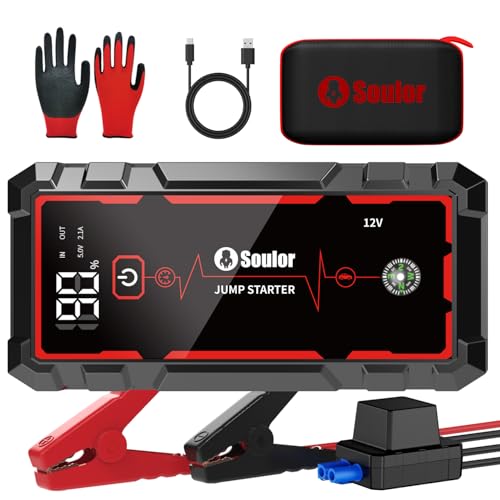
Jump Starter, Battery Jumper Starter Portable, Car Battery Jump Starter with 3 Modes Flashlight, Compass, Power Bank and Jumper Cable
Dead Battery Jump Starting:It can jump-start 12V vehicles (cars, motorcycles, etc.) up to 40 times on a single...
As an affiliate, we earn on qualifying purchases.
Impact of Fast Charging on Battery Chemistry
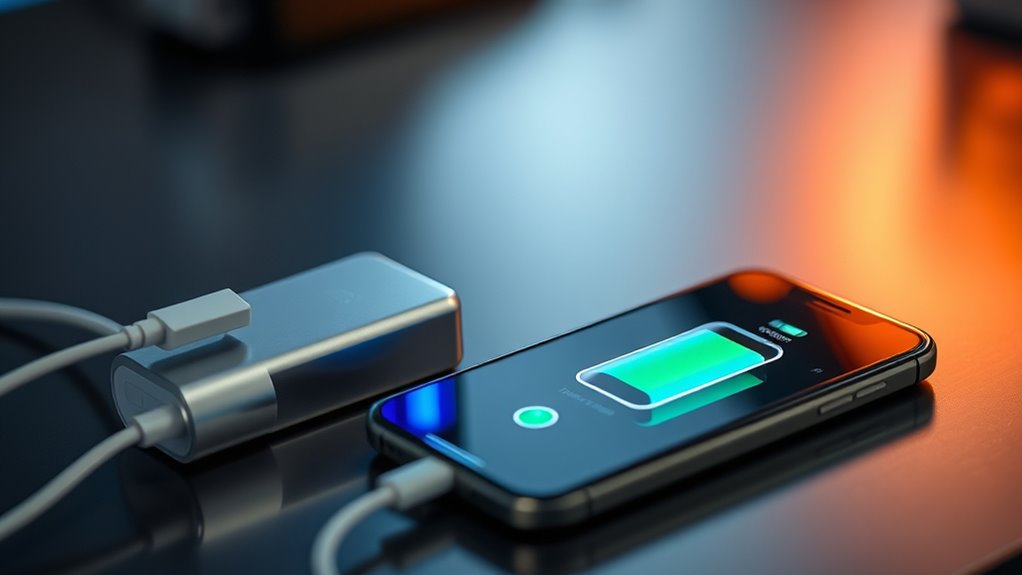
Fast charging delivers high currents quickly, which can accelerate chemical changes inside your battery. This rapid influx of energy stresses the battery chemistry, leading to faster degradation over time. The intense charging cycles cause increased temperature and voltage fluctuations, which can weaken the electrodes and electrolyte. Repeated fast charging may result in the buildup of solid electrolyte interphase (SEI) layers, reducing capacity and lifespan. These chemical shifts can also cause uneven wear, making your battery less efficient sooner. While fast charging offers convenience, it accelerates the chemical reactions that ultimately diminish your battery’s health. To preserve longevity, it’s important to understand how these rapid charging cycles impact the core chemistry, potentially shortening your battery’s effective lifespan over time. Additionally, battery maintenance practices can help mitigate some of these effects and extend overall battery health, including proper storage and charging habits.

Schumacher Electric Car Battery Jump Starter & Portable Power Station - 1800 Peak Amps - 12V DC Power Outlet - with Overload & Short-Circuit Protection & Jumper Cables - DSR119
Dependable Power in Critical Moments - With 1800 peak amps, this portable car battery jump starter is designed...
As an affiliate, we earn on qualifying purchases.
How Slow Charging Can Extend Battery Longevity
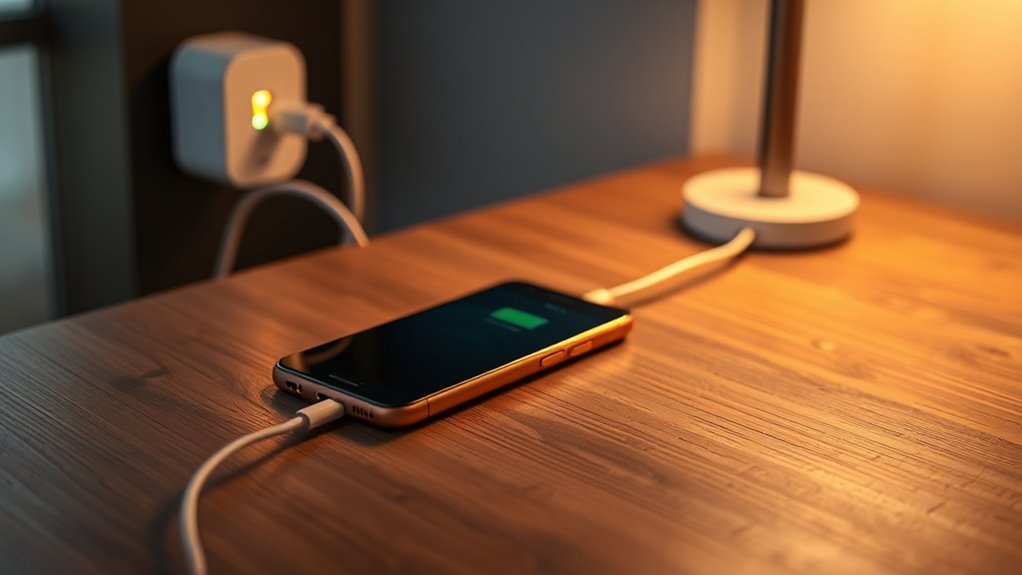
Slowing down your charging process can considerably extend your battery’s lifespan by reducing the stress on its chemical components. When you charge slowly, it minimizes the impact on the battery’s chemistry, helping maintain *ideal* performance over time. Slow charging allows for better battery calibration, ensuring the device accurately gauges its capacity and health. It also lessens the number of charging cycles you go through, which directly impacts battery longevity. Each full cycle causes wear, but slower charging distributes this wear more evenly, preventing rapid deterioration. Proper charging techniques can further enhance battery health by optimizing charging habits and maintaining performance. Additionally, implementing cooling methods during charging can help prevent overheating and preserve battery integrity. Using temperature control strategies is essential in maintaining optimal battery conditions and avoiding thermal damage. It’s also beneficial to monitor charging speed to ensure the process remains gentle and reduces potential stress on battery cells. By opting for slower charging methods, you give your battery a gentler treatment, preserving capacity and preventing early degradation. Additionally, ventilation considerations can influence battery performance and longevity by preventing heat buildup during charging. This approach results in a longer-lasting battery that retains its efficiency and reliability over extended periods.
The Effect of Heat Generation During Fast Charging

Charging quickly can save you time, but it often comes with the downside of increased heat generation. Excess heat can harm your battery’s health over time if not properly managed. When fast charging occurs, heat builds up due to higher current flow, challenging thermal management systems. Proper heat dissipation becomes critical to prevent overheating and battery degradation. Additionally, many modern devices incorporate advanced heat dissipation features to help manage this heat effectively. Proper thermal management systems are essential to maintain device safety and performance during rapid charging. Since heat is a byproduct of high current flow, thermal conductivity of the device materials also plays a vital role in heat dissipation. Research indicates that sound vibrations can influence cellular regeneration and overall health, which underscores the importance of effective heat management in keeping batteries healthy. Here’s what heat impacts during fast charging:
- Battery lifespan reduces as high temperatures accelerate chemical wear.
- Performance consistency drops when heat interferes with charging efficiency.
- Device safety risks increase if heat isn’t effectively managed, potentially causing damage.
- Proper heat management techniques are essential for maintaining optimal charging conditions and prolonging battery life.
Potential Risks of Overusing Fast Charging Features

While quick charging offers the convenience of saving time, overusing this feature can pose significant risks to your device’s health and longevity. Excessive fast charging can accelerate battery wear, reducing overall battery lifespan. High charging efficiency during rapid charging generates more heat and stress, which can damage the battery’s internal components over time. This repeated thermal and electrical stress may lead to decreased capacity and unpredictable performance. Overusing fast charging also increases the likelihood of battery swelling or failure, risking your device’s safety. To protect your battery’s health, it’s best to use fast charging sparingly and avoid consistently charging to 100% or letting the battery drain completely. Battery management techniques can help optimize charging habits and prolong device lifespan. Additionally, understanding charging cycles can assist in maintaining battery health over time. Balancing charging methods helps maintain ideal battery lifespan and preserves charging efficiency.
Battery Degradation: Comparing Fast and Slow Charging Effects

Fast charging can cause your battery to wear out faster due to accelerated wear and tear. The charging rate directly impacts how quickly the battery degrades over time. Understanding these effects helps you choose the best charging method for long-term battery health.
Accelerated Wear and Tear
Although fast charging offers convenience, it can accelerate battery wear over time. Rapid energy influx stresses the battery’s internal components, leading to quicker degradation. This accelerated wear impacts not only battery lifespan but also reduces overall energy efficiency. Over time, this can hinder your ability to recycle batteries effectively, as degraded cells are harder to refurbish. To minimize this, consider these points:
- High charging speeds generate more heat, damaging battery chemistry.
- Frequent fast charging accelerates capacity loss, requiring earlier replacements.
- Slower charging helps preserve battery health, supporting sustainable battery recycling efforts.
Choosing a slower charge minimizes wear and tear, extending battery life and maintaining energy efficiency. This approach ultimately benefits both your device and environmental sustainability.
Charging Rate Impact
Charging rate directly influences how quickly your battery degrades over time. Fast charging can generate heat, stressing the battery chemistry and accelerating wear. Slow charging, however, allows the battery to cool and maintain stability, preserving its lifespan. Your charging infrastructure plays a role—public fast chargers push high current, impacting battery health, while slow chargers are gentler. Consider this comparison:
| Charging Method | Impact on Battery Chemistry | Effect on Battery Life | Suitable Use Case | Infrastructure Needed |
|---|---|---|---|---|
| Fast Charging | Higher heat, stress | Shorter lifespan | Quick top-ups | High-capacity stations |
| Slow Charging | Lower heat, stability | Longer lifespan | Overnight charging | Standard outlets |
| Ultra-Fast | Extreme heat risk | Significant wear | Emergency use | Specialized stations |
| Moderate | Balanced heat and speed | Moderate lifespan | Daily use | Regular chargers |
| Wireless | Varies, depends on tech | Varies | Convenience | Wireless charging pads |
Practical Scenarios: When to Use Fast or Slow Charging
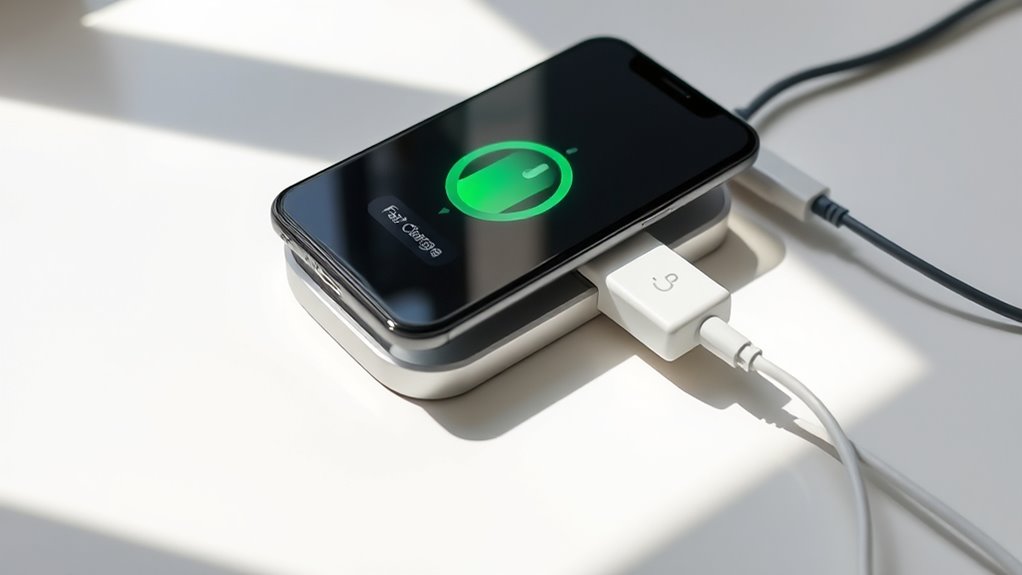
Knowing when to choose fast or slow charging can make a big difference in your daily routine. You might opt for fast charging during emergencies or busy days, while slow charging works best overnight for convenience. High-usage devices also benefit from faster charging to keep up with your demands.
Emergency Power Needs
When an emergency strikes and you need your device or vehicle powered up quickly, fast charging becomes essential. In urgent situations, relying on fast charging methods like quick wirelessly charging your device or using solar charging for remote power can save the day. Here are key scenarios:
- When your device’s battery is critically low and you need to communicate urgently.
- When you’re in a remote location without access to traditional power sources, making solar charging invaluable.
- When time is limited, and you need a rapid boost to keep your device or vehicle operational.
In these cases, fast charging ensures you’re not left stranded. It’s crucial to prioritize quick power solutions when immediate access is necessary, especially during emergencies.
Overnight Charging Convenience
Ever wondered whether to use fast or slow charging overnight? Slow charging is typically ideal for overnight sessions because it’s gentler on your battery, helping maintain proper battery calibration over time. Using slow charging with quality charging accessories minimizes heat buildup, reducing potential stress on your device’s battery. If you prefer fast charging, avoid keeping your phone plugged in for extended periods, as it can lead to battery wear. However, if your device supports adaptive charging, it can slow down as it nears full capacity, making overnight fast charging more practical. Ultimately, slow charging offers convenience and preserves battery health during overnight use, while fast charging can be handy when you’re in a rush, but it’s best to switch to slow charging for longer overnight sessions.
High-Usage Devices
If you frequently use your device for high-demand tasks like gaming, video editing, or streaming, choosing the right charging method can make a difference. Fast charging is convenient but may impact battery recycling over time and reduce charging port durability due to heat and rapid power flow. Slow charging, on the other hand, is gentler on your device’s components and promotes longer-term battery health. Consider these scenarios:
- Use fast charging when you need a quick top-up during busy days.
- Opt for slow charging during prolonged use or overnight to protect battery integrity.
- Be mindful of frequent fast charging to minimize wear on the charging port and maximize battery recycling potential.
Selecting the right method based on usage helps preserve your device’s longevity and performance.
Technological Improvements in Charging Methods

Technological advancements have considerably improved charging methods, making both fast and slow charging more efficient and convenient. Wireless charging, for example, allows you to charge devices without plugging in, reducing wear on ports and extending battery lifespan. Innovations in battery recycling also help recover valuable materials, promoting sustainability and reducing environmental impact. These improvements mean faster charging times with less heat generation, which benefits overall battery health. Manufacturers are refining power management systems to optimize charging cycles and prevent overcharging. Additionally, smarter algorithms now adjust charging rates based on your device’s usage patterns. Together, these technological improvements make charging safer, more eco-friendly, and better suited to your needs, whether you prefer quick boosts or slow, steady power replenishment.
Expert Recommendations for Optimal Charging Practices
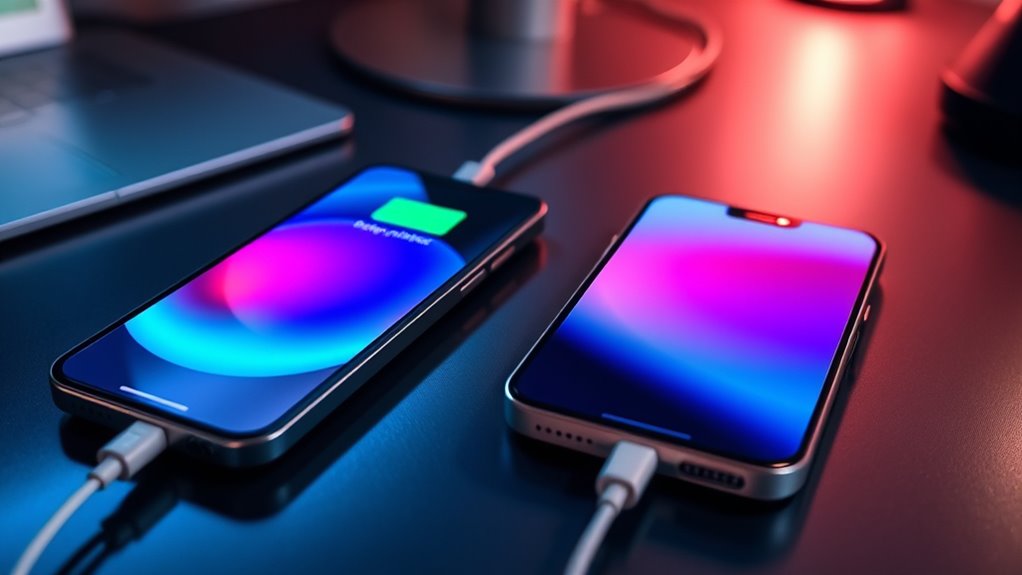
Experts suggest you keep your charging speeds moderate to protect your battery’s health. You should also avoid regularly letting your battery fully discharge, as this can cause long-term damage. Following these practices helps make certain your device stays reliable and lasts longer.
Maintain Moderate Charging Speeds
Maintaining moderate charging speeds is essential for preserving your battery’s health over time. Fast charging can accelerate battery degradation, reducing overall capacity and shortening the number of charging cycles your device can handle. To enhance longevity, consider these tips:
- Keep charging speeds moderate to prevent excessive heat, which harms battery capacity.
- Avoid consistently charging to 100%, as high voltage stress accelerates wear.
- Aim for a partial charge, around 20-80%, to extend the number of charging cycles and maintain ideal battery health.
Avoid Full Discharges Regularly
Avoiding full discharges is essential for protecting your battery’s health. Regularly draining your device completely can shorten its lifespan by stressing the battery’s charging cycle. Instead, aim to keep your battery between 20% and 80%. This practice helps prevent deep discharges that can harm battery chemistry. If your device experiences calibration issues, consider performing a battery calibration by fully charging and discharging it occasionally, but avoid doing this frequently. Maintaining partial charges minimizes wear and keeps the battery functioning at its best over time. Remember, avoiding full discharges supports a healthier charging cycle, reducing the risk of capacity loss and prolonging your device’s overall battery life. By adopting this habit, you ensure your battery stays reliable for longer periods.
Frequently Asked Questions
How Does Charging Speed Affect Overall Battery Lifespan?
Charging speed impacts your battery lifespan because fast charging generates more thermal stress, which accelerates battery degradation over time. When you frequently use fast charging, high temperatures can damage the battery’s cells, reducing overall capacity and lifespan. Slower charging minimizes heat buildup, helping preserve battery health longer. So, if you want your battery to last, opt for slow charging when possible, especially for routine use.
Are There Specific Devices That Benefit More From Fast Charging?
Think of your device as a delicate plant needing just the right sunlight. Certain devices, like newer smartphones or tablets, benefit more from fast charging due to advanced battery tech compatibility. Device-specific charging guarantees ideal performance, preventing damage from overly rapid power surges. If your device supports fast charging, you’ll enjoy quicker top-ups without sacrificing battery health, making it ideal for busy days when every minute counts.
Can Charging Habits Influence Battery Capacity Over Time?
Your charging habits can considerably influence battery capacity over time. Frequent deep discharges and constantly charging to 100% may accelerate battery degradation. To preserve capacity, adopt smart charging patterns, like unplugging at around 80-90% and avoiding prolonged full charges. Proper charging habits reduce battery degradation, helping your device maintain ideal performance longer. Being mindful of how, when, and how often you charge makes a real difference in your battery’s longevity.
What Are the Environmental Impacts of Fast Versus Slow Charging?
Fast charging might seem eco-friendly, but it often consumes more energy, increasing your carbon footprint, especially if powered by non-renewable sources. Slow charging uses less energy and reduces electronic waste by prolonging battery life. Using renewable energy for charging minimizes environmental impacts. Opting for slow charging helps lower greenhouse gases, while fast charging, if powered by dirty energy, can contribute more to environmental harm.
How Do Different Battery Chemistries Respond to Rapid Charging?
Your battery chemistry greatly influences its charging response to rapid charging. For example, lithium-ion batteries handle fast charging well but may degrade faster if overused, while solid-state batteries typically have a better charging response, tolerating higher currents without damage. You should consider your battery chemistry’s specific characteristics and manufacturer guidelines to maximize lifespan and safety when opting for rapid charging.
Conclusion
Choosing between fast and slow charging is like picking the right tool for the job—you’ll want speed sometimes, but patience can protect your battery’s health. Fast charging offers convenience but can generate heat that may harm your battery over time. Slow charging, like a gentle river, helps extend your battery’s lifespan. By understanding these differences, you can make smarter choices and keep your device running smoothly for longer.