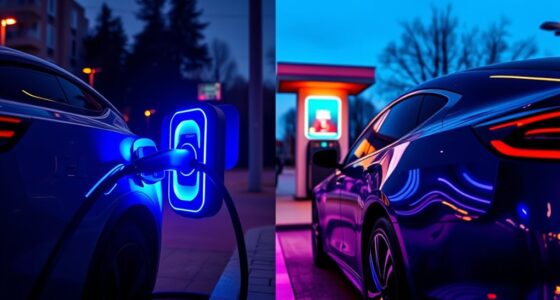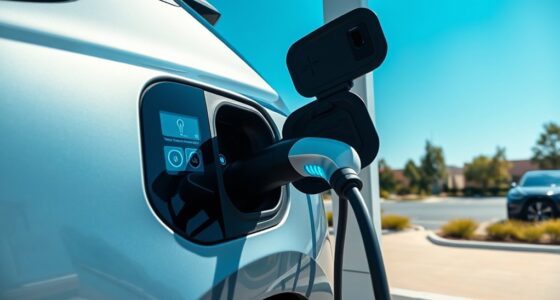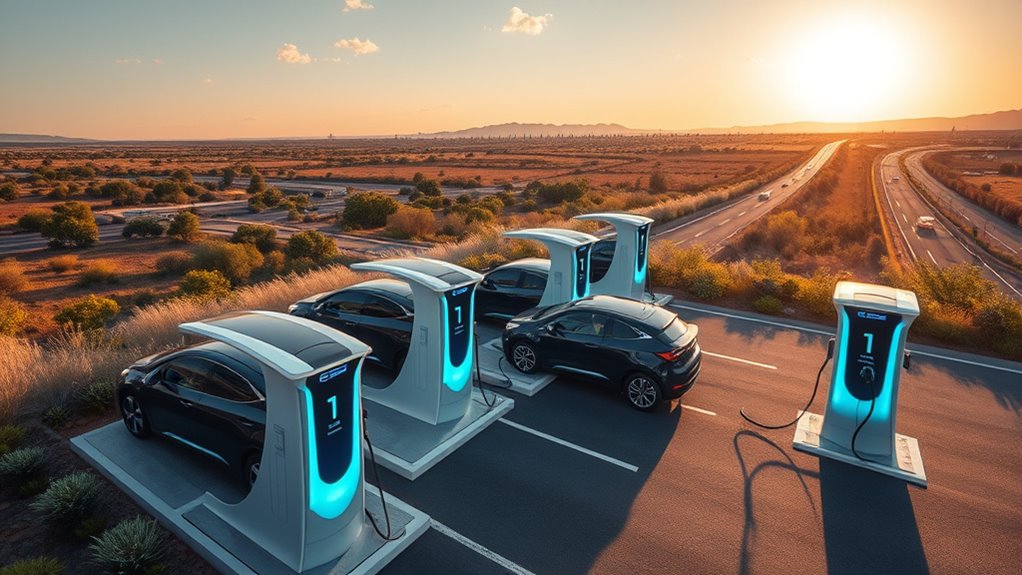
Future EV charging hubs will transform your road trip by seamlessly communicating with autonomous vehicles, ensuring quick, effortless stops. They’ll be powered by renewable energy sources like solar and wind, making charging cleaner and more sustainable. Smart grid technology will balance energy distribution, reducing wait times and boosting reliability during busy travel periods. As these stations become smarter and greener, your trips will be smoother and eco-friendlier—discover more about the exciting innovations shaping your journeys ahead.

Get backup power and energy gear delivered free with Prime
- Fast, free delivery on millions of items
- Prime Video, Amazon Music and more included
- Member-only deals all year
Key Takeaways
- Autonomous vehicle integration will enable seamless, automated charging and navigation to stations, reducing parking hassle and wait times.
- Renewable energy-powered hubs will provide clean, eco-friendly charging options, decreasing carbon footprints during road trips.
- Self-sufficient stations with energy storage will ensure consistent, sustainable power even during low renewable generation periods.
- Smart grid technology will optimize energy distribution across stations, balancing supply and demand for faster, more reliable charging.
- Enhanced, interconnected networks will make charging stops smoother, quicker, and less stressful, transforming long-distance travel.

As electric vehicles become more mainstream, the future of EV charging stations promises to revolutionize how we power our cars. Imagine stopping at a bustling hub and effortlessly charging your vehicle while enjoying a quick snack or catching up on work. These stations will be more than just points to recharge; they’ll be integrated with cutting-edge technology like autonomous vehicle integration, making your road trips smoother and more efficient. Autonomous vehicle integration means that charging stations will communicate directly with your car, automatically initiating charging sessions when needed and optimizing energy flow based on real-time conditions. Your car might even navigate itself to the nearest station when your battery dips below a certain level, removing the hassle of manual parking and charging. This seamless interaction will considerably cut down wait times and streamline the entire process, allowing you to spend more time enjoying your journey rather than worrying about charging logistics. Additionally, renewable energy sources will power these hubs, ensuring that your trips are more sustainable and eco-friendly. Solar panels, wind turbines, and other renewable options will be integrated directly into the station infrastructure, ensuring that the energy used to charge your vehicle is clean and eco-friendly. This shift toward renewable energy sources not only reduces your carbon footprint but also helps combat climate change by decreasing reliance on fossil fuels. As these stations harness renewable resources, they’ll become self-sufficient, capable of storing excess energy for later use, especially during peak times or when renewable generation is low. This means you’ll benefit from more consistent and environmentally conscious charging options, aligning your travel with your values.
In addition, these future hubs will likely feature smart grid technology, allowing them to distribute energy efficiently across multiple vehicles and stations. This integration ensures that energy is used effectively, reducing waste and increasing availability for everyone. Imagine a network of charging stations that communicates with each other and the grid, balancing supply and demand in real-time. As a result, you’ll experience faster charging times and more reliable service, even during busy travel periods. These advancements will make road trips more convenient, as charging stops become less of a logistical concern and more of a seamless part of your journey.
All these innovations—autonomous vehicle integration and renewable energy sources—will come together to create a future where EV charging stations are smarter, cleaner, and more integrated into your travel experience. You’ll no longer need to plan around long charging waits or worry about the environmental impact of your trip. Instead, you’ll enjoy a journey powered by cutting-edge technology and sustainable energy, making every mile more enjoyable and responsible.
Products Worth Considering

Nextbase iQ 4K Smart HD Dash Cam Pro with 64GB microSD Card – Front and Rear View, 1440p, Smart Sense Parking, Emergency SOS, Roadwatch AI

NOCO Boost GB70 2000A 12V Lithium Jump Starter

Autel MaxiCOM MK808S Bidirectional Automotive Diagnostic Scanner
As an affiliate, we earn on qualifying purchases.
Frequently Asked Questions
How Will Charging Station Locations Evolve Over the Next Decade?
Over the next decade, you’ll see charging infrastructure become more integrated into urban planning, placing stations at convenient locations like shopping centers, workplaces, and along highways. Cities will prioritize accessible, fast-charging hubs to reduce range anxiety. Expect a shift toward smarter, more widespread networks that support both short trips and long journeys, making charging stations more seamless and embedded into your daily routes and travel plans.
What Incentives Will Governments Offer for Using Future EV Hubs?
Imagine a future where every mile you drive feels effortless. Governments will likely offer tax credits to encourage EV use and develop hubs, making charging as easy as stopping for coffee. Public-private partnerships will fund these hubs, ensuring widespread access. These incentives aim to boost adoption, reduce emissions, and create a seamless travel experience, transforming road trips into enjoyable, sustainable adventures.
How Will Charging Speeds Improve With Technological Advancements?
Charging speeds will substantially improve as advancements in battery capacity and charging infrastructure progress. You’ll notice faster charging times because new battery tech allows for higher power transfer, reducing wait times. Improved infrastructure means more reliable, widespread fast-charging stations, enabling you to recharge quickly during your trips. These innovations work together to make your EV experience smoother and more efficient, meaning less time plugged in and more time on the road.
Will Charging Stations Integrate Renewable Energy Sources?
Charging stations will definitely integrate renewable energy sources like solar integration and wind power. As the saying goes, they’re “leading the charge” toward sustainability. You’ll see more stations harnessing solar panels and wind turbines to generate clean energy on-site. This shift not only reduces carbon footprints but also makes your road trips greener and more eco-friendly, helping you travel with a lighter impact on the planet.
How Will Data Privacy Be Protected at These New Hubs?
At these new hubs, your data privacy is protected through strong measures like data encryption and user authentication. You’ll need to verify your identity securely, preventing unauthorized access. The system encrypts your personal and charging information, making it unreadable to outsiders. This way, your data stays safe, and you can enjoy a seamless, worry-free charging experience. Rest assured, your privacy remains a top priority at these advanced charging hubs.
Conclusion
Soon, EV charging hubs will transform your road trips into epic adventures, making stops feel less like errands and more like exciting pit stops. Imagine charging your car in minutes while enjoying gourmet food, entertainment, and even spa treatments—all at once! These hubs will turn long drives into unforgettable experiences, so you’ll wonder how you ever traveled without them. Buckle up—your future road trips will be nothing short of legendary!