Charging your EV can boost your monthly electricity bill by $30 to $60, depending on how much you drive, your home’s rates, and your charging habits. Using a dedicated Level 2 charger at home usually costs more upfront but saves time and energy. Charging during off-peak hours and avoiding frequent fast charging can lower costs and preserve your battery. Keep exploring to discover smart strategies to keep charging expenses manageable.
Key Takeaways
- EV charging adds approximately $20 to $50 to monthly electricity bills, depending on usage and local energy rates.
- Larger batteries and frequent fast charging can significantly increase charging costs and overall electricity consumption.
- Charging during off-peak hours and using smart chargers can reduce the impact on your electric bill.
- Regional energy rates and available incentives influence how much EV charging will raise your monthly expenses.
- Maintaining efficient charging habits and selecting cost-effective stations help minimize the increase in your electric bill.

ChargePoint HomeFlex Level 2 EV Fast Charger, J1772, Smart, Hardwired, 50A
- Reliable Home Charging: Builds dependable EV charging stations
- 24/7 Support: Around-the-clock assistance available
- Mobile App Control: Manage charger via smartphone app
As an affiliate, we earn on qualifying purchases.
As an affiliate, we earn on qualifying purchases.
Factors Affecting Charging Costs
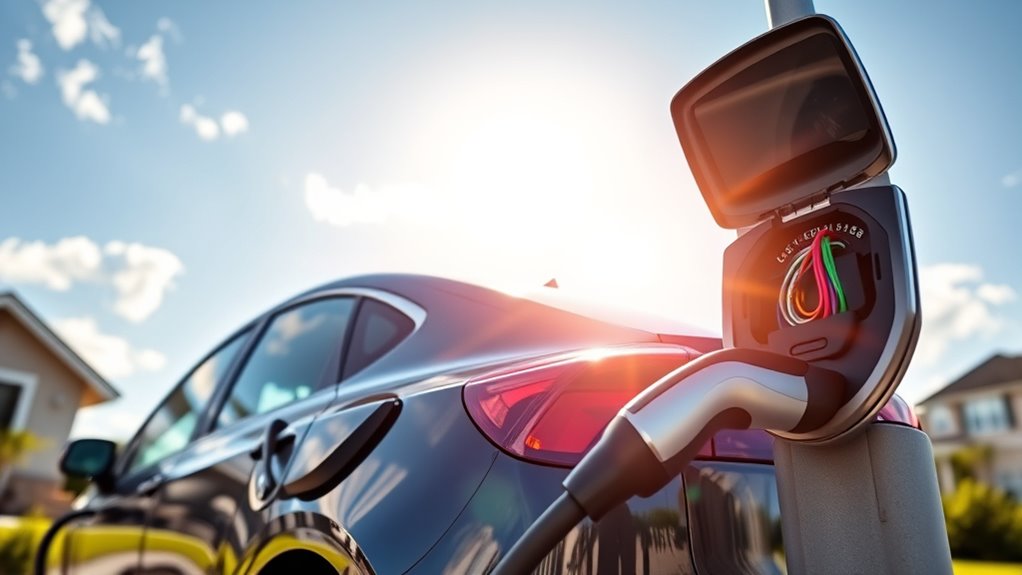
Several factors influence how much you’ll pay to charge your electric vehicle. One key aspect is government incentives, which can lower charging costs through rebates or tax credits, making EV ownership more affordable. Additionally, battery recycling programs impact overall costs by encouraging the reuse of materials, reducing manufacturing expenses, and potentially lowering electricity prices over time. If your region offers incentives for battery recycling, you’ll benefit indirectly by supporting sustainable practices that can help keep charging costs down. The availability of these incentives varies, so it’s worth researching what’s offered locally. Other factors, like charging station locations and energy rates, also play roles, but government incentives and battery recycling programs are essential in shaping your overall EV charging expenses. Moreover, advancements in projector technology are continuously improving energy efficiency, which can also influence future charging costs for EV owners. Staying informed about energy policies can help you better understand how regulations may affect your charging costs over the coming years. Recognizing the importance of renewable energy sources can also provide insights into how cleaner energy options might impact electricity prices for EV charging. Incorporating sustainable energy practices into your charging routine can further contribute to lowering costs and reducing environmental impact.

NexCyber Level 2 EV Charger(WiFi APP/Plug-Play), 48A Nema 14-50p, 25ft Cable ETL Certified, Home Level 2 EVSE Car Charger w/ J1772 Connector, Electric Vehicle Charging Stations (46)
- Charging Speed: Up to 9x faster charging
- Charging Rate: 46 miles/hour via hardwired
- Plug Type: NEMA 14-50p, 40-48A
As an affiliate, we earn on qualifying purchases.
As an affiliate, we earn on qualifying purchases.
Typical Home Electricity Rates

Understanding your home electricity rates is essential when estimating the cost of charging your EV. Rates vary depending on your location and utility provider, but on average, you might pay between 10 to 20 cents per kilowatt-hour (kWh). Higher rates can accelerate battery degradation over time, making efficient charging important. Your existing charging infrastructure influences how effectively you can charge at home; a dedicated Level 2 charger typically costs more upfront but reduces charging time and energy loss. Keep in mind that fluctuating rates, such as time-of-use plans, can also impact your charging costs. Additionally, being aware of floating on water concepts can help you understand how water-related factors, like humidity and temperature, might indirectly influence your electrical systems. Understanding electricity consumption patterns can help you better plan and manage your EV charging habits, minimizing the impact on your overall electricity bill. Recognizing rate fluctuations can further assist in optimizing your charging schedule to save money and preserve battery health.

Dzytnsy 200W Car Fast Charging Station,6 Ports, Compatible with MacBook pro/Air/M5 M4 M3 M2 M1/Dell/Lenovo/HP,for iPhone 17/16/15 Series,Samsung Galaxy S26/S25 Ultra/S24 Series and More
- High Power 200W for Multiple Devices: Supports 6 devices simultaneously with 200W power
- 3 USB-C Ports with Fast Charging: Includes 100W and 25W USB-C ports
- 3 USB-A Ports for Versatile Charging: Features 18W and 15W USB-A ports
As an affiliate, we earn on qualifying purchases.
As an affiliate, we earn on qualifying purchases.
Average EV Battery Capacity

The average EV battery capacity typically ranges from 40 to 100 kilowatt-hours (kWh), depending on the vehicle’s size and intended use. Larger batteries offer longer driving ranges but may impact your electric bill more during charging. Battery longevity is a key factor to evaluate, as higher-capacity batteries tend to last longer with proper care. Your access to a robust charging infrastructure influences how often you need to recharge and how convenient it is to top off your battery. Keep in mind that larger batteries require more energy to charge fully, which can increase charging costs. Understanding your vehicle’s battery capacity helps you estimate energy consumption and plan for both performance and affordability over time. Additionally, holistic approaches to health and wellness can support overall well-being during your transition to electric vehicle ownership. Being aware of your energy consumption patterns can also help optimize your charging habits and control costs more effectively. For example, choosing energy-efficient charging practices can further reduce the impact on your electricity bill.
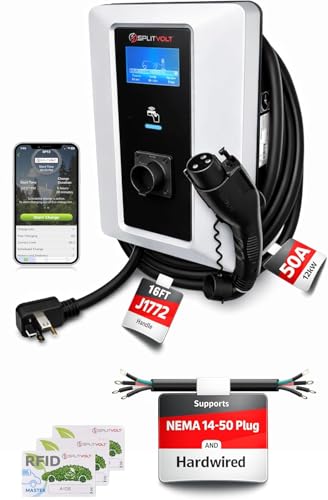
Splitvolt Level 2 Smart EV Charging Station – Connected, Adjustable 12kW, Display, Scheduling, RFID, NEMA 14-50, J1772, OCPP Compatible, Outdoor Rated, 16ft
- Plug and Play or Hardwire: Immediate use or optional hardwired setup
- Ultra Fast Charging: Charges 12-15 times faster than 120V outlets
- High Power Output: Provides up to 12kW (50A) for quick charging
As an affiliate, we earn on qualifying purchases.
As an affiliate, we earn on qualifying purchases.
Estimating Energy Consumption per Charge

To estimate how much energy your EV uses per charge, you’ll want to look at your vehicle’s average energy consumption. Keep in mind that factors like driving habits, terrain, and climate can influence this number. Additionally, being aware of your energy consumption rate can assist in more accurate budgeting for electricity expenses. Knowing the typical charging frequency can also help you plan your energy needs effectively.
Average Energy Use per Charge
Estimating the average energy use per charge can help you better understand how much electricity your EV consumes on each trip. Typically, EVs use between 20 to 40 kWh per full charge, depending on the model and driving habits. Keep in mind that battery health impacts energy efficiency: a well-maintained battery maintains ideal capacity, reducing energy consumption. Charging speed also plays a role; faster chargers may generate more heat, which can slightly decrease efficiency over time. To estimate your average energy use accurately, monitor your vehicle’s energy meter over several charges, noting differences in driving conditions. This approach helps you determine how much electricity your EV consumes per trip and allows you to plan your charging needs more effectively, ultimately managing your electric bill better. Additionally, understanding energy efficiency factors can guide you in optimizing your charging habits for cost savings.
Factors Affecting Consumption
Several factors directly influence how much electricity your EV consumes per charge. Your driving habits, terrain, and climate all play a role in energy use. For example, frequent accelerations or hilly terrain increase consumption. Battery degradation over time can reduce efficiency, causing your vehicle to use more energy to travel the same distance. Additionally, taking advantage of government incentives may encourage you to upgrade to newer, more efficient models that consume less electricity. Other key considerations include your charging habits and the type of charger you use. Fast chargers, while convenient, often lead to higher energy use due to increased heat and battery stress. Being aware of these factors helps you estimate your energy consumption more accurately and manage your electric bill effectively.
The Role of Charging Habits
Your charging habits substantially influence how much your electric vehicle impacts your monthly bill. Using a charging station wisely can help you manage costs effectively. For example, frequent fast charging at public stations may increase energy expenses and accelerate battery degradation over time. To save money, consider charging during off-peak hours and avoiding unnecessary rapid charges. Keeping your battery’s state of charge between 20% and 80% not only prolongs battery life but also reduces the need for costly replacements. Being mindful of when and where you charge helps you control your electricity consumption. Small adjustments, like unplugging once fully charged or scheduling regular, moderate charges, can add up to significant savings, making your EV more economical in the long run. Proper charging practices can also help prevent unnecessary energy use and extend your battery’s lifespan. Additionally, understanding energy consumption patterns can further optimize your charging routine and reduce overall costs. Monitoring your electricity usage can provide insights to fine-tune your habits and maximize savings. Recognizing charging station efficiency can further aid in selecting the most cost-effective options for your needs. Implementing smart charging technology can automate some of these adjustments, further reducing your energy expenses and prolonging battery health.
Comparing Charging at Home vs. Public Stations
Charging your EV at home often proves more convenient and cost-effective than relying on public stations, especially if you have a dedicated charger and access to off-peak electricity rates. Home charging allows you to monitor battery health closely, ensuring ideal longevity. Public stations, however, can be more accessible when you’re on the go, but availability isn’t always guaranteed, leading to potential delays. Costs at public stations vary, and sometimes they charge premium rates, making your total expenses higher. Additionally, frequent public charging might impact battery health over time if not managed properly. To maximize efficiency, implementing smart charging can optimize energy use and reduce costs further, while understanding charging speed can help you plan your charging sessions to minimize impacts on your battery and budget. Being aware of the charging infrastructure available in your area can also help you make better decisions about when and where to charge. Incorporating connected home charging systems that integrate with your smart home setup can further enhance your charging management and efficiency.
Impact of Time-of-Use Electricity Rates

Time-of-use rates mean your electricity costs vary depending on when you charge your EV. Charging during peak hours can be more expensive, while off-peak times offer savings. Planning your charging schedule can help you reduce costs and manage your energy expenses effectively.
Peak vs. Off-Peak Costs
Electricity rates often vary depending on the time of day, which can considerably affect your charging costs. Charging during off-peak hours usually saves you money, but it’s important to weigh how frequent charging might impact battery degradation and long-term costs. Off-peak rates are often lower, making it more affordable to charge your EV while benefiting from government incentives that encourage nighttime charging. Conversely, charging during peak hours can be pricier and accelerate battery wear, increasing replacement costs. Being strategic about your charging schedule can help you optimize savings and battery health. Keep these points in mind:
- Off-peak charging reduces costs and extends battery life
- Peak-hour rates are higher but may be necessary during urgent needs
- Government incentives often favor off-peak charging to reduce strain on the grid
Cost Variability Over Time
Since electricity rates fluctuate throughout the day, your costs can vary considerably depending on when you choose to charge your EV. Charging during peak hours can lead to higher bills, while off-peak times often offer lower rates. However, frequent charging during low-cost periods may accelerate battery degradation over time, impacting your vehicle’s long-term health. Additionally, the availability and quality of charging infrastructure influence your flexibility to take advantage of variable rates. If you have access to smart chargers, you can program them to charge when rates are lowest, saving money and reducing stress on the grid. Being aware of time-of-use rates helps you manage costs better, but balancing cost savings with battery longevity is essential for ideal long-term EV ownership.
Planning Charging Times
By carefully planning when you charge your EV, you can take advantage of lower electricity rates during off-peak hours. This not only saves you money but also helps maintain your battery’s longevity by avoiding frequent high-stress charges. Additionally, timing your charging sessions can ease pressure on the charging infrastructure, reducing congestion and wear on public chargers. To maximize benefits:
- Schedule charges overnight when rates are lowest
- Use smart chargers with timers to automate charging times
- Avoid frequent, rapid top-ups that strain the system and degrade your battery
Tips to Minimize Charging Expenses

To cut down on charging costs, you should take advantage of off-peak electricity rates whenever possible. This helps you save money by charging your EV during times when electricity is cheaper. Additionally, proper battery maintenance ensures your battery stays healthy, preventing unnecessary charges or early replacements that can increase costs. When selecting a charging station, choose one that offers lower rates or access to discounted charging networks. Using a home charger with smart features allows you to schedule charges during off-peak hours automatically. Keep your battery at ideal levels, avoiding frequent full charges or deep discharges, which can affect efficiency. By being strategic about charging times, station choice, and battery care, you can considerably reduce your overall EV charging expenses.
Frequently Asked Questions
How Does EV Charging Impact Monthly Electricity Bills Overall?
Charging your EV impacts your monthly electricity bill based on your electricity rate and charging frequency. If you charge often and have a high rate, expect a noticeable increase. However, if you charge less frequently or have a lower rate, the impact remains minimal. Monitoring your electricity rate and adjusting your charging habits can help you manage costs effectively, keeping your overall bill more predictable and affordable.
Are There Any Hidden Fees Associated With Public EV Charging Stations?
Ah, the age of electric vehicles, where hidden fees can catch you off guard. You should watch out for surcharge policies at some public charging stations, which might add unexpected costs. These hidden fees often aren’t obvious upfront, making it wise to read station policies carefully. Some stations may have extra charges for fast charging or specific hours, so be sure to check for any extra fees before plugging in.
Can Solar Panels Offset the Increased Energy Consumption From EV Charging?
Yes, solar panels can offset the increased energy consumption from EV charging. By harnessing solar savings, you generate clean energy that powers your vehicle and reduces your reliance on the grid. Keep in mind that panel efficiency impacts how much energy you produce; higher efficiency panels maximize your savings and help cover your EV’s charging needs. Investing in quality panels guarantees you get the most benefit from your solar setup.
How Do Seasonal Changes Affect EV Charging Costs?
Seasonal energy changes impact your EV charging costs because colder or hotter weather reduces charging efficiency, making you use more electricity. During winter, you’ll likely see higher costs due to increased energy needed to heat the battery and compensate for lower efficiency. In summer, cooling systems can also raise energy use. To save, consider charging during off-peak hours and keeping your vehicle in a moderate environment when possible.
What Incentives or Rebates Are Available to Reduce Charging Expenses?
Think of EV charging incentives and rebate programs as your golden tickets to savings. You can often access federal, state, or local EV charging incentives that cut costs or offer rebates for installing home chargers. These programs are designed to make charging more affordable, so you should check out available EV charging incentives in your area. Taking advantage of rebate programs can markedly reduce your overall charging expenses.
Conclusion
Charging your EV can add about $10 to $30 to your monthly electricity bill, depending on your habits and rates. Did you know that the average EV battery capacity is around 60 kWh, which can power your car for roughly 200 miles? By smartly managing charging times and habits, you can profoundly cut costs. Staying informed about your local rates helps you optimize your expenses and enjoy the benefits of electric driving without breaking the bank.