Using an extension cord for EV charging is risky because it can cause overheating, voltage drops, and connection issues that may damage your vehicle or pose fire hazards. Many cords aren’t rated for high current loads, increasing safety concerns. Instead, safe options include installing dedicated outlets or using certified chargers. To understand more about proper safety practices and why avoiding extension cords is vital, keep exploring the essential info below.

Get backup power and energy gear delivered free with Prime
- Fast, free delivery on millions of items
- Prime Video, Amazon Music and more included
- Member-only deals all year
Key Takeaways
- Extension cords may cause voltage drops, reducing charging efficiency and increasing the risk of electrical faults.
- Using cords not rated for high current can lead to overheating and fire hazards.
- Damaged or low-quality extension cords amplify electrical risks during high-power charging.
- Proper wiring and grounding are essential; extension cords often bypass these safety measures.
- Following safety standards and manufacturer guidelines helps prevent accidents and equipment damage.
Products Worth Considering

Autel 40A Level 2 EV Charger, 240V NEMA 14-50 J1772, WiFi, 25ft Cable

Autel MaxiCharger Level 2 EV Charger, 40A, 240V, Indoor/Outdoor, 25‑Foot Flexible Cable, NEMA 14‑50 Plug (White)

DEWALT 20V MAX XR Impact Driver, 1/4 Inch High Torque Brushless 3-Speed Cordless with LED Light, Extended Runtime (DCF845B)
As an affiliate, we earn on qualifying purchases.
Understanding the Power Requirements of EV Chargers
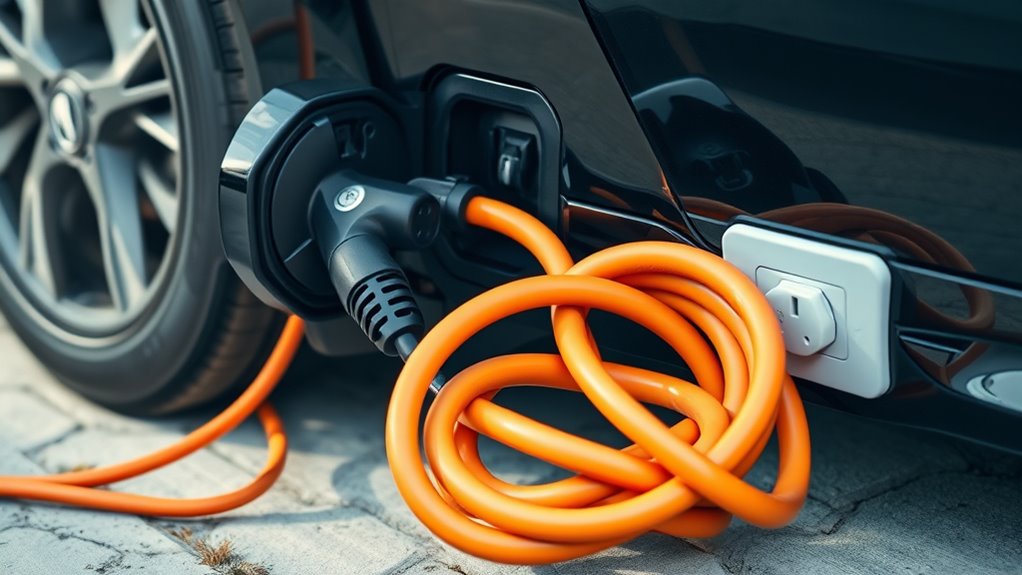
To safely use extension cords for EV charging, you need to understand the power requirements of your charger. First, check the cord length, as longer cords increase resistance and can cause voltage drops, affecting charging efficiency and safety. It’s best to keep the cord as short as possible within your setup. Next, pay attention to the wire gauge; a thicker wire (lower gauge number) can handle higher current loads safely. For high-current EV chargers, use an extension cord with an appropriate wire gauge, typically 10 or 12 gauge, to prevent overheating and potential hazards. Always verify the cord’s specifications match your charger’s power needs, ensuring it can deliver the necessary current without risking damage or fire. Properly understanding these factors helps you avoid dangerous situations during charging. Additionally, using European cloud innovation techniques can help optimize your charging setup for energy efficiency and safety.
The Risks of Using Extension Cords for High-Current Devices

Using extension cords for high-current devices like EV chargers can pose serious risks. Overheating and fire hazards are real concerns, especially if the cord isn’t rated for the load. Additionally, voltage drops and connection issues increase the chances of damage or safety problems. Proper maintenance and understanding of electrical safety, including the use of appropriate cords, are essential to prevent accidents. Ensuring that cords are designed for high-current transfer can significantly reduce these risks. Relying on proper equipment designed for high-power transfer is always the safest choice. Moreover, selecting cords that meet safety standards helps ensure reliable and safe operation.
Overheating and Fire Hazards
While extension cords might seem like a convenient solution, they pose serious risks when used with high-current devices like electric vehicle chargers. Overheating is a major concern because these cords aren’t designed to handle the power draw of EV charging. As current flows through the cord, it heats up, increasing the fire risk if the cord’s gauge isn’t rated for such use. Poor cord safety practices, such as using damaged or low-quality extension cords, amplify this danger. Overheating can cause the insulation to melt or ignite, leading to fires that threaten your home and safety. To protect yourself, always prioritize proper wiring and dedicated outlets over risky shortcuts like extension cords for high-current devices.
Voltage Drop Concerns
Extension cords may seem like a handy fix, but they can cause significant voltage drops when used with high-current devices like EV chargers. This drop can jeopardize voltage stability, leading to inconsistent charging and potential damage to your vehicle’s electrical system. As the voltage decreases, your charger works harder, risking overheating and reduced efficiency. Additionally, poor wiring integrity in extension cords worsens voltage loss, making it even riskier. Long or undersized cords create resistance, which diminishes voltage delivery and stresses your power supply. Over time, this can degrade the wiring and connections, increasing the chance of electrical faults. For safe, reliable EV charging, it’s best to avoid extension cords and ensure your charging setup maintains proper voltage stability and wiring integrity. Proper wiring practices are essential for ensuring consistent and safe charging performance.
Increased Connection Risks
Connecting high-current devices like EV chargers through extension cords substantially increases the risk of electrical faults and safety hazards. These cords can compromise connection stability, leading to overheating or sparks. Compatibility issues may arise if the extension cord isn’t rated for the charger’s power demands, resulting in poor performance or damage. Additionally, using unsuitable cords can interfere with the modern kitchen technology that relies on precise and reliable power connections. Properly rated cords are essential to maintain safe power delivery and prevent dangerous failures. Moreover, the use of improper extension cords can void warranties and pose legal liabilities in case of accidents. Given the electrical standards, it is crucial to follow manufacturer guidelines for safe charging practices. Using the correct extension cord can also ensure consistent charging performance and avoid unexpected interruptions.
Potential Fire Hazards and Electrical Damage
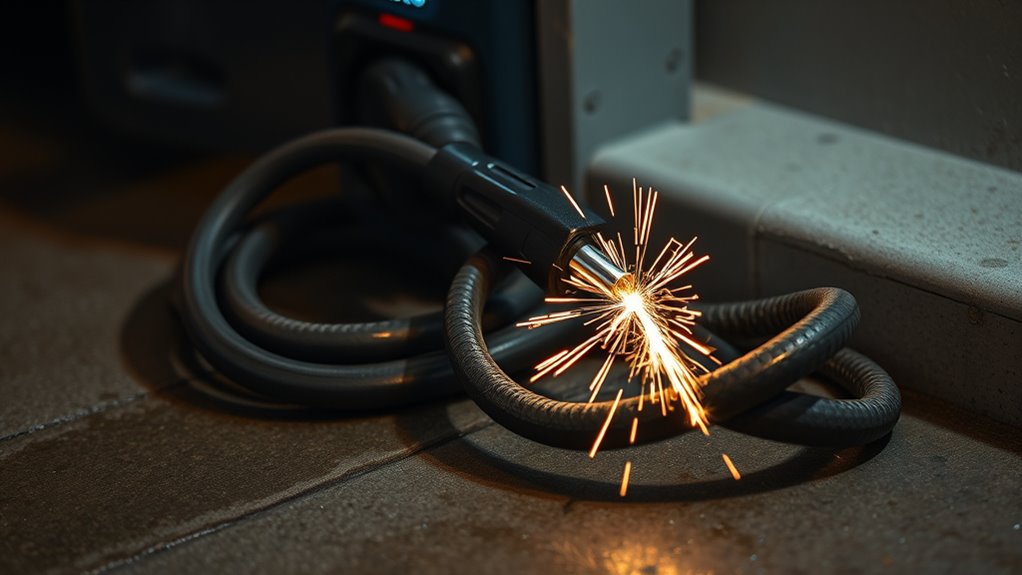
Using an extension cord for EV charging can pose serious fire hazards and cause electrical damage if not done properly. Overloaded cords can overheat, increasing the risk of sparks and fires. Poor connections or damaged insulation may lead to short circuits, which can ignite nearby materials. Without proper fire suppression measures, a small electrical fault could escalate into a larger blaze. Regular electrical inspections are vital to identify any issues before they become dangerous, but many extension cords are not built to handle the high current loads of EV charging. This setup also risks damaging your vehicle’s electrical system. To guarantee safety, it’s best to avoid using extension cords altogether or consult a professional electrician for a proper, code-compliant solution. Understanding electrical load capacities can help prevent overloading and reduce risks.
Impact on Charging Efficiency and Battery Health
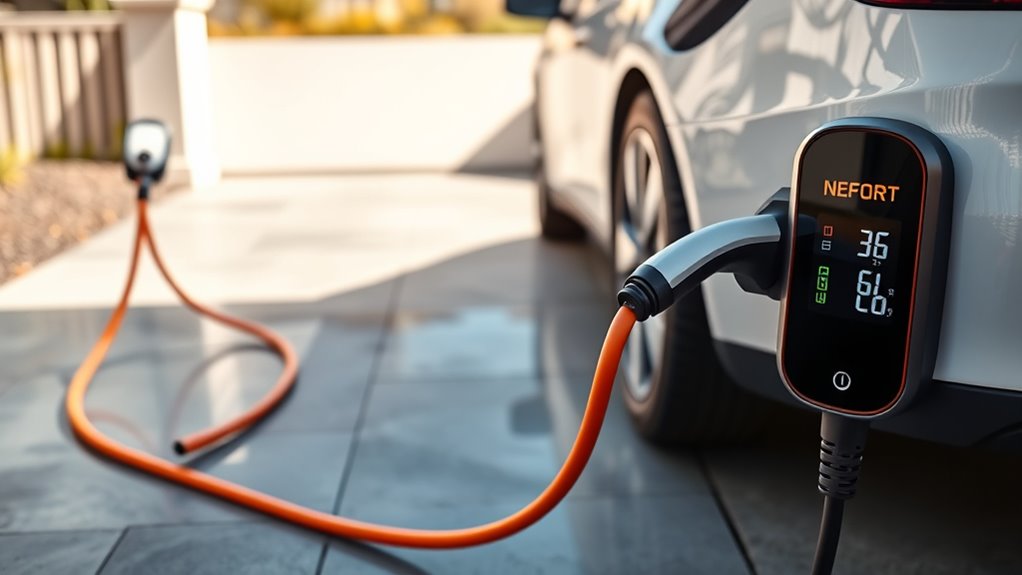
When you rely on an extension cord for EV charging, it can considerably reduce the charging efficiency and negatively impact your vehicle’s battery health. The longer and thinner the cord, the more resistance it creates, leading to slower charging and increased heat. This heat accelerates battery degradation over time, shortening your EV’s lifespan. Additionally, improper cable management can result in connectivity issues, further compromising charging performance. Using an extension cord that isn’t rated for high-current applications increases the risk of fire hazard and damage to the cord or vehicle. Consider these impacts: 1. Reduced charging speed, leaving you waiting longer. 2. Excess heat buildup, risking damage to the battery and cord. 3. Increased energy loss, raising your electricity costs. 4. Accelerated battery degradation, decreasing overall vehicle performance. To avoid these risks, always use proper charging equipment designed specifically for EVs and follow manufacturer recommendations. These practices help ensure safety and optimal performance, protecting your investment over time.
Safety Standards and Manufacturer Recommendations
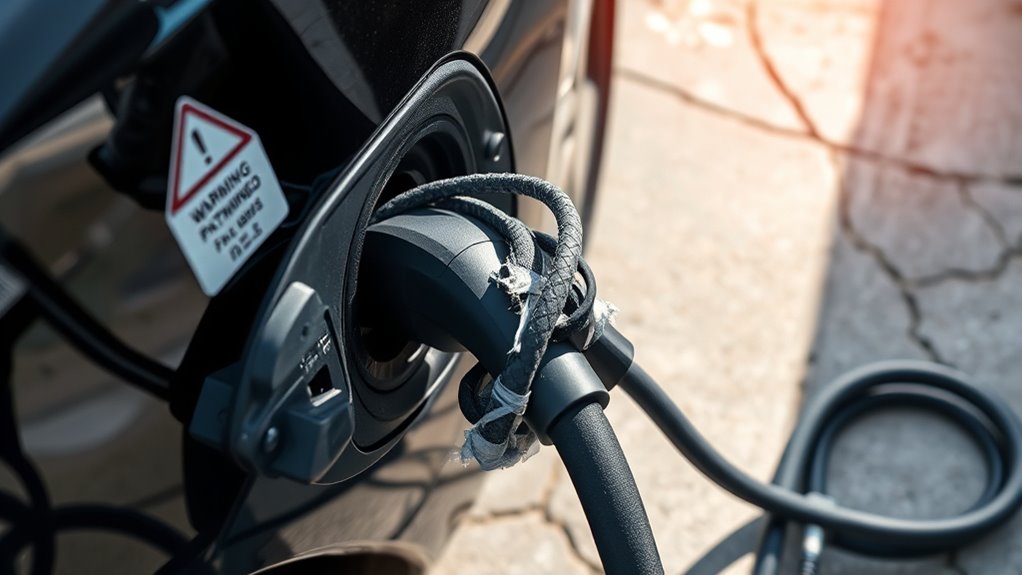
To guarantee safe and efficient EV charging, it’s vital to follow manufacturer recommendations and adhere to established safety standards. Always check if your portable adapters are compatible with your EV charger and meet safety certifications. Extension cord ratings matter considerably; you should use cords specifically rated for high current loads, and avoid those not designed for heavy-duty use. Manufacturers often specify approved extension cords or adapters, emphasizing that improper choices can lead to overheating or fire hazards. Skipping these guidelines increases risks and may void warranties. Prioritizing safety standards ensures your charging process remains reliable and secure, protecting both your vehicle and your home. Additionally, proper electrical wiring plays a crucial role in maintaining safety during high-current charging sessions. Ensuring proper grounding is essential for preventing electrical shocks and ensuring the safety of your setup. Remember, adhering to these recommendations is the best way to prevent accidents and extend the lifespan of your EV charging setup. Proper compliance with safety standards is essential for a secure and efficient charging experience.
Safer Alternatives for Extending Charging Range
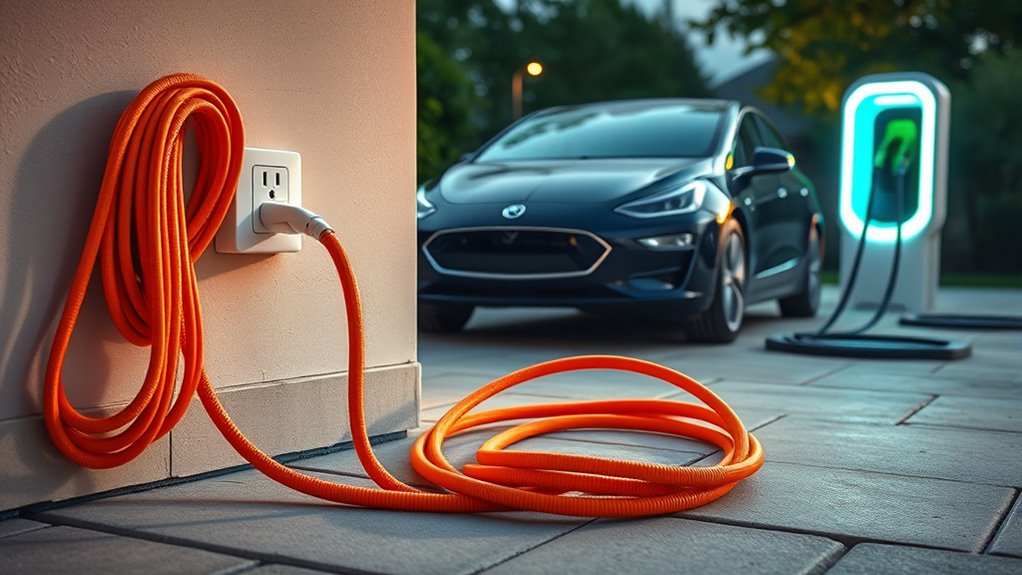
Rather than relying on extension cords that may not meet safety standards, consider safer alternatives to extend your EV’s charging range. Using portable adapters designed specifically for EV charging offers a much safer option, ensuring the connection remains secure. Additionally, explore installing a dedicated outdoor outlet or a longer, professionally installed charging cable—these options prioritize extension safety. A well-chosen garage door opener can also facilitate easier access to your charging area, improving overall convenience. Ensuring that your charging setup adheres to safety protocols is essential for preventing electrical hazards. Here are four ways to improve your charging experience: 1. Use certified portable adapters that meet safety standards. 2. Have a licensed electrician install a dedicated outdoor outlet. 3. Opt for high-quality, approved extension cords designed for outdoor use. 4. Consider a portable charging station for flexible, safe charging locations. These alternatives help protect you and your vehicle while ensuring reliable charging.
Tips for Proper and Safe EV Charging Practices

Practicing proper and safe EV charging habits is essential to protect both your vehicle and yourself. Always use the correct charging equipment, and avoid makeshift solutions like extension cords. If you need flexibility, consider portable adapters designed for EV charging, which are safer than improvised setups. Keep your charging area clear of hazards, and never overload outlets. For convenience, wireless charging pads are an option for compatible vehicles, reducing the risk of electrical issues caused by improper connections. Regularly inspect your charging equipment for damage, and follow manufacturer guidelines. Charging in well-ventilated areas minimizes fire risks. Additionally, understanding the importance of air quality in your environment can help prevent potential hazards associated with electrical fires or emissions. Using certified and reliable charging devices ensures the safety and longevity of your charging setup. By adhering to these practices, you ensure a safe, efficient, and reliable charging experience while safeguarding your investment.
Frequently Asked Questions
Can a Heavy-Duty Extension Cord Handle EV Charging Loads Safely?
A heavy-duty extension cord can handle EV charging loads safely if it has the right cable gauge and power capacity. Look for a cord with at least a 10-12 gauge, which can support higher currents without overheating. Always verify the extension cord’s power capacity matches or exceeds your EV charger’s requirements. However, for safety and reliability, it’s best to use a dedicated, properly rated outlet instead of extension cords.
Are There Specific Extension Cords Approved for EV Charging Purposes?
Did you know that improper extension cord use causes over 3,000 electrical fires annually? There are no extension cords specifically approved for EV charging purposes, making extension cord safety vital. EV-specific cables are designed to handle high current loads safely, unlike typical extension cords. Always use manufacturer-approved, heavy-duty, properly rated cables to guarantee safe, reliable charging. Never rely on generic extension cords—they pose serious fire and safety risks.
How Does Using an Extension Cord Affect My Vehicle’s Warranty?
Using an extension cord for EV charging can jeopardize your vehicle’s warranty because it often violates manufacturer policies. If damage occurs due to improper charging setups, warranty issues may arise, leaving you responsible for repairs. Manufacturers typically specify approved charging methods, and using an extension cord might void your warranty, especially if it causes electrical problems or damages. Always check your vehicle’s warranty terms and follow manufacturer recommendations for safe, compliant charging.
What Are the Long-Term Risks of Repeatedly Using Extension Cords for Charging?
Sure, keep playing with fire—literally. Repeatedly using extension cords can accelerate cable degradation, exposing wires and increasing fire hazards. Over time, the cord’s insulation wears thin, risking sparks or worse. You might save a few bucks now, but long-term, you’re risking costly repairs, dangerous fires, and potential damage to your EV. Think about safety first—ditch the extension cord for proper charging stations.
Is There a Safe Way to Temporarily Extend My Charging Cable?
Yes, you can use portable solutions like a heavy-duty, properly rated extension cord for temporary extensions. Make sure it’s designed for outdoor use, has sufficient gauge, and is free of damage. Keep the cord straight, avoid daisy-chaining, and don’t exceed recommended length or current limits. Always monitor the connection during charging, and disconnect promptly after. This approach minimizes risks but should only be a short-term solution.
Conclusion
While it might seem convenient to use an extension cord for your EV charger, it’s best to prevent it. The risks of electrical issues and potential damage outweigh the convenience. Instead, consider safer options like installing a dedicated outlet or using proper charging equipment. Prioritizing safety ensures your vehicle stays healthy and your home remains protected. After all, taking the right steps now keeps your driving experience smooth and worry-free in the long run.