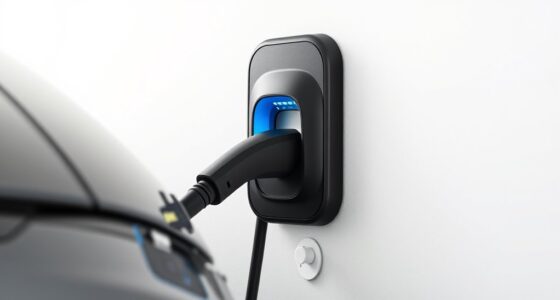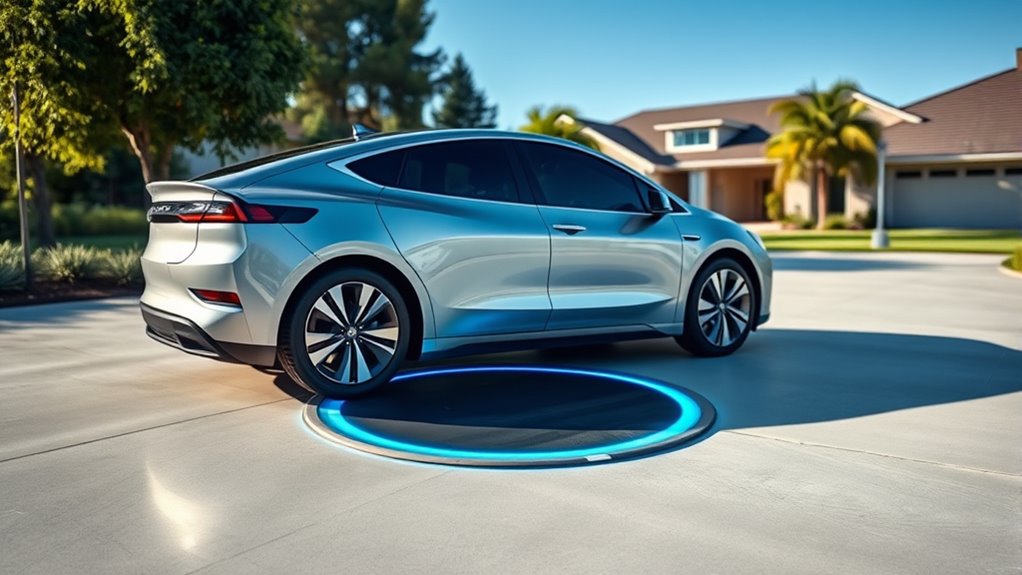

Wireless EV charging offers the convenience of charging your vehicle without cables, using electromagnetic fields, which makes it safer and easier to plug in automatically. It reduces cable clutter, eliminates tripping hazards, and can be installed indoors for added protection. However, it’s still less common and can be more expensive initially. With ongoing advancements and evolving safety standards, wireless charging may become a practical option for homes soon—keep exploring to discover more about its future potential.
Key Takeaways
- Wireless EV charging offers convenience by eliminating cables and enabling automatic charging when parked over a compatible pad.
- It ensures safety through strict standards, automatic shutoff, and shielding to prevent electromagnetic interference.
- Installation requires professional setup, adhering to safety codes, which can add to initial costs and complexity.
- Currently less widespread than plug-in options, but rapid technological advancements and evolving standards may increase adoption.
- Future integration into homes depends on affordability, certification, and the development of more efficient, reliable wireless charging systems.
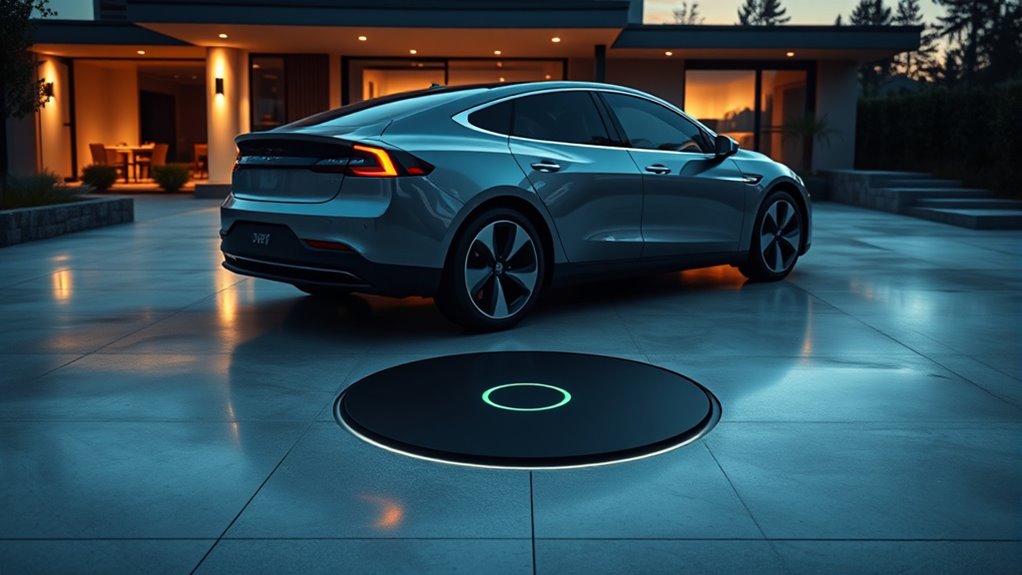
Have you ever wondered how electric vehicles (EVs) might charge without plugging in? Wireless EV charging offers a fascinating glimpse into the future of clean transportation. Instead of connecting a cable, your vehicle can top off its battery through an electromagnetic field generated by a charging pad embedded in the ground or mounted on a wall. This technology is especially appealing for indoor installation, where convenience and safety are top priorities. Installing wireless chargers inside your garage or carport can eliminate the clutter of cables and reduce tripping hazards. Plus, since the system is designed with strict safety standards, it minimizes the risk of electrical shocks or fires, making it a safe option for home use. Manufacturers guarantee that these systems meet rigorous safety standards, including proper shielding and automatic shutoff features that activate if something obstructs the charging process.
When considering wireless charging for your home, indoor installation becomes a key factor. You’d need a compatible charging pad installed either on the floor or wall where you park your vehicle. The process is straightforward—once installed, you simply park your EV over the pad, and charging begins automatically. This convenience can be especially attractive if you park in a garage or covered area, where outdoor exposure isn’t a concern. However, it’s vital to verify that the installation adheres to safety standards set by regulatory bodies. Proper installation prevents issues like unintended electromagnetic interference or overheating. It’s advisable to work with certified professionals who understand local electrical codes and safety requirements to guarantee a safe and effective setup. As deep‑sky imaging demonstrates, technological advancements can greatly enhance user experience while maintaining safety and reliability.
While wireless charging is still not as widespread as traditional plug-in methods, its development is moving swiftly. The technology is designed with safety and efficiency in mind, addressing concerns about electromagnetic fields and electrical safety. As standards evolve, you can expect these systems to become even safer and more reliable for home use. If you’re contemplating an upgrade or new installation, checking for certifications like UL or IEC compliance can give you peace of mind that your wireless charger meets safety standards. In the end, wireless EV charging promises a more seamless, clutter-free experience, especially if you value convenience and safety at home. Although it might still be in the early stages for widespread adoption, innovations continue to make it more practical and secure for everyday use.

(Update) Charging Alignment Adapter for Chevy Silverado, GMC Sierra, Hummer EV & Other Vertical Wireless Charging Pads Compatible with All iPhone Models, Samsung & Google Pixels (Galaxy Black)
- Premium Automotive Materials: Made in the USA with quality materials
- Adjustable Butterfly Hinge: Fits all phone sizes securely
- Universal Compatibility: Works with iPhone, Samsung, and Google Pixels
As an affiliate, we earn on qualifying purchases.
As an affiliate, we earn on qualifying purchases.
Frequently Asked Questions
How Long Does Wireless EV Charging Take Compared to Traditional Charging?
Wireless EV charging typically takes longer than traditional plug-in methods due to lower charging speeds. While conventional chargers can fully charge your vehicle in about 4-8 hours, wireless charging often takes 8-12 hours or more. The efficiency comparison shows that wireless charging is less efficient, meaning more energy is lost during transfer. So, if you’re in a hurry, traditional charging is faster, but wireless offers convenience at the expense of longer charging times.
Are There Safety Concerns With Wireless Charging in Residential Areas?
You might worry about safety with wireless EV charging, especially since 40% of homeowners cite electromagnetic interference as a concern. While generally safe, electromagnetic interference could disrupt nearby electronics or pose privacy concerns if signals aren’t well protected. Manufacturers design systems to minimize these risks, but it’s wise to stay informed about potential issues and guarantee your home’s setup follows safety standards to keep your environment secure.
Can Wireless Charging Be Used With All Electric Vehicle Models?
Wireless charging isn’t compatible with all electric vehicle models. You need to check the charging compatibility of your car, as it depends on model-specific features. Some vehicles are designed to work with wireless chargers, while others require traditional plug-in systems. Before considering wireless charging, verify your EV’s specifications and confirm the charging station supports your model to avoid compatibility issues and maximize convenience.
What Is the Cost Difference Between Wireless and Wired Charging Installations?
You’ll find that wireless EV charging installation costs are generally higher than wired setups. Equipment expenses for wireless systems include specialized pads and receivers, which can be pricier upfront. Installation costs also tend to be higher because of the need for precise alignment and additional infrastructure. While wired charging is more affordable initially, wireless charging offers convenience, but expect to pay a premium for the installation and equipment expenses.
How Will Wireless Charging Impact Electric Grid Infrastructure?
Wireless EV charging could increase energy demand, potentially impacting grid stability if adoption grows rapidly. As more people use wireless chargers, you’ll see higher energy flows, which may strain infrastructure if not managed properly. To keep the grid reliable, utilities might need to upgrade systems and implement smarter energy management. Overall, wireless charging’s impact depends on how quickly and widely it’s adopted, influencing grid stability and energy demand.

ChargePoint HomeFlex Level 2 EV Charger J1772 – Fast Smart Battery Power Charging at Home for Electric Automobile Vehicles – Hardwired for Electric Car
- Reliable Home Charging: Builds dependable EV charging stations
- 24/7 Support: Around-the-clock assistance available
- Mobile App Control: Manage charger via smartphone app
As an affiliate, we earn on qualifying purchases.
As an affiliate, we earn on qualifying purchases.
Conclusion
Wireless EV charging is a convenient and innovative way to power your vehicle without plugging in, making your daily routine easier. While it’s still developing, experts predict that by 2030, over 30% of new EVs could feature wireless charging capabilities. Imagine never fussing with cords again—that future is closer than you think. As technology advances, wireless charging could become a standard part of your home, saving you time and hassle every day.
ChargePoint HomeFlex Level 2 EV Charger J1772 – Fast Smart Battery Power Charging at Home for Electric Automobile Vehicles – Hardwired for Electric Car
- Reliable Home Charging: Builds dependable EV charging stations
- 24/7 Support: Around-the-clock assistance available
- Mobile App Control: Manage charger via smartphone app
As an affiliate, we earn on qualifying purchases.
As an affiliate, we earn on qualifying purchases.

POLMXS 25W Wireless Charger Car Fast Wireless Charging Pad DIY Wireless Phone Charger Mat Compatible with iPhone 17/16(25W)/15/14/13/12(7.5W) (P21)
- Powerful 25W Wireless Charger: Fast, safe, universal charging for home, office, car
- High-Speed Charging Performance: Charge iPhone 17 Pro to 50% in 30 minutes
- Case-Friendly Wireless Charging: Works through lightweight phone cases
As an affiliate, we earn on qualifying purchases.
As an affiliate, we earn on qualifying purchases.