
To save on installing a home EV charger, explore available rebates and incentives at the local, state, and federal levels. These programs can cut your upfront costs and make charging more convenient. Plus, you might qualify for extra benefits if you install solar panels or use renewable energy. Act fast, as some programs have time limits or funding caps. Keep going to discover how you can maximize your savings and enjoy eco-friendly transportation.
Key Takeaways
- Explore local, state, and federal EV charger rebate programs with varying eligibility and funding limits.
- Install approved, energy-efficient chargers through licensed professionals to qualify for incentives.
- Combine home charger rebates with solar energy incentives for maximum savings and sustainability.
- Act quickly, as many programs have time restrictions or funding caps.
- Utilize resources like total-cost clarity tools to assess your overall savings and financial benefits.
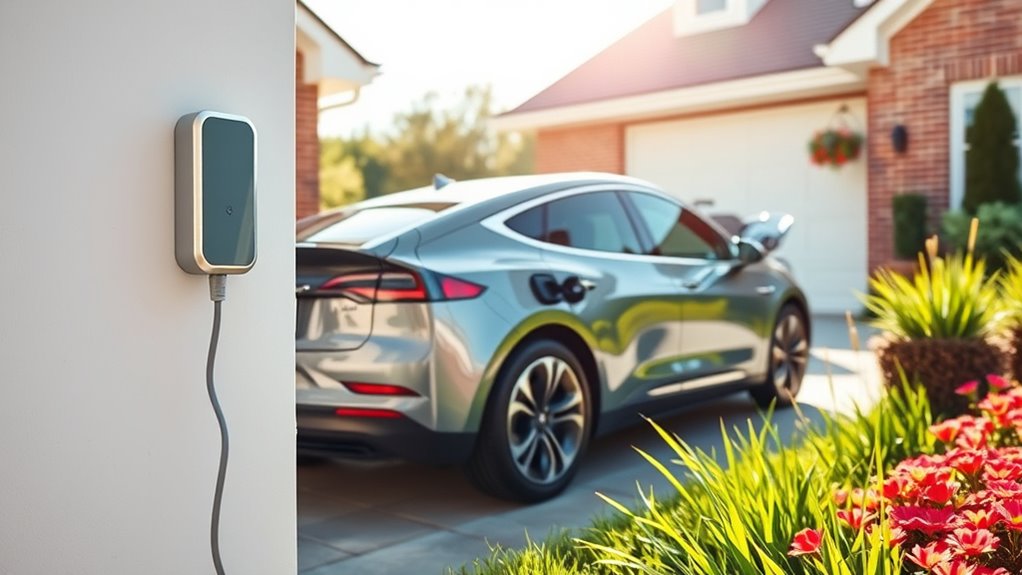
If you’re considering upgrading your electric vehicle charging setup, taking advantage of home charger rebates can help reduce your costs appreciably. Installing a dedicated home charger makes charging your electric vehicle more convenient and efficient, especially if you’re committed to reducing your carbon footprint. Many programs and incentives are designed to encourage the adoption of electric vehicles and the use of renewable energy sources, making now a smart time to explore your options. These rebates can substantially lower the upfront costs of purchasing and installing a charger, making the switch to electric driving more affordable.
Taking advantage of home charger rebates makes electric vehicle upgrades more affordable and eco-friendly.
When you look into rebates, you’ll find that many local, state, and federal initiatives offer incentives for installing electric vehicle chargers at home. These programs often prioritize energy-efficient and environmentally friendly setups, so if your home charging station is compatible with renewable energy sources like solar panels, you might qualify for even more benefits. By integrating renewable energy into your charging routine, you not only save money through rebates but also reduce your reliance on fossil fuels, further minimizing your environmental impact. This synergy between electric vehicles and renewable energy is increasingly supported by incentives, encouraging homeowners to adopt cleaner technologies.
To qualify for these rebates, you typically need to meet certain criteria, such as installing an approved charger model and ensuring proper certification. Most programs require that the installation be carried out by licensed professionals to meet safety standards. Once installed, you usually need to submit proof of purchase and installation to receive your rebate, which can be a straightforward process. Keep in mind that these incentives are often time-sensitive or subject to funding limits, so it’s wise to act quickly.
Beyond direct rebates, some utility companies also offer special rates or incentives for home charging powered by renewable energy sources. For example, if you generate your own solar power, you might be eligible for additional credits or discounts on your electricity bill. This not only reduces your overall charging costs but also aligns with your goal of a sustainable lifestyle. Combining these incentives with the right equipment can maximize your savings and environmental benefits. Additionally, understanding total-cost clarity can help you evaluate the long-term savings associated with various rebate programs and energy-efficient setups.
Frequently Asked Questions
Are There Income Limits to Qualify for Home Charger Rebates?
Yes, income restrictions can influence your eligibility for home charger rebates. Many programs set specific income criteria to make certain assistance goes to those who need it most. You should review each rebate’s eligibility criteria carefully, as some offer additional support for lower-income households. If your income falls within the specified limits, you may qualify for financial incentives that make installing a home charger more affordable.
Can I Combine Multiple Incentives or Rebates?
Yes, you can often combine multiple incentives or rebates through rebate stacking, but it depends on the program rules. Some programs allow incentive overlap, letting you maximize your savings, while others may limit you to one rebate. Always check the specific guidelines for each incentive to guarantee you’re eligible for rebate stacking and avoid disqualification. Doing so can considerably reduce your overall costs for installing a home charger.
How Long Does the Application Process Typically Take?
The application process usually takes anywhere from a few weeks to a couple of months, depending on the rebate program. During this time, your application moves through the approval process, where authorities review your eligibility and submitted documents. To speed things up, make sure you provide all required information accurately and promptly. Keep an eye on your email for updates, and stay patient as your application goes through the approval timeline.
Do Rebates Cover Installation Costs or Just the Charger?
Rebates often cover both the charger and installation costs, making your upgrade more affordable. While some programs focus solely on the charger, many incentives include installation expenses, reducing your out-of-pocket costs. Imagine installing your home charger with little to no extra expense—it’s a win-win. Always check the specific rebate details to confirm whether installation costs are included, so you can maximize your savings and get your EV charging setup ready faster.
Are There Specific Brands or Models Eligible for Rebates?
Many rebates are available for specific brands or models that meet charger compatibility and rebate eligibility criteria. You should check with your local utility or rebate program to see which chargers qualify, as some programs restrict rebates to certain certified models. By verifying the eligible brands and models beforehand, you can confirm your chosen charger meets the rebate requirements, maximizing your savings and making the installation more affordable.
Conclusion
Don’t miss out on these generous rebates and incentives—they can substantially cut your home charging costs. With over 80% of EV owners reporting savings from such programs, taking advantage of available rebates isn’t just smart; it’s essential. By acting now, you could save hundreds or even thousands on your home charger. So, check your eligibility today and power up your EV affordably—your wallet and the environment will thank you!