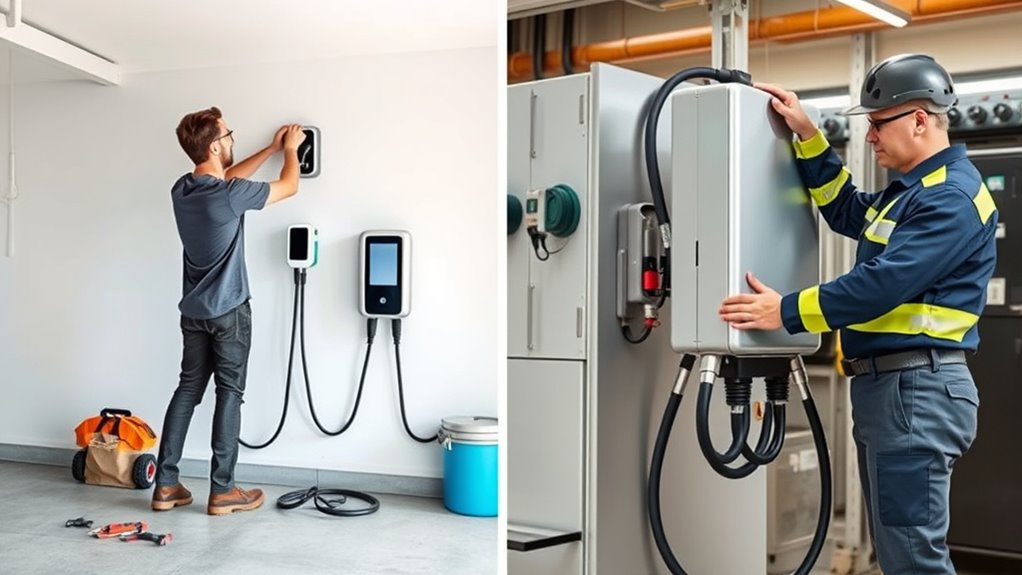

Deciding whether to install your EV charger yourself or hire a professional hinges on your electrical skills, safety awareness, and local codes. DIY installation can save money but poses risks like fire hazards, code violations, and potential damage to your home or vehicle if done improperly. A professional ensures compliance, safety, and proper setup, often preventing costly mistakes. If you’re uncertain about your skills or the regulations, exploring the options further can help you make the best choice.
Key Takeaways
- DIY installation saves money but risks safety hazards and code violations if not performed correctly.
- Professional installers ensure compliance, safety, and proper system integration, reducing potential future costs.
- Your electrical skill level and system complexity influence whether a DIY or professional approach is advisable.
- Proper permits, inspections, and adherence to local codes are crucial, often requiring professional expertise.
- Consider safety, time, and long-term reliability when choosing between DIY and professional EV charger installation.
Advantages of DIY EV Charger Installation
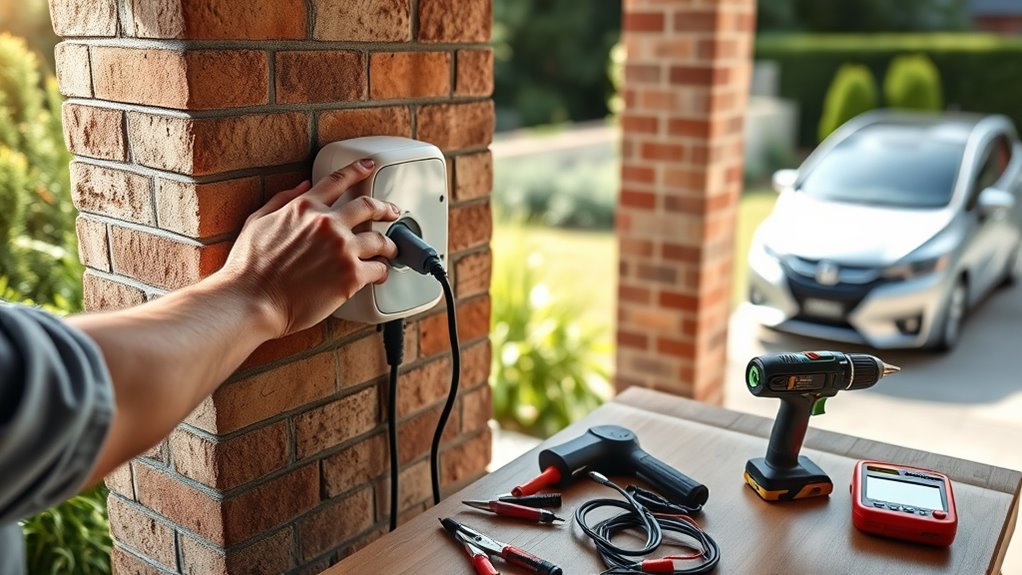
One of the main advantages of installing your EV charger yourself is the potential cost savings. When you do it yourself, you avoid labor fees charged by professionals, making the project more affordable. Plus, you have control over the installation process, ensuring your charger is compatible with your vehicle and electrical system. To succeed, you’ll need the right installation tools, such as a drill, wire strippers, and a voltage tester. Proper tools help you connect wiring securely and ensure safety. Doing it yourself also allows you to take your time, troubleshoot issues early, and customize the setup to fit your needs. With careful planning and the right equipment, you can enjoy the benefits of a seamless installation without extra expenses. Additionally, understanding electric load capacity ensures your home’s electrical system can handle the additional demand safely. Being familiar with home electrical standards can help prevent potential safety hazards during installation. Recognizing safety requirements is essential to ensure a secure and compliant setup, and having a good understanding of electrical code compliance can further reduce risks during installation. Gaining knowledge of circuit breaker ratings can also help you avoid overloads and ensure your system’s safety.
Risks and Challenges of DIY Installation
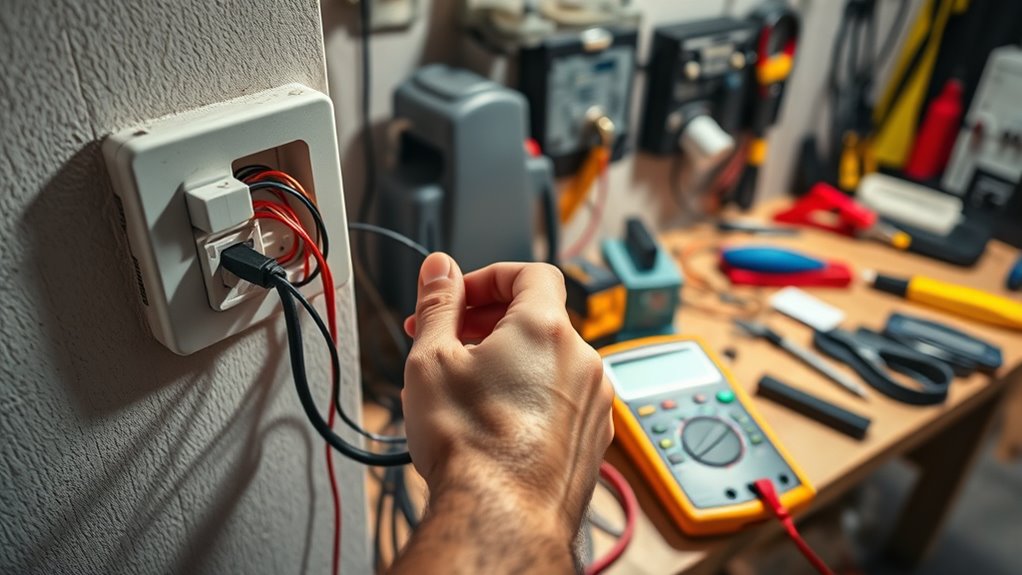
While saving money is a key benefit of DIY EV charger installation, it also comes with significant risks and challenges. Incorrect wiring or improper setup can lead to serious issues, including fire hazards. Additionally, failing to follow the electrical code increases the risk of legal problems and unsafe conditions. You might also face difficulties troubleshooting problems if it’s not installed correctly. Here are some key risks: 1. Fire hazards from faulty wiring or poor connections 2. Violating electrical code, leading to potential fines or failed inspections 3. Damage to your vehicle or home’s electrical system 4. Increased safety risks for you and others during operation which underscores the importance of proper electrical practices. Understanding the importance of drone safety and proper electrical practices emphasizes why professional installation often provides a safer, more reliable solution. Proper load‑planning can help prevent overloads and ensure your system operates safely and efficiently. Moreover, consulting with a licensed electrician can help identify potential issues early and ensure compliance with all safety standards. Furthermore, professional installers stay updated on the latest electrical codes, reducing the likelihood of compliance issues down the line.
Benefits of Hiring a Professional Installer
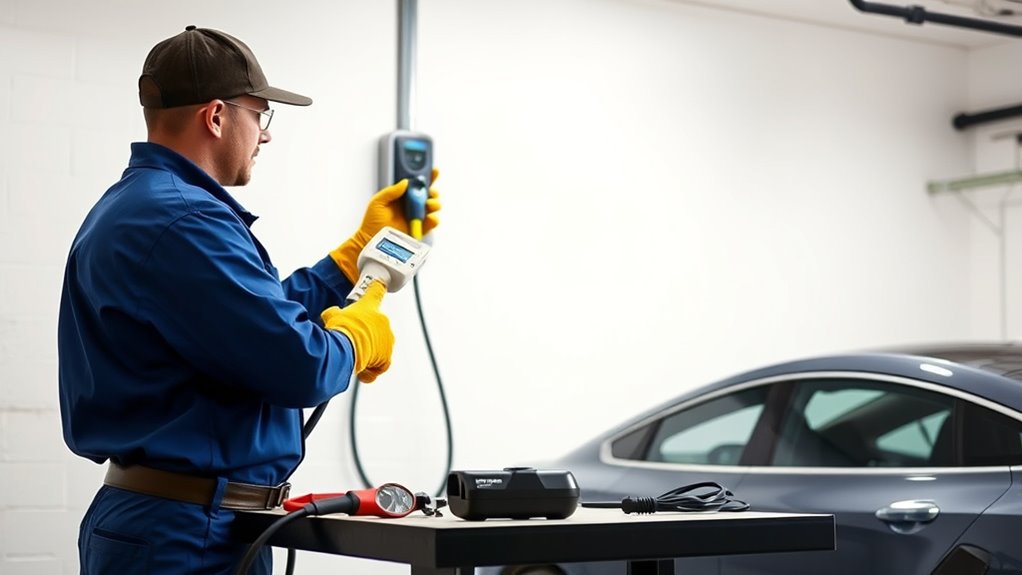
Hiring a professional installer helps guarantee safety standards are met, reducing the risk of accidents. They also guarantee that the installation is done correctly the first time, saving you time and money. With their expertise, you can have peace of mind knowing everything is handled properly. Additionally, professional installers are familiar with local building codes and regulations, ensuring your installation complies with all legal requirements for safety and legality. Their knowledge of electrical system safety ensures that your EV charger is installed securely and reliably, minimizing potential hazards. Moreover, experienced installers are well-versed in auditory processing and other safety considerations, further enhancing the installation’s reliability and safety. Understanding installation procedures allows professionals to anticipate and mitigate potential issues before they become problems. Their proficiency in compliance standards helps ensure your installation adheres to all relevant safety protocols and legal requirements.
Ensures Proper Safety Standards
Because safety standards are critical when installing complex systems, a professional installer knows how to follow all regulations and safety protocols precisely. They ensure proper charger placement to prevent hazards and avoid potential damage. Additionally, securing required electrical permits guarantees your installation complies with local codes. A professional’s expertise minimizes risks such as electrical fires or shocks. They also conduct thorough inspections to confirm that wiring and grounding meet safety standards. Furthermore, understanding Free Floating concepts helps professionals design installations that integrate seamlessly with existing electrical systems, enhancing overall safety and efficiency. Incorporating Smart Home Integration knowledge allows installers to optimize the system’s performance and ensure compatibility with other connected devices. Moreover, professionals stay updated on the latest electrical safety standards to ensure your EV charging setup is compliant and secure. Staying informed about industry regulations ensures that your installation remains compliant with evolving safety requirements. Additionally, experienced installers are familiar with testing procedures that verify the safety and reliability of the entire system before finalization.
Guarantees Correct Installation
A professional installer guarantees your charging system is set up correctly the first time, reducing the risk of costly mistakes or future issues. They ensure charger compatibility, so your EV charges efficiently without any hiccups. Plus, a skilled installer streamlines the installation timeline, preventing delays and surprises. When you hire a pro, you gain confidence knowing your system meets all safety and performance standards. Incorporating thermal behavior knowledge ensures proper system cooling and prevents overheating during operation, which is essential for long‑term system reliability and safety. Additionally, understanding cable insulation properties helps maintain optimal operating temperatures and prevents potential failures.
Cost Comparison: DIY Vs Professional Setup

When comparing costs between DIY and professional setups, it’s clear that your choice can considerably impact your budget. The cost comparison depends heavily on installation complexity and your skill level.
- DIY installation typically costs between $300 and $1,000, mainly for equipment and basic tools.
- Professional installation ranges from $500 to $2,500, including labor, permits, and equipment.
- If you’re experienced, you might save on labor but risk higher costs if issues arise later.
- Complex installations, such as those requiring panel upgrades or extensive wiring, drive up costs notably when done professionally.
Ultimately, the decision hinges on your comfort with installation complexity and your budget constraints, influencing whether you save money or invest in a guaranteed, compliant setup.
Safety Considerations and Building Codes
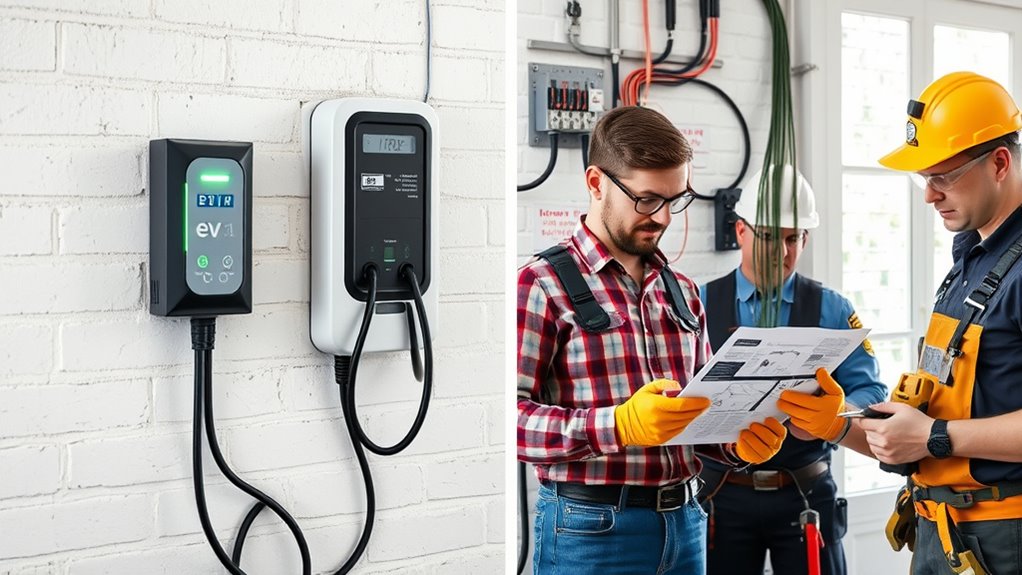
Safety considerations and adherence to building codes are critical factors regardless of whether you’re doing the installation yourself or hiring a professional. Ensuring proper electrical permits are obtained is essential to meet local regulations and avoid fines or safety hazards. Code compliance guarantees that your EV charger installation follows electrical standards designed to prevent fires, shocks, or equipment failure. Skipping permits or ignoring codes can lead to dangerous situations and costly repairs. If you’re DIY-ing, research your local building codes and verify that your setup meets all safety requirements. When hiring a professional, confirm they are licensed and knowledgeable about code compliance. Ultimately, prioritizing safety and adhering to building codes protect you, your property, and future users of your EV charger.
Factors to Consider Before Making a Decision
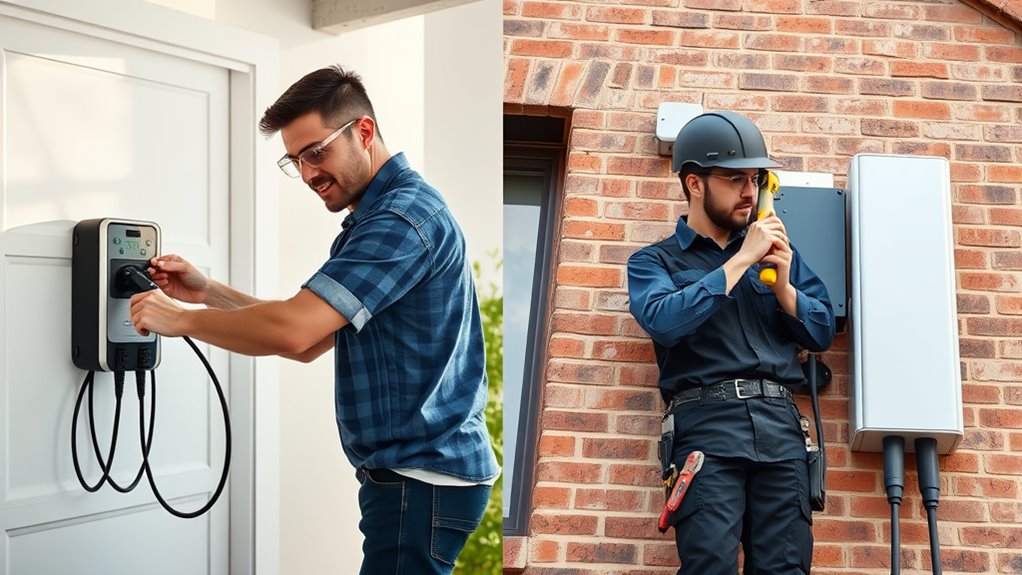
Before deciding whether to tackle the EV charger installation yourself or hire a professional, it’s important to weigh several key factors. First, consider the cost implications—DIY might save money upfront, but mistakes can be costly. Second, evaluate your skill requirements; installing a charger involves electrical knowledge and experience. Third, assess the complexity of your home’s electrical system and whether it’s compatible with the charger. Fourth, reflect on the time and effort you’re willing to invest, as DIY projects can be time-consuming. By carefully analyzing these factors, you can determine if the potential savings and satisfaction of a DIY install outweigh the safety risks and technical challenges involved.
Making the Best Choice for Your Home and Vehicle
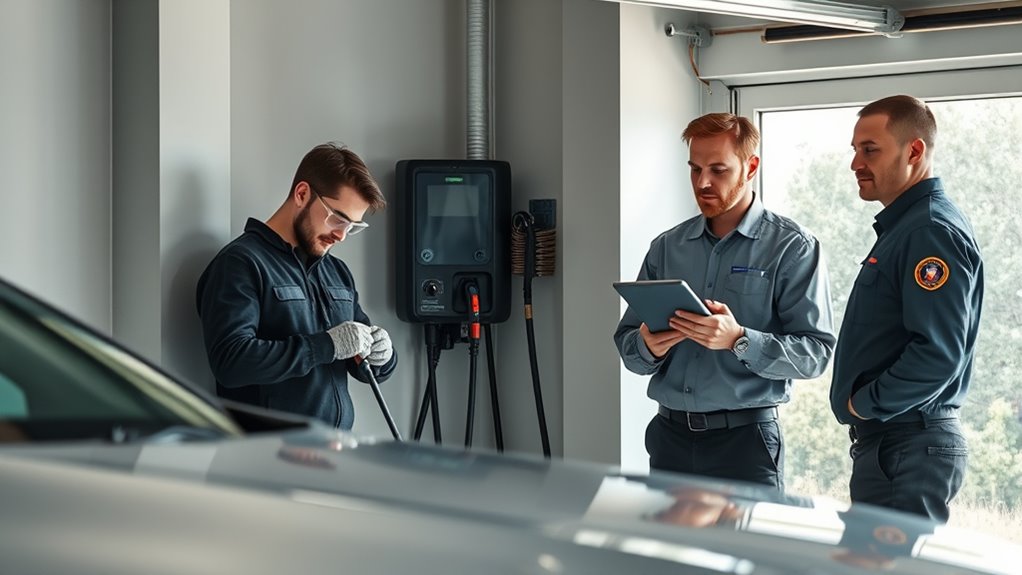
Choosing between DIY and professional EV charger installation depends on your specific home setup and vehicle needs. To make the best decision, evaluate charger compatibility with your vehicle and electrical system. If your home’s wiring is complex or outdated, a professional install guarantees safety and proper connections. Consider your installation timeline—DIY projects may take longer if you’re unfamiliar with electrical work, while professionals can often complete the job swiftly. Reflect on your comfort level with electrical tasks and the importance of safety. A professional installation reduces risks and guarantees adherence to local codes. Ultimately, balancing your technical skill, time constraints, and the specific requirements of your home and vehicle will help you choose the most suitable option.
Frequently Asked Questions
What Permits Are Required for DIY EV Charger Installation?
You’ll need to check your local electrical codes and follow the permit process before starting your DIY EV charger installation. Typically, you must obtain a permit from your city or county to guarantee your work meets safety standards. This involves submitting plans or documentation, and sometimes an inspection. Skipping permits can lead to fines or safety issues, so it’s essential to follow the proper permit process for a compliant and safe installation.
How Long Does Professional EV Charger Installation Typically Take?
Most professional EV charger installations take about 4 to 8 hours, but this can vary based on your home’s wiring and the technician’s availability. Notably, a survey shows that 70% of installations are completed within a single day. Your installation timeline depends on factors like permit approval and site complexity. Scheduling with a certified technician ensures timely service, avoiding delays caused by technician availability or unforeseen wiring issues.
Can I Upgrade My Existing Electrical System for a New Charger?
Yes, you can upgrade your existing electrical system for a new charger, but you should prioritize safety considerations and consult a professional. Electrical upgrades may involve increasing your panel capacity or adding dedicated circuits, which require proper knowledge and equipment. A licensed electrician evaluates your system’s current state, ensures code compliance, and safely performs the upgrade, reducing risks of electrical hazards and ensuring your EV charger functions correctly.
What Warranties Are Offered With Professional Installation Services?
With professional installation, you get clear warranty options and reliable service guarantees that protect your investment. These warranties typically cover parts, labor, and potential future repairs, giving you peace of mind. Service guarantees ensure timely, quality work, and responsive support if issues arise. You’ll benefit from expert knowledge, proper safety standards, and extensive coverage, making your EV charging experience smooth and worry-free from installation through everyday use.
How Does Installation Complexity Vary Between Different EV Charger Models?
Installation complexity varies depending on the EV charger model you choose. Some chargers are designed for simple, plug-in setups, making installation straightforward and compatible with most electrical systems. Others require more advanced electrical work, especially if they need a dedicated circuit or higher power capacity. Always check charger compatibility with your existing wiring and electrical panel to guarantee a smooth installation process, whether you do it yourself or hire a professional.
Conclusion
Choosing between DIY and professional EV charger installation is like steering through a maze—you’ll want the right guide. If you’re comfortable with electrical work and follow safety rules, DIY might save you money. But if you’re uncertain or want peace of mind, hiring a pro ensures safety and code compliance. Whichever route you take, prioritize safety and your vehicle’s needs. Making an informed decision helps you enjoy your EV experience with confidence, just like a smooth ride on a clear road.