
Choosing the right amp for your EV charger affects how fast you can charge your vehicle and how safe your electrical system remains. A 16A charger suits basic needs and is easier to install, while 32A offers faster charging but may require electrical upgrades. A 48A charger is best for rapid charging but demands careful professional setup. Understanding these options helps you plan effectively—if you want to learn more about what each level entails, keep exploring further.
Key Takeaways
- 16A chargers are suitable for basic daily EV charging with minimal electrical upgrades needed.
- 32A chargers enable faster charging, ideal for larger batteries or frequent use, possibly requiring electrical panel upgrades.
- 48A chargers offer the fastest charging times, often used in commercial settings, but need dedicated circuits and expert installation.
- Higher amp chargers increase charging speed but demand careful compatibility checks and adherence to electrical safety standards.
- Selecting the right amperage depends on your home’s electrical capacity, charging needs, and installation complexity.
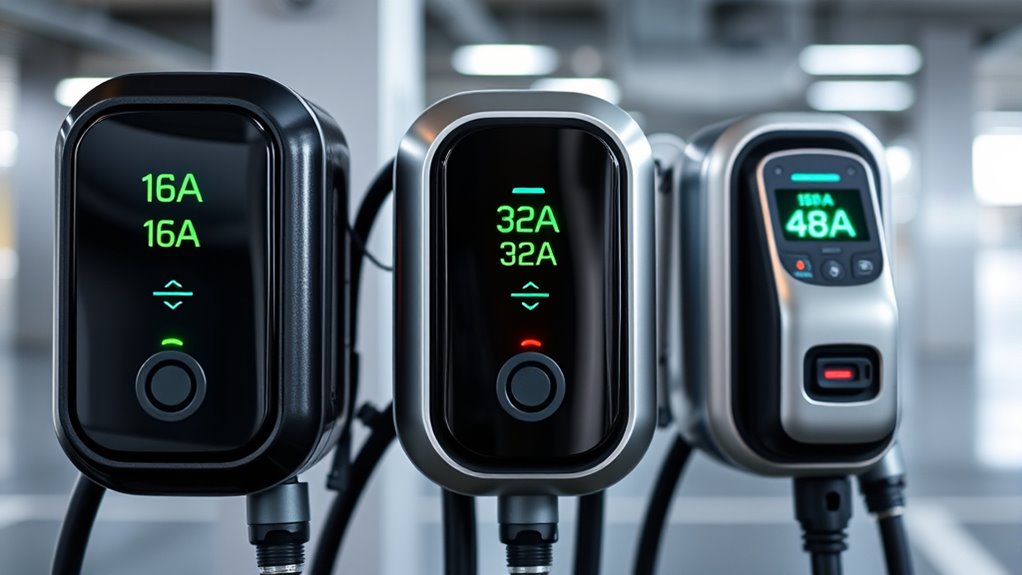
Selecting the right amp rating for your EV charger is essential to guarantee safe, efficient, and cost-effective charging. When choosing between 16A, 32A, or 48A chargers, you need to understand what each amperage means for your vehicle and your home’s electrical system. The amp rating determines how quickly your EV charges, but it also impacts the charger installation process and safety considerations. Picking the wrong level can lead to slower charging times or, worse, electrical hazards.
Choosing the right EV charger amp rating ensures safe, efficient, and cost-effective charging for your vehicle and home.
A 16A charger is typically suitable for basic charging needs or if your electrical system has limited capacity. It’s often easier and less expensive to install, making it a good choice for those who don’t need fast charging. However, it might take longer to top off your EV, especially for larger batteries. When considering safety, a 16A charger generally poses fewer risks because it draws less current, reducing the chance of overheating or electrical faults. Still, it’s important to verify your home’s wiring can support this amperage without overloading circuits.
Moving up to a 32A charger, you get a significant boost in charging speed. This level is ideal if you want faster top-ups, especially for daily use or larger batteries. Installing a 32A charger requires a proper charger installation, which might involve upgrading your electrical panel or wiring to handle the increased current safely. Safety considerations become even more important here; an improperly installed 32A charger can cause electrical faults or damage your home’s wiring. Always consult a qualified electrician to verify that your electrical system can safely support this level of charging. Proper grounding, circuit protection, and adherence to local electrical codes are essential to prevent hazards.
A 48A charger offers the fastest charging times but demands the most from your electrical infrastructure. This amperage level is typically used for commercial applications or for owners who need rapid charging. Because of the high current draw, safety considerations become critical. You’ll likely need a dedicated circuit with appropriate circuit breakers and wiring rated for this amperage. The installation process becomes more complex and costly, but it’s worth it if you require quick charging. It’s especially important to have a professional evaluate your home’s electrical capacity and ensure all safety standards are met to prevent overloads, fires, or other hazards. Additionally, understanding Room‑size wattage guides and electrical load capacity can help you plan for safe and effective charging solutions.
Frequently Asked Questions
Can I Upgrade My Charger Amperage Later?
Yes, you can upgrade your charger amperage later, but you need to verify charger compatibility and circuit requirements first. Confirm your home’s wiring and circuit breaker can handle the higher amperage—sometimes upgrades are necessary. Consulting a qualified electrician helps ensure your system is safe and compatible with the new charger. Upgrading allows faster charging, but always verify that your electrical setup supports the increased load.
Do Higher Amps Mean Faster Charging?
Imagine your EV’s battery as a thirsty plant, craving a steady rain of power. Higher amps act like a faster downpour, increasing charging speed. But, it’s all about power compatibility—your vehicle must handle the higher current. If it does, you’ll enjoy quicker charging times. Just remember, exceeding your car’s capacity won’t make it charge faster; it’s about matching the right amp for ideal, safe charging.
Is a 48A Charger Suitable for All EVS?
A 48A charger isn’t suitable for all EVs because of charging infrastructure and power compatibility. You need to verify your vehicle’s maximum charging rate and your home’s electrical capacity. If your EV supports 48A charging and your electrical system can handle it, then it’s a good choice. Otherwise, you might risk damage or insufficient power. Always verify your EV’s specifications and ensure your infrastructure supports the higher amperage.
What Are the Safety Concerns With High Amperage Chargers?
Think of high-amperage chargers like powerful engines—they can boost your EV faster, but come with risks. Safety concerns with chargers at 16A, 32A, or 48A include electrical hazards like shocks or short circuits if not properly installed or maintained. Always guarantee charger safety by using certified equipment, avoiding damaged cables, and having a professional install your charger to prevent dangerous electrical issues.
How Does Amperage Affect Installation Costs?
Higher amperage chargers increase installation costs because they often require more complex installation, including upgrading wiring requirements and electrical panels. You might need additional wiring or a dedicated circuit, which adds to installation complexity. The more amps your charger needs, the more you’ll likely pay for professional setup. So, balancing your EV charging needs with these factors helps you avoid unexpected expenses and guarantees safe, efficient installation.
Conclusion
Choosing the right amp for your EV charger is like finding the perfect key to open smooth, effortless charging. Whether you go for 16A, 32A, or 48A, you’re shaping how quickly and efficiently your EV refuels. Think of it as tuning your home’s electrical symphony—each amp setting is a note that plays a crucial role. So, pick wisely, and let your charging experience flow seamlessly, turning your electric journey into a well-orchestrated ride.