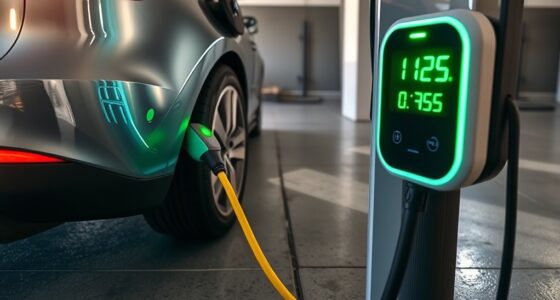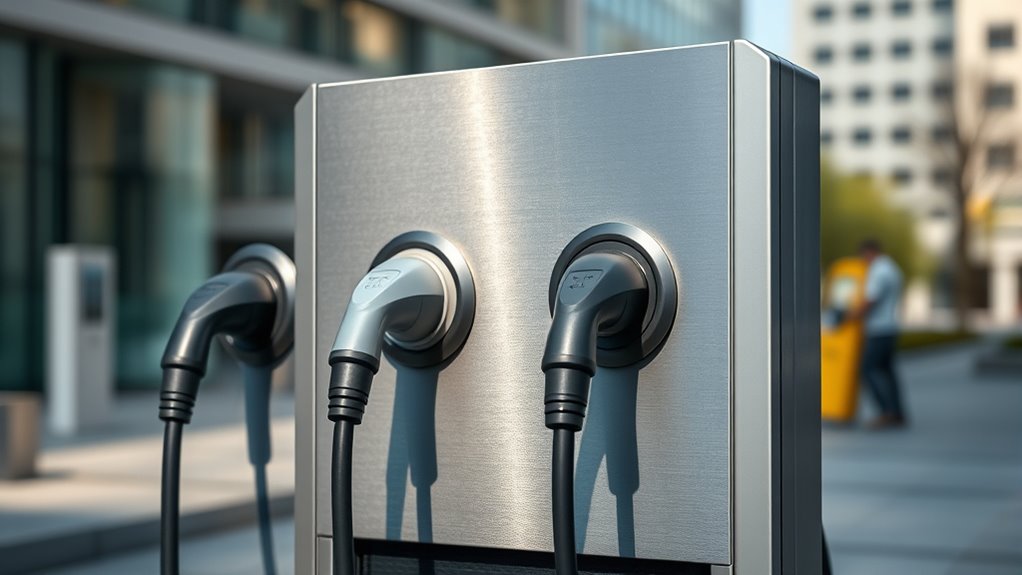

You might notice some charging stations have multiple plugs because they’re designed to serve several devices at once, especially in busy public spaces like airports or cafes. This setup lets you quickly power up your smartphone, tablet, or other gadgets without searching for an outlet. While charging might be a bit slower since power is shared, these stations are meant to make life easier on-the-go. Keep going to discover how they balance convenience and performance.
Key Takeaways
- They enable multiple devices to charge simultaneously in busy public spaces.
- Shared chargers save space and eliminate the need for multiple individual outlets.
- They improve convenience by providing quick access to power without searching for free outlets.
- Power is distributed among devices, allowing several to charge at once, though speeds may vary.
- They support various device types through different plugs and ports, enhancing flexibility.
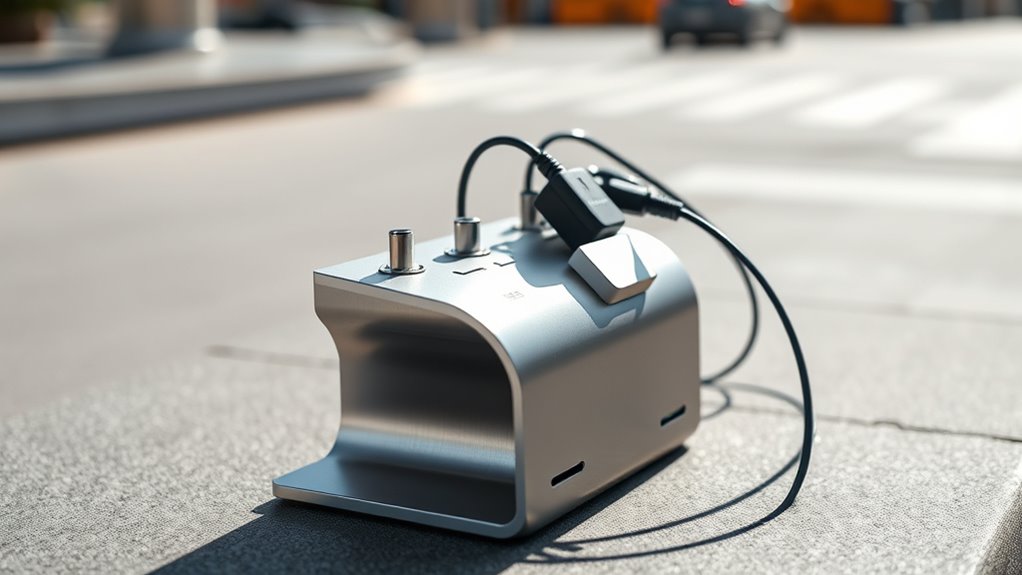
Have you ever wondered how shared chargers work and why they’re gaining popularity? These charging stations, equipped with multiple plugs, are designed to serve more than one device at a time, making them a practical solution in busy areas like airports, cafes, and shopping centers. One of the main reasons people flock to shared chargers is the increased user convenience. Instead of searching for a free outlet or carrying around bulky power banks, you can quickly plug in your device alongside others, saving time and effort. This setup is especially helpful when you’re in a rush or need to charge multiple devices simultaneously.
Shared chargers offer quick, convenient power for multiple devices in busy public spaces.
However, a common concern with shared chargers is the impact on charging speed. When multiple devices are plugged into the same station, the available power gets divided among them. This means that your device might not charge as quickly as it would on a dedicated outlet. Manufacturers address this issue by designing shared chargers that intelligently distribute power, prioritizing devices or providing sufficient output to keep charging speeds acceptable. Still, the overall goal is balancing user convenience with effective charging performance. If you’re using a shared charger, it’s good to keep in mind that your device might take a bit longer to reach full battery compared to a personal charger plugged directly into a wall socket.
Another aspect that enhances user convenience is the adaptability of shared charging stations. Many are compatible with a variety of devices—be it smartphones, tablets, or even some laptops—thanks to different types of plugs and ports. This flexibility means you don’t need to carry multiple chargers or worry about compatibility issues. Plus, shared chargers often have features like USB ports or wireless charging pads, further increasing their utility in public spaces. This versatility makes them an attractive option for travelers, students, or anyone who needs a quick, easy way to power up without fuss.
Despite these benefits, shared chargers do have limitations. The division of power can sometimes result in slower charging times, which might be frustrating if you’re in a hurry. Nevertheless, their ability to serve multiple users simultaneously and offer broad device compatibility makes them a popular choice. They provide a practical solution to the increasing demand for on-the-go charging, especially in crowded environments where every second counts. So, whether you’re grabbing a quick snack or waiting for your flight, shared chargers help keep your devices powered with minimal effort, offering the perfect blend of user convenience and functionality.
Additionally, the design of home theatre projectors often incorporates features that support multiple connection options, enhancing overall usability and user experience.
Frequently Asked Questions
Are Shared Chargers Suitable for All Electric Vehicle Models?
Shared chargers can be suitable for many electric vehicle models, but you should check their charging compatibility and plug standards first. Not all stations support every EV type or plug standard, so make certain your vehicle’s connector matches the station’s plugs. Some shared chargers offer multiple plug options, making them more versatile. Always verify your EV’s charging requirements to avoid compatibility issues and ensure a smooth charging experience.
How Do Shared Chargers Impact Charging Speed?
Shared chargers can slow down charging speed because multiple users share the same power source, which can reduce the amount of energy each vehicle receives. This might mean longer wait times, especially during busy periods. While they promote user convenience by offering more accessible charging options, you should expect some impact on charging speed. Planning ahead or choosing dedicated chargers can help you minimize delays and charge your vehicle more efficiently.
What Safety Features Are Integrated Into Multi-Plug Chargers?
Think of multi-plug chargers as a fortress protecting your vehicle. They include safety protocols like circuit breakers, grounding, and overcurrent protection, acting as vigilant guards. Electrical safeguards such as temperature sensors and automatic shut-off systems guarantee safe charging environments. These features prevent electrical faults, reduce fire risks, and keep you safe during charging, giving you peace of mind that your vehicle and the station are well protected.
Can Multiple Users Charge Simultaneously Without Conflicts?
Yes, you can charge simultaneously without conflicts, thanks to smart power distribution and charging etiquette. Many stations are equipped with systems that allocate power efficiently, preventing overloads and ensuring fair access. Just remember to follow proper charging etiquette—limit your time if others are waiting—and the station’s technology will handle power distribution smoothly, allowing multiple users to charge their devices at once without issues.
What Are the Cost Implications of Shared Versus Private Chargers?
Shared chargers often cost less upfront, making them attractive for public spaces, but their maintenance costs can add up due to higher wear and tear. Private chargers, while pricier initially, usually have lower ongoing maintenance costs and better reliability. You might save money with shared stations if usage is high, but private chargers can be more cost-effective long-term if you prioritize consistent availability and lower upkeep.
Conclusion
Next time you see a charging station with multiple plugs, imagine a busy highway bustling with cars enthusiastic to refuel. Each plug is a lane, ready to swiftly charge different vehicles at once, reducing wait times and easing the flow. These shared chargers act like a well-oiled machine, keeping your journey smooth and uninterrupted. So, the next time you plug in, remember you’re part of a larger system working tirelessly to power the world around you.