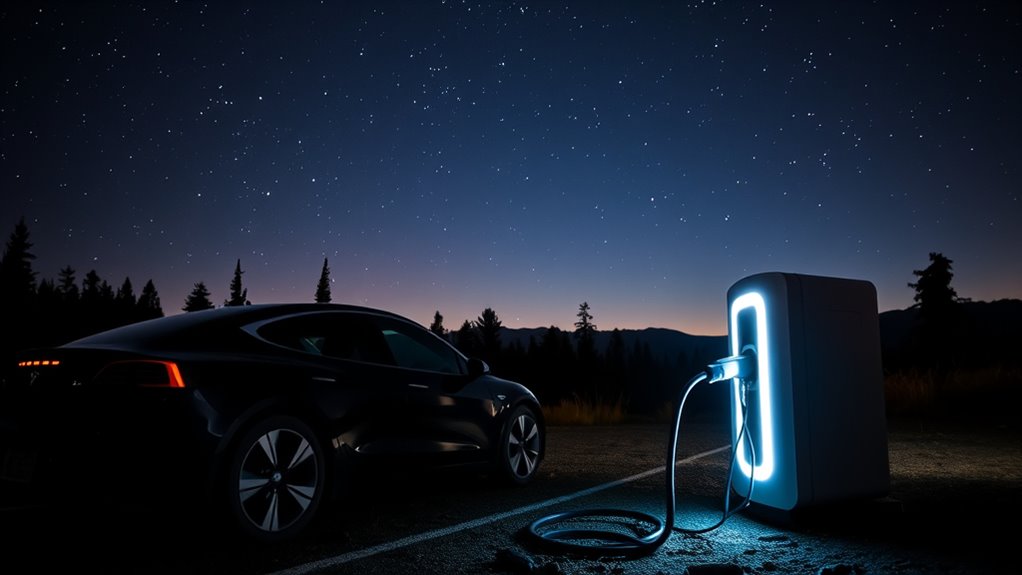

When charging your EV at night or in remote areas, always check that stations are operational, well-lit, and secure before parking. Carry an emergency kit, keep your phone charged, and inform someone of your location and estimated time. Avoid isolated or poorly lit spots, and be alert for any suspicious activity. Prioritize safety over convenience—more tips to help you stay safe during remote or nighttime charging are just steps away.
Key Takeaways
- Verify station is operational, well-lit, and easily accessible before starting your charge.
- Avoid poorly lit or isolated locations; choose safer, more visible areas for charging.
- Carry emergency supplies and ensure your mobile device is charged for safety and communication.
- Secure your vehicle and charging connections; leave if you notice suspicious activity or hazards.
- Inform trusted contacts of your location and estimated charging time for added safety.

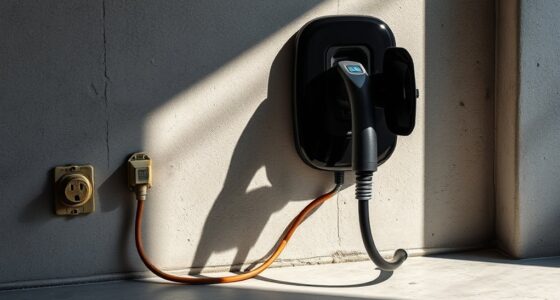
Charging your electric vehicle (EV) in remote areas or at night can be convenient, but it also requires extra caution to guarantee safety. One of the key considerations is understanding charging station accessibility. When planning your trip, always verify that the charging stations you intend to use are operational, well-lit, and easily accessible. Many remote chargers may lack proper signage or may be tucked away in less visible spots, increasing the risk of accidents or vandalism. Before heading out, map out your charging points and ensure they are compatible with your vehicle’s charging port. It’s also wise to have backup options in case your initial choice is out of service. Being aware of the station’s location and its surroundings helps you avoid unnecessary detours or dangerous situations during late hours.
Emergency preparedness is equally essential when charging in secluded areas. Carry a basic emergency kit that includes items like a flashlight, first aid supplies, and a portable phone charger. In remote settings, cell reception can be spotty, so having a backup power source or satellite communication device can be a lifesaver. When you arrive at a charging station, make sure the area is safe to park and that your vehicle’s charging port and cable connections are secure. Avoid charging in poorly lit or isolated spots where you might be vulnerable. If you notice any damages, suspicious activity, or if the station appears abandoned, don’t attempt to charge there. Instead, seek a better-lit, more populated location to ensure your safety.
While waiting for your EV to charge, stay alert and avoid distractions. Keep your phone charged and close at hand, and inform someone you trust about your location and estimated charging time. This is especially important in remote areas where help may take longer to arrive. Additionally, never leave your vehicle unattended for extended periods in unfamiliar or unsafe environments. Being proactive about safety can prevent accidents and ensure that you’re prepared for any emergencies that might arise. Remember, your safety should always come first. By understanding charging station accessibility and staying prepared for emergencies, you’re taking responsible steps to make your nighttime or remote-area charging experience secure, smooth, and stress-free. Understanding charging station accessibility is key to avoiding potential hazards and ensuring a safe charging process.
Frequently Asked Questions
Can I Leave My EV Charging Unattended Overnight Safely?
You can leave your EV charging unattended overnight if you guarantee the charging station is well-maintained and meets proper EV charger ratings. Regularly check for any signs of wear or damage, and use a reputable charging station with safety features like circuit protection. While many chargers are designed for unattended use, it’s best to confirm the manufacturer’s guidelines and perform routine maintenance to prevent potential issues, ensuring safe overnight charging.
What Should I Do if I Notice a Charging Station Malfunction?
Notice a charging station malfunction? Don’t ignore it—your safety depends on prompt action. First, stop charging immediately to prevent further issues. Report the problem to the station’s maintenance team and follow any emergency response procedures listed nearby. While the station’s maintenance is being addressed, consider alternative charging options. Always prioritize your safety by staying alert and ensuring the station’s functionality before proceeding with your charge.
Are There Specific Safety Precautions for Charging in Extremely Cold Weather?
In cold weather, you should prioritize charging safety by ensuring your EV and charging equipment are rated for low temperatures. Keep connectors dry and free of snow or ice, and avoid charging in extreme cold without proper insulation or protection. Use a dedicated, grounded outlet and monitor your vehicle during charging. These precautions help prevent electrical issues, ensuring safe and efficient charging in cold conditions.
How Can I Ensure My EV Charger Is Properly Grounded?
To guarantee your EV charger is properly grounded, you should follow proper grounding techniques outlined by your local electrical safety standards. Verify that the charger’s grounding wire is securely connected to a grounded outlet or grounding rod. Regularly inspect for any signs of wear or damage to the grounding components. If unsure, consult a licensed electrician to perform safety checks, ensuring your setup meets all electrical safety requirements and minimizes risk during charging.
What Steps Should I Take if My Charging Cable Gets Damaged?
If your charging cable gets damaged, stop using it immediately. First, inspect the cable thoroughly for any visible damage like cuts, frays, or exposed wires. If you find damage, don’t attempt a repair yourself—use your emergency repair kit to safely temporarily secure or mark the cable. Replace the damaged cable promptly with a new, certified one to ensure safe and reliable charging. Always prioritize safety and professional repairs.
Conclusion
Remember, charging your EV in the dark or remote spots isn’t without risks. Stay vigilant—check your connections, use quality equipment, and never leave a charging session unattended. What surprises might await if you overlook these safety tips? The road ahead is full of adventures, but safety always comes first. Stay cautious, stay prepared, and keep your journey smooth—because the next charging moment could be the most vital yet. Will you be ready?