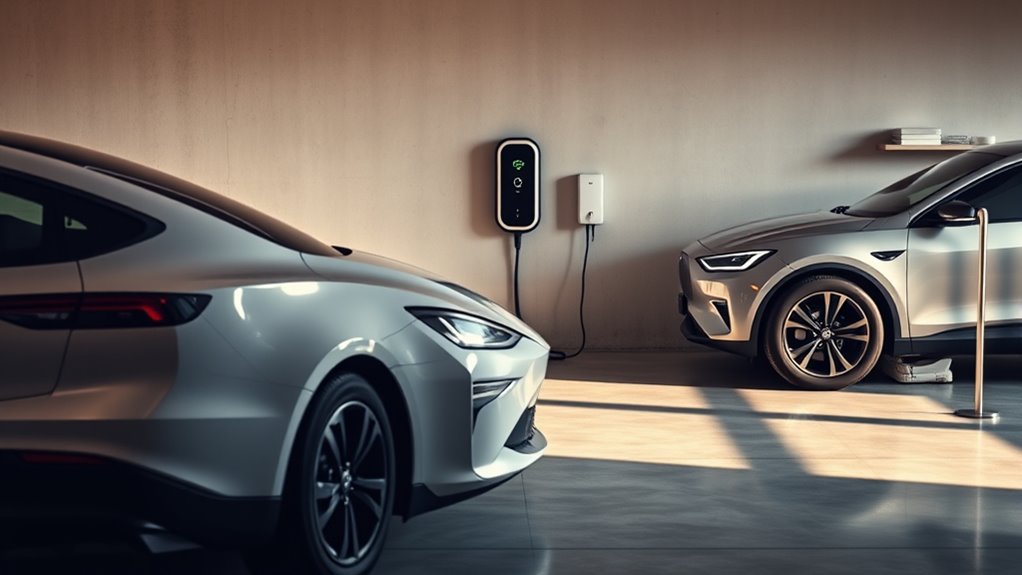

To charge two EVs at home with one charger, start by evaluating your electrical capacity to make certain your wiring and panel can handle the load. Choose a compatible, smart charger with features like scheduling and load management. Implement charging schedules during off-peak hours to save energy and prevent overloads. Consider installing load management systems for real-time monitoring and balance. Keep safety in mind with regular inspections—continue exploring these tips to maximize efficiency and safety for your multi-EV setup.
Key Takeaways
- Install a dedicated, high-capacity circuit with a compatible charger designed for multi-vehicle use.
- Utilize smart charging schedules to stagger charging times during off-peak hours.
- Implement load management systems to monitor and balance energy demand between both EVs.
- Upgrade wiring and electrical components to support increased load safely and efficiently.
- Use home automation and energy management tools for real-time control and optimized charging.
Assessing Your Home’s Electrical Capacity and Setup
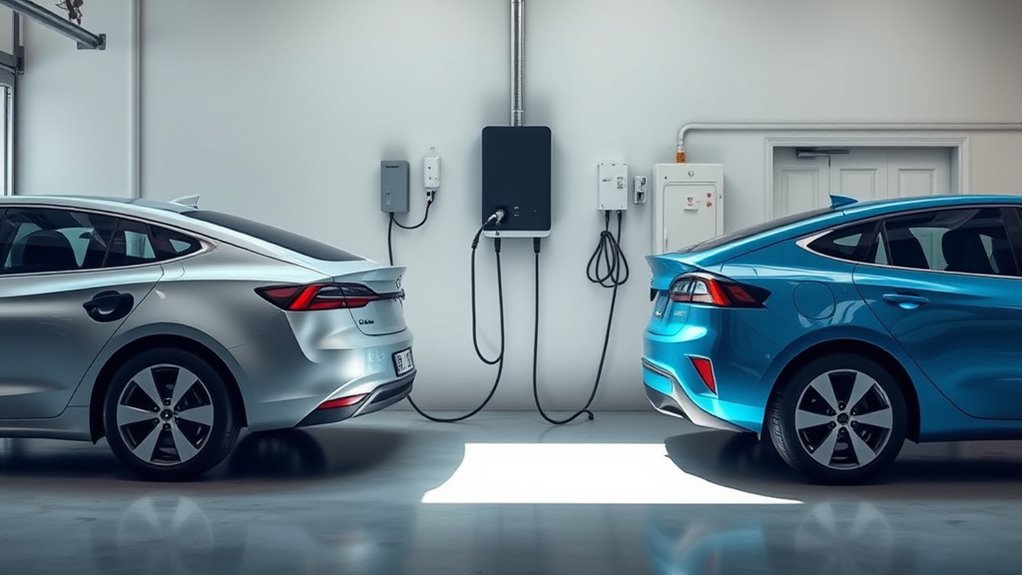
Before installing a dual EV charger, you need to evaluate your home’s electrical capacity to make certain it can handle the added load. Start by checking your current power outlet and ensure it provides enough amperage for a dual charger setup. You’ll also want to inspect your electrical wiring to confirm it’s in good condition and rated for higher loads. If your wiring is outdated or underpowered, upgrading may be necessary to safely support the additional electrical demands. Consulting your electrical panel will help determine if your system can accommodate the increased load without tripping or overheating. Proper assessment prevents future issues and guarantees your home’s infrastructure can safely support charging two EVs simultaneously. Additionally, considering energy-efficient electrical solutions can provide insights into modern, energy-efficient electrical solutions that align with sustainable practices. To ensure safety and compliance, it’s advisable to have a licensed electrician perform a thorough electrical capacity assessment, which can also identify opportunities for integrating smart charging technology to optimize energy use.
Choosing the Right Charger for Multiple Vehicles

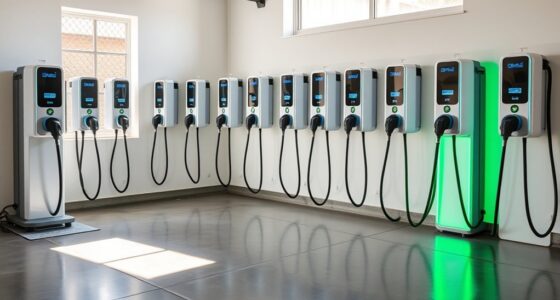
Selecting the right charger for multiple vehicles requires considering both your home’s electrical capacity and your charging needs. Guarantee the charger compatibility with your EVs and your existing electrical system. You might need wiring upgrades to support higher power loads or dedicated circuits for efficient charging. When choosing, think about:
Choose the right charger with sufficient power and compatibility for efficient multi-vehicle EV charging.
- Charger’s power output and compatibility with your EV models
- Flexibility for future vehicle additions
- Ability to handle simultaneous charging sessions
- Ease of installation, including wiring upgrades if necessary
- Smart features for energy management and scheduling
- Considering charging station technology can help optimize your setup for current and future EVs.
Implementing Smart Charging Schedules
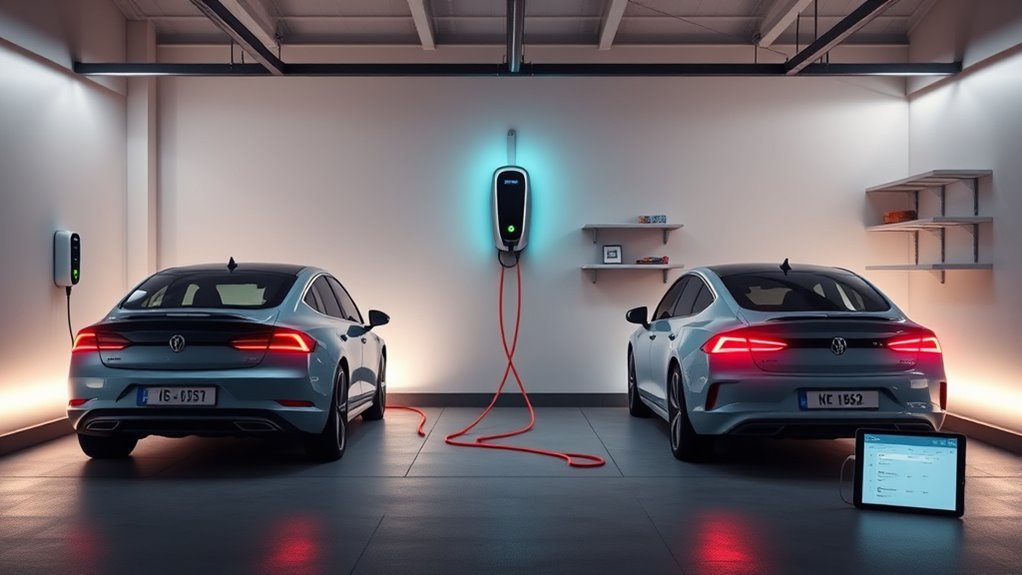
Implementing smart charging schedules enables you to optimize your home charging setup by managing when and how your EVs draw power. You can synchronize charging times with off-peak hours to save money and reduce strain on your electrical system. Proper charging station placement ensures convenient access for all users while minimizing energy consumption during peak times. Using user access control features allows you to restrict or authorize charging sessions, preventing unnecessary use and balancing demand. By setting specific schedules, you avoid simultaneous charging conflicts and ensure both vehicles are ready when needed. This proactive approach maximizes efficiency, extends charger lifespan, and keeps your energy costs manageable. Additionally, energy management tools can help monitor and adjust your charging habits in real-time, further enhancing your system’s efficiency. Incorporating load balancing techniques can also help distribute power more evenly across your household, preventing overloads and optimizing energy use. Smart scheduling turns your single charger into a versatile, user‑friendly solution tailored to your family’s daily routine. Moreover, integrating smart home automation can facilitate seamless control and adjustments based on your household’s changing needs.
Utilizing Load Management Systems and Technologies

Utilizing load management systems and technologies allows you to efficiently distribute power between multiple EVs and household appliances, preventing overloads and reducing energy costs. These systems enable dynamic load balancing, adjusting charging rates based on current demand and household usage. They also facilitate seamless grid integration, allowing your home to work harmoniously with the energy grid, especially during peak times.
Consider these key features:
- Real-time monitoring of energy consumption
- Automated load adjustments based on demand
- Compatibility with smart home systems
- Support for grid integration to optimize energy use
- Alerts for overload risks to prevent damage
Tips for Safe and Efficient Multi-EV Charging at Home
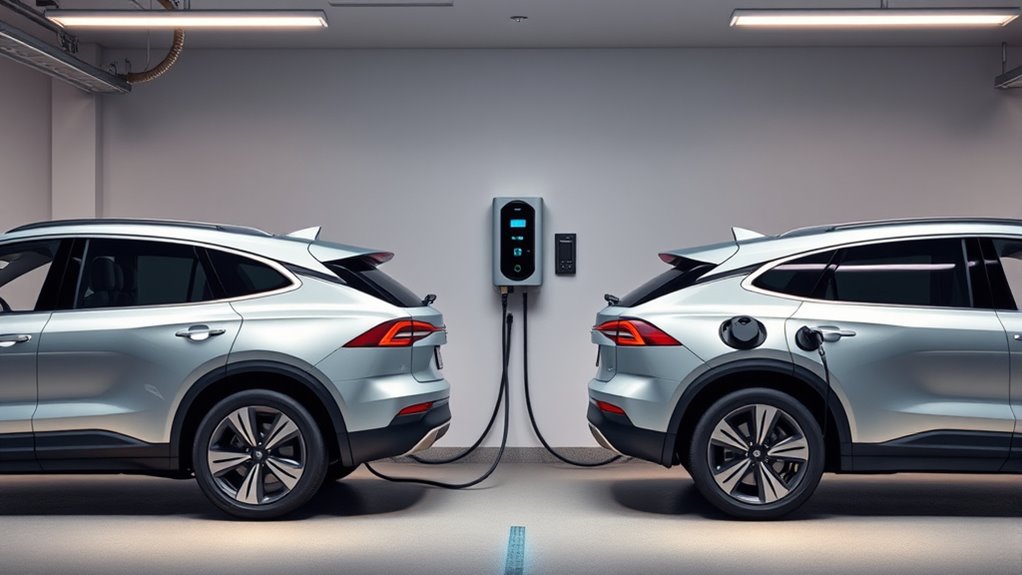
Effectively managing multiple EVs charging at home requires careful attention to safety and efficiency. Start by evaluating each vehicle’s battery capacity to determine ideal charging times and avoid overloading circuits. Confirm your wiring requirements meet local safety standards, especially when adding outlets or upgrading your electrical system. Use load management systems to distribute power evenly, preventing voltage drops and overheating. Regularly inspect wiring connections for signs of wear or damage. Keep charging areas clear of obstructions, and avoid simultaneous high-power charging if your system isn’t designed for it. Additionally, implementing smart energy management solutions can optimize energy use and further enhance safety during multi-EV charging. To ensure reliable operation, verify that your system’s safety features are up to date and functioning correctly.
Frequently Asked Questions
Can I Upgrade My Home’s Electrical System for Better EV Charging?
Yes, you can upgrade your home’s electrical system to improve EV charging. Consider integrating solar power to supplement energy needs and reduce costs. Load management systems help balance your electrical load, preventing overloads while charging multiple EVs efficiently. An upgrade might include a higher-capacity panel or dedicated circuits for EVs. Consulting an electrician ensures your system accommodates future needs, making charging more reliable and eco-friendly.
What Are the Cost Implications of Installing a Multi-Vehicle Charging Setup?
Did you know that installing a multi-vehicle charging setup can cost between $1,000 and $3,000? You’ll want to take into account the cost analysis and installation expenses carefully. While the initial investment might seem high, it can save you money long-term by reducing the need for multiple chargers. Keep in mind, upgrading your electrical system may also add to the overall costs, but it ensures safe and efficient charging for your EVs.
How Do I Ensure My EV Charger Is Compatible With Different Vehicle Models?
To guarantee your EV charger is compatible with different vehicle models, check the charger’s compatibility with various vehicle charging standards like SAE J1772 or CCS. Verify that it supports the charging ports of each vehicle you own. Read the manufacturer’s specifications carefully, and consider a versatile charger that adapts to multiple vehicle charging standards. Doing this guarantees safe, efficient charging across all your EVs.
Are There Any Government Incentives for Multi-Ev Home Charging Systems?
Yes, there are government incentives for multi-EV home charging systems. You might qualify for government grants or tax credits that help offset installation costs. Check your local and federal programs, as they often provide financial support for upgrading your home to accommodate multiple EVs. These incentives aim to encourage eco-friendly transportation and make home charging more affordable, making it easier for your family to adopt electric vehicles.
What Maintenance Is Required for a Home Multi-Ev Charging Station?
Your home multi-EV charging station needs minimal maintenance to stay in top shape. Regularly inspect cables for wear and tear, and guarantee charger calibration is accurate to prevent charging issues. Keep the area clean and dry, and check connections periodically. By doing these simple steps, you prevent costly repairs and keep your system running smoothly, ensuring your EVs always charge efficiently and reliably—like a well-oiled machine.
Conclusion
So, here you are, juggling two EVs with a single charger—who knew home charging could be so complex? It’s almost ironic how a setup meant to simplify your life requires all this planning. But with the right assessment, smart scheduling, and load management, you’ll be cruising smoothly. After all, the real challenge isn’t charging your cars; it’s mastering the art of doing it efficiently without blowing a fuse. Happy charging!