
To charge your EV at a campground using RV plugs, first check the available electrical outlets. You’ll need the right adapter to connect your vehicle’s charging port to the campground’s outlet type, such as a standard 30-amp or 50-amp receptacle. make certain your charging cable is compatible and follow safety procedures when making the connection. Using these tips, you can easily top off your battery; discover more ways to optimize your outdoor charging setup below.
Key Takeaways
- Verify the campground’s electrical outlet types and compatibility with your EV’s charging port.
- Use appropriate adapters to connect your EV charging cable to campground outlets safely.
- Ensure proper safety procedures during connection, including turning off power before plugging in.
- Consider solar power options if available, to supplement electrical hookups and extend charging capabilities.
- Research campground amenities and outlet availability beforehand to plan for efficient EV charging during your stay.
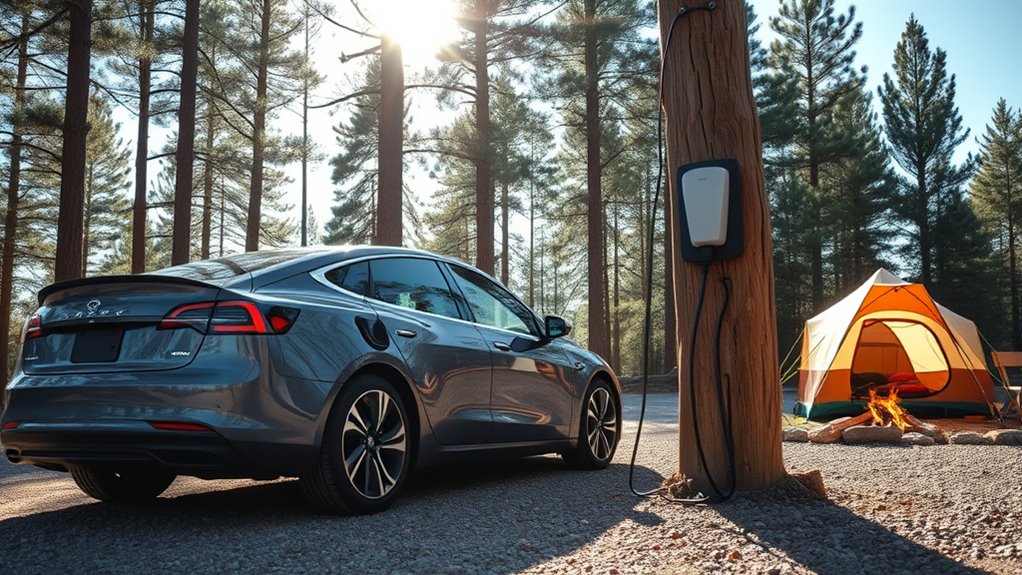
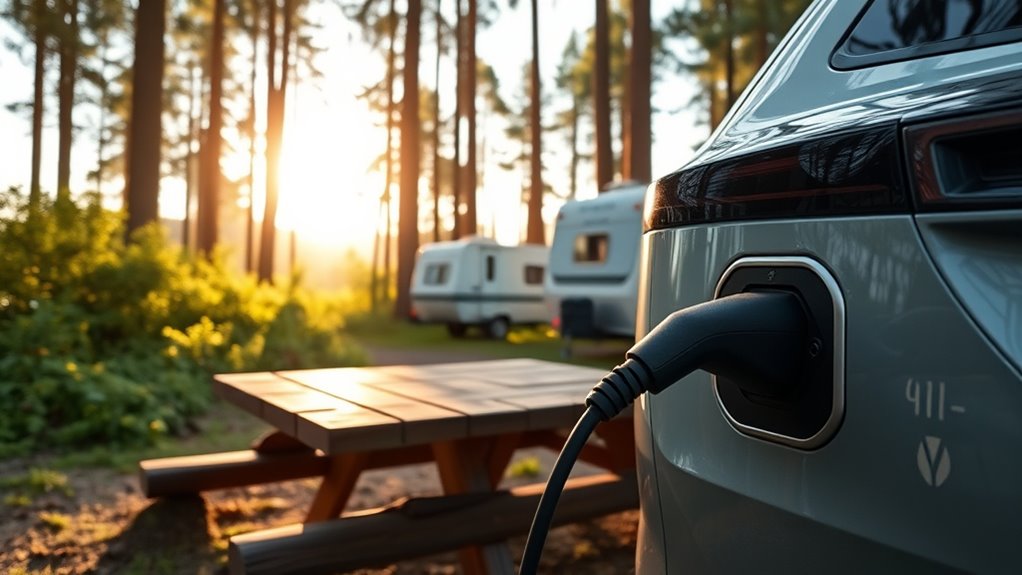
Have you ever wondered how to keep your electric vehicle charged while enjoying the great outdoors? When you’re out at a campground, you want to make sure your EV stays ready to go, and that often means tapping into the right power sources. Luckily, many campgrounds now offer various options, including solar power and charging station availability, to help you stay charged without hassle. Understanding how to use RV plugs for charging can make a big difference, especially when you’re looking to rely on renewable energy sources like solar power. renewable energy sources such as solar power are increasingly being integrated into campground infrastructure to promote eco-friendly travel. Solar power is a fantastic, eco-friendly way to recharge your EV, particularly if your camper has solar panels or if the campground provides solar charging stations. Many campgrounds are beginning to incorporate solar arrays, which can supplement your vehicle’s battery and reduce your dependence on traditional electrical hookups. To tap into solar power, check if the site has dedicated solar charging stations or if you can connect your vehicle directly to a solar-powered outlet. These outlets are often compatible with standard RV plugs, so you won’t need special adapters. Keep in mind that solar power is weather-dependent, so it’s best suited for sunny days or when the campground has sufficient sun exposure. Charging station availability is another essential factor. Some campgrounds are equipped with dedicated electric vehicle charging stations, which often feature standard RV outlets like the 30-amp or 50-amp connections. These are usually designed for RVs but can be used for charging EVs with the appropriate adapters. Before you go, it’s wise to research the campground’s amenities to see if they have these stations and whether they’re accessible for quick top-ups or full charges. If your campground only offers basic electrical hookups, you can still use RV plugs to charge your EV, provided you have the right equipment. Many RV parks have outlets compatible with Level 1 or Level 2 chargers, so bringing the proper adapter and extension cords can make the process seamless. Using RV plugs for charging your EV at a campground involves connecting your vehicle’s charging port to the available electrical outlet via an appropriate cable or adapter. Ensure that your vehicle’s charging system is compatible with the outlet type, and always follow safety procedures. With the right setup, you can enjoy the outdoors without worrying about your EV’s battery life. Whether you’re relying on solar power, campground charging stations, or basic electrical hookups, understanding how to make the most of these options guarantees you stay mobile and eco-conscious during your adventures.
Frequently Asked Questions
Can I Charge My EV Overnight at Campgrounds?
Yes, you can charge your EV overnight at campgrounds, provided they offer suitable campground amenities like RV plugs or charging stations. Check in advance for charging station availability, as not all campgrounds have them. Many campgrounds with RV hookups or 50-amp outlets make overnight charging easy. Make sure to bring the right adapters and cables, and confirm with the campground staff if you’re unsure about the charging options.
Are RV Plugs Compatible With All EV Chargers?
RV plugs aren’t compatible with all EV chargers because their compatibility depends on the charger types and RV compatibility. Some EV chargers use level 2 or level 1 outlets, while RV plugs often supply different voltage and current specifications. To guarantee smooth charging, check your EV’s plug type and your campground’s RV outlet specifications. You might need an adapter or specific charger to connect safely and efficiently.
What Safety Precautions Should I Take When Charging?
When charging, you should prioritize grounding safety by ensuring all connections are secure and properly grounded to prevent shocks. Keep an emergency preparedness kit nearby and know how to disconnect power quickly if needed. Always inspect your RV plug and outlet for damage before plugging in. Avoid using damaged equipment, and stay alert to any unusual smells or sparks. Following these precautions keeps you safe during the charging process.
How Long Does a Typical RV Plug Charge Take?
Charging your EV at a campground is like fueling a journey—patience is key. Typically, using an RV plug with lower power output can take anywhere from 8 to 24 hours to fully charge, depending on your vehicle’s battery size and the power supply. Charging speed varies, so expect a slower fill compared to fast chargers. It’s a gentle reminder that good things, like a full battery, often take time to develop.
Do I Need Special Adapters for Different RV Plug Types?
Yes, you’ll need special adapters for different RV plug types to guarantee compatibility with your EV charger. RV plug compatibility varies, so check your vehicle’s charging port and the campground’s outlets. Adapter requirements depend on your specific plug types; for example, converting a 30-amp to a 50-amp outlet. Always carry the right adapters to avoid compatibility issues and safely charge your EV using campground RV hookups.
Conclusion
Charging your EV at campgrounds using RV plugs is a practical way to keep your vehicle powered during trips. Did you know that over 60% of RV owners now consider charging options a top priority? By understanding how to safely use RV plugs, you can enjoy outdoor adventures without worrying about running out of juice. So, next time you hit the road, rest assured you’ve got a reliable, eco-friendly way to recharge your EV amidst nature’s beauty.