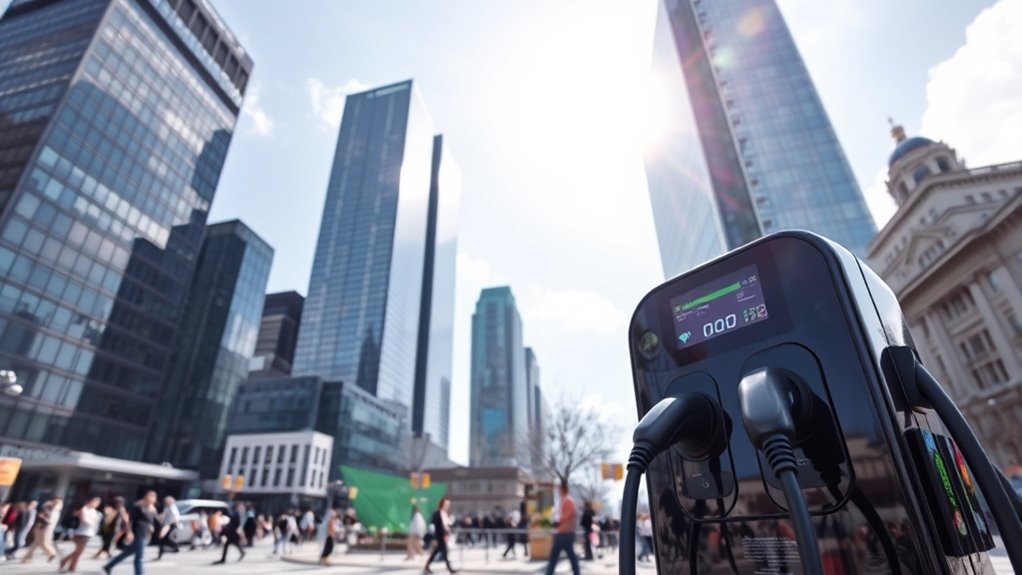

Public chargers can be expensive because they require regular maintenance to stay reliable and safe, which adds to costs. They also face higher electricity tariffs, especially during peak times or in some locations, driving prices up. Infrastructure costs for installation and ongoing updates further increase expenses that get passed onto users. If you want to discover the full reasons behind these costs and how they impact your charging experience, keep exploring the details.
Key Takeaways
- Maintenance costs for public chargers, including repairs and updates, are factored into their higher prices.
- Elevated electricity tariffs, especially during peak times and in urban areas, increase charging costs.
- Infrastructure investments for installation, connectivity, and user experience add to the overall price.
- Renewable energy sources often incur higher production costs, raising the price of electricity at stations.
- Location-specific factors, such as urban density and higher operational expenses, contribute to more expensive charging.

Have you ever wondered why charging your electric vehicle at a public station costs so much? It’s a question many EV owners ask, especially as the prices seem to fluctuate or remain high despite advancements in technology. One major reason behind the high costs is the complex nature of charger maintenance. Public chargers aren’t just simple power outlets; they’re sophisticated machines that require regular upkeep to ensure safety, efficiency, and reliability. This maintenance involves routine inspections, software updates, repairing worn-out parts, and sometimes replacing entire components. These costs add up quickly and are reflected in the price you pay to charge. If a station isn’t properly maintained, it could lead to longer wait times or even damage to your vehicle’s battery, which nobody wants. As a result, operators invest heavily in keeping chargers in top shape, and those expenses naturally get passed on to consumers. Proper charger maintenance is essential for preventing costly repairs and ensuring consistent service.
Public chargers require regular maintenance and updates, which contribute to higher charging costs for EV owners.
Another key factor influencing the cost is electricity tariffs. Electricity isn’t priced the same everywhere; tariffs vary based on location, time of day, and the source of energy. Public charging stations often pay higher rates than residential customers because they purchase power in bulk or during peak demand periods. Utilities may charge premium tariffs during certain hours to manage grid load or to recover infrastructure investments. When these higher tariffs are incorporated into the cost of charging, you end up paying more at the pump. Additionally, some public chargers rely on renewable energy sources, which tend to have higher production costs, further increasing electricity prices. The station’s location also plays a role—urban areas with higher living costs often have elevated electricity tariffs, which are passed on to consumers using the charging stations.
Furthermore, the infrastructure costs associated with establishing and operating public chargers contribute to the price. Installing high-capacity chargers, ensuring reliable internet connectivity for payment systems, and creating a user-friendly experience all require significant investments. These costs are embedded in the charging price to recover the initial capital outlay and ongoing operational expenses. Many stations also offer convenience services, such as 24/7 access or fast charging capabilities, which come with additional costs. All these elements—charger maintenance, electricity tariffs, infrastructure investments—combine to make public charging more expensive than charging at home, where you typically pay a lower, residential rate and avoid many of these overheads.
In essence, the high cost of public chargers isn’t arbitrary. It’s a reflection of the real expenses involved in keeping these stations operational, reliable, and accessible. When you see those higher prices, remember they’re partly covering the ongoing costs of charger maintenance and the fluctuating electricity tariffs that power these stations.
Private EV Charger Sign for Home – Not Public Charging,Black Metal EV Charging Parking Sign
PROTECT YOUR PRIVATE EV CHARGER Designed to clearly indicate that your EV charger is private and not intended…
As an affiliate, we earn on qualifying purchases.
As an affiliate, we earn on qualifying purchases.
Frequently Asked Questions
Are Public Charging Fees Consistent Across Different Locations?
Public charging fees vary depending on location-based pricing and charging fee variability. You’ll notice that costs aren’t consistent across different stations or regions, as prices depend on local factors like electricity rates and station operators. When you charge your EV, expect to encounter different fees based on where you are. Always check the station’s pricing details beforehand to avoid surprises, especially in high-demand or premium locations.
Do Charging Station Brands Affect the Price?
Yes, charger brand definitely affects the price. Different brands have unique pricing strategies based on their technology, reliability, and network access. Some brands might charge more because they offer faster charging speeds or better customer service. When you choose a charger brand, you’re also paying for their reputation and network quality, which can make some stations more expensive than others, even if they’re in the same location.
How Do Electricity Rates Impact Charging Costs?
Your charging costs are directly impacted by electricity rates, which can fluctuate by up to 20% monthly due to rate fluctuations and electricity tariffs. These changes influence how much you pay per kilowatt-hour, making charging more expensive during peak times. Understanding electricity tariffs helps you plan your charging schedule better, potentially saving you money by avoiding high-cost periods and taking advantage of lower rates when they happen.
Are There Hidden Fees When Using Public Chargers?
Yes, some public chargers do have hidden charges that you might not notice upfront. You should always check for fee transparency before plugging in, as extra costs like connection fees or parking charges can add up. To avoid surprises, read the station’s pricing details and ask staff if anything isn’t clear. Being aware of hidden charges helps you better understand the true cost of charging and prevents unexpected expenses.
Can Membership Programs Reduce Charging Expenses?
Yes, membership programs can reduce your charging expenses. Many public charging networks offer membership discounts and loyalty programs that lower per-session costs or provide free charging after a certain number of uses. By signing up, you can save money over time, especially if you frequently charge at public stations. These programs often reward your loyalty, making charging more affordable and helping you avoid higher pay-as-you-go fees.

AIMILER Level 2 Electric Vehicle (EV) Charger(WIFI APP/Plug-play), 32A, 25ft Cable ETL Certified, 220V-240V NEMA 14-50P Plug EVSE w/ J1772 Connector, Portable EV Car Charging Stations for Home Level 2
❤ [Equipped with Nema 14-50 plug 240V, Compatible with 110-120V Nema 5-15p to 14-50r EV Adapter(Not packaged) or…
As an affiliate, we earn on qualifying purchases.
As an affiliate, we earn on qualifying purchases.
Conclusion
Ultimately, public chargers are like gatekeepers to a brighter future, demanding a toll for access. Their high prices symbolize the hurdles of infrastructure and investment needed to power change. While it might feel costly now, each charge is a small step toward a cleaner world. Remember, every symbol of expense is a signpost on the road to progress, reminding us that building a sustainable future requires effort—and sometimes, a little investment.

Commercial EV Charging Station – OCPP-Compliant, Revenue-Generating Charger with Driver Pay App – Powered by EV Range Software
Earn Revenue with Every Charge: Set custom pricing and idle fees. Monthly payouts and usage reports included.
As an affiliate, we earn on qualifying purchases.
As an affiliate, we earn on qualifying purchases.
EV Charger Holder Wall Mount – J1772 Cable Organizer & Nozzle Holster with Storage Box for Electric Vehicle Charging
Fit J1772 Connector: Designed to securely hold standard J1772 charging connectors, keeping them stable, properly positioned, and protected…
As an affiliate, we earn on qualifying purchases.
As an affiliate, we earn on qualifying purchases.