
Portable EV chargers provide on-the-go power, making them handy during emergencies or when fixed stations aren’t nearby. They let you recharge your vehicle from standard outlets or other power sources, giving you flexibility and peace of mind. Whether you need extra convenience or want emergency backup, they can be a smart addition, especially for long trips or remote areas. Keep going to find out if a portable charger fits your needs and how to choose the right one.
Key Takeaways
- Portable EV chargers provide on-the-go charging, essential during power outages or remote travel where fixed stations are unavailable.
- They enhance emergency preparedness by enabling quick recharging, preventing vehicle immobilization in unexpected situations.
- Different levels (Level 1 and Level 2) offer varying speeds; choose based on your vehicle’s needs and urgency.
- Compatibility, safety features, and power supply requirements are critical factors in selecting an effective portable charger.
- They are a practical investment for frequent travelers, RV owners, or areas with limited charging infrastructure.
What Are Portable EV Chargers and How Do They Work
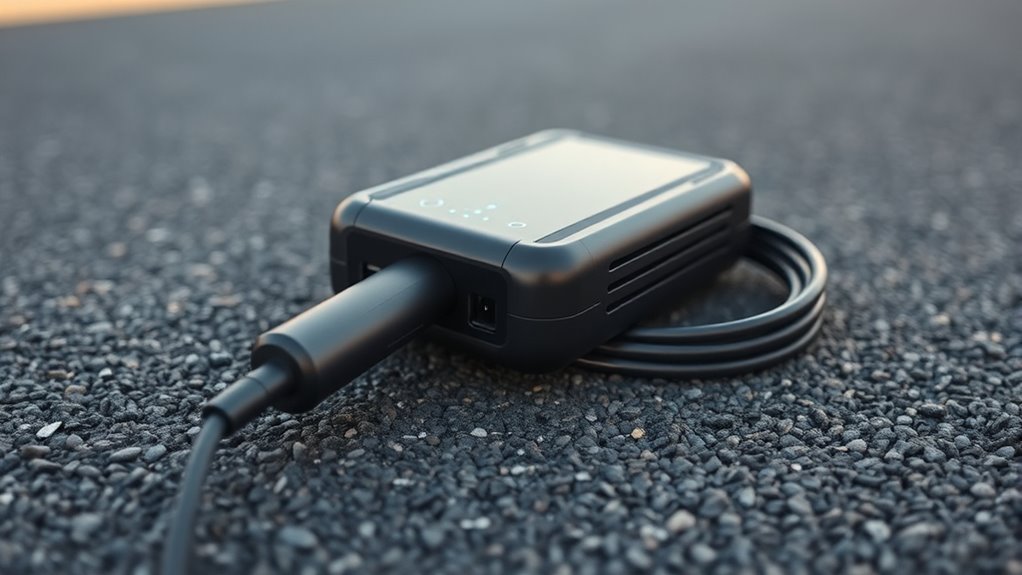
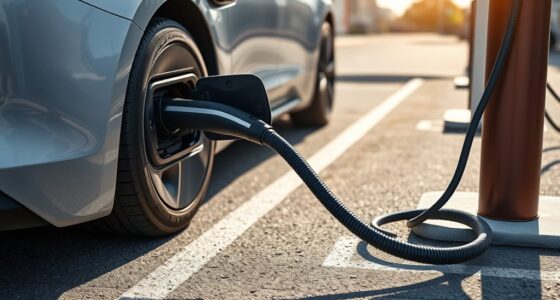
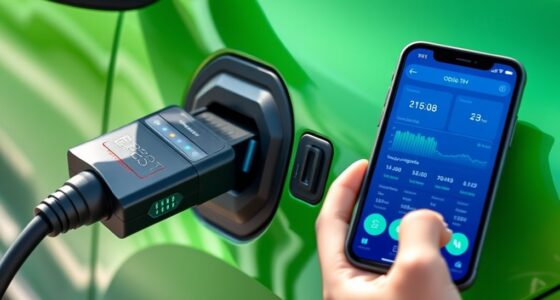
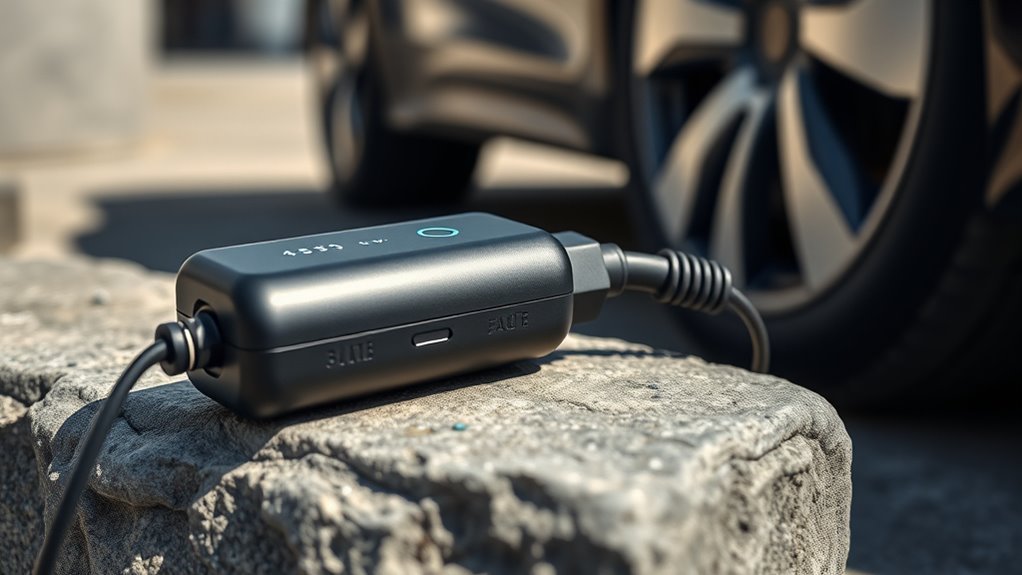
Portable EV chargers are compact devices that allow you to charge your electric vehicle almost anywhere, offering convenience and flexibility. They work by connecting to various power sources, including standard outlets, charging stations, or even solar power setups. Some portable chargers are designed to harness solar energy, making them eco-friendly options for on-the-go charging. When plugged into a power source, these chargers convert electricity into usable power for your EV’s battery. They often include safety features like surge protection and adjustable voltage settings. With a portable EV charger, you can top off your vehicle’s battery during road trips, camping trips, or emergencies, especially when traditional charging stations are unavailable. This versatility makes them an essential accessory for EV owners seeking independence and sustainability. Smart home technology can also enhance the safety and monitoring of your EV charging setup at home. Additionally, energy-efficient design ensures minimal power loss and optimal performance during use. Incorporating modern charging standards can further improve compatibility and efficiency for various EV models. Understanding the role of portable chargers in emergency situations can help you be better prepared for unexpected events when away from regular charging infrastructure. Moreover, choosing a charger with reliable construction ensures durability and safety during frequent use.
Types of Portable EV Chargers Available in the Market
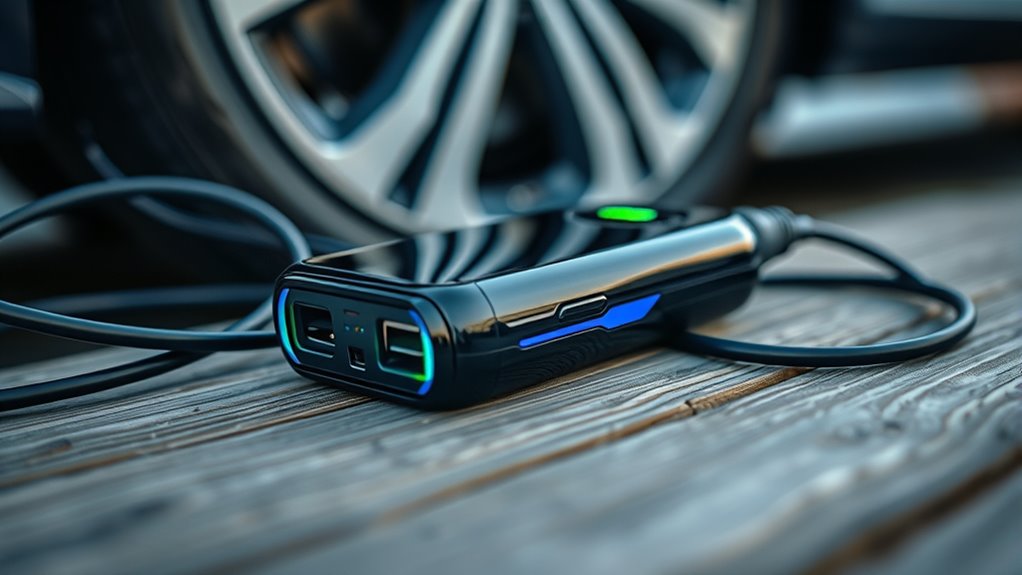
When choosing a portable EV charger, you’ll encounter different types based on their power levels. Level 1 chargers are simple and easy to use, while Level 2 chargers offer faster charging options. Understanding these options helps you pick the right charger for your needs. Additionally, considering your charging requirements can help determine whether a basic or more advanced portable charger is best suited for your lifestyle. For example, knowledge of power tool safety can be useful if you want to maintain a healthy lifestyle while on the go, ensuring your energy needs are met during long trips. Being aware of safe charging practices is crucial to prevent accidents or damage during emergency situations, especially when relying on portable chargers. Familiarity with Free Floating concepts can also assist in planning your outdoor charging setup efficiently, especially in backyard or natural pool environments, ensuring your charging station integrates well with your surroundings.
Level 1 Chargers
Level 1 chargers are among the simplest and most affordable portable EV charging options available. They typically plug into standard household outlets, making them accessible for emergency charging. While the charging speed is slower compared to other types, they’re ideal for topping off your vehicle’s battery capacity during short stops or overnight. Because of their simplicity, they’re lightweight and easy to carry, perfect for emergencies or routine use. Keep in mind, the charging speed depends on your vehicle’s onboard charger and the power supply, which can limit how quickly your battery charges. Charging speed limitations are an important consideration when choosing a portable EV charger for emergencies. Additionally, the availability of certified charging accessories can ensure safety and compatibility during use. For reliable performance, selecting certified accessories ensures your charger meets safety standards and works seamlessly with your vehicle. Also, understanding the power supply requirements can help you determine the best portable charger for your needs. Knowing how to assess the home electrical capacity can help prevent overloads and ensure safe operation during emergency charging situations.
Level 2 Chargers
As you explore portable EV charging options, you’ll find that Level 2 chargers offer a significant upgrade over basic Level 1 units. These charging stations deliver faster electrical current, reducing your charging time and making them ideal for emergencies. Unlike Level 1 chargers, which connect to standard outlets, Level 2 units require a dedicated circuit but are often portable enough for emergency use. They are especially useful if your vehicle has a larger battery capacity, as they can replenish more energy quickly. With a Level 2 portable charger, you gain flexibility and efficiency, ensuring you’re better prepared when battery levels run low. Additionally, understanding the Luggage & Bags options can help you carry and store your portable charger safely and conveniently. Proper ventilation considerations are also important when using portable chargers to prevent overheating and ensure safety during operation. Using a portable charging station with built-in safety features can further enhance your confidence in emergency situations. Moreover, selecting a charger with certified safety standards can ensure reliable performance and peace of mind. Incorporating reliable power sources into your planning can help you stay prepared during power outages or other emergencies.
Benefits of Using a Portable EV Charger

A portable EV charger offers you unmatched convenience during power outages, ensuring you can keep your vehicle charged when you need it most. It also gives you the flexibility to charge your car at various locations, not just traditional charging stations. Plus, having one on hand boosts your emergency readiness, providing peace of mind in unexpected situations. Additionally, understanding space‑heating basics can help you optimize your overall energy use in emergencies. Being aware of compact living principles can further aid in managing your energy resources efficiently during such times. Incorporating knowledge of water chemistry can also help maintain your vehicle’s battery health and efficiency during emergency charging scenarios.
Convenience During Outages
When a power outage strikes, having a portable EV charger can be a game-changer for your convenience. It guarantees you can keep your vehicle charged without relying on the grid, especially when emergency power is limited. With a good battery capacity, your charger can deliver enough energy to get you back on the road quickly. Plus, the charging speed of portable chargers means you won’t be stuck waiting long for a boost. This is especially useful during extended outages or when other charging options aren’t available. You can maintain mobility and peace of mind knowing you’re prepared.
- Stay mobile during blackouts
- Quickly recharge your EV in emergencies
- Minimize downtime with fast charging speed
Flexibility in Charging Spots
Portable EV chargers give you the freedom to charge your vehicle wherever you go, breaking free from the limitations of fixed charging stations. This flexibility means you’re not tied to specific locations, allowing you to find convenient spots that suit your schedule. Keep in mind that charging speed can vary depending on the charger’s power output and the vehicle’s compatibility considerations. Some portable chargers deliver faster charging, saving you time, while others are more versatile across different car models. By choosing a portable charger suited to your needs, you can adapt to various environments and avoid being stranded due to lack of charging options. Overall, this mobility enhances your EV experience, providing convenience and peace of mind wherever your journey takes you.
Emergency Readiness Assurance
Having a portable EV charger on hand considerably boosts your emergency readiness by ensuring you’re never stranded with a dead battery. It provides a reliable backup when charging infrastructure is limited or unavailable, giving you peace of mind during unexpected situations. With this device, you can quickly recharge your EV, preventing battery maintenance issues caused by prolonged disuse or deep discharge. Plus, it enhances your ability to adapt to various scenarios, whether you’re off-grid or facing a delayed charging station. Portable chargers also help you avoid the hassle of waiting for roadside assistance or towing. By keeping your vehicle ready to go, you stay confident in your mobility no matter where you are, ensuring you’re always prepared for any unexpected battery drain.
Limitations and Considerations When Choosing a Portable Charger
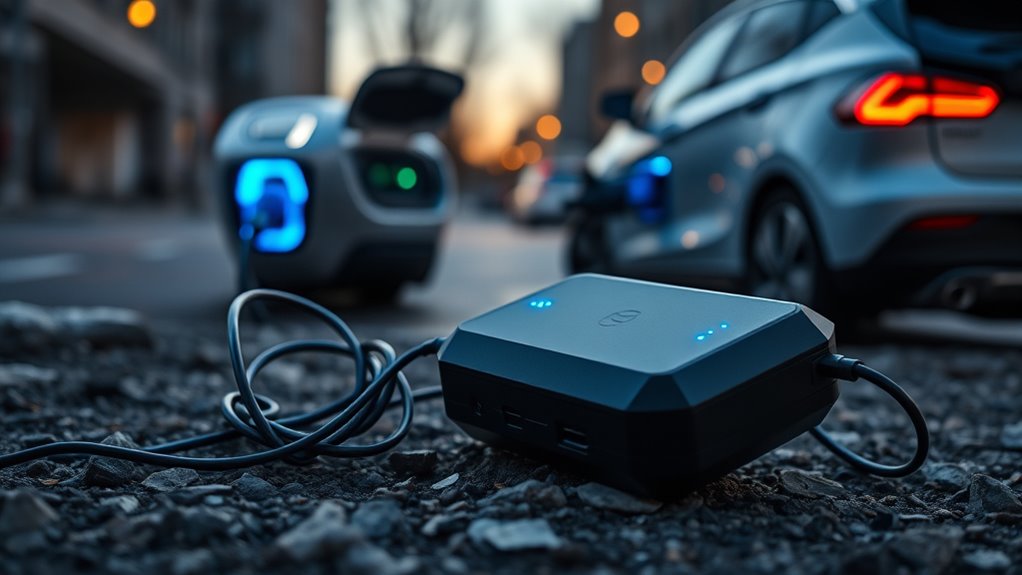
Choosing a portable EV charger involves balancing convenience with practical limitations. One key consideration is cost; higher-quality chargers tend to be more reliable but can come with a higher price tag. You’ll also want to think about device compatibility, ensuring the charger matches your vehicle’s charging port and power requirements. Not all portable chargers work with every EV, so check the specifications carefully before purchasing. Additionally, consider the charger’s power output—faster charging often means a more expensive device. Weight and size are also important, especially if you’ll carry it frequently. Remember, a portable charger isn’t a substitute for regular charging infrastructure, so weigh these factors to avoid surprises when you need it most.
Scenarios Where a Portable EV Charger Can Be Particularly Useful
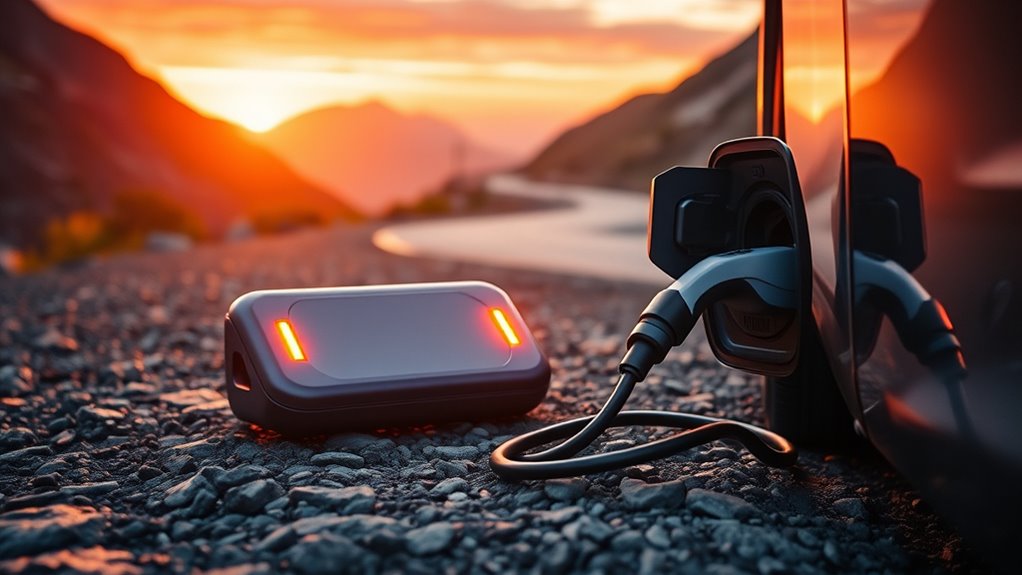
A portable EV charger becomes especially valuable when you’re caught in a pinch or away from reliable charging stations. It’s ideal for situations where charging station compatibility might be uncertain or limited. For example, when traveling through rural areas, remote work sites, or unfamiliar locations, having a portable charger guarantees you can top up your battery without hassle. Keep in mind your vehicle’s battery capacity considerations—larger batteries may require longer or more frequent charges. This makes a portable charger a practical backup if your destination lacks fast charging options or if you encounter unexpected delays. It’s also useful when your current charging options aren’t compatible with your vehicle’s charging port, giving you added flexibility and peace of mind during critical moments.
Do You Really Need a Portable Charger for Emergency Situations?
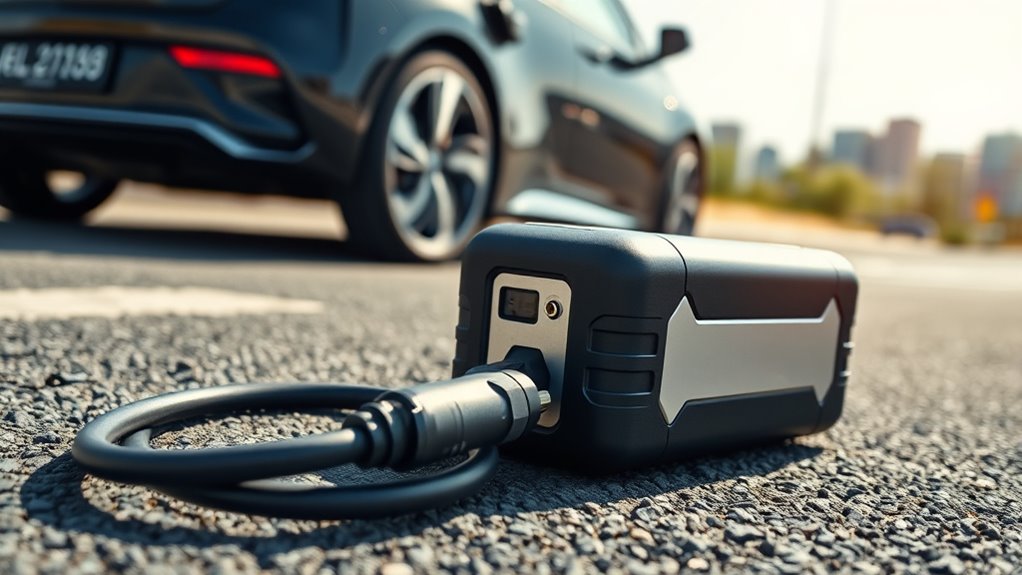
While a portable EV charger can be a helpful backup, it’s worth asking whether you truly need one for emergencies. Your decision depends on your typical driving habits and battery capacity. If you often drive long distances or have a smaller battery capacity, a portable charger might be useful to avoid being stranded. However, consider that charging speed plays a role; some portable chargers offer slower charging, which might not be sufficient in urgent situations. If your vehicle’s battery capacity is large, you’ll likely need more time to recharge, making a portable charger less practical. Evaluate your daily routine and the likelihood of emergencies to determine if investing in one makes sense for your peace of mind and travel needs.
Tips for Selecting the Right Portable EV Charger for Your Vehicle
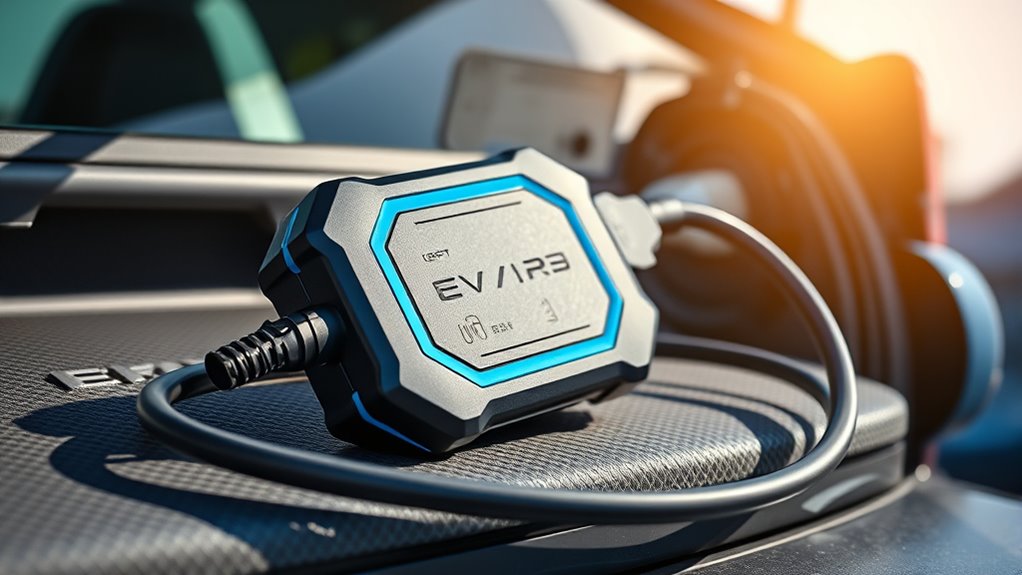
Selecting the right portable EV charger requires understanding your vehicle’s specific charging needs and compatibility. Consider the charger’s power output to match your car’s charging capacity, ensuring efficient battery maintenance. Pay attention to charging etiquette, such as avoiding overloading circuits or charging during peak hours, to be a considerate user. Think about portability features like size, weight, and ease of use, especially if you plan to carry it frequently. Check the connector type to ensure compatibility with your vehicle’s port. Also, assess the charger’s durability for emergency use in various conditions. A well-chosen portable charger helps you stay prepared, maintain your battery’s health, and charge conveniently when you need it most. Remember, the right choice makes all the difference.
Frequently Asked Questions
How Long Does It Take to Charge an EV Using a Portable Charger?
Charging an EV with a portable charger typically takes between 4 to 12 hours, depending on its power capacity and your vehicle’s battery size. The charging speed varies with the charger’s wattage—higher capacity chargers deliver power faster. Keep in mind, portable chargers usually provide slower charging compared to station chargers, making them more suitable for emergencies or topping off your battery rather than regular, full charges.
Can Portable EV Chargers Damage My Vehicle’s Battery?
Honestly, your portable EV charger won’t ruin your battery’s health or shorten charging cycles—if it’s a quality unit. Think of it like giving your car a snack, not a crash diet. As long as you follow manufacturer guidelines, you’re safe. Overusing it or using the wrong charger might cause issues, but otherwise, it’s a handy tool for emergencies, not a battery killer.
Are Portable EV Chargers Compatible With All Electric Vehicle Models?
Portable EV chargers aren’t compatible with all electric vehicle models due to compatibility concerns. You need to check your vehicle’s charging port and the charger’s connector type, as well as charging speed, to guarantee a proper fit. Some chargers work with specific standards like Type 1 or Type 2. Always verify compatibility before purchasing to avoid issues and assure safe, efficient charging for your EV.
What Safety Features Should I Look for in a Portable EV Charger?
Think of your portable EV charger as a trusted guard dog—always alert to defend you. Look for safety features like safety certifications, which guarantee it meets industry standards, and surge protection, guarding against voltage spikes. These features act as your safety net, preventing damage to your vehicle and charger. Prioritize these essentials to ensure safe, reliable charging during emergencies, giving you peace of mind on every journey.
How Should I Store and Maintain My Portable EV Charger?
You should store your portable EV charger in a cool, dry place away from direct sunlight to prevent damage. When not in use, keep it in a protective case if possible. For maintenance, regularly clean the charger with a damp cloth and make sure the charging station placement avoids moisture and dirt. This helps keep your portable charger in top condition and ready for emergencies whenever you need it.
Conclusion
Having a portable EV charger can be a game-changer, especially since over 80% of EV owners experience range anxiety. While it’s not mandatory for everyone, having one offers peace of mind during unexpected situations or long trips. If you frequently travel off-grid or want extra convenience, a portable charger is a smart investment. Ultimately, it’s about selecting what fits your driving habits and guarantees you’re never stranded without power.