To monitor your electric vehicle’s health with an OBD-II adapter, make certain it’s compatible with your car’s port and connect it securely. Use a smartphone app designed for EV diagnostics to access real-time data on battery status, temperature, voltage, and system alerts. These adapters help you track performance, identify issues early, and optimizeCharging routines. Curious how to choose the right adapter or get detailed insights? Keep going to explore all the key steps and tips.
Key Takeaways
- Verify if your EV has a compatible data port for OBD-II adapters before purchasing.
- Use specialized adapters designed for EVs to connect with smartphone apps for monitoring.
- Monitor battery health metrics like temperature, capacity, and voltage in real-time via compatible apps.
- Access vehicle diagnostics and error codes to identify issues early and schedule maintenance.
- Utilize apps to plan trips with charging station info and receive alerts on battery status during travel.
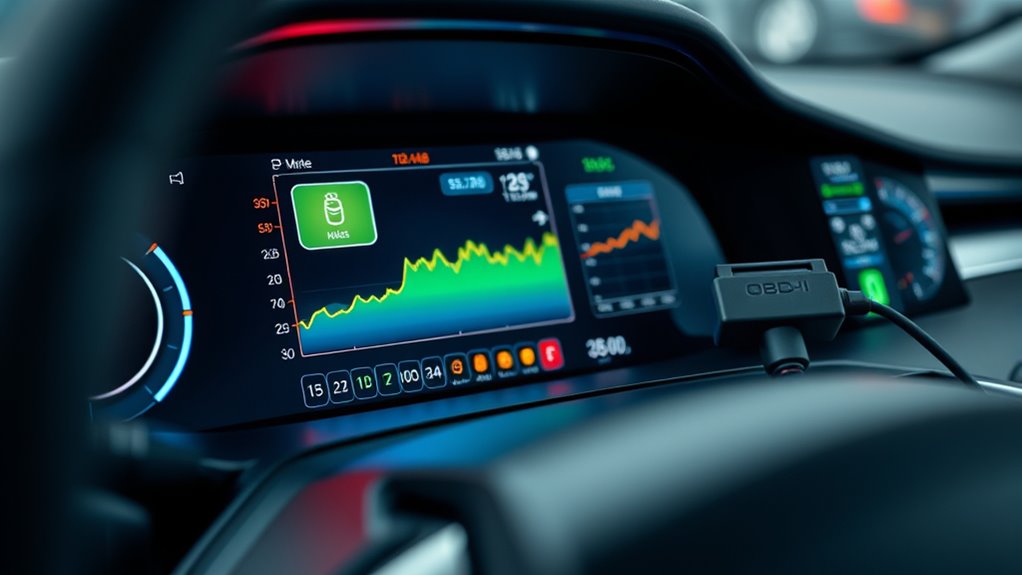
Electric vehicle owners often wonder if their OBD-II adapters can connect to their EVs, and the answer depends on the adapter and the vehicle. Unlike traditional gas-powered cars, many EVs don’t have the standard OBD-II port used for diagnosing engine issues, but some models do, or they have compatible data ports that adapters can access. When you use an OBD-II adapter designed for EVs, you gain the ability to monitor various aspects of your car’s health through smartphone apps. This includes battery management, charging status, and overall system performance, giving you more control and insight into your vehicle’s operation.
One of the key benefits of using OBD-II adapters for EVs is tracking your battery’s health. Unlike internal combustion engines, EVs rely heavily on their batteries, so understanding their condition is vital. With the right adapter, you can view real-time data like state of charge, voltage levels, temperature, and capacity. This helps you identify potential issues early, such as overheating cells or declining capacity, so you can take action before problems worsen. Monitoring battery health also extends to managing your charging routines, guaranteeing you’re not overcharging or depleting the battery unnecessarily, which can prolong its lifespan.
Using OBD-II adapters helps monitor your EV’s battery health and extend its lifespan.
Charging stations play a significant role here, too. When you’re on the road, knowing your battery’s status helps plan your stops at charging stations efficiently. The apps paired with OBD-II adapters often display nearby charging points, their availability, and whether your vehicle can handle fast charging at a particular station. This integration simplifies long trips, avoids range anxiety, and guarantees you’re always prepared for your next charge. Some adapters even provide alerts if your battery temperature gets too high during charging or driving, preventing potential damage.
Beyond battery management and charging, these adapters give you access to other vehicle diagnostics. You can check for error codes, monitor electrical systems, and even get notifications about maintenance needs. This level of insight is especially useful if your EV doesn’t have advanced onboard diagnostics or if you want to keep a close eye on its performance. By connecting your EV to compatible apps via an OBD-II adapter, you transform your smartphone into a powerful diagnostic tool, making it easier than ever to maintain your vehicle’s health. Additionally, the vetted nature of these tools ensures reliable data and safe operation.
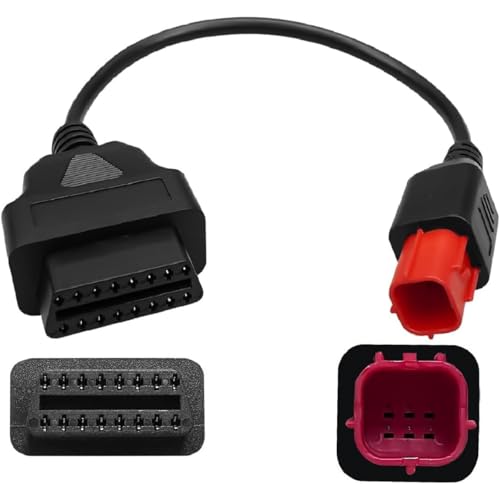
6 Pin OBD2 Adapter Cable Compatible with Kawasaki Guzzi Suzuki Yamaha Harley Davidson Piaggio Vespa Motorcycle Outboard Diagnostic Adapter Euro5 6-pin Connector
1:6pin obd motor cable Wide Compatibility:This 6 pin to 16 pin obd2 OBDII diagnostic tool cable adapter are…
As an affiliate, we earn on qualifying purchases.
As an affiliate, we earn on qualifying purchases.
Frequently Asked Questions
Can OBD-II Adapters Improve EV Charging Efficiency?
Yes, OBD-II adapters can help improve your EV’s charging efficiency by providing real-time data on battery performance. With these insights, you can optimize charging habits, monitor battery health, and identify issues early. This proactive approach helps extend your battery’s lifespan and guarantees your vehicle charges efficiently. By tracking parameters through compatible apps, you gain better control over your EV’s charging process, ultimately enhancing overall performance and saving you money.
Are There Compatibility Issues With Specific EV Brands?
Yes, there can be compatibility issues with specific EV brands due to brand compatibility and adapter limitations. Some adapters work better with certain brands like Tesla or Nissan, while others may lack features or fail to connect properly. Always check the adapter’s compatibility list and reviews to verify it supports your EV brand. Be aware of adapter limitations, such as restricted data access or limited functionality, before making a purchase.
How Secure Is Data Transmitted Through These Adapters?
Think of your data as precious cargo, and the transmission as a guarded gate. These adapters typically use data encryption to protect your info, making it like a lock on a treasure chest. While privacy concerns exist, reputable adapters prioritize secure connections, minimizing risks. However, always choose trusted brands and keep firmware updated. Your car’s health stays safe, and your privacy remains intact, like a secret kept safe in a vault.
Can These Adapters Diagnose Battery Degradation?
Yes, these adapters can diagnose battery degradation. They provide insights into your battery health by accessing diagnostic capabilities that monitor parameters like capacity loss and cell balance. With the right app, you can track your battery’s overall condition, helping you identify early signs of degradation and plan maintenance. Keep in mind, though, that their diagnostic capabilities vary depending on the adapter model and the EV’s system integration.
Do I Need Professional Installation for EV OBD-II Adapters?
You can often install EV OBD-II adapters yourself, but don’t rush—installation requirements and adapter compatibility matter. While many adapters are designed for easy plug-and-play use, some might need a basic understanding of your vehicle’s system or specific tools. If you’re unsure about compatibility or the installation process, consulting a professional saves you from potential headaches and guarantees your monitor works flawlessly, keeping your EV in top shape.

ANCEL BM200-US Car Battery Tester 12V Automotive Battery Monitor Bluetooth Auto Battery Load Tester with Cranking Charging Test Alarm Record Voltage History Voltmeter for Car/RV/Motorcycle/Truck/Boat
🔋High Value Battery Tester: BM200 is your go-to solution for 12V lead-acid and lithium battery. Equipped with advanced…
As an affiliate, we earn on qualifying purchases.
As an affiliate, we earn on qualifying purchases.
Conclusion
Using OBD-II adapters for your EV lets you effortlessly monitor your car’s health and optimize performance through user-friendly apps. Did you know that EVs with regular diagnostics experience 15% fewer unexpected breakdowns? By staying informed about your vehicle’s data, you guarantee safer, more efficient driving. So, invest in an OBD-II adapter, keep a close eye on your EV’s stats, and enjoy peace of mind on every journey.

Commercial EV Charging Station – OCPP-Compliant, Revenue-Generating Charger with Driver Pay App – Powered by EV Range Software
Earn Revenue with Every Charge: Set custom pricing and idle fees. Monthly payouts and usage reports included.
As an affiliate, we earn on qualifying purchases.
As an affiliate, we earn on qualifying purchases.

iKKEGOL 1ft Feet 30cm/12 OBD II OBD2 16 Pin Male to Female Extension Cable Car Diagnostic Extender Cord Adapter
OBD2 16Pin male to female extension cable
As an affiliate, we earn on qualifying purchases.
As an affiliate, we earn on qualifying purchases.