
TL;DR

Get backup power and energy gear delivered free — and shop member deals
- Fast, free delivery on millions of items
- Access to Prime Big Deal Days deals on October 6–7
- Prime Video, Amazon Music and more included
German startup Revolta AG has secured European Regional Development Fund support through the state of Hesse for a residential sodium-ion battery designed to charge from the electricity grid. The project is aimed at households, including renters, without rooftop solar; the company has not disclosed the battery’s capacity, price or expected launch date.
German startup Revolta AG has secured European Regional Development Fund support through the state of Hesse to develop a plug-and-play sodium-ion battery that households can charge from the electricity grid. The proposed system targets homes without solar panels, including smaller rental apartments, and is designed to store electricity when prices are low and supply it when prices rise.
Hesse’s register of ERDF beneficiaries lists the “Highly Efficient AC Salt Battery” project with eligible costs of €660,545 and an EU co-financing rate of 40%, or about €264,200 in EU support. The project period is listed as Aug. 1, 2026, through Dec. 31, 2029. The funding is for development; the register does not establish that a finished product is available.
Revolta says the planned battery will connect directly to the grid using alternating-current (AC) technology. It is intended to charge when electricity prices and grid fees are lower, then feed stored electricity back when prices are higher. The company’s stated design uses sodium-ion cells without lithium or cobalt.
The report by Energy Storage said Revolta had not disclosed the system’s storage capacity, power rating, price or launch date. Those details are needed to judge how much energy a unit could store, which household uses it could support and whether the expected savings could offset purchase and installation costs.
A Storage Option Beyond Rooftop Solar
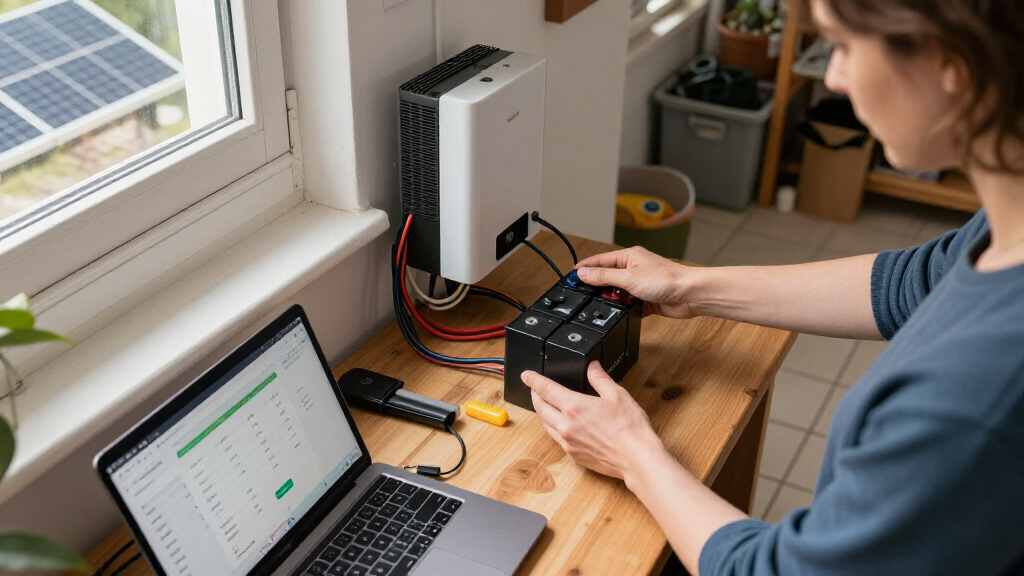
The project is aimed at a gap in the residential storage market: people who cannot install their own solar panels have fewer ways to use a home battery to shift electricity use across the day. If Revolta’s system reaches the market as described, it could let renters and other households without rooftop generation store grid electricity during cheaper periods and use it later.
The potential financial benefit is not yet established. It would depend on the battery’s efficiency, upfront cost, usable capacity, household consumption and the difference between low and high prices. Grid fees and other charges also matter. The funding supports development, not proof that customers will save money or that the device is commercially ready.
The use of sodium-ion cells is another point of interest, but the project announcement does not provide enough information to compare the finished product’s performance, safety, lifespan or cost with other home batteries. Its relevance to consumers will depend on those specifications and on how the system works under the applicable grid and billing rules.
As an affiliate, we earn on qualifying purchases.
Policy Changes and Revolta’s Earlier Battery
The business case for grid-charging storage in Germany shifted with rules adopted by the country’s grid regulator on Oct. 1, 2026. According to the source report, the rules allow storage systems to take electricity from the grid and feed it back later with lower levies and grid fees on the electricity returned. They also apply to storage systems that do not have their own generation, a category relevant to Revolta’s target customers.
That policy change is relevant to a battery designed to buy power from the grid, but it does not by itself establish a particular household’s savings. Actual costs and returns will depend on the rules’ application, electricity contracts, charges and the battery’s performance. The available reporting does not give a worked example of expected bills or returns for a Revolta customer.
Frankfurt-based Revolta launched a high-voltage sodium-ion home battery for households with photovoltaic systems in July 2026, according to the report. The new ERDF-backed project is for a different use: an AC battery intended to charge from the grid. Revolta also has a separate €124,940 grant from Germany’s Federal Environmental Foundation for an AC battery project scheduled to run from September 2025 to September 2027.
The ERDF is also supporting sodium-ion manufacturing in Germany. The report says Moll Batterien secured €22.17 million in public funding for a planned 1 GWh battery plant in Lichtenfels, Bavaria, including €2.52 million from the ERDF. That is a separate project and does not confirm that Revolta’s battery will use cells made at the facility.
“The system is designed to connect directly to the grid, charging when power prices and grid fees are low and feeding electricity back when prices are higher.”
— Revolta AG, as described in the Energy Storage report
As an affiliate, we earn on qualifying purchases.
Product Specifications Remain Undisclosed
Revolta has not disclosed the planned battery’s capacity, power rating, price or launch date, according to the source report. The company has also not provided enough information in the available material to establish the product’s efficiency, lifespan, installation requirements or expected savings for households.
The reported funding period runs through Dec. 31, 2029, but that date is not identified as a product launch deadline. It is also unclear how the new Hesse-backed project relates technically and commercially to Revolta’s separate AC battery project funded by the Federal Environmental Foundation. The available report does not say whether the projects share a design, milestones or planned product.
It is not yet clear when the company will publish specifications, begin customer trials or make the battery available for purchase. Nor does the source give details about eligibility, installation arrangements or how customers would access the lower fees described under Germany’s new rules.
home energy storage system without solar
As an affiliate, we earn on qualifying purchases.
As an affiliate, we earn on qualifying purchases.
Development Runs Through 2029
The ERDF beneficiary register lists Revolta’s project as running from Aug. 1, 2026, to Dec. 31, 2029. The funding period points to a multiyear development effort, but the available reporting names no interim technical milestones, demonstration schedule or commercial release date.
The next useful update for prospective buyers would be the company’s publication of the battery’s capacity, output, price and operating performance, along with details on installation and how the system will respond to electricity prices and grid charges. Until those details are available, the project is best understood as a funded development plan rather than a product offer with confirmed consumer costs or savings.
As an affiliate, we earn on qualifying purchases.
Key Questions
What has Revolta received funding to develop?
Hesse is supporting Revolta AG’s “Highly Efficient AC Salt Battery” project through the European Regional Development Fund. It is intended to develop a residential sodium-ion battery that charges from the grid.
Who is the proposed battery for?
The system is aimed at households without their own solar panels, including smaller rental apartments that may have limited options for residential energy storage.
How much funding is listed for the project?
Hesse’s beneficiary register lists €660,545 in eligible project costs and a 40% EU co-financing rate, equivalent to about €264,200. The figures describe the project funding basis, not the expected retail price of a battery.
When will the battery be available, and what will it cost?
The available report gives no launch date or price. Revolta has also not disclosed the battery’s capacity or power rating.
Does the funding mean households will save money?
No household savings figure is provided. Any financial benefit would depend on the battery’s price and performance, household use, electricity contracts and applicable grid fees.
Source: rss
Fall Picks
fall essentials
As an affiliate, we earn on qualifying purchases.