
EV charger extension cables can be safe if you choose high-quality, weather-rated options designed for EV use and follow proper safety standards. They’re handy when your charging station is temporarily out of reach or for flexibility, but they may slightly slow charging and pose safety risks if poorly used or cheap. To guarantee safety and efficiency, it’s essential to select the right cable and use it correctly—more details can help you make the best choice.
Open a free Amazon Business account
Business pricing, bulk buying and tax-exempt orders.
As an affiliate, we earn on qualifying purchases.
Key Takeaways
- High-quality, certified EV extension cables are generally safe when used properly and designed for EV charging.
- They may slightly reduce charging speed, especially during fast charging, but are acceptable for overnight or slow charging.
- Proper outdoor-rated cables with weather-resistant insulation enhance durability and safety in outdoor conditions.
- Using an extension cable improperly or with low-quality equipment increases risks of overheating, electrical faults, or safety hazards.
- It’s recommended to use extension cables only when necessary and consult professionals to ensure compatibility and safety compliance.
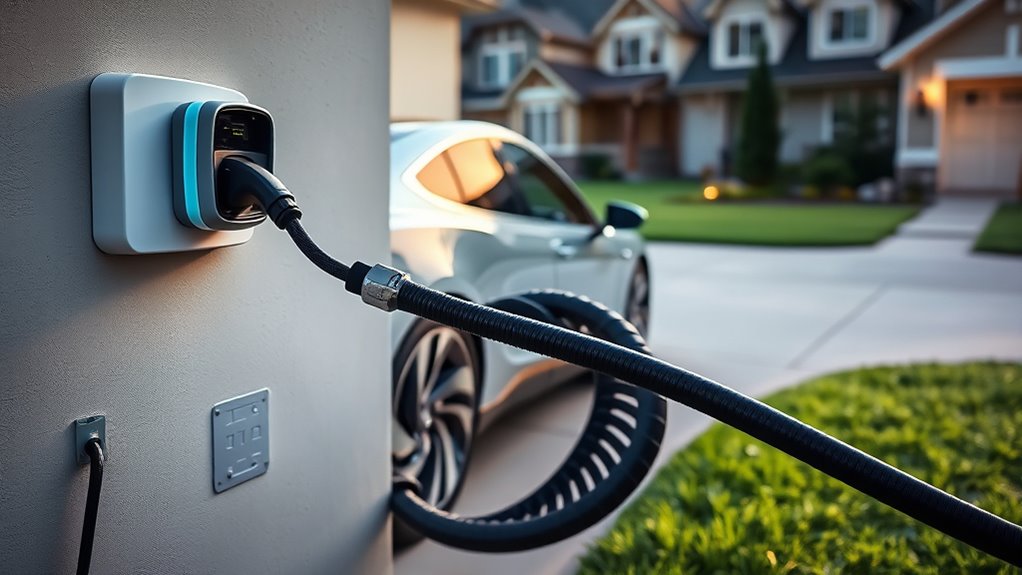
Have you ever found yourself needing a little extra length when charging your electric vehicle? If so, you’re not alone. Sometimes, the distance from your parking spot to the power outlet isn’t ideal, and that’s when an extension cable can seem like the perfect solution. But before you go plugging in, it’s vital to consider whether using an EV charger extension cable is safe and what factors influence its effectiveness. One of the main concerns revolves around charging speed. When you extend your cable, there’s a risk that the connection might be less efficient, causing a slight decrease in charging speed. This isn’t usually a major issue for overnight charging, but if you rely on fast charging to save time, even a small reduction in speed could be noticeable. That’s why choosing a high-quality extension cable designed specifically for EVs is essential. These cables are engineered to minimize voltage drops, ensuring your charging speed remains as close to ideal as possible. Additionally, understanding the safety standards for electrical equipment can help you select a cable that meets rigorous safety requirements.
Using a quality EV extension cable helps maintain charging speed and ensures safe, reliable outdoor charging.
Another important consideration is cable durability. Extension cables that aren’t built to withstand the rigors of outdoor use or frequent plugging and unplugging can deteriorate quickly. Cheap or poorly made cables may have thinner insulation, exposing the internal wiring to damage from weather, abrasion, or bending. Over time, this can create safety hazards, such as short circuits or electrical faults. When shopping for an extension cable, look for one that features heavy-duty, weather-resistant materials and robust connectors. These qualities not only extend the lifespan of the cable but also help keep your charging setup safe and reliable.
It’s also worth noting that using an extension cable improperly can pose safety risks. For example, if the cable is too long, of poor quality, or not rated for EV charging, it can overheat or cause electrical issues. Always verify that the extension cable has the appropriate certifications and is rated for the power levels your EV charger requires. When in doubt, consult your vehicle’s manufacturer or a qualified electrician to guarantee compatibility and safety.
Ultimately, an EV charger extension cable can be a handy tool when you need extra reach, but only if you choose one designed for the purpose. Prioritize cables with high durability and minimal impact on charging speed. Properly used and maintained, they can offer convenience without compromising safety or efficiency. Just take the time to select the right product, and always follow safety guidelines for outdoor electrical connections.
EV charger extension cable outdoor weatherproof
As an affiliate, we earn on qualifying purchases.
As an affiliate, we earn on qualifying purchases.
Frequently Asked Questions
Can Extension Cables Affect Charging Speed?
Using an extension cable can affect your charging speed because poor cable quality may cause increased voltage drop, reducing power delivered to your vehicle. If the cable isn’t designed for high current, it can limit charging efficiency and even pose safety risks. To avoid this, always choose a high-quality extension cable rated for your charger’s voltage and current needs, ensuring safe, fast, and reliable charging.
Are There Specific Regulations for Using Extension Cables?
Yes, there are specific regulation standards and safety certifications you should check before using extension cables. You’re responsible for ensuring the extension complies with local electrical codes and manufacturer guidelines. Always look for cables with proper safety certifications to prevent hazards like overheating or electrical faults. If regulations aren’t followed, you risk damaging your charger, voiding warranties, or causing safety issues, so always verify compliance before use.
How Long Can an Extension Cable Safely Be?
You should limit your extension cable length to guarantee safety and proper function. Typically, a safe extension cable length ranges from 3 to 5 meters (10 to 16 feet). Longer cables can cause voltage drops, overheating, and fire hazards. Always follow safety guidelines, use high-quality cables rated for EV charging, and check your vehicle and charger manufacturer’s recommendations before extending. Staying within these limits helps prevent potential electrical issues.
Do Extension Cables Increase the Risk of Electrical Fires?
Think of extension cables as delicate bridges—if overloaded, they can spark a fire hazard. Yes, using the wrong extension cable or overloading it increases the risk of electrical fires. To stay safe, make certain your cable is rated correctly and avoid pulling too much current. Proper use prevents cable overload, protecting your home from potential fire hazards and keeping your EV charging safe and sound.
Can Extension Cables Be Used for Fast-Charging Stations?
You shouldn’t use extension cables for fast-charging stations because they aren’t designed to handle the high power demands. Portable chargers and high-quality cables with durable insulation are better suited for such tasks. Using an extension cable with poor cable durability can pose safety risks, including overheating or fire hazards. For fast charging, always depend on manufacturer-approved cables and equipment to ensure safety and efficiency.
high quality EV charging extension cord
As an affiliate, we earn on qualifying purchases.
As an affiliate, we earn on qualifying purchases.
Conclusion
Imagine pulling your EV into the driveway, the sun setting behind your home, as you effortlessly connect an extension cable and settle in for a quick charge. When used correctly, extension cables can be a safe way to reach your charging station, especially on longer journeys or distant garages. Just remember to choose the right cable and follow safety guidelines. With the right setup, you’ll enjoy a smooth, worry-free charge every time, no matter where your driveway ends.
EV charging cable safety certified
As an affiliate, we earn on qualifying purchases.
As an affiliate, we earn on qualifying purchases.
As an affiliate, we earn on qualifying purchases.
Fall Picks
fall essentials
As an affiliate, we earn on qualifying purchases.