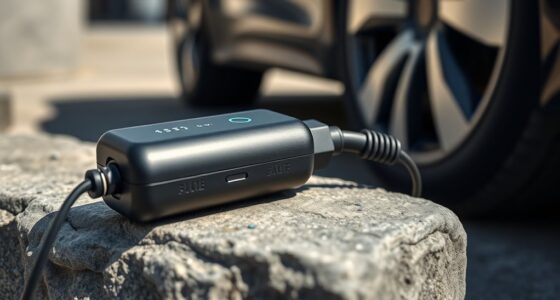
To keep your charging cable safe in public, use a sturdy cable lock made from resistant materials to secure it to a fixed object or your device. Pair it with anti-theft devices like small alarms or GPS trackers to increase theft deterrence. Always choose well-lit, busy areas to park or leave your gear, and consider locking up your device or accessories in secure containers. Want to discover more ways to protect your valuables effectively? Keep exploring for smarter security tips.
Key Takeaways
- Use a durable cable lock made from hardened steel to secure your charging cable to a fixed object.
- Combine cable locks with anti-theft alarms or GPS trackers for enhanced security.
- Secure the charging cable at visible, well-lit locations to deter potential thieves.
- Store excess cable in lockable cases or bags when not in use in public spaces.
- Implement a layered security approach by pairing cable locks with strategic parking and vigilant monitoring.
When it comes to protecting your bike, motorcycle, or valuable equipment, cable locks and anti-theft devices are essential tools. Though it’s tempting to assume your charging cable isn’t a prime target, thieves are often on the lookout for anything that can be easily stolen or resold. Implementing effective security measures not only deters theft but also provides peace of mind when you leave your belongings in public spaces. Your goal is to make theft as difficult and time-consuming as possible, discouraging would-be thieves from even attempting to steal your charging cable or other valuables.
Protect your valuables with sturdy locks and smart security practices to prevent theft and ensure peace of mind.
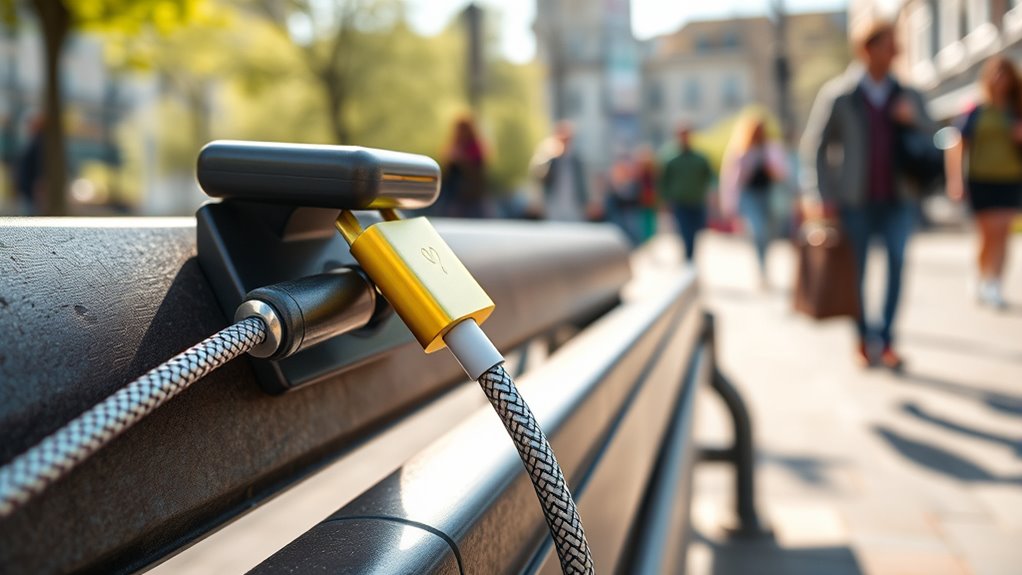
A good starting point is choosing a sturdy, high-quality cable lock designed specifically for security measures. Look for locks made from hardened steel or materials resistant to cutting or tampering. When securing your charging cable, avoid simple or thin cables that can be easily snipped or pulled away. Instead, loop the cable through a secure anchor point—like a bike frame, a fixed object, or a designated lock station—and lock it tightly. This prevents thieves from quickly snatching the cable or disconnecting it without effort. Remember, thieves often scan for easy targets, so the more obstacles you put in their way, the less likely they are to target your belongings.
Anti-theft devices such as alarms, GPS trackers, or lockable cases can markedly improve theft prevention. Attaching a small, portable alarm to your charging cable or the device it’s connected to can alert you immediately if someone tries to tamper with it. GPS trackers are also invaluable; they allow you to locate your equipment if it’s stolen, making recovery more feasible. Lockable cases or covers add another layer of protection by making it more difficult for thieves to access your cables quickly. These devices act as deterrents by increasing the effort and risk associated with theft, which is exactly what you want to achieve.
Beyond the physical devices, it’s vital to be strategic about where and how you store your equipment. Park in well-lit, busy areas whenever possible. Visibility reduces the chances of theft because thieves prefer to operate where they’re less likely to be seen. If you’re leaving your charging cable or device unattended for a prolonged period, consider securing it in a lockable bag or container. Combining these practical security measures with sturdy anti-theft devices makes theft prevention much more effective. Additionally, understanding the importance of mastering deep-sky imaging can inspire you to secure your valuable equipment more diligently, ensuring your investments in astronomy gear remain safe from theft.
Ultimately, your goal is to create a layered defense that discourages theft at multiple points. Cable locks and anti-theft devices may not eliminate all risks, but they considerably reduce the likelihood of theft and give you better control over your valuables. In public spaces, applying these security measures is the smartest way to keep your charging cable safe and protect your investment.
Frequently Asked Questions
Are Cable Locks Compatible With All Charging Cables?
Cable locks aren’t compatible with all charging cables, as cable compatibility varies based on connector types and sizes. Before lock installation, you should check if your cable’s connector matches the lock’s design. Many locks are adjustable, but some may only fit specific cables. To guarantee secure lock installation, verify compatibility first, so your charging cable stays safe without risking damage or ineffective theft protection.
How Much Do Anti-Theft Devices Typically Cost?
Anti-theft devices usually cost between $10 and $50, with pricing variations influenced by features and quality. According to recent surveys, over 60% of users find affordable options effective for their needs. You’ll want to evaluate affordability factors like durability and locking mechanisms when choosing a device. Investing in a reliable anti-theft device is a smart move, especially if you frequently use public charging stations and want to protect your cables from theft.
Can Cable Locks Damage My Charging Port?
Cable locks can potentially damage your charging port if they’re not used carefully, especially if the lock’s durability is low or if it’s too tight. To prevent damage, choose a lock designed for electronics and verify it fits securely without forcing it into the port. When used correctly, cable locks effectively deter theft while minimizing the risk of port damage, keeping your device safe and functional.
Are There Any Legal Restrictions on Using Theft Deterrents?
Sure, theft deterrent laws aren’t exactly written in stone, so you can generally use them without worry. But don’t go turning your charging cable into a fortress—some local ordinances might have restrictions. Always check your city’s legal restrictions before deploying these devices, because what’s legal in one place could land you in hot water elsewhere. Stay smart, stay legal, and keep your cables safe without turning into a lawbreaker.
Do Anti-Theft Devices Affect Charging Speed or Data Transfer?
Anti-theft devices generally don’t affect your charging speed or data transfer, especially with wireless charging and power delivery technologies. They’re designed to secure your cable without interfering with performance. However, if a lock or clamp is overly restrictive or poorly designed, it might cause slight delays or connection issues. To guarantee ideal performance, choose anti-theft solutions compatible with your device’s wireless charging and power delivery standards.
Conclusion
To keep your charging cable safe in public, consider using cable locks or discreet anti-theft devices. They act like gentle guardians, quietly protecting your belongings without drawing too much attention. While no method is foolproof, these little precautions can give you peace of mind and help you avoid an unnecessary inconvenience. Think of them as friendly reminders to stay vigilant, ensuring your tech stays safe so you can focus on enjoying your day without worry.