
TL;DR

Get backup power and energy gear delivered free with Prime
- Fast, free delivery on millions of items
- Prime Video, Amazon Music and more included
- Member-only deals all year
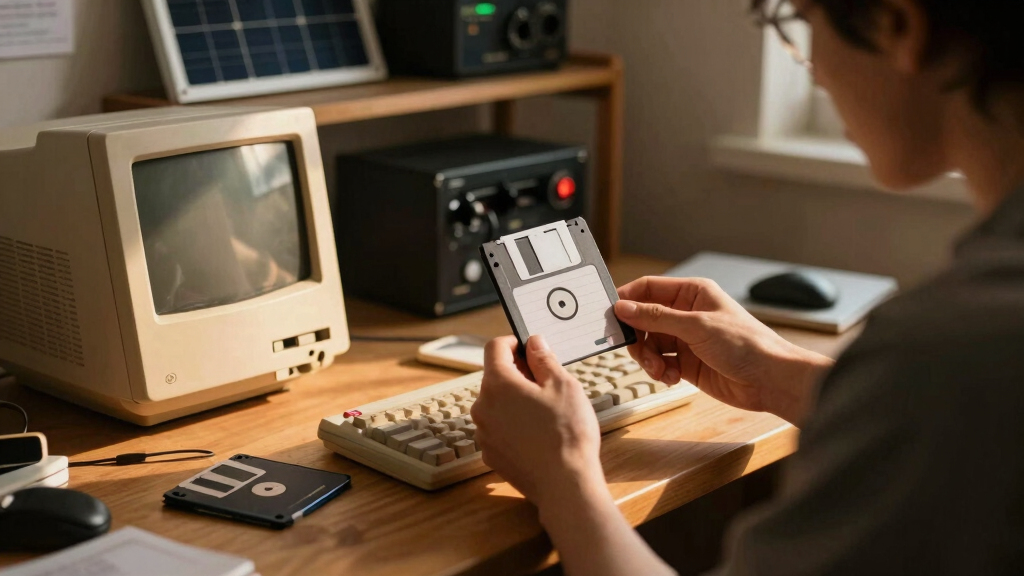
Cambridge University has published a detailed guide for preserving data stored on fragile floppy disks. The initiative aims to prevent data loss from deteriorating media and aid archivists in digital preservation efforts.
Cambridge University has published a comprehensive guide aimed at helping archivists, libraries, and institutions preserve data stored on fragile floppy disks. The guide provides detailed procedures to safely recover and digitize data before the disks become unreadable, addressing a pressing issue in digital preservation.
The new ‘Copy That Floppy’ guide offers step-by-step instructions for handling, imaging, and storing data from floppy disks, which are increasingly at risk of deterioration due to age and environmental factors. The project was led by the Cambridge Centre for Digital Knowledge, in collaboration with digital preservation experts, and is intended to support efforts to safeguard historical and institutional data stored on these obsolete media.
According to the lead researcher, Dr. Emily Carter, the guide emphasizes the importance of using specialized hardware and software to minimize data loss during transfer. She noted that floppy disks, which date back to the 1970s and 1980s, are highly susceptible to damage from magnetic decay, mold, and physical degradation, making timely intervention critical.
The guide also includes recommendations for environmental controls, such as temperature and humidity regulation, and suggests best practices for handling disks to prevent further deterioration. It is freely available online and is targeted at archivists, librarians, and digital preservation specialists worldwide.
Why Preserving Floppy Disk Data Is Critical Now
This initiative is significant because it addresses the urgent need to recover and preserve data stored on aging floppy disks, which contain valuable historical, scientific, and cultural information. As physical media deteriorate, the risk of permanent data loss increases, potentially erasing decades of digital history. The guide provides practical tools to prevent this loss, supporting ongoing efforts to digitize and archive important collections before they become unreadable. This effort underscores the broader challenge of digital preservation in an era of rapidly obsolescent media, highlighting the importance of proactive measures to safeguard digital heritage for future generations.floppy disk data recovery hardware
As an affiliate, we earn on qualifying purchases.
As an affiliate, we earn on qualifying purchases.
Historical Decline of Floppy Disks and Preservation Challenges
Floppy disks, once a standard for data storage, have largely been phased out since the late 1990s, replaced by more durable and higher-capacity media. Despite their obsolescence, many institutions and individuals still possess valuable data stored on these disks. Over time, floppy disks have become increasingly fragile due to magnetic decay, mold, and physical damage, making data recovery difficult. Previous efforts at digital preservation have focused on newer media, leaving floppy disks at risk of permanent data loss. The new guide by Cambridge aims to fill this gap by providing practical, accessible procedures for safe data extraction from these vulnerable media.“Our goal is to provide archivists with clear, practical methods to recover data from floppy disks before it’s too late. The media’s physical fragility makes timely action essential.”
— Dr. Emily Carter, Cambridge Centre for Digital Knowledge
As an affiliate, we earn on qualifying purchases.
Uncertainties About Widespread Adoption and Effectiveness
It is not yet clear how widely the guide will be adopted by institutions globally, or how effective it will be in recovering data from severely degraded disks. The actual success rate of data recovery depends on disk condition, available hardware, and expertise, which can vary significantly. Further testing and case studies are needed to evaluate the practical impact of the guide across different settings.As an affiliate, we earn on qualifying purchases.
Next Steps for Digital Preservation of Floppy Disks
The Cambridge team plans to collaborate with archives and libraries to pilot the guide in real-world recovery projects. They aim to gather feedback and refine procedures, encouraging wider dissemination of best practices. Additionally, efforts are underway to develop specialized hardware and software tools aligned with the guide’s recommendations. Monitoring the outcomes of these initiatives will help determine how effectively floppy disk data can be preserved before the media become unreadable.digital imaging software for floppy disks
As an affiliate, we earn on qualifying purchases.
As an affiliate, we earn on qualifying purchases.
Key Questions
Why are floppy disks considered at risk now?
Floppy disks are at risk because they are made of materials that degrade over time, such as magnetic media that can lose data due to decay, mold, and physical damage. Many disks are decades old, and environmental factors accelerate deterioration, making data recovery increasingly difficult.
What does the guide recommend for handling floppy disks?
The guide recommends careful handling with anti-static gloves, storing disks in controlled environments, and using specialized hardware to create disk images. It also emphasizes gradual, careful reading of disks to prevent further damage.
Is the guide available for free?
Yes, the ‘Copy That Floppy’ guide is freely accessible online, designed to support archivists and institutions worldwide in preserving their collections.
Will this help recover data from severely damaged disks?
The guide provides best practices for attempting data recovery, but success depends on the disk’s condition. Severely degraded disks may still pose significant challenges, and recovery is not guaranteed in all cases.
What are the broader implications of this preservation effort?
This initiative highlights the importance of proactive digital preservation strategies for obsolete media, ensuring valuable historical data is not lost as physical formats age beyond repair.
Source: hn
Fall Picks
fall essentials
As an affiliate, we earn on qualifying purchases.