For commercial AC charging, I would start with the OCPP-compliant station if drivers need to pay through an app, the Autel MaxiCharger if high output and a longer warranty matter, and the Grizzl-E Ultimate for a rugged, high-power single-port installation. Those are different strengths, not interchangeable wins: commercial payment and reporting, 80A capability, and a heavy-duty enclosure solve separate operating needs.

Get backup power and energy gear delivered free with Prime
- Fast, free delivery on millions of items
- Prime Video, Amazon Music and more included
- Member-only deals all year
My ranking weighs commercial usefulness first: whether the charger supports a public or fleet workflow, how much charging power it can deliver, what the installation requires, and whether its connector and network features suit the site. The ChargePoint HomeFlex is a capable connected 50A unit, but its home-oriented positioning makes it a better fit for employee or small-fleet charging than a public payment station. All four are single-port AC chargers, so throughput, simultaneous charging, site electrical capacity, and network terms matter more than a headline claim alone.
Key Takeaways
- The OCPP-compliant station is the clearest pick for a site that needs app-based driver payments and usage reporting, though its pedestal mount is not included.
- Autel and Grizzl-E both offer 80A charging, but Autel lists CSA and UL certifications plus a five-year warranty, while Grizzl-E highlights a UL Type 4 metal enclosure and J1772/NACS connector options.
- The Grizzl-E Ultimate is a strong rugged-site choice, yet its hardwired setup and single port still call for electrical and traffic-flow planning.
- ChargePoint HomeFlex offers a simpler 50A smart-charging proposition for workplace or small-fleet use, but it lacks the stated payment and revenue tools of the OCPP unit.
- Every charger here has one port; sites serving several vehicles at once may need multiple units, load management, and a careful review of service capacity.
| Commercial EV Charging Station – OCPP-Compliant, Revenue-Generating Charger with Driver Pay App |  | Best for Public Charging and Driver Payments | Input/output: 240V AC | Connector: J1772 | Ports: 1 | VIEW LATEST PRICE | See Our Full Breakdown |
| Autel MaxiCharger Level 2 Electric Vehicle (EV) Charger, 80 Amp Fast Charging, Indoor/Outdoor, J1772, Hardwired |  | Best Premium High-Output Pick | Output: Up to 80A / 19.2 kW | Input/output voltage: 240V | Connector: SAE J1772 | VIEW LATEST PRICE | See Our Full Breakdown |
| Grizzl-E Ultimate Level 2 EV Charger, 80A / 19.2 kW, UL Certified, Indoor/Outdoor, J1772/NACS |  | Best for Rugged, High-Power Installations | Output: Up to 80A / 19.2 kW | Voltage: 240V | Connector: J1772/NACS listed | VIEW LATEST PRICE | See Our Full Breakdown |
| ChargePoint HomeFlex Level 2 EV Charger, J1772, Smart, Hardwired, 50A | 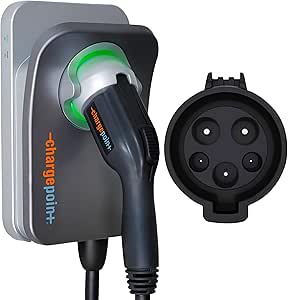 | Best for Employee and Small-Fleet Charging | Amperage: 50A | Voltage: 240V | Connector: J1772 | VIEW LATEST PRICE | See Our Full Breakdown |
| commercial AC EV charger | Connector | Ports | Warranty | Enclosure |
|---|---|---|---|---|
| Commercial EV Charging Station | J1772 | 1 | 2 years | Weather-resistant |
| Autel MaxiCharger Level 2 Elec | SAE J1772 | 1 | 5 years | — |
| Grizzl-E Ultimate Level 2 EV C | J1772/NACS listed | 1 | 3 years | UL Type 4 metal |
| ChargePoint HomeFlex Level 2 E | J1772 | 1 | 3-year manufacturer warranty | — |
More Details on Our Top Picks
Commercial EV Charging Station – OCPP-Compliant, Revenue-Generating Charger with Driver Pay App
This is my lead pick for operators whose first requirement is a commercial workflow, rather than the highest amperage. The product description calls out OCPP compliance, customizable charging prices, driver payments through the EV Range app, and usage reports. That combination addresses a different problem from the Grizzl-E Ultimate and Autel MaxiCharger: those units emphasize high-output charging and rugged hardware, while this one is presented around collecting payment and tracking use.
The distinction matters for a public parking site, lodging property, or fleet that needs to account for sessions. A network-ready unit with driver payment can reduce reliance on an informal honor system, but operators should verify the available payment methods, service fees, network terms, reporting details, and compatibility with their chosen backend before committing. The listing specifies a 240V AC supply and one J1772 port, but does not state an amperage or charging rate. I would not choose it over the 80A Autel or Grizzl-E on a promise of faster charging; its case is the documented payment-oriented feature set.
There are practical limits. A pedestal mount is required and sold separately, which affects site planning and the finished installation. It has one port, and Tesla drivers may need an adapter. Compared with the ChargePoint HomeFlex, it is much more clearly aimed at paid commercial use; compared with either 80A charger, its charging output is less clearly specified. I would shortlist it for a public-facing location, then confirm electrical specifications and network details with the supplier before purchase.
Pros:- OCPP-compliant, network-ready design is aimed at commercial management.
- Driver payment through the EV Range app and customizable pricing support paid charging.
- Usage reports can help operators track charging activity.
- Weather-resistant enclosure is intended for varied site environments.
Cons:- Pedestal mount is required but not included.
- Single J1772 port limits simultaneous sessions at each unit.
- Tesla vehicles may require an adapter, and amperage is not specified in the supplied details.
Best for: Public parking operators, property managers, and small fleets that need app-based driver payment, configurable charging fees, and usage reporting.
Not ideal for: Buyers prioritizing a stated high-amperage rating, dual-port service, a supplied pedestal, or a charger with clearly documented electrical output.
- Input/output:240V AC
- Connector:J1772
- Ports:1
- Network/payment:OCPP-compliant; EV Range app payments and customizable pricing
- Enclosure:Weather-resistant
- Mounting:Pedestal mount required; not included
- Warranty:2 years
Our verdict“I rank this first for public and fleet operators who value payment and reporting tools more than a stated 80A output.”
Autel MaxiCharger Level 2 Electric Vehicle (EV) Charger, 80 Amp Fast Charging, Indoor/Outdoor, J1772, Hardwired
The Autel MaxiCharger is the most compelling choice here when a commercial site can support 80A charging and wants a longer stated warranty. Its 19.2 kW maximum is shared with the Grizzl-E Ultimate, but Autel adds a five-year warranty, CSA and UL certifications, app control, energy monitoring, temperature monitoring, and theft protection in the supplied description. Those details give it a strong case for a workplace, fleet yard, or other site where a fixed hardwired installation and higher-power circuit are practical.
Compared with the Grizzl-E, Autel’s advantages are its warranty length and stated certifications; Grizzl-E, by contrast, specifies a UL Type 4 metal enclosure and lists both J1772 and NACS in its title. The Autel uses a J1772 connector, so Tesla vehicles may need an adapter. Compared with the OCPP unit, Autel provides more clearly stated charging output but does not have the same described driver-payment and customizable-pricing workflow. That makes it less suited to an operator whose central requirement is collecting payments from public users.
The major tradeoff is electrical demand. The product information calls for a 100A circuit for its 80A output, and professional installation is recommended. That may shape a project more than the charger itself: existing service, conductor sizing, permitting, and site load all need review. Its high output also does not mean every vehicle will draw 80A. I would choose Autel when the site has capacity and wants a documented high-output unit with strong warranty coverage; I would skip it where lower-power charging or public payment tools are the priority.
Pros:- Up to 80A and 19.2 kW output for installations designed to support it.
- Five-year warranty is longer than the coverage listed for the other products here.
- CSA and UL certifications are specified.
- App control, energy monitoring, temperature monitoring, and theft protection add management and security features.
Cons:- 80A operation calls for a 100A circuit and professional installation is recommended.
- Single J1772 port; no NACS adapter is included.
- High-power capability may be unnecessary or unusable on sites with constrained service.
Best for: Commercial buyers with suitable electrical service who want an 80A hardwired charger, app-based energy monitoring, and a five-year warranty.
Not ideal for: Sites with limited electrical capacity, buyers seeking a payment-enabled public network product, or Tesla-heavy locations that want a native NACS connector.
- Output:Up to 80A / 19.2 kW
- Input/output voltage:240V
- Connector:SAE J1772
- Ports:1
- Installation:Hardwired; 100A circuit specified for 80A output
- Certifications:CSA, UL
- Warranty:5 years
- Controls and protection:App control, energy and temperature monitoring, theft protection
Our verdict“I place Autel second because its high output, certifications, and five-year warranty are strong, but its electrical demands and lack of stated payment tools narrow its fit.”
Grizzl-E Ultimate Level 2 EV Charger, 80A / 19.2 kW, UL Certified, Indoor/Outdoor, J1772/NACS
The Grizzl-E Ultimate stands out for pairing 80A / 19.2 kW output with a UL Type 4 metal enclosure and a 25-foot cable. That combination suits locations where the charger may be exposed to the elements and cable reach matters, such as a fleet parking area or a commercial lot with varied parking positions. It is also hardwired, with adjustable amperage and Wi-Fi monitoring, giving an installer flexibility to set it for the circuit available rather than treating 80A as the only setting.
Against the Autel MaxiCharger, Grizzl-E has the more explicitly rugged enclosure rating and lists J1772/NACS in its title, while Autel lists CSA and UL certifications and a longer five-year warranty. Grizzl-E’s stated warranty is three years. Both are single-port, high-output chargers, so neither solves simultaneous charging on its own. Compared with the OCPP station, Grizzl-E has a much clearer output specification, but the supplied information does not describe public driver payments or customizable pricing. I see it as a hardware-and-power choice, not a complete public charging business platform.
Wi-Fi, real-time monitoring, and smart load balancing may help an owner keep tabs on charging and coordinate electrical use, but commercial buyers should confirm the exact load-balancing behavior and any required network setup. The hardwired installation calls for qualified electrical planning, and the vehicle’s onboard charger can limit the power it accepts. The listing says it is compatible with North American EVs and PHEVs; I would still verify connector configuration against the fleet before ordering. This is my best rugged high-power option, but the Autel is a better match for buyers who place more weight on warranty length and stated certifications.
Pros:- 80A / 19.2 kW maximum output with adjustable amperage.
- UL Type 4 metal enclosure is specified for indoor and outdoor use.
- 25-foot cable can provide more reach across parking positions.
- Wi-Fi monitoring and smart load balancing are listed features.
Cons:- Hardwired installation may require a qualified electrician and site electrical work.
- One port serves one vehicle at a time.
- Three-year warranty is shorter than Autel’s listed five-year coverage.
Best for: Fleet and workplace sites seeking a rugged, weather-suited 80A charger with adjustable amperage, long cable reach, and Wi-Fi monitoring.
Not ideal for: Public operators needing documented driver payment and pricing tools, buyers who need two ports, or sites that cannot support a hardwired high-output installation.
- Output:Up to 80A / 19.2 kW
- Voltage:240V
- Connector:J1772/NACS listed
- Ports:1
- Enclosure:UL Type 4 metal
- Cable:25 ft
- Installation and connectivity:Hardwired; Wi-Fi; adjustable amperage
- Warranty:3 years
Our verdict“I recommend Grizzl-E for buyers who put enclosure toughness, cable reach, and adjustable 80A capability ahead of public payment features or the longest warranty.”
ChargePoint HomeFlex Level 2 EV Charger, J1772, Smart, Hardwired, 50A
ChargePoint HomeFlex is the lower-output connected option in this group, with a 50A rating, hardwired installation, and app-based remote management. Its described charging capability reaches up to 45 miles per hour, though the actual rate depends on the vehicle, circuit, and operating conditions. For employee parking or a small fleet that charges vehicles over a workday or overnight, that may be a more appropriate fit than paying for infrastructure built around 80A output.
Its place in this roundup is narrower than that of the OCPP station. ChargePoint offers Wi-Fi and app control, but the supplied information does not describe driver payments, customizable fees, or usage reporting as the commercial unit does. Compared with Autel and Grizzl-E, it has less maximum output, yet it may be easier to justify where the site’s electrical capacity or charging schedule does not call for 80A. The cold-resistant cable and indoor/outdoor suitability are useful for exposed installations, while J1772 compatibility covers many non-Tesla EVs.
The tradeoffs are clear: this is a hardwired, Wi-Fi-dependent smart charger, not a multiport station or a stated public-pay product. Tesla vehicles need an adapter, and buyers should confirm app and network requirements before selecting it for a site with limited connectivity. The title and product description position it as a home charger, so I would treat it as a practical workplace or small-fleet candidate rather than assume it has the management controls expected in a larger public charging network. Its three-year warranty matches Grizzl-E’s stated term, but Autel offers longer coverage.
Pros:- 50A output and a stated charging rate of up to 45 miles per hour.
- Wi-Fi app control supports remote management.
- Indoor/outdoor suitability and a cold-resistant cable support varied conditions.
- Three-year manufacturer warranty.
Cons:- Wi-Fi is needed for full functionality.
- J1772 connector means Tesla vehicles need an adapter.
- Lower maximum output than the 80A Autel and Grizzl-E options, with no payment tools specified.
Best for: Workplaces, small fleets, or managed parking areas that need one connected J1772 charger and do not require public driver-payment tools.
Not ideal for: High-throughput fleet depots, public sites requiring stated payment features, Tesla-heavy operations without adapters, or locations without reliable Wi-Fi.
- Amperage:50A
- Voltage:240V
- Connector:J1772
- Ports:1
- Installation:Hardwired
- Charging claim:Up to 45 miles per hour, depending on vehicle and installation
- Connectivity:Wi-Fi and ChargePoint app
- Warranty:3-year manufacturer warranty
Our verdict“I would choose HomeFlex for modest workplace or small-fleet charging, but not as my first choice for a public site or high-throughput depot.”
How We Picked
I ranked these products for commercial AC use, not as interchangeable home chargers. I gave the most weight to evidence of a workable public or fleet operation: payment and reporting tools, network support, output capability, enclosure or certification details, connector fit, and the practical demands of installation. That approach puts the OCPP-compliant station first for operators who need to manage drivers and charging sessions, even though it does not lead the group on stated amperage.
I also separated maximum output from site value. An 80A charger can support a higher-power installation, but vehicle acceptance limits, circuit capacity, utility service, and wiring determine what drivers actually receive. I treated hardwired installation, single-port capacity, connector adapters, and app or network dependence as meaningful tradeoffs rather than footnotes. The supplied specifications do not establish every detail an operator would need—such as backend subscription terms, simultaneous load-sharing behavior, or installation cost—so I avoid claiming those capabilities where they are not stated. The resulting order reflects each unit’s documented fit, not a promise that one model suits every commercial site.
| commercial AC EV charger | Connector | Enclosure | Installation |
|---|---|---|---|
| Commercial EV Charging Station | J1772 | Weather-resistant | — |
| Autel MaxiCharger Level 2 Elec | SAE J1772 | — | Hardwired; 100A circuit specified for 80A output |
| Grizzl-E Ultimate Level 2 EV C | J1772/NACS listed | UL Type 4 metal | — |
| ChargePoint HomeFlex Level 2 E | J1772 | — | Hardwired |
Factors to Consider When Choosing Best Commercial AC EV Chargers
I would choose a commercial AC charger by working backward from how vehicles use the site. The parking dwell time, number of vehicles, available electrical service, payment needs, and connector mix matter at least as much as peak amperage. These four products span a payment-oriented commercial station, two 80A hardwired units, and a connected 50A charger. That makes the main decision a question of operational fit, not a simple ranking by power.
Start with the charging job
AC charging is often a good match for places where vehicles stay parked for a while: workplaces, lodging, public parking, and fleet lots with scheduled downtime. If drivers need a quick turnaround or vehicles return with low batteries several times a day, the site may need more ports, a different charging approach, or both. In this lineup, every product has one port. A site serving several cars concurrently will need multiple units or another way to increase capacity.
Estimate how long vehicles will be parked and how much energy they need during that window. Then check the vehicle’s onboard AC charging limit. A charger rated at 80A cannot force a vehicle to accept 80A if its onboard equipment draws less. This is why the ChargePoint 50A unit can be a sensible fit for employee parking even though the Grizzl-E and Autel have higher maximum output.
Match amperage to electrical capacity
The Autel and Grizzl-E list up to 80A / 19.2 kW, while HomeFlex is rated at 50A. Higher output can shorten a charging session for a compatible vehicle, but it also places greater demands on circuits, wiring, and site service. Autel’s supplied information specifies a 100A circuit for 80A operation. Before choosing any hardwired charger, have a qualified electrician assess the panel, feeder, wire run, local requirements, and other building loads.
Ask whether the site needs load management across several chargers and what that feature actually controls. Grizzl-E lists smart load balancing, but the supplied details do not explain system limits or how multiple units coordinate. Confirm those points rather than assuming all chargers can share a site’s available power in the same way. Where electrical capacity is constrained, a lower-amperage setting or several managed chargers may fit better than a single unit selected for its maximum rating.
Decide whether drivers must pay
If the site is open to the public or charges for sessions, the OCPP-compliant station is the only product here whose description explicitly includes driver payments, customizable pricing, and usage reports. Those functions can help an operator organize a paid service, but the product description alone does not establish all operating costs or backend details. Before buying, confirm the app’s payment process, service fees, network agreements, reporting exports, and support arrangements.
ChargePoint HomeFlex, Autel, and Grizzl-E list connected or app-based features, but the information provided does not specify public payment capability for those models. Remote monitoring is not the same as payment processing. If staff, tenants, or employees use the chargers without a per-session fee, a connected charger may be sufficient. For public use, I would require written confirmation of payment and management functions before treating any product as a complete commercial network solution.
Check connector fit across the fleet
J1772 is the connector listed for the commercial OCPP unit, Autel, and ChargePoint. The Grizzl-E title lists J1772/NACS, so buyers should verify the exact connector configuration of the model being supplied. Tesla compatibility can depend on connector choice or a suitable adapter; the product descriptions call out adapters for some J1772 models. A fleet with mixed makes should map vehicle inlet types before ordering, then decide whether adapters are acceptable for day-to-day operations.
Connector planning affects uptime and staff workflow. If adapters are needed, decide who supplies them, where they are stored, and whether drivers can use them safely and consistently. A charger that fits most vehicles directly may be simpler than one that requires shared accessories, but that convenience needs to be weighed against output, enclosure, and network features.
Plan mounting, exposure, and cable reach
Installation details can change the total project scope. The commercial payment station requires a pedestal mount that is not included. The other three are described as hardwired, so installation involves fixed electrical work rather than simply plugging a unit into an existing receptacle. Ask the supplier and installer about mounting hardware, conduit routes, bollards, cable management, signage, and any site-specific protection.
For exposed parking, compare enclosure claims rather than relying on a general indoor/outdoor label. Grizzl-E specifies a UL Type 4 metal enclosure, while the OCPP station is described as weather-resistant. Autel lists a durable build and temperature monitoring; ChargePoint lists indoor/outdoor use and a cold-resistant cable. Cable length also matters: Grizzl-E provides 25 feet, which may help at awkward parking positions, but the route must avoid trip hazards and vehicle traffic.
Compare warranty and support needs
Warranty coverage can matter when a charger is exposed to frequent use or weather. Autel lists five years; Grizzl-E and ChargePoint list three years, and the OCPP station lists two. Warranty duration alone does not tell the whole story. Review what parts and labor are covered, whether commercial use is included, how service requests are handled, and what happens if a network-connected charger is offline.
For commercial installations, downtime affects drivers and property operations. Confirm local service availability and replacement procedures before choosing a model. The OCPP unit’s payment and reporting features may be valuable only if the associated platform remains supported, while app-connected units need a clear answer on software support. I would make support terms part of the purchase approval, not a detail left for after installation.
Think beyond one charger
A single unit may serve a small office or a reserved fleet space, but a growing site should plan for expansion. Because every model here is single-port, multiple vehicles cannot charge from one unit at the same time. Ask whether the chosen network can manage multiple chargers, whether units can share electrical capacity, and how data is presented across a site. The OCPP model’s stated network focus may appeal to operators building a public service, while the other products emphasize individual charger features.
Do not buy on a maximum output figure alone. A site with limited service and long parking dwell times may get more practical coverage from several appropriately configured chargers than from one high-output unit. Conversely, a fleet with short turnaround and compatible vehicles may value the 80A options, provided electrical capacity and installation costs work. I would get an electrician’s load assessment and the network provider’s feature terms before final selection.
Frequently Asked Questions
Which charger is the best fit for a public charging site?
I would start with the OCPP-compliant commercial station because its description specifically lists driver payments through the EV Range app, customizable pricing, and usage reports. Those features align more directly with public operation than the app monitoring described for the other models. Confirm its amperage, payment fees, backend terms, and pedestal requirements before purchase; its output is not stated in the supplied specifications.
Are the 80A chargers automatically faster for every EV?
No. The Autel and Grizzl-E are rated up to 80A / 19.2 kW, but the vehicle’s onboard AC charging limit and the installation determine the power it can accept. A site’s circuit and service capacity also matter. A compatible EV may charge faster than it would on the 50A ChargePoint, but an 80A rating does not guarantee that every vehicle will draw at that level.
Which option has the longest stated warranty?
The Autel MaxiCharger lists a five-year warranty, compared with three years for Grizzl-E and ChargePoint, and two years for the OCPP-compliant station. I would still read the warranty terms carefully, especially for commercial use, labor coverage, and service response. The duration is a useful comparison, but it does not answer every support question.
Do these chargers support Tesla vehicles?
Connector fit varies. The OCPP station, Autel, and ChargePoint list J1772, and their descriptions indicate that Tesla vehicles may need an adapter. The Grizzl-E title lists J1772/NACS, but I would verify which connector configuration is supplied before ordering. For a mixed fleet, check every vehicle inlet and decide whether adapters are acceptable for regular use.
Can I install one of these chargers without an electrician?
These products are described as hardwired installations, and Autel’s 80A configuration specifies a 100A circuit. I would have a qualified electrician assess the site’s service, wiring, mounting, and local permitting requirements before purchase. The OCPP unit also requires a pedestal mount that is not included, adding a site-planning step beyond the charger itself.
Conclusion
My recommendation depends on what the site needs to do. Choose the OCPP-compliant station for public or fleet charging where driver payments, configurable pricing, and reports are central. Pick the Autel MaxiCharger if the site can support 80A operation and the five-year warranty and listed certifications are priorities. The Grizzl-E Ultimate is the stronger match for buyers who value a UL Type 4 metal enclosure, 25-foot cable, adjustable output, and high-power capability. For employee parking or a small fleet with less demanding throughput, ChargePoint HomeFlex offers a connected 50A alternative.
Before making a final choice, I would verify connector configuration, network and payment terms, warranty coverage for commercial use, and the electrician’s load assessment. Since all four are single-port units, plan for additional chargers if vehicles must charge simultaneously. The best commercial AC charger is the one whose electrical demands, management features, and site layout match the way drivers actually park and charge.
Fall Picks
fall essentials
As an affiliate, we earn on qualifying purchases.