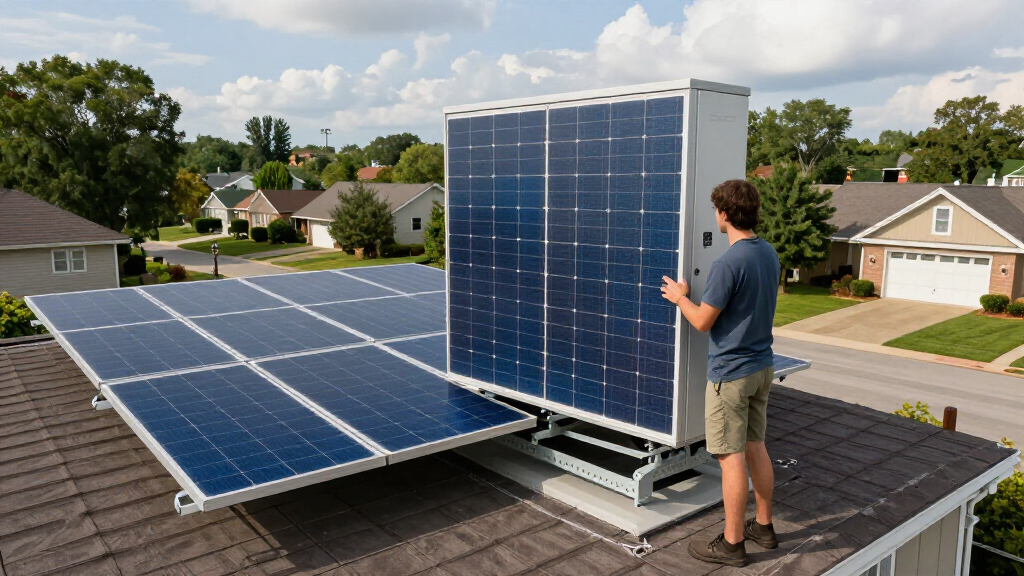

The Anker SOLIX C1000 Gen 2 is my best overall choice among these solar backup power stations because its 1,024Wh battery and 2,000W output offer the strongest everyday balance of capacity, appliance support, and portability. For longer outages, the Jackery HomePower 3600 Plus adds far more storage and expansion potential, while the Jackery Solar Generator 300 gives beginners a smaller, panel-inclusive starting point. The main tradeoffs are battery runtime versus weight, continuous output versus storage capacity, and a complete solar bundle versus a station that requires separate panels. Compact models suit phones, lights, routers, and laptops, but they should not be mistaken for refrigerator or whole-home backup systems. Continue reading for the full breakdown of which capacity class and feature set best match each buyer.
Key Takeaways
- The Anker SOLIX C1000 Gen 2 leads the ranking because its 2,000W output is unusually capable for a station with roughly 1kWh of storage.
- Large batteries do not always deliver higher appliance power: the 2,010Wh Anker SOLIX S2000 is capped at 1,500W, below several smaller rivals.
- The Jackery HomePower 3600 Plus is the premium outage pick because its 3,584Wh battery can expand to 21kWh, but that scale carries a major cost and portability penalty.
- Included-panel bundles reduce setup friction: the HomePower 3000, Solar Generator 1000 V2, Solar Generator 300, and 280Wh portable generator can begin solar charging without another major purchase.
- The three roughly 300Wh models are device-backup products, not substitutes for the 1kWh-to-3.6kWh stations when refrigerators, cooking equipment, or extended outages are the priority.
| Anker SOLIX C1000 Gen 2 |  | Best Overall | Battery capacity: 1,024Wh | Battery chemistry: LiFePO4 | Continuous AC output: 2,000W | VIEW LATEST PRICE | See Our Full Breakdown |
| Anker SOLIX S2000 |  | Best for Extended Refrigerator Backup | Battery capacity: 2,010Wh | Battery chemistry: LiFePO4 | Continuous output: 1,500W | VIEW LATEST PRICE | See Our Full Breakdown |
| Jackery HomePower 3000 with Two 200W Solar Panels |  | Best Premium Home Backup | Battery capacity: 3,072Wh | Battery chemistry: LiFePO4 | AC output: 3,600W | VIEW LATEST PRICE | See Our Full Breakdown |
| 1000W Portable Power Station 1024Wh LiFePO4 Solar Generator |  | Best for Simple 1kWh Backup | Battery capacity: 1,024Wh | Battery chemistry: LiFePO4 | Continuous output: 1,000W | VIEW LATEST PRICE | See Our Full Breakdown |
| Jackery Solar Generator 300 with 40W Solar Panel |  | Best Compact Solar Kit | Battery capacity: 292Wh | Battery chemistry: LiFePO4 | Rated AC output: 300W | VIEW LATEST PRICE | See Our Full Breakdown |
| Portable Solar Generator 300W with 60W Solar Panel | 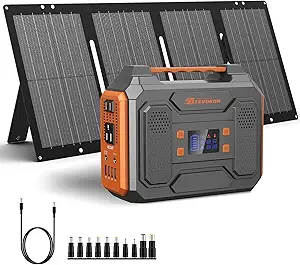 | Best Starter Solar Kit | Power Output: 300W | Battery Capacity: 280Wh | Solar Panel: 60W monocrystalline | VIEW LATEST PRICE | See Our Full Breakdown |
| EBL Portable Power Station 1000W |  | Best for RV Device Versatility | Continuous Output: 1000W | Battery Capacity: 999Wh | AC Outlet: 1 x 120V | VIEW LATEST PRICE | See Our Full Breakdown |
| Anker SOLIX C1000 Portable Power Station |  | Best for Fast Recharging | Continuous Output: 1800W | Peak Output: 2400W | Battery Capacity: 1056Wh | VIEW LATEST PRICE | See Our Full Breakdown |
| EnginStar Portable Power Station 300W |  | Best Compact Emergency Pack | Battery Capacity: 296Wh | Running Output: 300W | Starting Output: 300W | VIEW LATEST PRICE | See Our Full Breakdown |
| Jackery HomePower 3600 Plus Portable Power Station |  | Best Expandable Home Backup | AC Output: 3600W | Parallel Output: 7200W | Base Capacity: 3584Wh | VIEW LATEST PRICE | See Our Full Breakdown |
| EF ECOFLOW DELTA 3 Classic |  | Best Fast-Charging 1kWh Pick | Capacity: 1024Wh | AC Output: 1800W | Surge Power: 3600W | VIEW LATEST PRICE | See Our Full Breakdown |
| Jackery Explorer 2000 v2 | 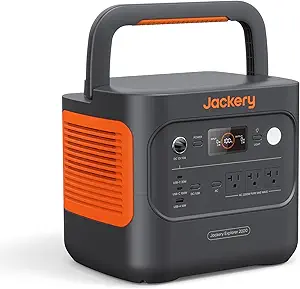 | Best High-Capacity Portable Pick | Capacity: 2042Wh | AC Output: 2200W | Weight: 39.5 lbs | VIEW LATEST PRICE | See Our Full Breakdown |
| Jackery Solar Generator 1000 V2 with 200W Solar Panel |  | Best Ready-to-Go Solar Kit | Capacity: 1070Wh | AC Output: 1500W | Surge Peak: 3000W | VIEW LATEST PRICE | See Our Full Breakdown |
| solar backup power station | Battery capacity | Weight |
|---|---|---|
| Anker SOLIX C1000 Gen 2 | 1,024Wh | 11.3kg |
| Anker SOLIX S2000 | 2,010Wh | 35.7lb |
| Jackery HomePower 3000 with Tw | 3,072Wh | — |
| 1000W Portable Power Station 1 | 1,024Wh | 27.73lb |
| Jackery Solar Generator 300 wi | 292Wh | 7.5lb |
| Portable Solar Generator 300W | 280Wh | — |
| EBL Portable Power Station 100 | 999Wh | 17.86 lb |
| Anker SOLIX C1000 Portable Pow | 1056Wh | — |
| EnginStar Portable Power Stati | 296Wh | — |
| Jackery HomePower 3600 Plus Po | — | — |
| EF ECOFLOW DELTA 3 Classic | — | — |
| Jackery Explorer 2000 v2 | — | 39.5 lbs |
| Jackery Solar Generator 1000 V | — | 23.8 lbs |
More Details on Our Top Picks
Anker SOLIX C1000 Gen 2
I rank the Anker SOLIX C1000 Gen 2 first because its 1,024Wh battery and 2,000W continuous output create the strongest balance of capacity, appliance support, and portability in this group. It can handle heavier loads than the 1,000W Portable Power Station without adding more battery capacity, while its 11.3kg body is lighter than that model. Compared with the Anker SOLIX S2000, it stores roughly half as much energy but supplies 500W more continuous power. The 49-minute AC recharge is especially useful when grid power returns briefly. Solar charging is strong for this size, though the 600W input ceiling limits larger arrays. It is still fairly heavy for frequent carrying, and buyers prioritizing overnight refrigerator runtime should choose the S2000 instead. For mixed home and outdoor backup, this is my most balanced recommendation.
Pros:- 2,000W continuous output supports more demanding appliances than most 1kWh stations
- 49-minute AC recharge can make short periods of grid availability useful
- 600W solar input supports relatively quick daytime recovery
- LiFePO4 battery balances durability with a compact 1,024Wh format
Cons:- 1,024Wh capacity is limited for long home outages
- 11.3kg weight is cumbersome for frequent carrying
- 600W solar ceiling leaves larger panel arrays underused
Best for: I recommend it to households and campers who need a portable 1kWh station capable of running demanding appliances during short outages.
Not ideal for: I would skip it for buyers needing multi-day refrigerator backup or a station light enough for frequent walking trips.
- Battery capacity:1,024Wh
- Battery chemistry:LiFePO4
- Continuous AC output:2,000W
- Peak output:3,000W
- AC recharge time:49 minutes
- Maximum solar input:600W
- Listed solar recharge time:1.8 hours
- Power outlets:9
- Weight:11.3kg
Our verdict“This is my pick for buyers seeking the best balance of appliance power, recharge speed, and manageable size.”
Anker SOLIX S2000
The Anker SOLIX S2000 earns its place through endurance rather than maximum appliance wattage. Its 2,010Wh LiFePO4 battery has nearly twice the storage of the SOLIX C1000 Gen 2, making it better suited to keeping a refrigerator, router, and lights operating through a long outage. Anker claims up to 35 hours of refrigerator backup, though actual duration will shift with compressor demand and ambient temperature. The compromise is a 1,500W continuous ceiling: the smaller C1000 Gen 2 can run higher-wattage equipment despite storing less energy. Eight outlets may also feel restrictive in a home setup, and the missing 12V DC port weakens its appeal for RV owners. I favor this model for sustained basic loads, especially given its claimed 10,000-cycle battery life, but not for buyers running heaters, large cooking appliances, or numerous devices at once. It is the lineup’s runtime-focused choice.
Pros:- 2,010Wh capacity provides substantially longer backup than 1kWh alternatives
- Claimed refrigerator runtime reaches up to 35 hours
- LiFePO4 battery is rated for 10,000 cycles
- Supports AC, solar, and car charging
Cons:- 1,500W continuous output is lower than the smaller SOLIX C1000 Gen 2
- No 12V DC port for common RV and automotive accessories
- Eight outlets may require external power strips in larger backup setups
Best for: I recommend it to households that want long refrigerator, lighting, and internet backup without moving to a much larger expandable system.
Not ideal for: I would skip it for RV users needing a 12V DC connection or households planning to run appliances above 1,500W.
- Battery capacity:2,010Wh
- Battery chemistry:LiFePO4
- Continuous output:1,500W
- Starting output:3,000W
- Claimed refrigerator runtime:Up to 35 hours
- Claimed cycle life:10,000 cycles
- Power outlets:8
- Weight:35.7lb
- Dimensions:8.19 x 11.1 x 12.7 inches
Our verdict“This model makes the most sense when stored energy and refrigerator runtime matter more than running high-wattage appliances.”
Jackery HomePower 3000 with Two 200W Solar Panels
I place the Jackery HomePower 3000 at the premium end because its 3,072Wh capacity and 3,600W output can support larger household loads that exceed the limits of both Anker models. A 7,200W surge rating helps with motor-driven appliances, while the TT-30 port gives RV owners a direct connection missing from the SOLIX S2000. Its sub-20ms UPS response also suits equipment that should remain powered during an outage. The included pair of 200W panels makes this a complete solar package, but solar recovery is comparatively slow: reaching 80% can take nine hours. Its 4,000-cycle rating also trails the S2000’s claimed 10,000 cycles. Separate shipments for the station and panels can complicate delivery, and this is more system than occasional campers need. I reserve this high-output package for buyers who want serious home or RV coverage without stepping up to an expandable whole-home platform.
Pros:- 3,600W AC output can run loads that overwhelm the Anker S2000
- 3,072Wh capacity supports longer and broader household backup
- Two 200W solar panels are included in the package
- TT-30 RV port and sub-20ms UPS response expand its use cases
Cons:- Solar charging to 80% can take up to nine hours
- 4,000-cycle rating is lower than the SOLIX S2000 claim
- Power station and panels ship separately and may arrive at different times
Best for: I recommend it to homeowners and RV users who need high AC output, substantial storage, included panels, and a TT-30 connection.
Not ideal for: I would skip it for occasional campers or buyers who need rapid recovery from a modest 400W solar array.
- Battery capacity:3,072Wh
- Battery chemistry:LiFePO4
- AC output:3,600W
- Surge output:7,200W
- Cycle life:4,000 cycles
- AC recharge time:2.2 hours
- Hybrid recharge time:1.7 hours
- Solar recharge time:Up to 80% in 9 hours
- Included solar panels:2 x 200W
Our verdict“This is my premium choice for buyers who need enough output for larger appliances and want solar panels included.”
1000W Portable Power Station 1024Wh LiFePO4 Solar Generator
I see this 1,024Wh portable power station as the straightforward choice for buyers whose backup plan centers on lights, electronics, fans, and moderate-power appliances. It stores the same energy as the Anker SOLIX C1000 Gen 2, but its 1,000W continuous output is only half as high, so appliance selection requires more discipline. The two AC outlets also provide less connection flexibility than Anker’s multi-outlet layout. In return, buyers get LiFePO4 chemistry rated for more than 3,000 cycles and a useful mix of USB ports. Its 300W solar-input limit means slower off-grid recovery than the C1000 Gen 2’s 600W ceiling. At 27.73lb, it is also heavier than that Anker despite delivering less power. Compared with the Jackery Solar Generator 300, however, it supplies over three times the capacity and a much higher load ceiling. I rank it as the basic 1kWh option, not the performance leader.
Pros:- 1,024Wh capacity provides much longer backup than compact 300Wh-class stations
- LiFePO4 battery is rated for more than 3,000 cycles
- 2,000W peak rating accommodates brief startup demand
- USB-C and USB-A ports support several personal devices
Cons:- 1,000W continuous output restricts appliance choices
- 300W solar input limits off-grid recharge speed
- Only two AC outlets and a 27.73lb body reduce convenience
Best for: I recommend it to campers and households running moderate loads who want 1kWh of storage without advanced home-backup requirements.
Not ideal for: I would skip it for buyers who need to run heaters, large cooking appliances, or many AC devices simultaneously.
- Battery capacity:1,024Wh
- Battery chemistry:LiFePO4
- Continuous output:1,000W
- Peak output:2,000W
- Maximum solar input:300W
- AC outlets:2 x 110V
- USB ports:1 x 60W USB-C PD, 2 x USB-A
- Weight:27.73lb
- Dimensions:18 x 12 x 16 inches
Our verdict“This is a sensible 1kWh pick for moderate loads, provided buyers can accept slower solar charging and a lower output ceiling.”
Jackery Solar Generator 300 with 40W Solar Panel
The Jackery Solar Generator 300 fills the compact role: at 7.5lb, it is far easier to carry than any 1kWh model in this batch. I would choose it for phones, laptops, cameras, routers, and small medical devices rather than conventional household appliances. Its 292Wh capacity and 300W output sit far below the Anker SOLIX C1000 Gen 2, but that reduction buys true grab-and-go portability. A 100W USB-C PD port can charge a compatible laptop directly, and the included 40W panel turns the package into a working solar kit without another purchase. The weak point is recovery speed: the bundled panel needs about 7.5 hours to reach 80% under the listed conditions. Capacity will also disappear quickly under sustained AC loads. I rank it behind larger stations for outage coverage, yet it is the easiest option to transport and a better fit for personal electronics than whole-room backup.
Pros:- 7.5lb weight makes it far easier to carry than 1kWh alternatives
- Included 40W panel creates a ready-to-use solar kit
- 100W USB-C PD port supports direct laptop charging
- LiFePO4 battery is rated for more than 4,000 cycles
Cons:- 300W output cannot support most high-wattage household appliances
- 292Wh capacity provides limited runtime during extended outages
- Bundled 40W panel takes about 7.5 hours to charge the battery to 80%
Best for: I recommend it to solo campers, photographers, and apartment residents who need portable solar charging for electronics and communication gear.
Not ideal for: I would skip it for households expecting to power refrigerators, heaters, cooking appliances, or several devices overnight.
- Battery capacity:292Wh
- Battery chemistry:LiFePO4
- Rated AC output:300W
- AC outlets:2
- USB-C output:100W PD
- Car port output:120W
- Cycle life:Over 4,000 cycles
- Weight:7.5lb
- 40W panel charge time:7.5 hours to 80%
Our verdict“This is my compact pick for keeping personal electronics running, not for replacing a larger home-backup station.”
Portable Solar Generator 300W with 60W Solar Panel
I rank this as the best starter solar kit because the 60W monocrystalline panel is included, removing a separate purchase that the EnginStar 300W requires. Its 280Wh battery and 300W ceiling suit phones, laptops, lights, routers, and other modest outage essentials, while pure sine wave AC power is friendlier to sensitive electronics. The panel’s 20.5% conversion efficiency also makes the package more practical for camping than its modest rating might suggest. Still, it sits near the bottom of the lineup for appliance capability: the EBL 1000W holds over three times as much energy and handles much heavier loads. I would also protect the non-waterproof junction box from rain and recharge the battery regularly to limit performance decline. This is a convenient bundle, but not a home-appliance solution.
Pros:- Includes a 60W monocrystalline solar panel
- Pure sine wave AC output is suitable for sensitive electronics
- AC, USB, QC3.0, and DC connections cover varied small devices
- Short-circuit, overload, voltage, current, and heat protections are built in
Cons:- Cannot power devices drawing more than 300W
- 280Wh capacity is too limited for extended backup
- Solar-panel junction box is not waterproof
Best for: First-time solar-power buyers who want an all-in-one kit for camping electronics, phones, laptops, lights, and short outages
Not ideal for: Households expecting to run refrigerators, cooking equipment, heaters, or any device drawing more than 300W
- Power Output:300W
- Battery Capacity:280Wh
- Solar Panel:60W monocrystalline
- AC Outlets:2, 300W maximum combined output
- USB Ports:3 x 5V/3A and 1 x QC3.0
- DC Output:9V–12.6V, 10A maximum
- Charging Methods:AC outlet, solar panel, or 12V car port
- Solar Conversion Efficiency:20.5%
Our verdict“I recommend this bundle for buyers who want an easy entry into solar charging and only need to support low-draw devices.”
EBL Portable Power Station 1000W
The EBL earns its place through a balanced 999Wh capacity and a varied port selection that suits RV travelers carrying phones, laptops, 12V gear, and small appliances. Compared with the 300W EnginStar, its 1000W continuous output supports a much wider range of equipment, while the 60W USB-C port and 10W wireless pad reduce dependence on separate chargers. I place it below the Anker SOLIX C1000 for outage readiness, though: the Anker provides 1800W and recharges in 58 minutes, whereas this model needs seven to eight hours from AC. The single AC outlet may also force buyers to juggle appliance plugs despite the broad collection of DC and USB connections. At 17.86 pounds, it remains manageable around an RV, but less appealing for long walks to remote campsites.
Pros:- 999Wh capacity supports longer device runtimes than 300W-class models
- 1000W output can run many small appliances and electronics
- USB-C, USB-A, DC, car, wireless, and AC outputs serve mixed equipment
- LCD display, SOS light, and foldable handle add practical travel utility
Cons:- Seven-to-eight-hour AC charging is slow beside newer fast-charge models
- Only one 120V AC outlet limits plug flexibility
- 17.86-pound weight is cumbersome for carry-in camping
Best for: RV owners and car campers who need roughly 1kWh of energy across USB, 12V, wireless, and AC devices
Not ideal for: Buyers who need rapid AC recharging, several simultaneous AC appliances, or a lightweight walk-in camping unit
- Continuous Output:1000W
- Battery Capacity:999Wh
- AC Outlet:1 x 120V
- USB Connections:1 x 60W USB-C PD plus multiple USB-A QC3.0 ports
- DC Connections:2 x 12V DC ports and 1 x 12V/10A car outlet
- Wireless Charging:10W
- AC Charging Time:7–8 hours
- Weight:17.86 lb
- Dimensions:11.57 x 7.95 x 7.95 inches
Our verdict“I would choose the EBL for RV or vehicle-based trips where port variety matters more than rapid charging or high appliance output.”
Anker SOLIX C1000 Portable Power Station
I give the Anker SOLIX C1000 the fast-recharge distinction: its 1056Wh battery can refill in 58 minutes, a sharp advantage over the EBL 1000W’s seven-to-eight-hour AC recharge. Its 1800W continuous output also accommodates more demanding outage equipment, and up to 600W of solar input can replenish meaningful energy during daylight rather than merely slowing battery depletion. The LiFePO4 chemistry and stated 3,000-cycle life make it better suited to repeated backup duty than occasional-use budget packs. Yet speed has conditions: activating UltraFast charging requires the smartphone app, which adds friction for buyers who prefer controls confined to the unit. High-draw appliances can also exhaust 1056Wh quickly, with the supplied runtime figure listed at 43 minutes. Compared with the Jackery HomePower 3600 Plus, this is more manageable but far less expandable.
Pros:- 58-minute recharge sharply reduces downtime
- 1800W continuous and 2400W peak output cover many household appliances
- Up to 600W solar input supports useful daytime replenishment
- LiFePO4 battery is rated for 3,000 cycles
Cons:- UltraFast charging setup requires a smartphone app
- 1056Wh drains quickly under sustained high-power loads
- Heavier and bulkier than 300W-class camping stations
Best for: Households that face short outages and want a roughly 1kWh LiFePO4 station that can recharge rapidly between interruptions
Not ideal for: Buyers seeking multi-day whole-home backup or app-free access to every charging mode
- Continuous Output:1800W
- Peak Output:2400W
- Battery Capacity:1056Wh
- Battery Chemistry:LiFePO4
- Cycle Life:3,000 cycles
- Recharging Time:58 minutes
- Maximum Solar Input:600W
- Ports:11
- Rated Output Voltage:230V
Our verdict“I favor the SOLIX C1000 for short home outages when fast recovery and appliance-level output matter more than multi-day capacity.”
EnginStar Portable Power Station 300W
The EnginStar fills the compact emergency-pack role with a 9.1-by-5-by-7-inch body, 296Wh capacity, and two pure sine wave outlets. I rank it above the 280Wh Portable Solar Generator for stored energy and compact dimensions, but that competing bundle includes a 60W panel; the EnginStar requires buyers to source solar hardware separately. Its 300W output is appropriate for communications gear, laptops, lighting, and selected medical or networking devices during a short interruption, not kitchen or heating appliances. Multiple charging routes make it adaptable at home or in a vehicle, while overload protection and a digital display support straightforward monitoring. Still, capacity is limited for overnight loads, and the output ceiling leaves little room for startup surges. Against the EBL 1000W, it sacrifices appliance range for easier storage and transport.
Pros:- Compact 9.1 x 5 x 7-inch body is easy to store
- 296Wh capacity slightly exceeds the other 300W-class kit in this batch
- Two pure sine wave AC outlets support sensitive electronics
- Wall, car, and solar charging provide flexible replenishment
Cons:- Solar panel must be purchased separately
- 300W limit excludes most cooking and heating appliances
- 296Wh capacity is inadequate for extended backup
Best for: Apartment residents and car campers who want a small backup unit for phones, laptops, lights, routers, and other sub-300W devices
Not ideal for: Buyers who need an included solar panel, overnight appliance runtime, or power for loads above 300W
- Battery Capacity:296Wh
- Running Output:300W
- Starting Output:300W
- AC Voltage:110V
- AC Outlets:2 pure sine wave outlets
- Dimensions:9.1 x 5 x 7 inches
- Charging Methods:Solar, wall outlet, or car
- Display:Digital display with LED indicators
Our verdict“I see the EnginStar as a sensible grab-and-go backup for small electronics, provided the buyer accepts its low power ceiling and separate-panel cost.”
Jackery HomePower 3600 Plus Portable Power Station
The Jackery HomePower 3600 Plus sits first for serious home-backup scalability. Its 3584Wh base capacity already triples the Anker SOLIX C1000’s storage, while expansion up to 21kWh shifts it from short-outage support toward multi-day planning. A 3600W AC output can serve major appliances that overwhelm the 1000W EBL, and paired units raise output to 7200W while adding 240V capability. Wheels and a telescopic handle help with movement, though this remains a home-centered system rather than a casual camping pack. Buyers also face higher setup complexity when adding batteries, parallel operation, or solar equipment, and a panel is not included. AC charging takes 2.5 hours, slower than the Anker’s 58-minute refill but reasonable for the much larger battery. I reserve this pick for buyers who will use its expansion and appliance capacity, since smaller needs are served more simply elsewhere.
Pros:- 3584Wh base capacity supports substantially longer backup than 1kWh stations
- Expandable storage reaches 21kWh
- 3600W output handles major household loads, with 7200W available in parallel
- Wheels and a telescopic handle aid movement around the home
Cons:- Solar panels are optional rather than included
- Expanded or parallel configurations require more planning and setup
- Oversized for light camping and small-device backup
Best for: Homeowners preparing for prolonged outages who want to start near 3.6kWh and add capacity or 240V support later
Not ideal for: Apartment dwellers, occasional campers, and buyers who only need to charge personal electronics during brief outages
- AC Output:3600W
- Parallel Output:7200W
- Base Capacity:3584Wh
- Maximum Expanded Capacity:21kWh
- Voltage Support:120V; 240V in parallel
- Cycle Life:6,000 cycles
- Rated Lifespan:10 years
- AC Charging Time:2.5 hours
- Solar Charging Time:4 hours
Our verdict“I recommend the HomePower 3600 Plus to homeowners who need expandable, appliance-grade backup and can justify a larger, more involved system.”
EF ECOFLOW DELTA 3 Classic
I rank the EF ECOFLOW DELTA 3 Classic highly for buyers who want a 1kWh station that can return to service quickly. Its 0–80% charge in 45 minutes is useful during short utility windows, while 1800W output handles more demanding appliances than the 1500W Jackery Solar Generator 1000 V2. Sensitive electronics also benefit from its controlled AC delivery and app-based monitoring. The tradeoff is runtime: its 1024Wh battery offers roughly half the stored energy of the Jackery Explorer 2000 v2, so it is better for selective appliance backup than an extended outage. Solar charging can take 2.5 hours under the stated conditions, making this a capable renewable backup, but extra-battery compatibility is restricted because it does not support the DELTA 2 Smart Extra Battery.
Pros:- 1800W AC output supports a broad range of household appliances
- Charges from 0% to 80% in 45 minutes from AC power
- LiFePO4 battery is rated for more than 10 years of use
- Solar compatibility and app control suit managed off-grid backup
Cons:- 1024Wh capacity provides much less outage runtime than 2kWh and 3kWh alternatives
- Cannot use the DELTA 2 Smart Extra Battery
- Maximum solar recharge speed depends on adequate panels and strong sunlight
Best for: Apartment residents and homeowners who need rapid recharging and enough output for refrigerators, electronics, and selected kitchen appliances
Not ideal for: Buyers planning multi-day whole-home backup, since the 1024Wh capacity and restricted extra-battery compatibility limit runtime expansion
- Capacity:1024Wh
- AC Output:1800W
- Surge Power:3600W
- AC Fast Charge:0–80% in 45 minutes
- Solar Recharge Time:2.5 hours
- USB-C Output:100W
- Battery Type:LiFePO4
- Battery Lifespan:10+ years
Our verdict“I recommend this model for buyers who value fast recovery and strong appliance output more than extended backup duration.”
Jackery Explorer 2000 v2
The Jackery Explorer 2000 v2 earns its place by pairing 2042Wh of storage with a manageable 39.5-pound body. That capacity gives it about twice the stored energy of the EcoFlow DELTA 3 Classic, making it better suited to overnight refrigerator operation, communications gear, or several smaller loads during an outage. Its 2200W AC output also leaves more headroom for high-draw equipment. I would still choose the EcoFlow when charging speed and easier movement matter most: the Jackery reaches 80% in 66 minutes and becomes cumbersome over stairs or long distances. Solar charging takes as few as six hours with 400W of panels, but those panels cost extra. The sub-30dB operating noise and UL1778 certification strengthen its case for indoor backup near living or work areas.
Pros:- 2042Wh capacity offers substantially longer runtime than 1kWh models
- 2200W AC output supports demanding appliances and mixed loads
- Reaches 80% charge in 66 minutes and full charge in 102 minutes
- Quiet operation below 30dB is well suited to occupied spaces
Cons:- 39.5-pound weight makes frequent carrying difficult
- Solar charging requires separately purchased panels
- Six-hour best-case solar recharge is slower than smaller-capacity alternatives
Best for: Households, mobile businesses, and RV owners who need roughly 2kWh of quiet backup without moving a much larger home-power unit
Not ideal for: Solo campers and buyers with limited lifting ability, since 39.5 pounds is burdensome and solar panels are not included
- Capacity:2042Wh
- AC Output:2200W
- Weight:39.5 lbs
- Battery Type:LiFePO4
- Charge to 80%:66 minutes
- Full AC Charge:102 minutes
- Solar Charging:As few as 6 hours with 400W panels
- Noise Level:Less than 30dB
- Certification:UL1778
Our verdict“I would choose this Jackery for extended, quiet backup when 1kWh stations are too limited but larger home systems are too cumbersome.”
Jackery Solar Generator 1000 V2 with 200W Solar Panel
I see the Jackery Solar Generator 1000 V2 as the clearest choice for buyers who want a power station and solar panel in one package. The included 200W panel removes a separate purchasing decision, unlike the Jackery Explorer 2000 v2, whose solar panels are optional. At 23.8 pounds, the station is also much easier to move, while 1070Wh capacity covers phones, lights, a refrigerator, and other carefully managed emergency loads. Its limitation is power headroom: 1500W AC output trails both the 1800W EcoFlow DELTA 3 Classic and 2200W Explorer 2000 v2. The advertised one-hour full charge also requires app setup for the fastest mode, and the panel and station may arrive separately. Still, three pure-sine-wave AC outlets and 100W USB-C charging make this the most self-contained solar starter option here.
Pros:- Includes a 200W solar panel rather than requiring a separate panel purchase
- 23.8-pound station is easier to carry than the 2kWh Jackery alternative
- One-hour fast charging can rapidly restore the battery when configured through the app
- Three AC outlets and 100W USB-C support a useful mix of emergency devices
Cons:- 1500W AC output offers less appliance headroom than the EcoFlow DELTA 3 Classic and Jackery Explorer 2000 v2
- Fastest charging mode requires app setup
- Power station and solar panel ship separately, adding setup and delivery complexity
Best for: First-time solar-backup buyers, campers, and renters who want a matched 1kWh station-and-panel package with straightforward device connectivity
Not ideal for: Homes needing to run high-wattage appliances or sustain loads for several days, since output is capped at 1500W and storage is 1070Wh
- Capacity:1070Wh
- AC Output:1500W
- Surge Peak:3000W
- Included Solar Panel:200W
- Weight:23.8 lbs
- Battery Type:LiFePO4
- AC Outlets:3 pure sine wave
- USB Ports:2 USB-C and 1 USB-A
- USB-C Charging:PD 100W
Our verdict“I recommend this package to buyers who want an approachable solar-ready kit and can accept lower output than competing 1kWh stations.”
How We Picked
I ranked these models around their usefulness as solar-backed emergency power, giving the most weight to battery capacity, continuous AC output, solar readiness, and suitability for common outage loads. I compared watt-hours with rated watts because those figures answer different questions: capacity shapes runtime, while output determines which appliances can start and run. I also weighed LiFePO4 battery chemistry, charging convenience, panel inclusion, expansion options, outlet usefulness, and portability. Models offering a practical balance across those areas ranked above products that excelled in only one. This approach placed the Anker SOLIX C1000 Gen 2 first rather than automatically favoring the largest battery.
I treated the manufacturer-provided specifications as comparison points and did not present them as results from hands-on testing. Higher-capacity models earned specialist roles when their added storage supported longer outages, while compact units were judged against realistic device-level jobs. A bundled panel improved solar value, but it did not erase limitations in output or battery size. I also factored in brand clarity and support visibility, since replacement parts, compatible panels, warranty service, and documentation matter during years of ownership. Products with generic naming ranked more cautiously because uncertain support and compatibility can offset a low purchase price.
Factors to Consider When Choosing Solar Backup Power Stations
I would choose a solar backup station by starting with the loads it must run, then working backward to capacity, output, charging hardware, and budget. The label “solar generator” can describe anything from a small electronics bank to an expandable household system, so size alone does not reveal the right use case.
Match Battery Capacity to Real Runtime
Battery capacity is measured in watt-hours, but the advertised number is not the energy that reaches an AC appliance after conversion losses. I use a rough planning allowance of 80% to 90% of rated capacity, then divide that usable figure by the load in watts. A 1,024Wh station might supply roughly 820 to 920Wh through its AC outlets, giving a 100W device about eight to nine hours under steady conditions. Refrigerators complicate the estimate because their compressors cycle, while heaters and kettles draw heavily whenever they run. Measure actual consumption over time with an energy meter when outage duration matters. Buying too little capacity creates short runtimes, but buying several kilowatt-hours for phone charging adds expense, bulk, and slower solar recovery.
Separate Output Power From Storage Capacity
Continuous wattage controls appliance compatibility, while watt-hours control how long the battery lasts. A large battery paired with modest output can run light loads for a long time yet still reject a high-draw coffee maker, microwave, or pump. Motor-driven appliances may also need a brief starting surge above their normal running demand. I would total the devices likely to operate at the same time and leave some output headroom instead of planning around the exact rated ceiling. Pure sine wave AC power is the safer choice for sensitive electronics and motorized equipment. Buyers often focus on capacity first, but an undersized inverter can make stored energy inaccessible to the appliance that matters most.
Check the Entire Solar Charging Path
A station being “solar compatible” does not mean a panel is included or that every panel will connect safely. I would verify the maximum solar input wattage, accepted voltage range, connector type, and whether required adapters ship in the box. Panel wattage is a laboratory rating, and shade, clouds, heat, angle, and short winter days can reduce real production. A small panel may be easy to carry yet take multiple sunny days to refill a large battery. Panel-to-battery sizing matters more than simply having solar support: larger stations need enough array capacity to replace a meaningful share of daily use. Bundles simplify compatibility, while separate panels can offer better sizing flexibility and easier future replacement.
Decide Whether You Need UPS-Style Backup
Portable power and automatic backup are different jobs. A station may power appliances perfectly after manual setup but still be unsuitable for equipment that cannot tolerate an interruption. If a router, computer, medical device, sump pump, or refrigeration system must stay active, I would verify the model’s switchover behavior and supported pass-through configuration in its current manual. The appliance’s starting load must remain within the backup mode’s limits as well. A listed UPS feature deserves close scrutiny because transfer speed and operating restrictions vary by product. For household circuits rather than extension-cord loads, installation may also require compatible transfer equipment and a qualified electrician.
Balance Portability Against Expandability
Every increase in stored energy adds weight and volume, so the best outage system may be a poor camping companion. Around 300Wh is easy to move and practical for electronics, while 1kWh models cover a broader mix of portable and household tasks. Two-kilowatt-hour and larger stations favor longer runtime, but stairs, vehicle loading, and storage space become part of the buying decision. Expansion batteries let buyers start smaller, though proprietary modules can be expensive and may not work with future product families. I would also inspect handle design, wheel options, cable storage, and outlet placement, since these details affect daily usability more than an extra port that is rarely needed. A modular system makes sense when future outage needs are likely to grow; a fixed-capacity model is simpler when the load plan is already stable.
Judge Value Across the Full System
The station price is only one part of the budget. Panels, extension cables, adapters, expansion batteries, covers, and transfer hardware can turn a low headline price into a costly working setup. I would compare what arrives in the package and price the exact configuration needed for the first year. Battery chemistry and cycle-life claims matter for frequent use, but warranty length, service access, firmware support, and replacement-cable availability also shape ownership value. Generic models can offer attractive capacity per dollar, though limited documentation or support may be a poor bargain for emergency equipment. Paying more makes the most sense when it buys higher usable output, faster recovery, dependable expansion, or support that directly serves the planned job.
Frequently Asked Questions
How Much Battery Capacity Do I Need to Keep a Refrigerator Running During an Outage?
Start with the refrigerator’s measured daily energy use rather than relying only on its wattage label. Many household refrigerators cycle on and off, so a meter reading over 24 hours gives a better estimate than multiplying the compressor rating by a full day. I would add a loss allowance and reserve capacity, then confirm that the station can handle the compressor’s startup surge. A roughly 1kWh model may cover part or much of a day for an efficient refrigerator, but results vary widely with room temperature, door openings, and appliance age. For multi-day backup, 2kWh or more plus adequate solar input offers a more realistic margin.
Is a 300W Solar Power Station Enough for Home Backup?
A 300W station is best treated as electronics and lighting backup, not general household power. It can suit phones, tablets, laptops, a router, LED lights, and selected low-power medical devices if their ratings fit. The 280Wh-to-296Wh models in this roundup store far less energy than the 1kWh choices and cannot operate appliances that exceed their AC output. They remain attractive for apartments, cars, or short outages because they are easier to carry and store. I would move to at least the 1kWh class when refrigeration or a wider mix of AC appliances is part of the plan.
Should I Buy a Power Station With Solar Panels Included?
An included-panel bundle is useful when the priority is simple, matched setup and there are no panels already on hand. It reduces uncertainty around plugs and electrical compatibility, and the package price may be lower than buying each piece separately. The drawback is that bundled panels can be too small for the battery, especially when fast recovery after a long night matters. Separate purchasing gives more control over panel size, portability, mounting style, and replacement options. I would compare the station’s solar input limit with the panel’s rated output before deciding whether a bundle offers genuine backup value.
Can One of These Stations Power My Entire House?
Most models here are better suited to selected devices than every circuit in a house. The Jackery HomePower 3600 Plus comes closest to a scalable home system because it begins at 3,584Wh and can expand to 21kWh, but total load and connection hardware still define what it can support. Central air conditioning, electric water heating, ovens, and multiple simultaneous appliances can exceed portable-station output quickly. Direct connection to household circuits should use approved equipment and qualified electrical work rather than improvised backfeeding. I would build a priority-load plan around refrigeration, communications, lighting, medical needs, and a few convenience devices before sizing a larger system.
Is LiFePO4 Worth Paying More for in an Emergency Power Station?
LiFePO4 is a strong fit for repeated backup use because the chemistry is commonly chosen for long cycle life and thermal stability. It is especially appealing when the station will also serve camping, off-grid work, or routine energy shifting instead of sitting unused for years. The tradeoff can be greater weight and a higher purchase price than some compact battery designs. Chemistry alone does not settle the choice; charging controls, warranty terms, operating temperature limits, and inverter quality still matter. Among similar prices and capabilities, I would favor LiFePO4 for long-term ownership.
Conclusion
For most buyers, my best overall pick is the Anker SOLIX C1000 Gen 2, whose 1,024Wh capacity and 2,000W output create the most useful balance in this lineup. My value-oriented 1kWh choice is the EBL Portable Power Station 1000W when its price undercuts the Anker and EcoFlow models enough to offset its lower output and less developed ecosystem. Beginners who mainly need communications and lighting should choose the Jackery Solar Generator 300, since its included panel makes the first solar setup simpler.
For premium, expandable household backup, I would choose the Jackery HomePower 3600 Plus; buyers wanting a ready-made high-capacity solar bundle should instead examine the HomePower 3000 with two 200W panels. The Jackery Explorer 2000 v2 fits buyers seeking roughly 2kWh without moving to the largest class, while the EcoFlow Delta 3 Classic is a strong 1kWh alternative for buyers prioritizing fast charging. Compact shoppers can pick the EnginStar 296Wh for standalone device backup, while the 280Wh generator-and-panel kit targets those who want low-power solar charging included. The right final choice comes down to whether the priority is portable electronics, refrigerator-class loads, multi-day storage, or an expandable home system.