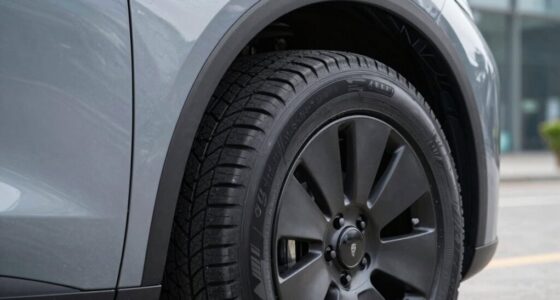
To compare all-season and winter tires for your EV, consider your climate, driving habits, and safety needs. All-season tires offer balanced performance and longer lifespan, making them ideal for milder conditions and saving money. Winter tires provide superior grip on snow and ice but wear faster and cost more upfront. Evaluating advancements in tire technology can also help you pick the best option. Keep exploring to discover how to choose the perfect tires for your EV.
Open a free Amazon Business account
Business pricing, bulk buying and tax-exempt orders.
As an affiliate, we earn on qualifying purchases.
Key Takeaways
- Assess climate and winter severity to determine if winter tires are necessary for safety and performance.
- Compare tire rubber compounds for durability and grip in cold temperatures, especially for EV efficiency.
- Consider the impact of tire weight and rolling resistance on EV range and energy consumption.
- Evaluate long-term costs, including replacement frequency and potential savings from all-season versatility.
- Check for technological advancements that enhance safety, grip, and lifespan in both tire types.
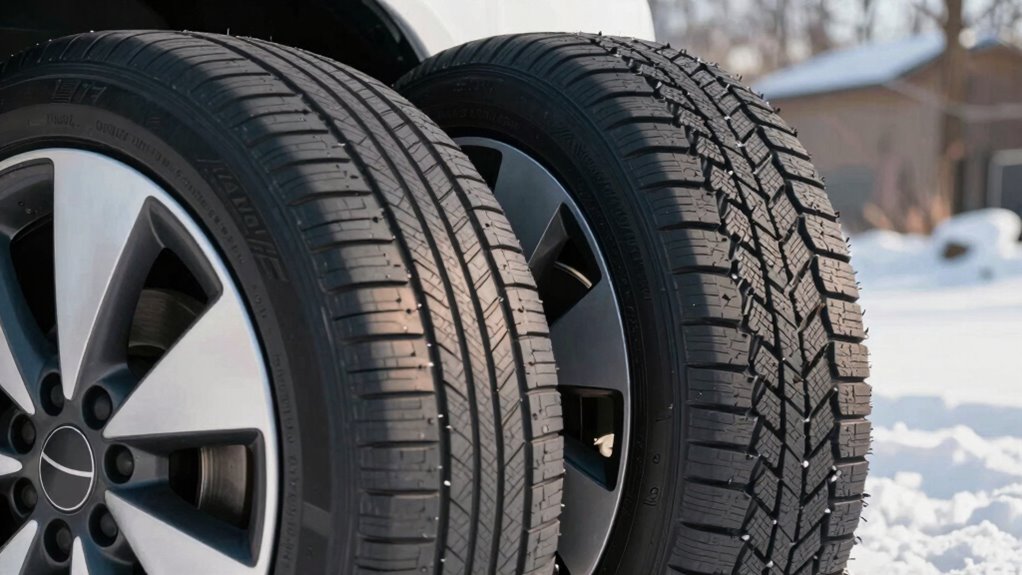
When choosing tires for your electric vehicle, understanding the differences between all-season and winter tires is vital, especially if you want ideal performance and safety year-round. Your decision impacts not just handling and safety but also how long your tires last and how much you’ll spend over time. Tire durability plays an essential role here. All-season tires are designed to provide a balanced performance across a variety of conditions, which often means they wear more slowly compared to specialized winter tires. They’re built with tougher rubber compounds that resist wear in moderate temperatures, so you get a longer lifespan. In contrast, winter tires are crafted with softer rubber to grip cold, icy surfaces better, but this softer rubber tends to wear out faster, especially if you use them during warmer months. So, if you’re looking for tires that last longer and want to avoid frequent replacements, all-season tires might be the smarter choice.
Price differences also play a significant role in your comparison. All-season tires generally cost less upfront because they’re designed for versatility, eliminating the need to buy and switch between different sets of tires. They’re a cost-effective option if you live in a climate with mild winters or if you want a single set to handle most conditions. Winter tires, however, tend to be more expensive initially due to their specialized rubber compounds and tread designs optimized for snow and ice. Additionally, since winter tires wear out faster, you might find yourself replacing them more often, adding to the overall cost. Keep in mind that investing in winter tires could save you money in the long run by preventing accidents and damage caused by poor traction on icy roads.
Your climate and driving habits should guide your choice. If you experience harsh winters with frequent snow and ice, winter tires are worth the extra investment for safety and grip. But if your winters are mild or infrequent, all-season tires may suffice, offering a good balance of durability and affordability. Remember, the key is to think about the long-term costs, not just the initial price. Durability affects how often you’ll need replacements, while the price differences influence your immediate expenditure. Both factors impact your overall budget and driving experience. Additionally, considering tire technology advancements can help you choose options with improved performance and longevity. Knowing how tire materials evolve can also influence your decision, as newer compounds can enhance safety and efficiency. So, weigh the benefits of each type based on your climate, driving style, and financial preferences, ensuring you select tires that keep your EV safe, efficient, and cost-effective all year round.
all-season tires for electric vehicles
As an affiliate, we earn on qualifying purchases.
As an affiliate, we earn on qualifying purchases.
Frequently Asked Questions
Do All-Season Tires Perform Well in Extreme Winter Conditions?
All-season tires generally don’t perform well in extreme winter conditions because their rubber composition isn’t designed for low temperatures, which can reduce traction. Tire durability might be compromised on icy roads, and their rubber tends to harden in cold weather, decreasing grip. For harsh winters, it’s better to switch to dedicated winter tires, which are specifically engineered with softer rubber and specialized tread patterns to handle extreme cold and snow effectively.
How Does Tire Weight Affect EV Range During Winter?
Imagine you’re driving your EV in winter, and the tires are heavier due to added tread or insulation. Heavier tires can slightly reduce your range because they demand more energy to rotate. To combat this, keep your tire pressure at recommended levels for maximum road grip, which helps maintain efficiency. Lighter tires generally improve range, but make sure they’re suitable for winter conditions to stay safe and secure.
Are There Specific Tire Brands Recommended for EV Winter Driving?
You should look for tire brands known for their durability and strong reputation in EV winter driving. Brands like Michelin, Continental, and Pirelli are highly recommended because they offer tires designed specifically for winter conditions, providing better grip and longevity. These brands focus on tire durability, ensuring your tires last through tough winter roads, while their reputation guarantees quality and performance, giving you confidence during cold, icy drives.
How Often Should EV Tires Be Replaced for Optimal Safety?
You should replace your EV tires every 6 to 10 years or when you notice significant tread wear, sidewall damage, or cracking. Regular tire maintenance, including checking tire pressure and tread depth, helps you spot issues early. Replacement intervals depend on driving habits, climate, and tire quality. Keeping up with these maintenance routines guarantees your tires stay safe and perform at their best, especially during winter driving conditions.
Can All-Season Tires Be Used Year-Round Safely on EVS?
Yes, you can use all-season tires year-round on your EV, but consider their tire durability and road noise. All-season tires are designed for a mix of conditions, offering decent traction and longevity. They typically produce less road noise compared to winter tires, making your ride quieter. However, for harsh winter conditions, specialized winter tires are safer. Regularly check tire wear to guarantee peak safety and performance throughout the year.
As an affiliate, we earn on qualifying purchases.
Conclusion
When choosing between all-season and winter tires for your EV, consider your climate and driving needs. For example, if you live in a region with harsh winters, switching to dedicated winter tires can improve safety and performance. On the other hand, if your winters are milder, all-season tires might suffice. Think about your typical driving conditions, and you’ll make a smarter choice that keeps you safe and optimizes your EV’s efficiency year-round.
As an affiliate, we earn on qualifying purchases.
best tires for winter driving EV
As an affiliate, we earn on qualifying purchases.
As an affiliate, we earn on qualifying purchases.
NFL season / tailgating Picks
team gear
As an affiliate, we earn on qualifying purchases.