As an EV owner, I’ve found that the OBDLink MX+, OBDLink EX FORScan, Autel MaxiAP AP2500, and OBD2 Bluetooth Car Code Reader are the best OBD dongles for enhancing my vehicle’s experience. They offer seamless compatibility with my smartphone, fast data transfer, and valuable diagnostic features like battery health monitoring. With these tools, I’m empowered to keep my electric vehicle in peak condition. Stick around, and I’ll share more about what to weigh when choosing the right dongle for you.
Key Takeaways
- OBDLink MX+ offers extensive compatibility with iOS, Android, and Windows, supporting popular diagnostic apps for EV monitoring and management.
- The Autel MaxiAP AP2500 is user-friendly, compatible with over 45 brands, and effectively reads and clears trouble codes for various EV models.
- OBDLink EX FORScan provides rapid data transfer, making it ideal for Ford EVs with enhanced diagnostics and real-time data access.
- Ensure the dongle supports essential EV parameters like battery SoC and SoH for comprehensive vehicle health monitoring and maintenance.
- Choose a device with strong app support and regular firmware updates to enhance functionality and adapt to evolving EV technologies.
| OBDLink MX+ OBD2 Bluetooth Scanner for iPhone Android and Windows | 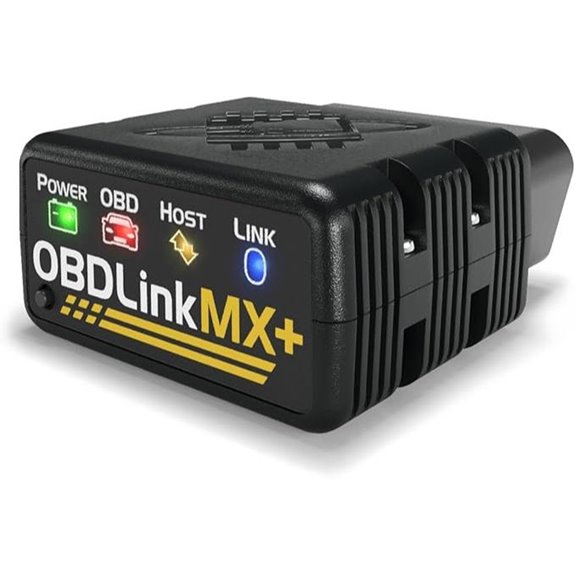 | Professional Grade | Compatibility: iOS, Android, Windows | Wireless Connectivity: Bluetooth | Error Code Reading: Yes, clear check engine light | VIEW LATEST PRICE | See Our Full Breakdown |
| OBDLink EX FORScan OBD Adapter | 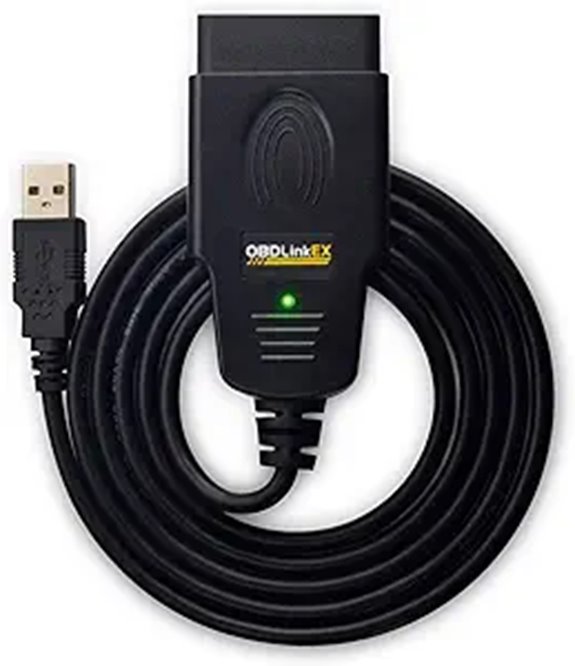 | Fastest Diagnostics | Compatibility: FORScan, Windows | Wireless Connectivity: Not specified (direct connection) | Error Code Reading: Yes, dealership-level diagnostics | VIEW LATEST PRICE | See Our Full Breakdown |
| Autel MaxiAP AP2500 Bluetooth OBD2 Scanner | 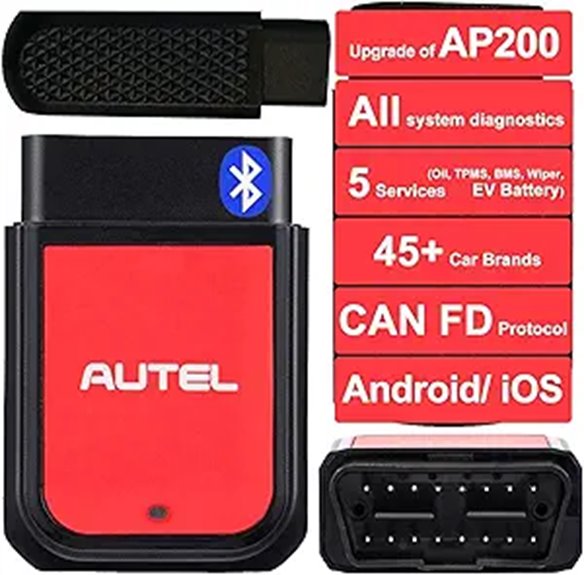 | Versatile Maintenance Tool | Compatibility: Android, iOS | Wireless Connectivity: Bluetooth | Error Code Reading: Yes, reads/erases DTCs | VIEW LATEST PRICE | See Our Full Breakdown |
| OBD2 Bluetooth Car Code Reader for iOS and Android | 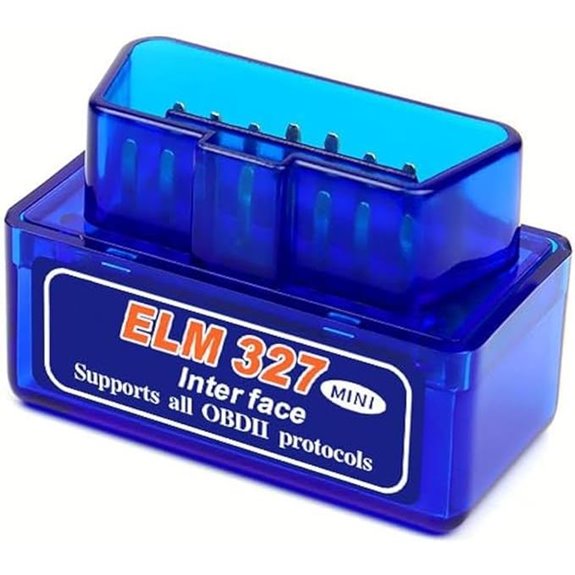 | Budget-Friendly Option | Compatibility: iOS, Android | Wireless Connectivity: Bluetooth | Error Code Reading: Yes, reads/clears over 3,000 codes | VIEW LATEST PRICE | See Our Full Breakdown |
More Details on Our Top Picks
OBDLink MX+ OBD2 Bluetooth Scanner for iPhone Android and Windows
If you’re an electric vehicle (EV) owner looking for a reliable diagnostic tool, the OBDLink MX+ OBD2 Bluetooth Scanner is your best bet. This compact scanner connects seamlessly to iOS, Android, or Windows devices, turning them into professional-grade diagnostic tools. I love how it supports a wide range of vehicles and apps like Torque and FORScan. With its ability to diagnose check engine lights and provide live parameters, it outshines many other options. Plus, it’s lightweight and easy to use, making it a must-have for any EV enthusiast. Trust me, it simplifies vehicle diagnostics like never before!
- Compatibility:iOS, Android, Windows
- Wireless Connectivity:Bluetooth
- Error Code Reading:Yes, clear check engine light
- Live Data Streaming:Yes, extensive parameters
- DIY Maintenance Functions:Yes, supports various apps
- Customer Rating:4.6/5 stars
- Additional Feature:Enhanced OEM diagnostics
- Additional Feature:Multiple app compatibility
- Additional Feature:Extensive parameter support
OBDLink EX FORScan OBD Adapter
The OBDLink EX FORScan OBD Adapter stands out as the ideal choice for Ford EV owners seeking advanced diagnostics and vehicle performance insights. This adapter is specifically designed for FORScan, ensuring compatibility with all Ford models and their advanced features. It’s impressively fast—up to 20 times quicker than traditional toggle switch adapters—ensuring reliable data transfer without corruption. Weighing just 3.34 ounces and powered by your vehicle, it’s compact yet powerful. Customers rave about its performance, averaging 4.8 out of 5 stars. If you’re serious about maintaining your Ford EV, the OBDLink EX is an essential tool in your arsenal.
- Compatibility:FORScan, Windows
- Wireless Connectivity:Not specified (direct connection)
- Error Code Reading:Yes, dealership-level diagnostics
- Live Data Streaming:Yes, advanced functions
- DIY Maintenance Functions:Yes, advanced Ford features
- Customer Rating:4.8/5 stars
- Additional Feature:Access to all CAN buses
- Additional Feature:Maximum throughput speed
- Additional Feature:Designed for Ford vehicles
Autel MaxiAP AP2500 Bluetooth OBD2 Scanner
Designed specifically for individual car owners, the Autel MaxiAP AP2500 Bluetooth OBD2 Scanner stands out as a top choice for those who want a user-friendly tool for vehicle diagnostics and maintenance. With Bluetooth connectivity, it easily pairs with my smartphone or tablet, making access to diagnostic data a breeze. Supporting over 45 car brands, it reads and erases trouble codes, streams live data, and even monitors hybrid systems. I appreciate the DIY maintenance features, like oil resets and TPMS relearn. Plus, the Autel MaxiAP Diag app provides fantastic support, ensuring I’m always informed about my vehicle’s health.
- Compatibility:Android, iOS
- Wireless Connectivity:Bluetooth
- Error Code Reading:Yes, reads/erases DTCs
- Live Data Streaming:Yes, live data streaming
- DIY Maintenance Functions:Yes, supports maintenance tasks
- Customer Rating:Not specified
- Additional Feature:Monitors hybrid systems
- Additional Feature:Quick vehicle identification
- Additional Feature:Free support for one brand
OBD2 Bluetooth Car Code Reader for iOS and Android
For EV owners seeking a reliable and convenient way to diagnose their vehicles, the OBD2 Bluetooth Car Code Reader stands out as a top choice. This compact, wireless tool connects effortlessly to all OBD-II compliant vehicles, working seamlessly with both iOS and Android devices. I love how it reads and clears over 3,000 error codes and provides real-time sensor data like engine speed and coolant temperature. Just plug it into the OBD2 port, pair via Bluetooth, and use the recommended Car Scanner app for maximum performance. Plus, customer support is available for any connection issues, ensuring a hassle-free experience.
- Compatibility:iOS, Android
- Wireless Connectivity:Bluetooth
- Error Code Reading:Yes, reads/clears over 3,000 codes
- Live Data Streaming:Yes, displays sensor data
- DIY Maintenance Functions:Yes, supports maintenance tasks
- Customer Rating:3.7/5 stars
- Additional Feature:Super mini interface
- Additional Feature:Wireless sensor data retrieval
- Additional Feature:Easy troubleshooting instructions
Factors to Consider When Choosing an OBD Dongle for EV Owners

When I’m choosing an OBD dongle for my EV, I focus on a few key factors. Compatibility with my specific model is essential, along with the diagnostic capabilities it offers. I also look for features like wireless connectivity, user-friendly design, and supported apps that enhance my experience.
Compatibility With EV Models
Choosing the right OBD dongle for your electric vehicle (EV) can be vital, especially since not all devices are created equal. First, confirm the dongle explicitly states compatibility with your specific EV make and model. You’ll want it to access advanced parameters like battery state of charge (SoC) and state of health (SoH). Also, check that it supports communication protocols like CAN FD for fast, reliable data transfer. It’s essential the dongle connects seamlessly to your vehicle’s diagnostic port and communicates effectively with its onboard systems. Lastly, verify compatibility with EV-specific diagnostic or monitoring apps, as they may need certain hardware features or software support to function properly. This will enhance your overall EV experience.
Diagnostic Capabilities Offered
While you might be excited about purchasing an OBD dongle for your electric vehicle (EV), it’s crucial to take into account the diagnostic capabilities it offers. First, verify the dongle can read and clear diagnostic trouble codes (DTCs) to assess your vehicle’s health accurately. Look for features that provide live data streaming, such as battery voltage, motor temperature, and charging system status. It’s also essential that the dongle is compatible with advanced systems like battery management and regenerative braking. Make sure it supports manufacturer-specific protocols for deeper insights into your EV components. Finally, consider a dongle that allows emissions testing and monitors metrics specific to electric or hybrid vehicles for optimized maintenance and troubleshooting.
Wireless Connectivity Features
Although I appreciate the convenience of wireless technology, it’s vital to contemplate the wireless connectivity features of an OBD dongle for your EV. Wireless connectivity means I can perform diagnostics without hassle, enhancing my overall experience. Look for dongles that support Bluetooth and Wi-Fi, as these protocols guarantee compatibility with various smartphones, tablets, and laptops. A reliable wireless connection is essential for real-time data transfer, which helps me monitor and maintain my vehicle efficiently. Advanced models often offer secure pairing and auto-reconnect capabilities, preventing frustrating disconnections during critical diagnostics. Plus, compatibility with popular diagnostic apps allows me to access extensive vehicle data, troubleshoot issues, and perform maintenance remotely, making my EV ownership journey smoother and more enjoyable.
User-Friendly Interface Design
When I look for an OBD dongle for my EV, I always prioritize a user-friendly interface design. It’s essential that I can easily navigate diagnostic features without needing prior technical knowledge. I appreciate intuitive menus and clear icons that let me quickly interpret vehicle data and troubleshoot issues. Simplified app layouts with guided instructions make it easier for someone like me, who isn’t familiar with OBD dongles, to get started. I love visual data presentations, such as graphs and color-coded alerts, which help me understand my vehicle’s health at a glance. Responsive controls and minimal setup steps enhance usability, ensuring diagnostics are accessible even for casual EV owners like myself.
Supported Apps and Software
Choosing the right OBD dongle means considering the apps and software it supports, especially for an EV like mine. I make sure it works with popular diagnostic apps like Torque or Dashcommand, as these offer seamless vehicle monitoring. Compatibility with iOS, Android, or Windows devices is essential, too, since I want access to various features and updates.
It’s vital to check if the software includes EV-specific functions such as battery health, State of Charge (SoC), and recharge mileage monitoring. I also look for apps that provide real-time data streaming, fault code reading, and clearing capabilities for thorough diagnostics. Finally, I confirm the software receives regular firmware updates to stay in sync with evolving vehicle systems for reliable performance.
Speed and Performance Metrics
As I explore options for OBD dongles, speed and performance metrics emerge as essential factors in my decision-making process. Faster data transfer rates allow for real-time monitoring of key EV performance metrics like battery temperature and voltage. I’ve found that high-speed diagnostic capabilities can considerably reduce the time needed to retrieve and analyze vehicle data, enhancing my efficiency as an EV owner. I also pay attention to performance metrics such as charge cycle counts and energy consumption, which require a dongle with robust processing power and quick connectivity. Low latency is critical for accurate updates on critical parameters, and I appreciate a dongle that supports exhaustive diagnostics, including quick access to advanced EV-specific data like regenerative braking statistics.
Maintenance and Service Functions
Having assessed speed and performance metrics, I realize maintenance and service functions are just as essential when selecting an OBD dongle for my EV. Tools that offer features like oil reset, TPMS relearn, and battery registration help keep my vehicle’s systems properly calibrated. I appreciate advanced OBD devices that monitor battery State of Charge (SoC) and State of Health (SoH), ensuring *ideal* performance. Dongles with quick vehicle identification via auto VIN save me time, granting access to vehicle-specific information, like TSBs and recall notices. This *thorough* approach enables me to plan maintenance effectively. Plus, with compatibility for apps supporting these functions, I can execute and record service tasks right from my device, avoiding unnecessary trips to the dealership.
Price and Warranty Options
How do I make certain I’m getting the best value when selecting an OBD dongle for my EV? First, I always check the warranty period. A longer warranty provides peace of mind against defects. Next, I compare prices across various online and offline stores to find the best deal. I also look for flexible return policies, like a 30-day or 60-day window, so I can test the dongle and return it if needed. Additionally, I keep an eye out for discounts or bundle deals that could offer extra value. finally, I consider if the price includes additional features or support services, ensuring I get the most bang for my buck. Choosing wisely makes all the difference!
Frequently Asked Questions
Can OBD Dongles Work With All Electric Vehicle Models?
No, OBD dongles don’t work with all electric vehicle models. I’ve found that compatibility varies based on the manufacturer and the specific model. Some dongles are designed for certain brands, while others cover a broader range. When I choose a dongle, I always check its compatibility list to verify it’ll work with my EV. It’s essential to do this research to avoid any frustration down the line.
How Do I Connect an OBD Dongle to My EV?
I remember the first time I connected my OBD dongle to my EV. To start, I plugged the dongle into the OBD-II port, usually located beneath the dashboard near the steering wheel. Next, I downloaded the corresponding app on my smartphone. Once I opened the app, I paired it with the dongle via Bluetooth. In just a few minutes, I could access real-time data from my electric vehicle and troubleshoot any issues.
Are OBD Dongles Compatible With Smartphone Apps?
Yes, OBD dongles are compatible with many smartphone apps. I’ve connected mine to several apps that help me monitor my vehicle’s performance and diagnose issues. Most dongles use Bluetooth or Wi-Fi to sync with my phone, making it easy to access real-time data right on my screen. I love having all that information at my fingertips, and it really enhances my understanding of my electric vehicle’s health and efficiency.
What Data Can I Expect From an OBD Dongle?
Did you know that 90% of vehicle issues can be detected with an OBD dongle? When I use mine, I expect to see real-time data like speed, engine temperature, and fuel efficiency. It also provides diagnostic trouble codes, which help me troubleshoot problems. Plus, I can monitor battery health and charging status, giving me an all-encompassing view of my vehicle’s performance. It’s like having a mechanic right in my pocket!
Do I Need Any Special Software for Using an OBD Dongle?
You don’t usually need special software to use an OBD dongle, but I recommend downloading an app that’s compatible with it. Most dongles come with their own app, or you can find popular ones in app stores. I’ve used several apps, and they make it easy to access and interpret data. Just make sure your smartphone or tablet supports Bluetooth, as that’s how most dongles connect to your device.
Conclusion
In my journey as an EV owner, I’ve discovered how the right OBD dongle transforms my driving experience. It empowers me to diagnose issues, monitor performance, and enhance my vehicle’s efficiency. Whether I choose the OBDLink MX+, the Autel MaxiAP, or any of the others, I find confidence in knowing I’m equipped to maintain my electric vehicle. So, let’s embrace innovation, let’s enhance our rides, and let’s drive into the future with assurance and excitement!