
Yes, you can safely charge your EV in the rain if your charging station has proper safety features. Modern chargers are designed with weather-resistant enclosures, sealed connectors, and GFCIs that cut power during faults or leaks. These measures prevent water from causing shocks or damage. Always inspect your charger for damage and follow safety guidelines, such as keeping cables dry and avoiding puddles. To learn more about safe rain charging practices, continue exploring this essential information.
Key Takeaways
- Modern EV chargers are weather-resistant with sealed enclosures, making rain exposure generally safe.
- GFCIs in charging stations detect leaks and quickly shut off power to prevent shocks during wet conditions.
- Always inspect cables and connectors for damage before charging in rain; avoid using if damage is visible.
- Keep hands dry, avoid puddles, and ensure the charging area is free of standing water for safe rain charging.
- If equipment malfunctions or shows signs of damage during rain, disconnect immediately and seek professional assistance.
How Modern EV Charging Stations Are Designed for Safety
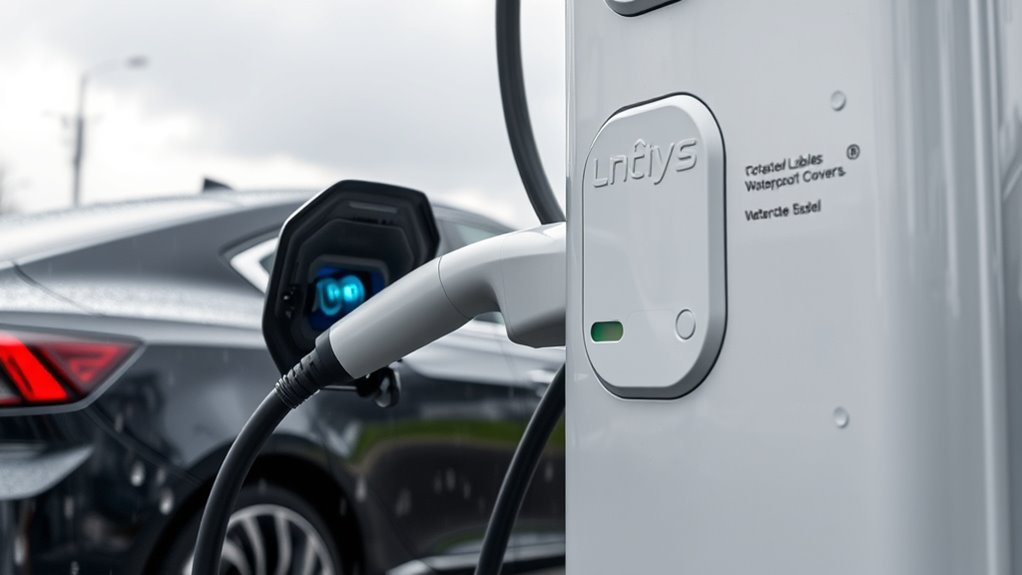
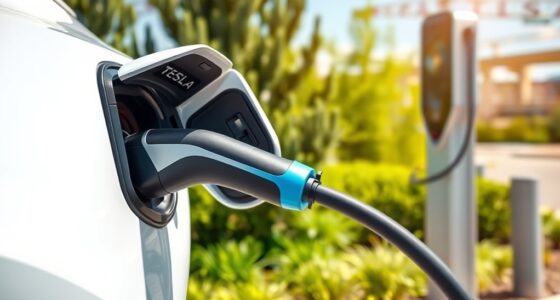
Modern EV charging stations are built with safety as a top priority, especially when it comes to rain and wet conditions. They incorporate robust fire safety features to prevent electrical fires caused by moisture exposure. These stations are designed with weather-resistant enclosures and sealed connectors that reduce water ingress, lowering risk during storms. These features are often tested under extreme weather conditions to ensure resilience and safety. Emergency procedures are clearly outlined, ensuring you know how to respond if issues arise, such as electrical faults or sparks. Automated shut-off systems activate immediately if a fault is detected, minimizing hazards. Additionally, safety signage and instructions are prominently displayed for quick reference. This thoughtful design helps protect you, your vehicle, and the surrounding environment, making charging in rain safer and more reliable. European cloud innovation plays a crucial role in developing these advanced safety features, ensuring consistent standards across regions. Incorporating smart safety features such as real-time monitoring and remote diagnostics further enhances reliability and peace of mind during adverse weather conditions. weather-resistant materials used in construction ensure durability and continued safety performance over time. Furthermore, ongoing testing and certification ensure that these stations meet rigorous safety standards, providing added confidence for users in all weather scenarios.
The Role of Ground Fault Circuit Interrupters (GFCIs) in EV Charging
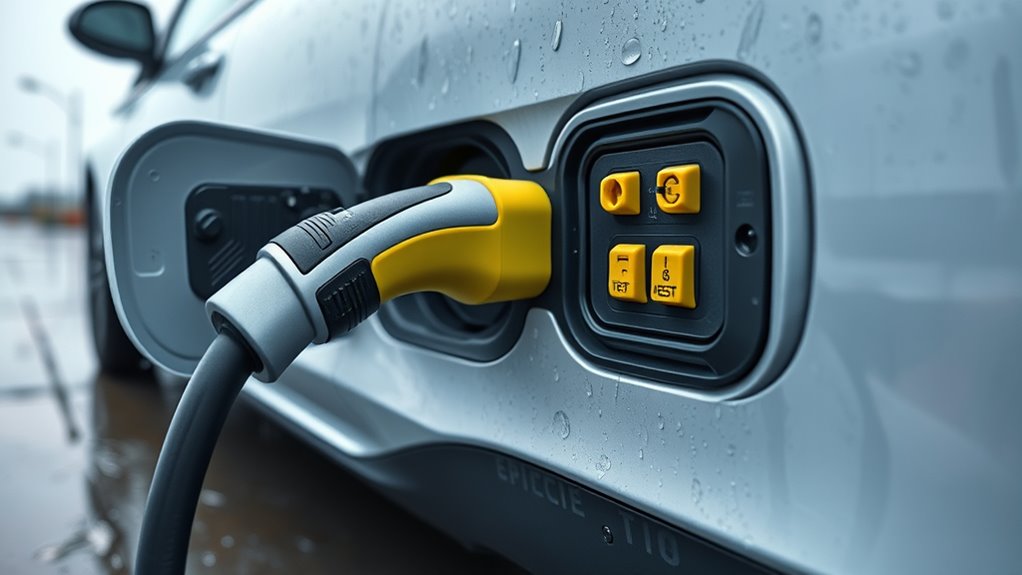
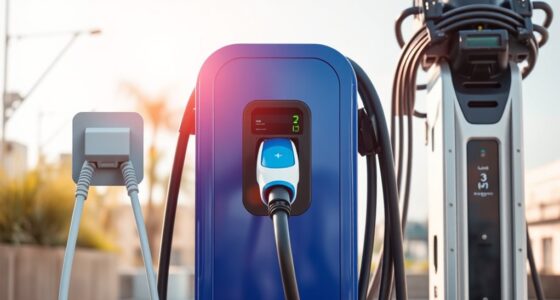
Ground Fault Circuit Interrupters (GFCIs) play an essential role in maintaining safety during EV charging, especially in wet conditions. They work by detecting ground faults—situations where electrical current leaks outside the intended pathway—through ground fault detection. If a leak occurs, the GFCI quickly cuts off power, preventing shocks or electrical fires. This rapid response is particularly important when charging in rain or damp environments, where compromised electrical insulation increases risk. GFCIs ensure that any unintended current flow is interrupted promptly, safeguarding you from electrical hazards. By continuously monitoring the circuit, these devices provide peace of mind, knowing that even in wet conditions, your EV charging remains safe and controlled. Their role is crucial in preventing accidents caused by moisture-induced faults. Understanding electrical safety is vital for ensuring proper installation and functioning of GFCIs in outdoor charging setups. Proper circuit protection helps prevent dangerous situations and ensures a safer charging experience. Additionally, understanding electric vehicle charging safety best practices can further reduce risks associated with outdoor and wet weather conditions.
Waterproof and Weather-Resistant Features of EV Chargers

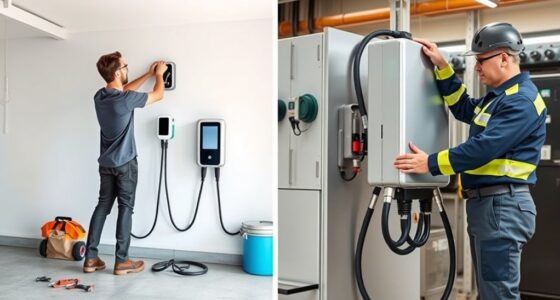
Since charging your EV often involves exposure to rain and moisture, manufacturers design chargers with waterproof and weather-resistant features to guarantee safety and reliability. A waterproof design ensures that the charger’s internal components stay protected from water ingress, preventing electrical faults. Weather resistance means the charger can withstand various environmental conditions like rain, snow, and high humidity without malfunctioning. These features are achieved through sealed enclosures, corrosion-resistant materials, and protective coatings. Environmental resilience is a key factor in maintaining the durability of outdoor EV chargers. This durability not only prolongs the lifespan of the charger but also reassures you that charging in the rain won’t compromise safety or performance. Proper installation practices further enhance the effectiveness of these protective features, ensuring the charger remains safe and functional over time. Additionally, adherence to safety standards is crucial to ensure the charger’s performance under various weather conditions. Incorporating weatherproofing technologies during manufacturing helps optimize the overall safety and longevity of EV chargers in outdoor settings.
Safety Protocols and Best Practices for Charging in Wet Conditions
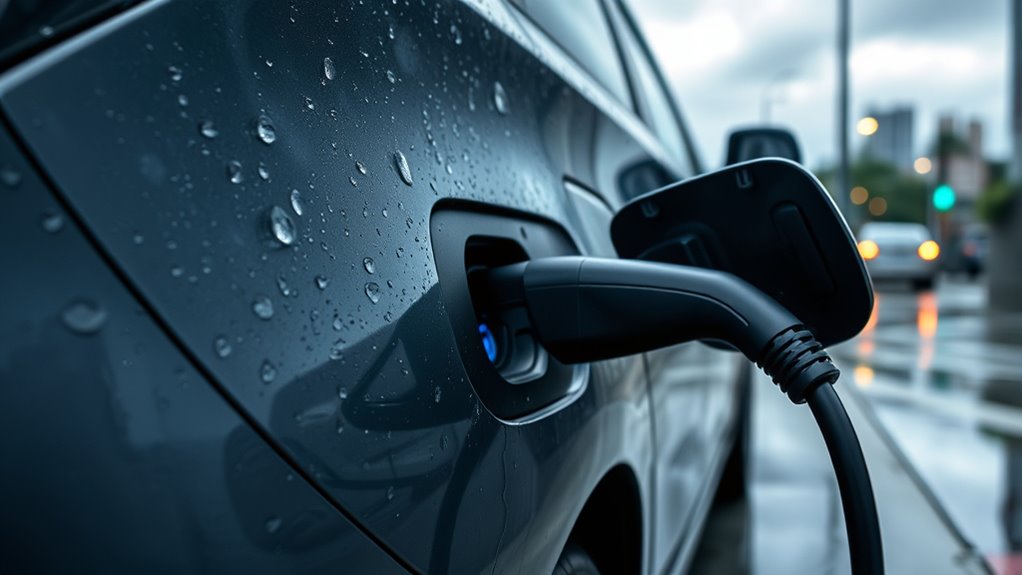
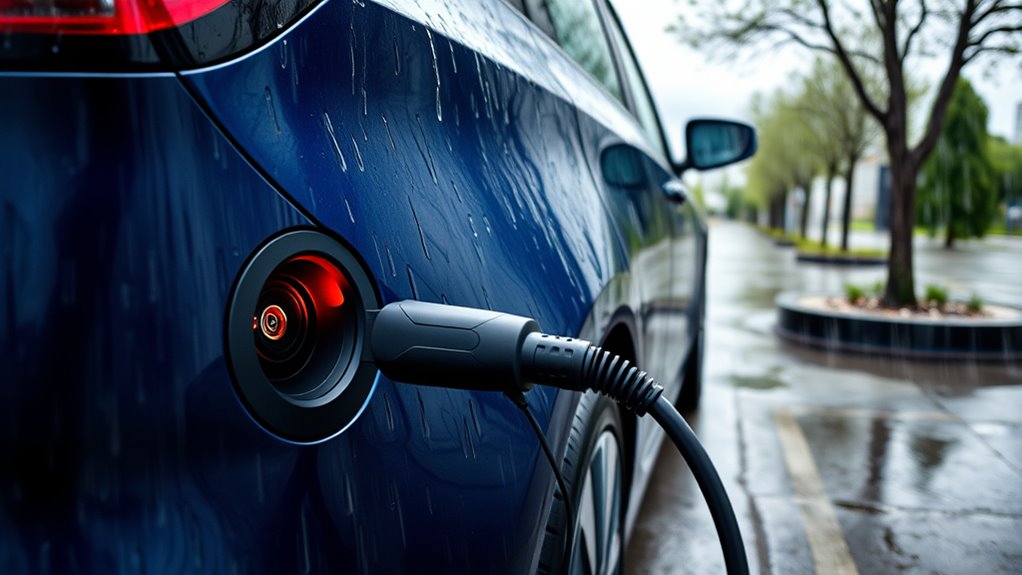
Even with waterproof and weather-resistant features, it’s important to follow proper safety protocols when charging your EV in wet conditions. Many ev charging myths suggest it’s unsafe to connect your charger in the rain, but rain safety is generally guaranteed by modern equipment designed to handle wet weather. Always inspect your charging station and cable for damage before use, and avoid plugging in if there are visible issues. Keep your hands dry and avoid standing in puddles while connecting or disconnecting the charger. Make sure the charging area is free of standing water and debris. Following these best practices helps prevent electrical hazards and ensures safe, reliable rain charging, dispelling common myths and emphasizing that with proper precautions, charging in the rain can be safe. Additionally, understanding the weatherproofing features of your charging setup can further enhance safety during wet conditions. Being aware of water-resistant technology incorporated into many modern chargers can provide added peace of mind. Recognizing the importance of electrical safety measures can help you better protect yourself and your vehicle during adverse weather.
What to Do If You Suspect a Charging Equipment Issue in the Rain
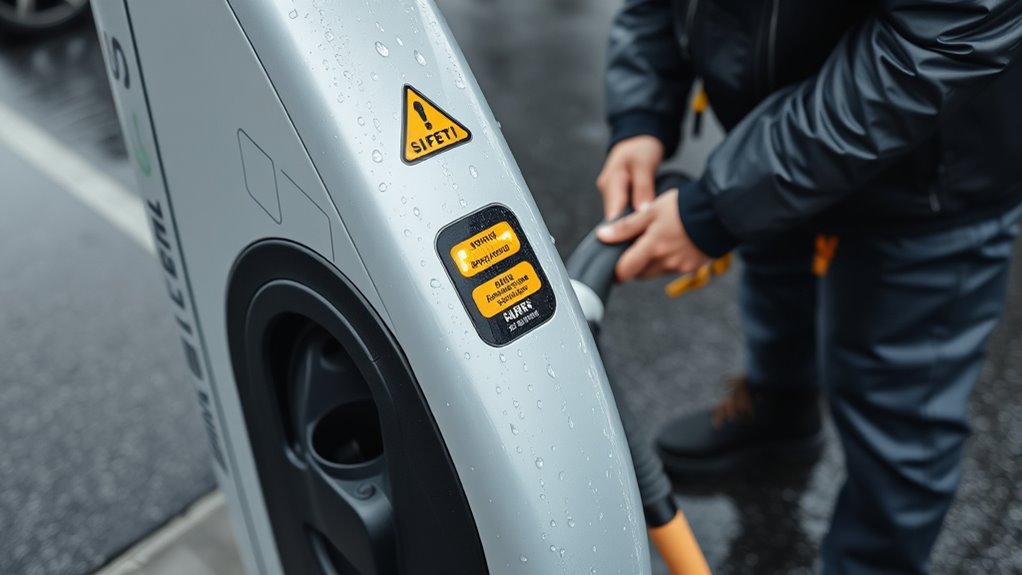
If you notice any signs of damage or malfunction in your charging equipment during rainy conditions, it’s crucial to act immediately to prevent potential hazards. Don’t attempt to use the charger or troubleshoot the issue yourself. Instead, follow emergency procedures: disconnect the charger from the power source if possible, stay dry, and keep a safe distance. Contact the manufacturer or a certified EV technician for expert ev troubleshooting. Your safety comes first—never ignore sparks, frayed cords, or unusual odors. Implementing standard testing practices can help identify issues early and ensure safety.
Frequently Asked Questions
Can I Leave My EV Charging Cable Outside During a Thunderstorm?
You shouldn’t leave your EV charging cable outside during a thunderstorm. Outdoor charging equipment isn’t designed to withstand lightning storms, and doing so poses safety risks. Lightning safety is vital, so unplug the cable and store it indoors until the storm passes. Keeping the cable protected ensures safety for you and your vehicle, and prevents damage to the charging equipment. Always prioritize safety during severe weather conditions.
Are There Specific EV Chargers Recommended for Rainy Climates?
Yes, you should choose EV chargers designed for rainy climates, as they offer superior weatherproofing tips and enhanced charger durability. Look for chargers with high IP ratings, such as IP65 or higher, to guarantee they resist water and debris effectively. Installing a weatherproof cover or enclosure further protects your charger. These features help keep your charging setup safe, functional, and long-lasting, even during heavy rain or storms.
How Does Rain Affect the Charging Speed of an EV?
Rain doesn’t substantially affect your EV’s charging speed or efficiency. Modern chargers and vehicles are designed to withstand weather impacts, ensuring safe charging in wet conditions. While water might cause minor fluctuations in charging efficiency, safety features prevent issues. You can confidently charge your EV in the rain, knowing that weather impact on charging speed is minimal, and your vehicle’s safety systems are built to handle wet environments effectively.
Is It Safe to Unplug My EV Charger in the Rain?
Yes, it’s safe to unplug your EV charger in the rain if it has a weatherproof design. Always prioritize electrical safety by making sure your hands are dry and you’re using a grounded outlet. Modern chargers are built to withstand outdoor conditions, but it’s best to avoid unnecessary exposure. Follow manufacturer guidelines and inspect the equipment regularly to maintain safety and ensure proper functioning during weather changes.
What Are the Signs of Water Damage in EV Charging Equipment?
You might think your charger’s waterproof, but water intrusion can reveal itself through corrosion damage or discoloration around connectors. Keep an eye out for rust, swelling, or a strange smell—these are signs water has compromised your equipment. Ironically, what seems like a minor splash could lead to major issues, so inspecting for water damage regularly helps prevent costly repairs and keeps your EV charging safe and reliable.
Conclusion
Charging your EV in the rain might seem risky, but modern safety features act like an umbrella, shielding you from harm. Just as a sturdy roof protects a home from storms, GFCIs and weather-resistant chargers keep you safe during wet conditions. So, while the rain may dampen the surroundings, your confidence in safe charging remains high. Embrace the rain with peace of mind, knowing that technology now safeguards you as effectively as a shelter from the storm.